Shape identification Extra Challenge 2D Shapes Worksheets for Ages 5-8
3 filtered results
-
From - To
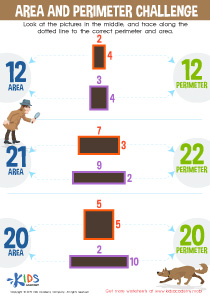
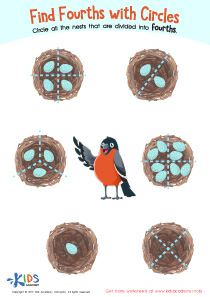
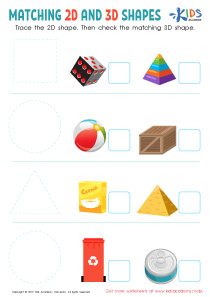
Enhance your child's math skills with our "Shape Identification Extra Challenge 2D Shapes Worksheets for Ages 5-8." Tailored for young learners, these engaging worksheets are designed to boost your child's ability to recognize and name various 2D shapes. Perfect for ages 5-8, each activity is aimed at making learning fun while reinforcing geometric concepts in a clear and interactive manner. From circles to hexagons, the sheets provide a dynamic approach to challenging your child's shape identification skills, promoting cognitive development and mastery in a playful yet educational format. Give your child the tools to succeed in math with these comprehensive worksheets!
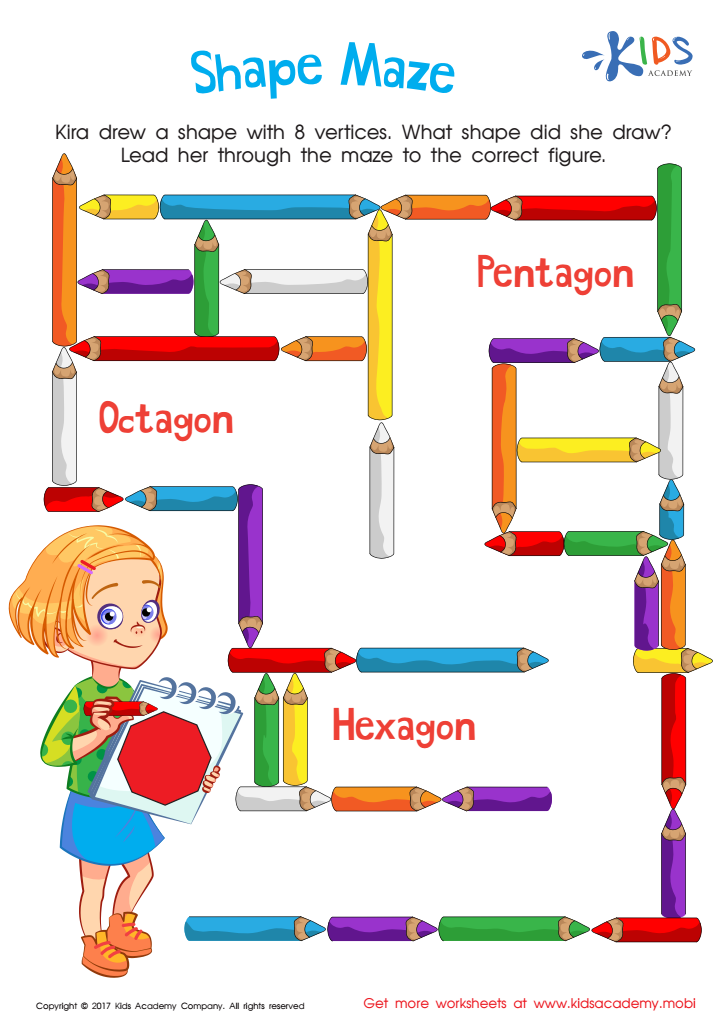
Shape Maze Worksheet
 Assign to My Students

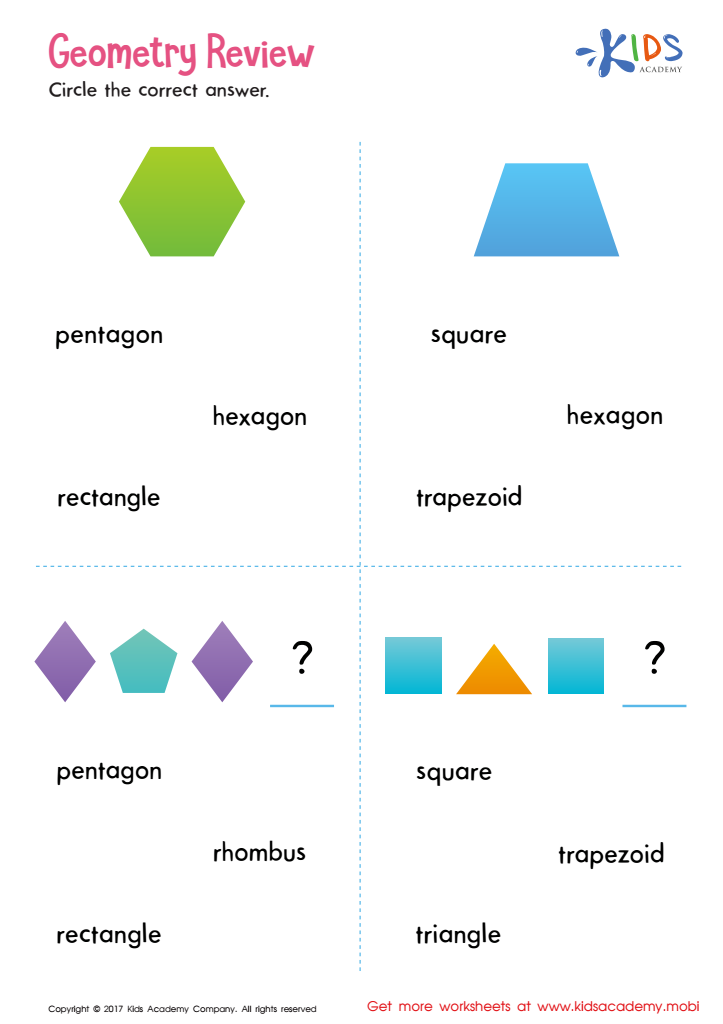
Geometry Review Printable
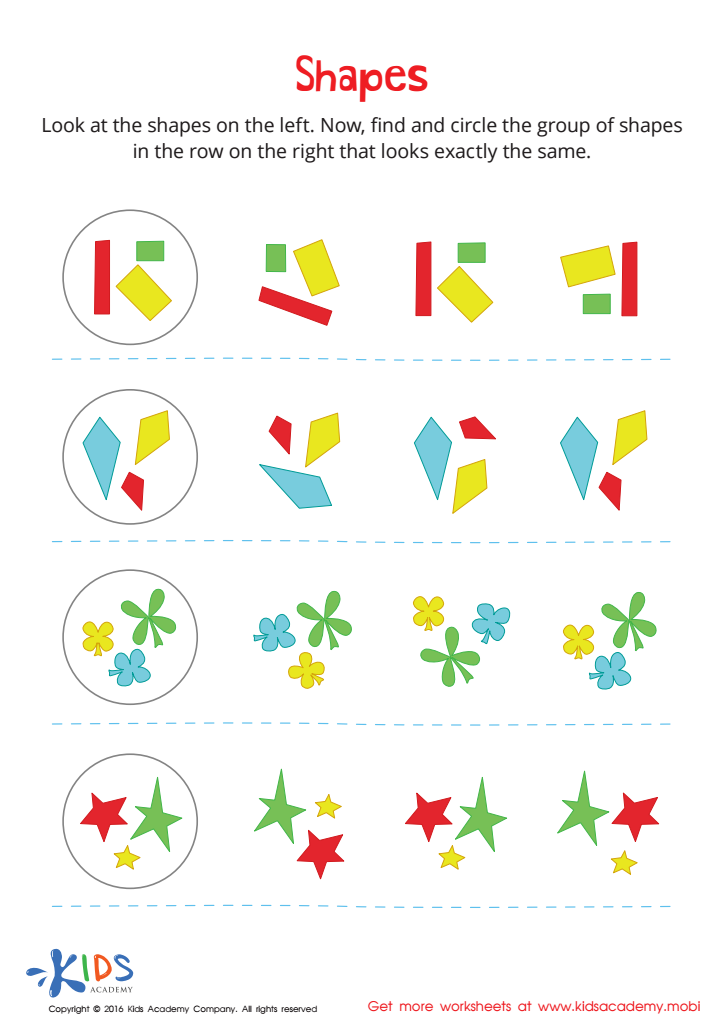
Shapes Worksheet








Parents and teachers should pay attention to Shape Identification Extra Challenge for 2D Shapes geared toward ages 5-8 because it is instrumental in building foundational math skills and developing spatial awareness in young children. Identifying shapes teaches children critical thinking and categorization skills, which are fundamental in various aspects of learning. Recognizing differences and similarities among shapes enhances their observation and comparison abilities, aiding cognitive development.
Engaging in shape identification helps children grasp basic geometry concepts. It also underpins more complex mathematical topics they will encounter later, such as area, volume, and algebraic thinking. Understanding shapes directly ties into recognizing numbers and letters, supporting early literacy and numerical proficiency.
Participating in extra challenges further encourages problem-solving and fine motor skills, vital for writing and drawing. With 2D shape recognition, children expand their vocabulary by learning terms like 'circle,' 'square,' 'triangle,' and descriptors such as 'sides' and 'corners.' This enriches language development and communication.
Shape activities, particularly when made challenging, cultivate perseverance and patience, encouraging a growth mindset. By focusing on essential shape identification skills, parents and teachers can foster an enriching learning environment that nurtures well-rounded, confident learners prepared for future academic challenges.