Vocabulary enhancement Extra Challenge Geometry Worksheets for Ages 5-8
3 filtered results
-
From - To
Unlock your child's potential with our Vocabulary Enhancement Extra Challenge Geometry Worksheets for ages 5-8. These engaging worksheets are designed to boost your child’s geometric skills while expanding their vocabulary. Each worksheet presents fun, challenging exercises that incorporate geometric shapes, patterns, and academic vocabulary, making learning exciting. Perfect for young learners who are ready for an extra challenge, our worksheets help bridge the gap between different mathematical concepts and terms. Promote critical thinking and language development simultaneously, giving your child the head start they need. Discover the perfect blend of fun and education at Kids Academy today!
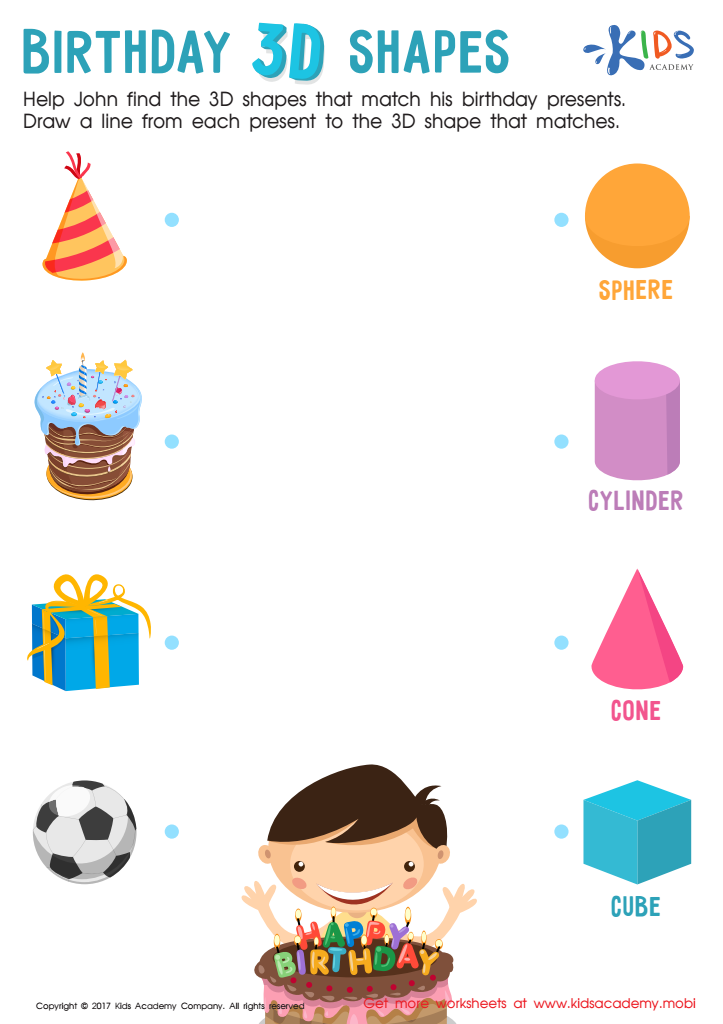
Birthday 3D Shapes Worksheet
 Assign to My Students











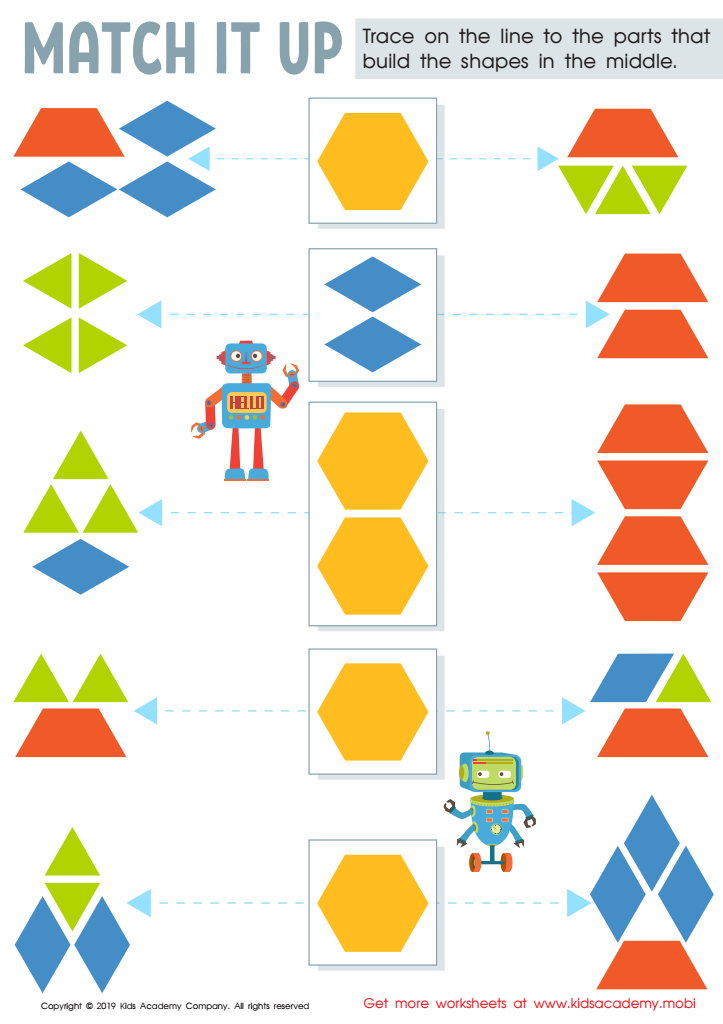
Match It up Worksheet
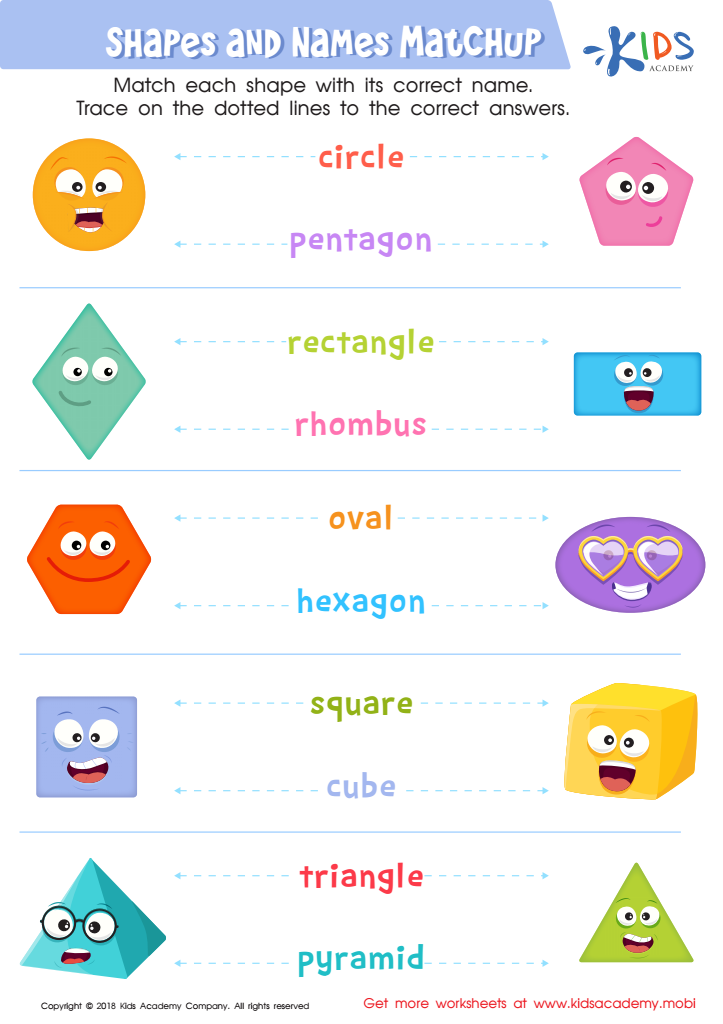
Shapes and Names Matchup Worksheet








Parents and teachers should care about vocabulary enhancement and extra challenges in geometry for children ages 5-8 because these activities lay the foundational skills for future academic success. At this early developmental stage, children's brains are highly receptive to learning and building connections. Enhancing vocabulary provides them with the words they need to express themselves more clearly and deeply, fosters effective communication, and instills a love for reading and learning. Strong vocabulary skills are correlated with better reading comprehension, which is essential for all other areas of learning.
Similarly, introducing geometry concepts to young children stimulates their cognitive development in unique ways. Geometry challenges help improve spatial reasoning, problem-solving skills, and logical thinking, which are crucial for mathematics and other disciplines. When children engage in hands-on geometry activities, they also develop fine motor skills and spatial awareness by manipulating shapes and patterns.
Additionally, these early educational challenges foster curiosity and a growth mindset. When children are encouraged to tackle slightly more difficult tasks with support from parents and teachers, they build resilience, confidence, and a positive attitude toward learning. These early interventions ensure that children do not just meet but exceed educational benchmarks, positioning them for long-term academic and personal success.








