
Letter recognition Extra Challenge ABC Order Worksheets for Ages 5-9
7 filtered results
Difficulty Level
Grade
Age
-
From - To
Subject
Activity
Standards
Enhance your child's literacy skills with our "Letter Recognition Extra Challenge ABC Order Worksheets" designed for ages 5-9! These engaging activities help young learners master letter recognition and the alphabet sequence while developing their critical thinking and problem-solving abilities. Each worksheet is crafted to challenge students, encouraging them to identify, match, and arrange letters in the correct order. Perfect for reinforcing classroom learning or providing extra practice at home, our worksheets cater to various learning styles. Dive into fun educational challenges today and watch your child's confidence soar as they become proficient in recognizing and organizing letters!
Favorites
With answer key
Interactive
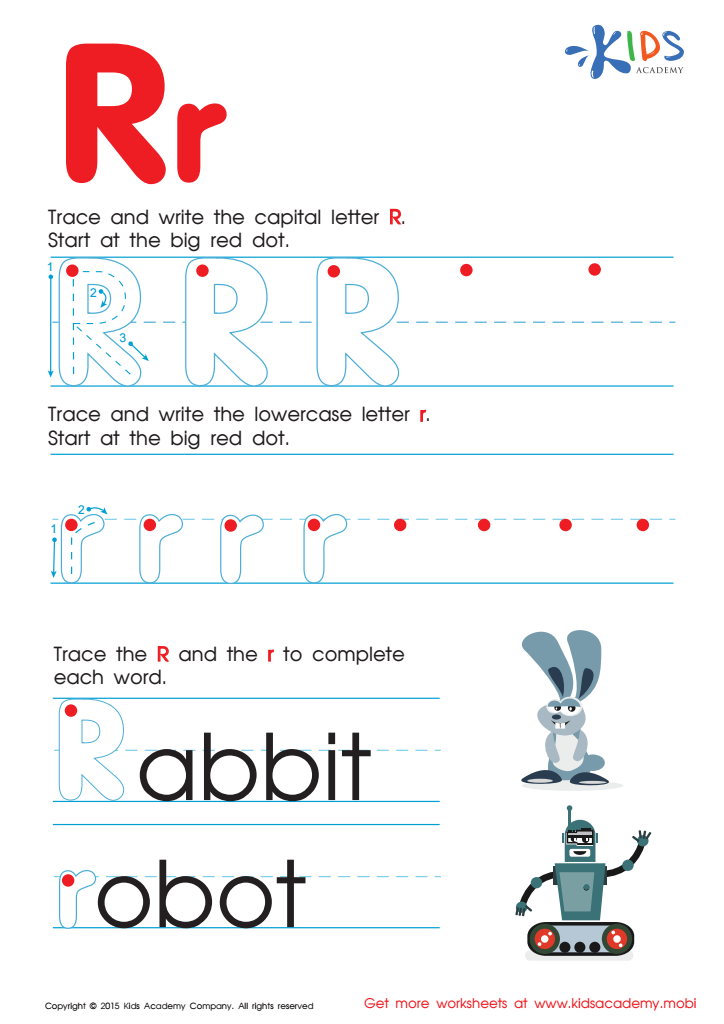
Letter R Tracing Page
Trace and write the letter "R" with this worksheet for kindergarten. Start with the uppercase, then move on to the lowercase. Write the letters several times for practice. Then help complete the words for the rabbit and robot, spelling carefully. More ABC worksheets can be found at Kids Academy.
 Assign to My Students
Letter R Tracing Page
Worksheet

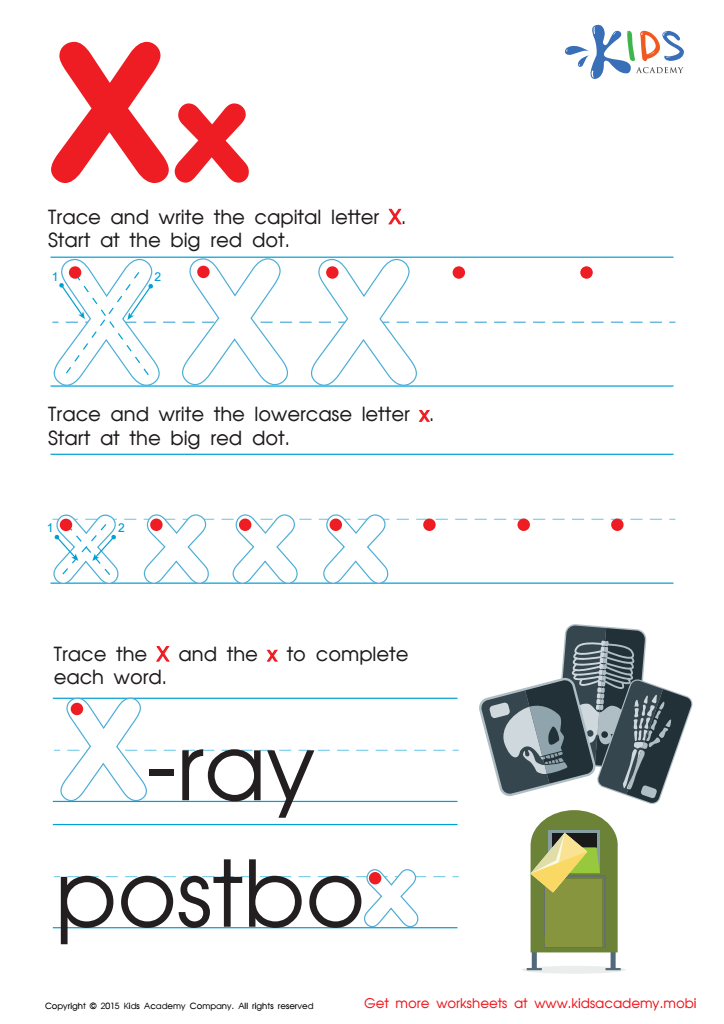
Letter X Tracing Page
Trace the uppercase letter "X" to learn, then write it yourself and practice. Then do the same with the lowercase "x" before completing the words "X-ray" and "postbox". Enjoy our alphabet printables!
Letter X Tracing Page
Worksheet
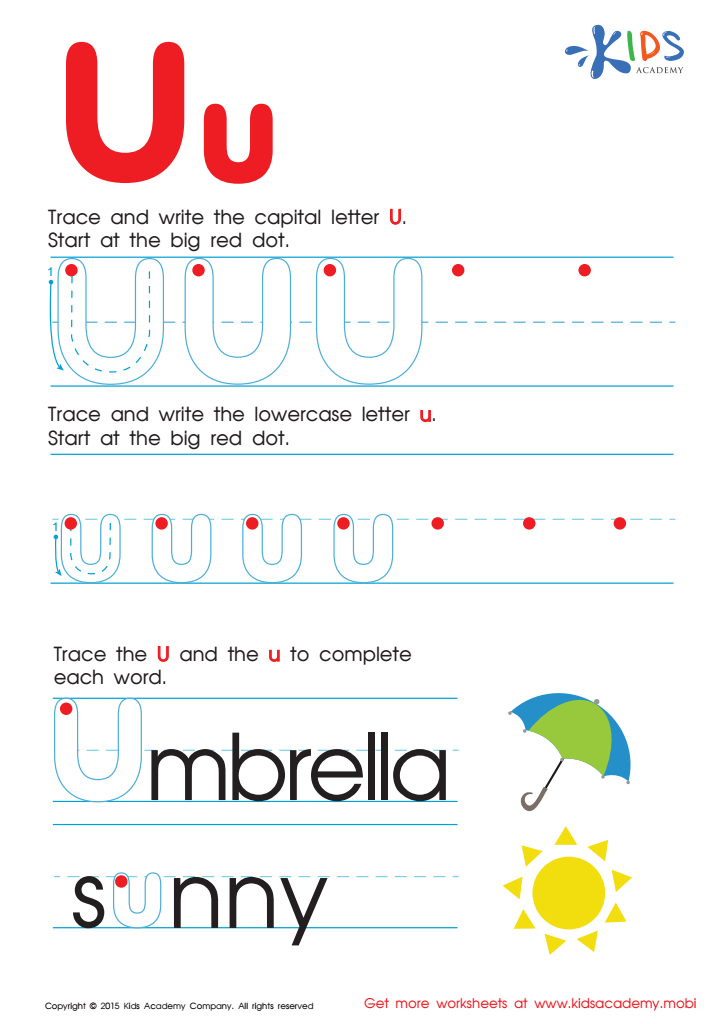
Letter U Tracing Page
Ready to trace and write the letter "U"? Use our worksheet and practice tracing both uppercase and lowercase letters. Complete the words "umbrella" and "sunny" with a capital "U". Check our full collection of alphabet printables for more activities.
Letter U Tracing Page
Worksheet
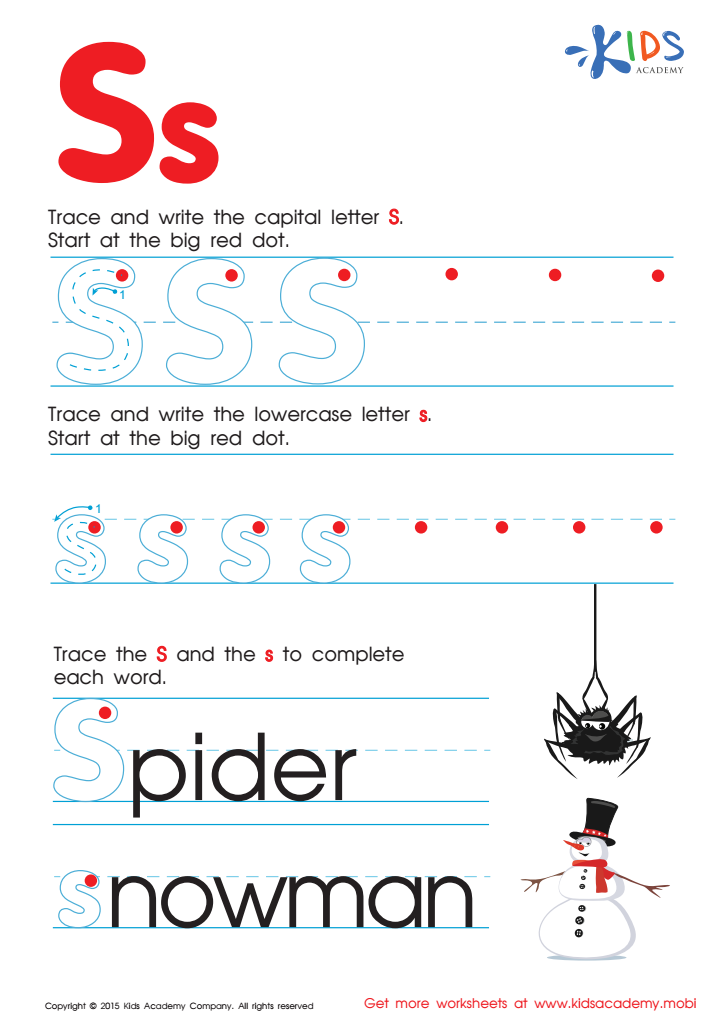
Letter S Tracing Page
Trace and write the capital and lowercase "S" on this ABC worksheet for kindergarten. Start with the big red dot and be careful. When you finish, help the spider and snowman in the pictures restore their words with the capital and lowercase letters. Continue learning the alphabet with Kids Academy.
Letter S Tracing Page
Worksheet
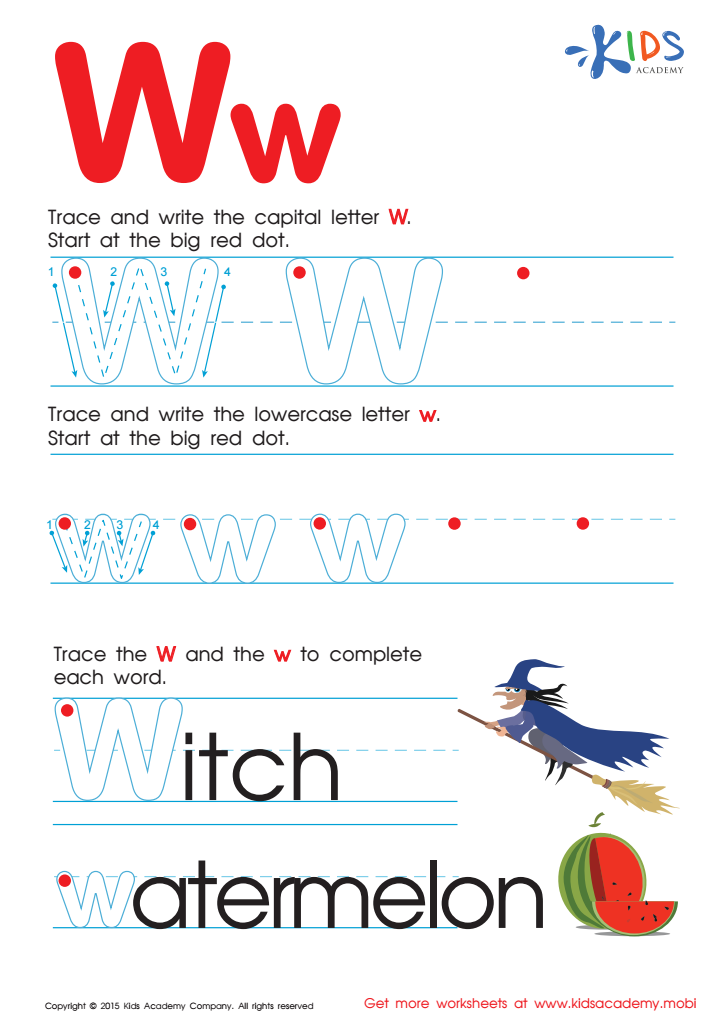
Letter W Tracing Page
Trace and write the capital and lowercase letter W with this free letter tracing worksheet by Kids Academy. Complete the words "Witch" (capital) and "watermelon" (lowercase). Check out our other kindergarten alphabet worksheets!
Letter W Tracing Page
Worksheet
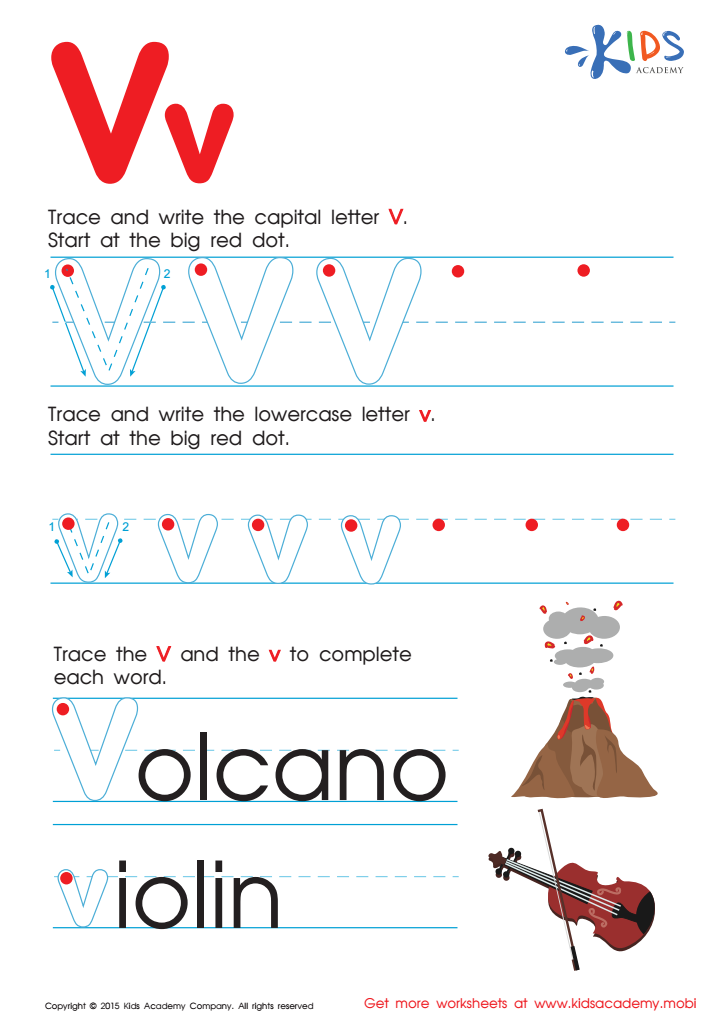
Letter V Tracing Page
Trace the uppercase and lowercase letter "V" with our kindergarten tracing worksheet. Begin at the red dot and follow the lines. Write it several times. Complete the words "Volcano" and "violin". Get more alphabet activities at Kids Academy.
Letter V Tracing Page
Worksheet
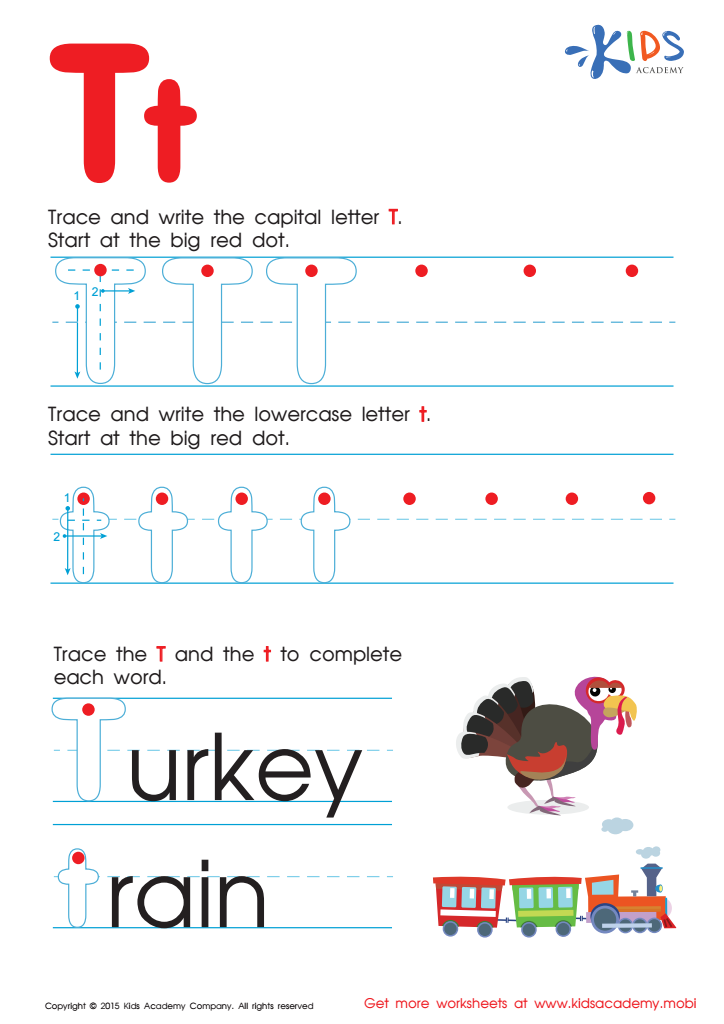
Letter T Tracing Page
Trace letters, complete words, draw pictures and see your kids having fun!
Kids Academy offers alphabet tracing worksheets to learn to write letters. Start with the big red dot, trace the letter, then write it. Practice uppercase and lowercase. Have fun completing words with a Turkey or a rain-train and draw pictures. Get more printable worksheets to make learning enjoyable.
Letter T Tracing Page
Worksheet
Join Kids Academy for Free
Who is primarily going to use this learning content?







Letter recognition is a foundational skill for children aged 5 to 9, crucial for literacy development. Parents and teachers should care about activities like "Letter Recognition Extra Challenge ABC Order" because mastering the alphabet empowers children with essential reading and writing skills. By engaging in such challenges, children learn to identify letters quickly, which enhances their ability to decode words, recognize sight words, and eventually, read fluently.
Additionally, organizing letters in alphabetical order fosters critical thinking and cognitive skills, introducing concepts of sequencing and categorization. These abilities not only support future academic tasks but are also essential for everyday life, as they help children understand how information is systematically organized.
For educators, incorporating a structured approach to letter recognition prepares students for more complex literacy skills like spelling, writing, and comprehension. For parents, participating in activities that emphasize letter skills creates bonding opportunities while reinforcing learning at home.
Overall, prioritizing letter recognition and its application in fun and engaging ways cultivates a lifelong love for reading and learning, setting the groundwork for future academic success. In our increasingly text-rich world, these fundamental skills cannot be overstated. Prompt action from both parents and teachers supports children’s holistic development.








