Extra Challenge Consonants Worksheets for Ages 5-9
5 filtered results
-
From - To
Discover the ultimate learning tool with our Extra Challenge Consonants Worksheets for Ages 5-9 from Kids Academy. Designed to build strong phonics foundations, these interactive printables engage young learners as they tackle more challenging consonant sounds. Perfect for in-class activities or at-home practice, each worksheet excites children with fun illustrations and exercises that promote critical thinking. Make learning consonants a joyful experience, enhancing reading and writing skills with games, puzzles, and creative tasks. Ideal for reinforcing classroom lessons or providing extra challenges for advanced students, our worksheets are a must-have for budding readers eager to master their phonics skills.
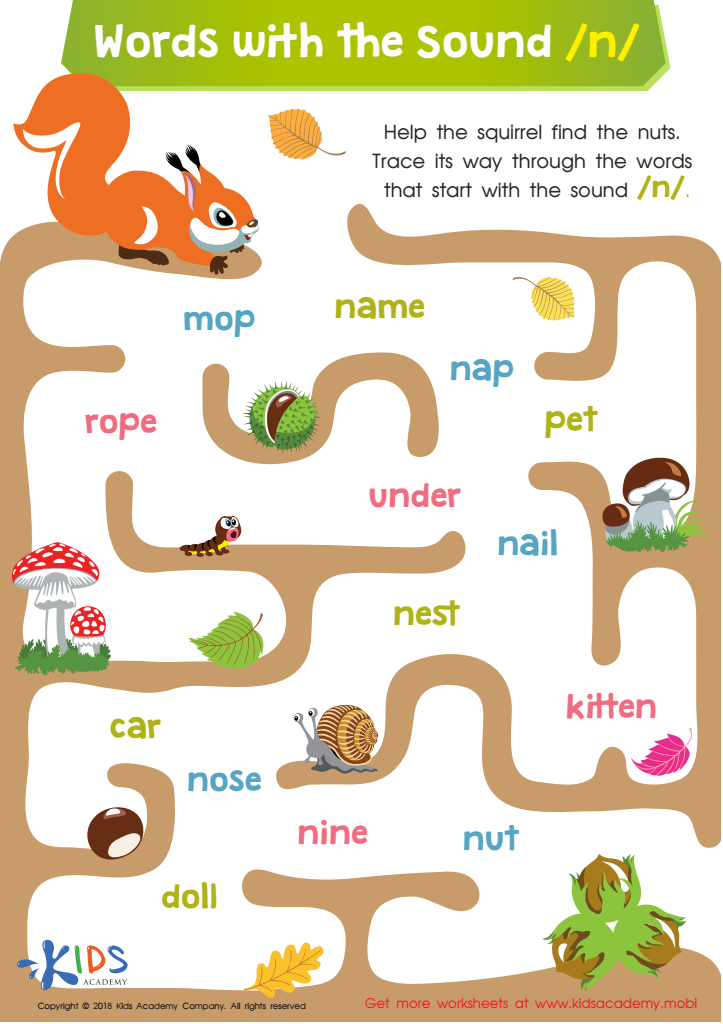
Words with Sound N Reading Worksheet
 Assign to My Students
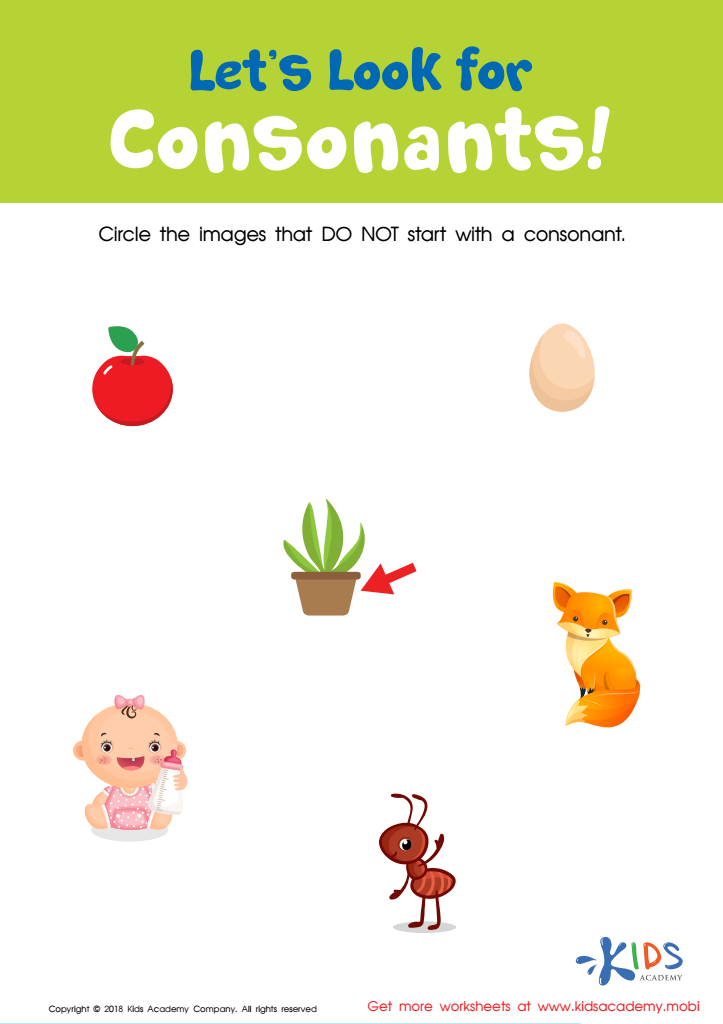
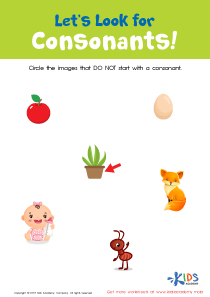
Let's Look for Consonants Worksheet
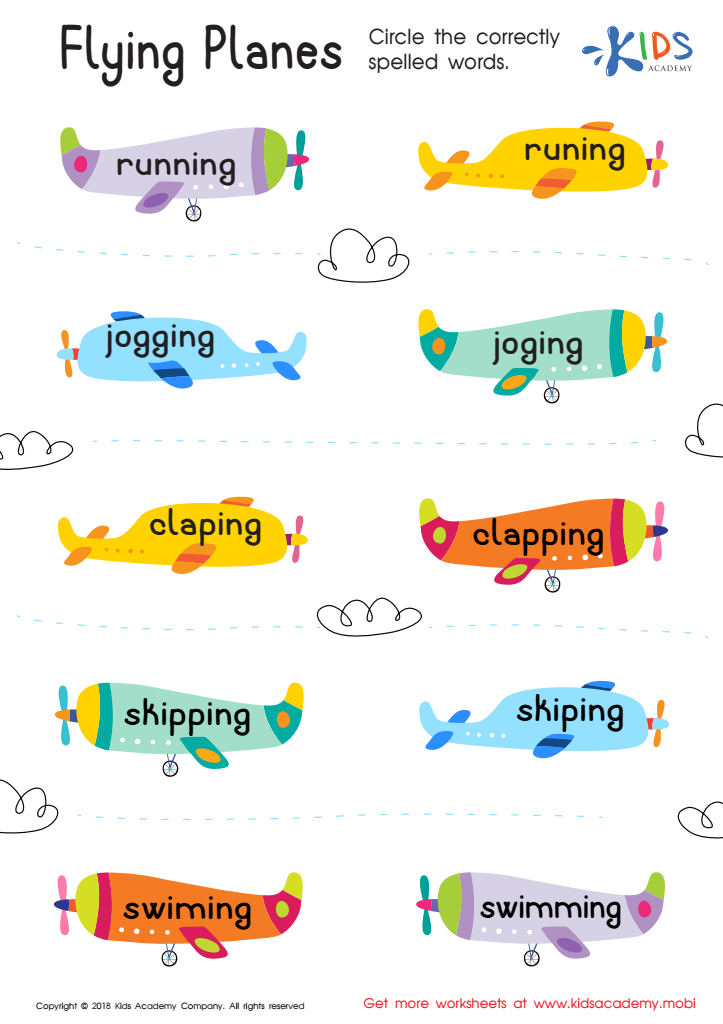
Flying Planes Worksheet
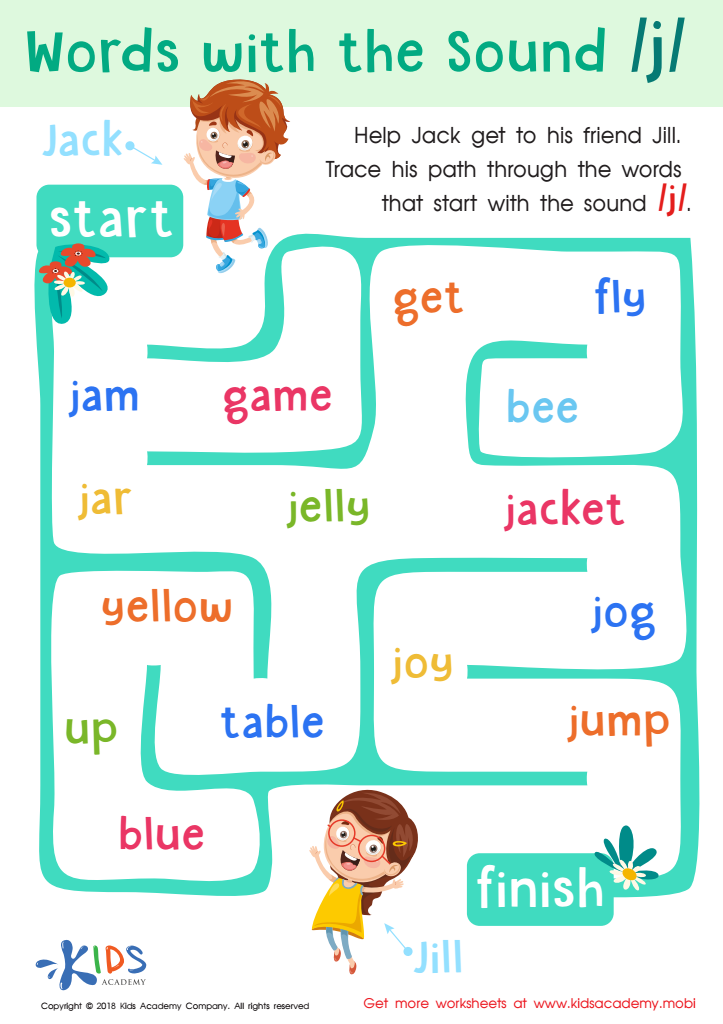
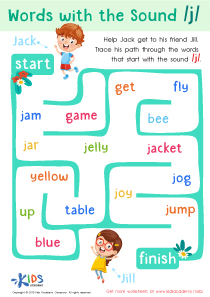
Words with sound j Reading Worksheet
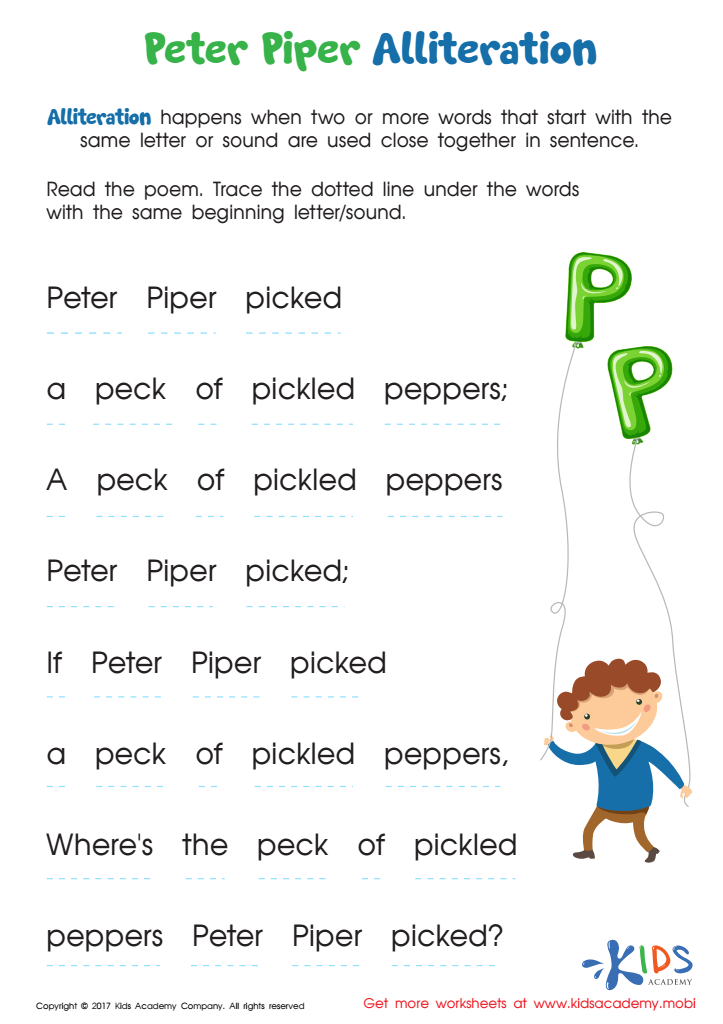
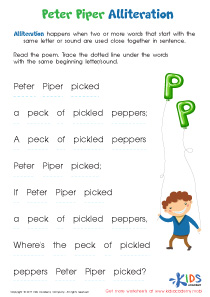
Peter Piper Alliteration Worksheet



Parents and teachers should care about Extra Challenge Consonants for children aged 5-9 because mastering these sounds is crucial for developing foundational reading and writing skills. At this stage, children are in the early phases of literacy, where understanding and using consonants coherently play a vital role in decoding words, enhancing reading fluency, and improving pronunciation.
Extra Challenge Consonants, such as blends (e.g., "bl" and "tr") and digraphs (e.g., "ch" and "th"), offer complexity beyond single consonant sounds. Exposure to and practice with these consonants help children recognize patterns and improve their phonological awareness. As children engage with these challenges, they build stronger cognitive connections to different sounds, making word recognition more automatic and comprehensive. This strength in phonics ultimately contributes to more advanced literacy skills, including vocabulary development and spelling accuracy.
Moreover, tackling these challenging aspects of consonant use in a supportive learning environment fosters a positive attitude toward learning. It creates opportunities for personalized instruction, engagement, and motivation as children experience success with tasks previously deemed difficult. This proactive approach sets the stage for continued educational success, highlighting the importance of focus on Extra Challenge Consonants in early childhood literacy programs.