Filters

5 filtered results

Clear all filters
Favorites
With answer key
Interactive

5 filtered results

Difficulty Level

Grade


Enhance your child’s vocabulary skills with our “Vocabulary Expansion Extra Challenge Vowels Worksheets” designed for ages 5-9. These engaging printables focus on mastering vowel sounds, helping young learners to recognize and use vowels in various contexts. Through interactive exercises, children will not only improve their phonetic abilities but also expand their vocabulary, boosting confidence in reading and writing. Perfect for extra practice at home or school, these worksheets are tailored to challenge and motivate kids, turning learning into an exciting adventure. Equip your child with the tools to excel in literacy with these comprehensive vowel worksheets!

Check out this FREE Trial Lesson on Vowels for age 5-9!

The Short U Sound

Favorites
With answer key
Interactive
  • 5-9
  • Vocabulary expansion
  • Vowels
  • Extra Challenge
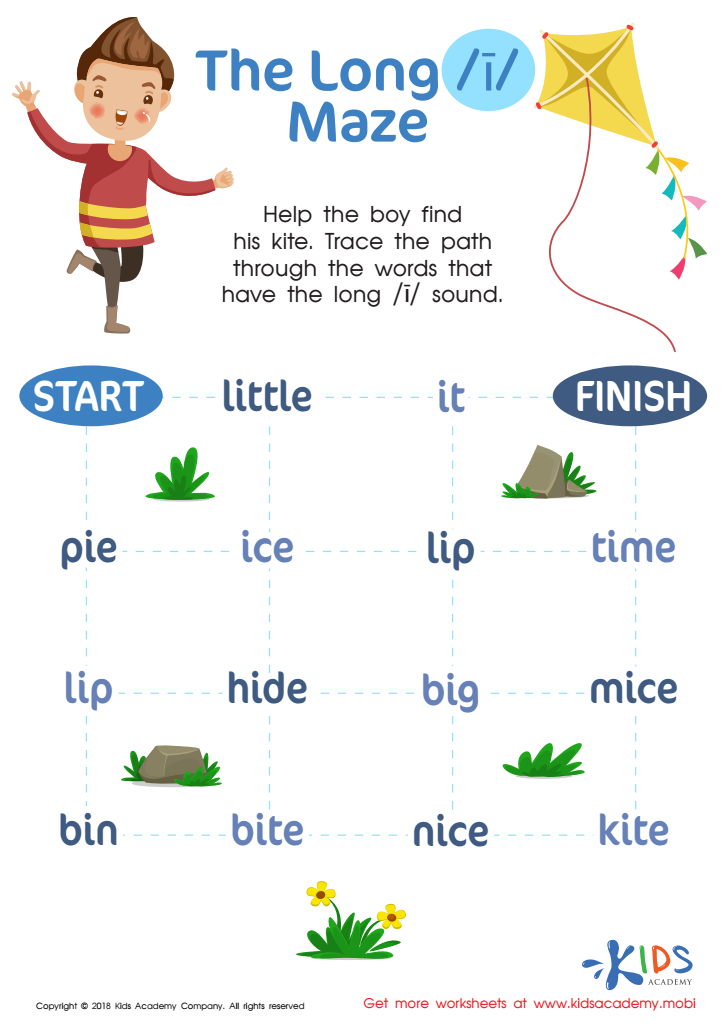
The Long I Maze Reading Worksheet

The Long I Maze Reading Worksheet

Help your child learn phonics to help them read. Show them the difference between long and short "i" sounds. Guide them as they use a pencil to trace words with the long "i:" sound in the "Help the Boy in the Picture" worksheet exercise. This will help them find the kite in the picture.
The Long I Maze Reading Worksheet
Worksheet
Phonics for Kids | Short Vowel Sound U | PDF Worksheet 2

Short Vowel Sound U Worksheet

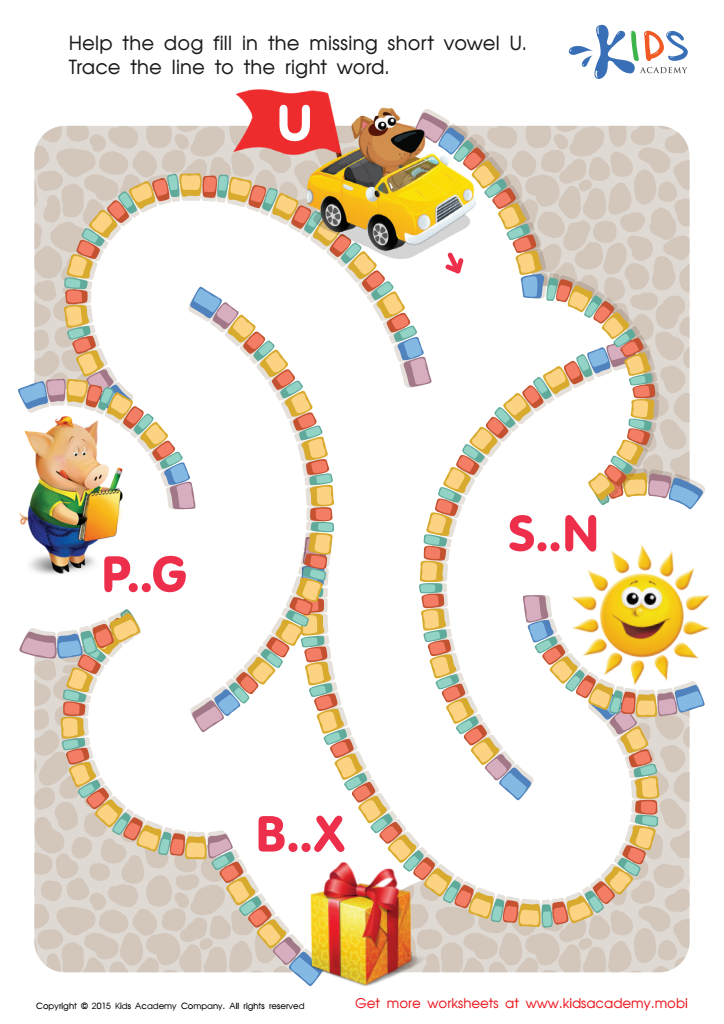
Practice abc phonics to help young learners link sounds to letters. This free printable phonics worksheet helps your kid learn the short vowel sound U. Guide them through the maze to help the dog complete the word "sun". Make sure they say the word out loud to emphasize the short U sound. Check out more phonics worksheets with mazes here.
Short Vowel Sound U Worksheet
Worksheet
Phonics for Kids | Short Vowel Sound I | PDF Worksheet 1

Short Vowel Sound I Worksheet

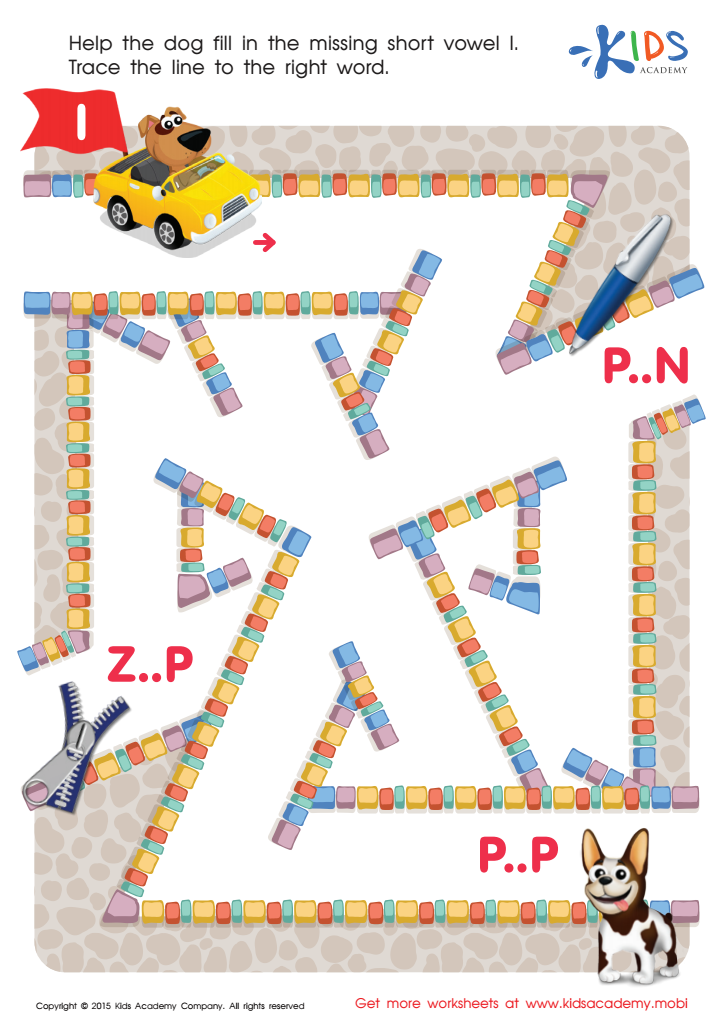
This free printable phonics worksheet will get your kid prepped for reading! It's a maze to help the dog complete the word “zip” with the missing letter I. Have your kid say the word aloud to learn the I sound. It's a great way to practice reading, writing and spelling skills. Check out here for more phonics worksheets!
Short Vowel Sound I Worksheet
Worksheet
Phonics for Kids | Short Vowel Sound O | PDF Worksheet 1

Short Vowel Sound O Worksheet

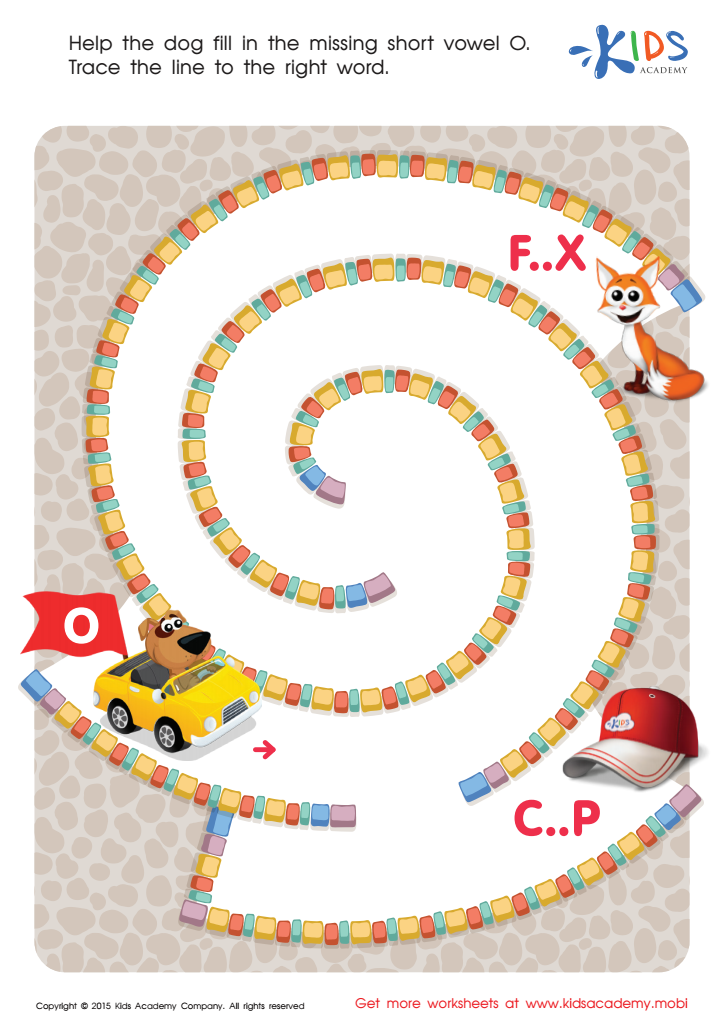
Help your child learn the short vowel sound O with this fun and free printable phonics worksheet! They'll need to complete the maze to help the dog finish the word "fox" with the missing letter O. Engage their fine motor muscles while they color or trace the maze with crayon or pencil. This educational activity is sure to bring a smile to your little learner's face! For more phonics worksheets, check here.
Short Vowel Sound O Worksheet
Worksheet
Phonics for Kids | Long Vowel Sound O | PDF Worksheet 1

Long Vowel Sound O Worksheet

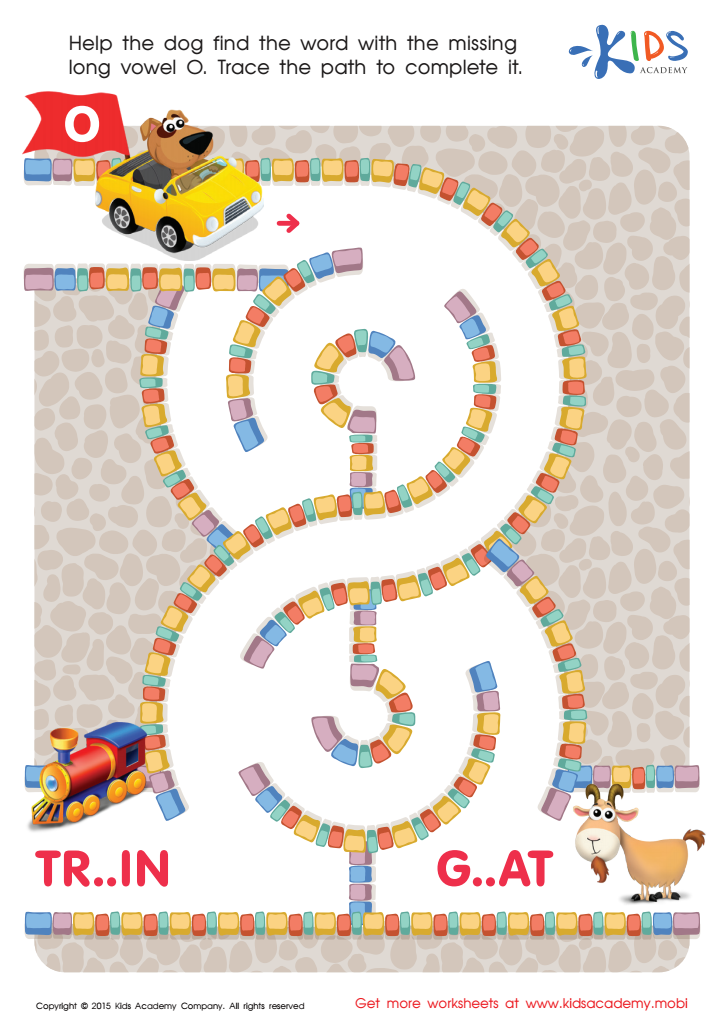
Help the goat find her missing O! Guide your little learner through this fun maze to help the goat get its vowel sound back. Make phonics learning engaging and enjoyable with this free printable worksheet.
Long Vowel Sound O Worksheet
Worksheet


Vocabulary expansion in early childhood, particularly through engaging methods like Extra Challenge Vowels, is crucial for several developmental reasons. Ages 5-9 encompass a key period known as the "language explosion," where children's ability to absorb and use new words skis rather rapidly. Providing activities that focus on vowels— the building blocks of language— aids not only in sound recognition but also in word formation and spelling.

An expanded vocabulary allows children to express themselves more clearly and effectively, which is foundational for both their social interactions and academic success. Enhanced vowel knowledge strengthens reading skills, which plays a significant role in future achievements in school. When children can decode words more easily, they are more likely to enjoy and engage in reading activities.

Moreover, vocabulary challenges that emphasize vowels can help bridge the gap between spoken and written language, facilitating better understanding and retention. These activities often spur curiosity, making learning fun and motivating young learners to discover new words independently.

Ultimately, engaging in strategies for vocabulary expansion supports cognitive development, boosts confidence in communication, and lays a strong foundation for lifelong learning. Prioritizing this aspect of early education is an investment in a child’s future linguistic and academic competence.