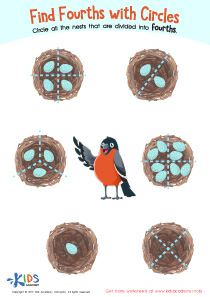
Spatial awareness Extra Challenge 2D Shapes Worksheets for Ages 5-9
3 filtered results
-
From - To
Boost your child’s spatial awareness with our engaging Extra Challenge 2D Shapes Worksheets designed for ages 5-9. These worksheets provide a fun and interactive way for young learners to explore shapes, enhance their understanding of dimensions, and apply visual reasoning skills. Carefully crafted, each worksheet features varied activities that challenge students to identify, compare, and manipulate 2D shapes in creative ways. Ideal for classroom or home use, these resources promote critical thinking and problem-solving while making learning enjoyable. Download our worksheets today and watch your child enhance their spatial skills while having fun mastering the world of 2D shapes!
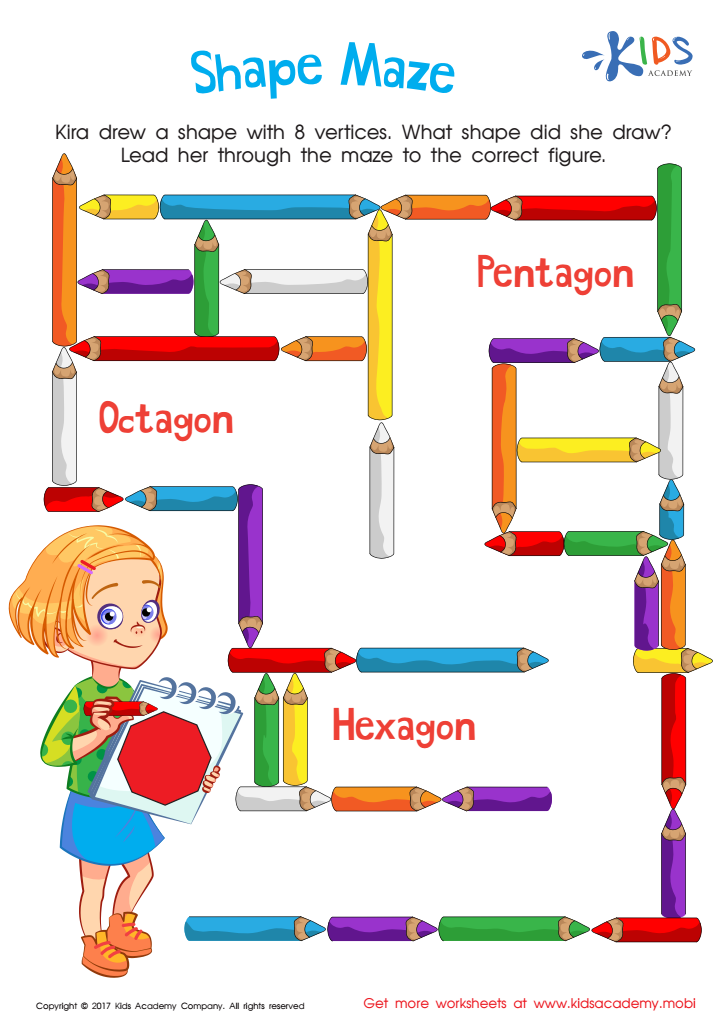
Shape Maze Worksheet
 Assign to My Students











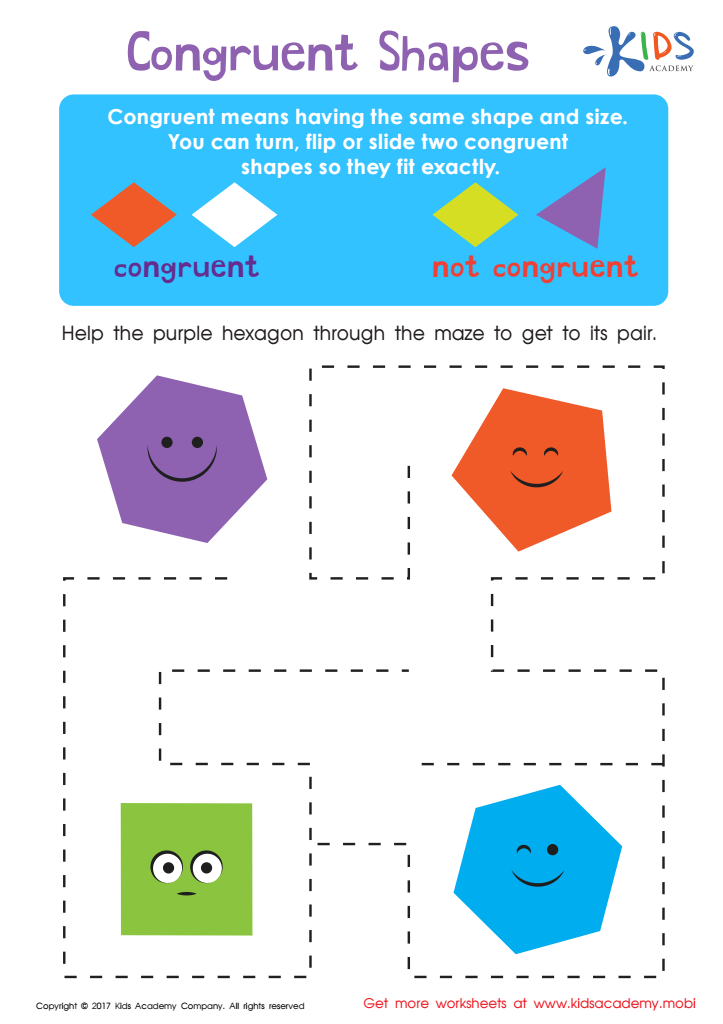
Congruent Shapes Worksheet
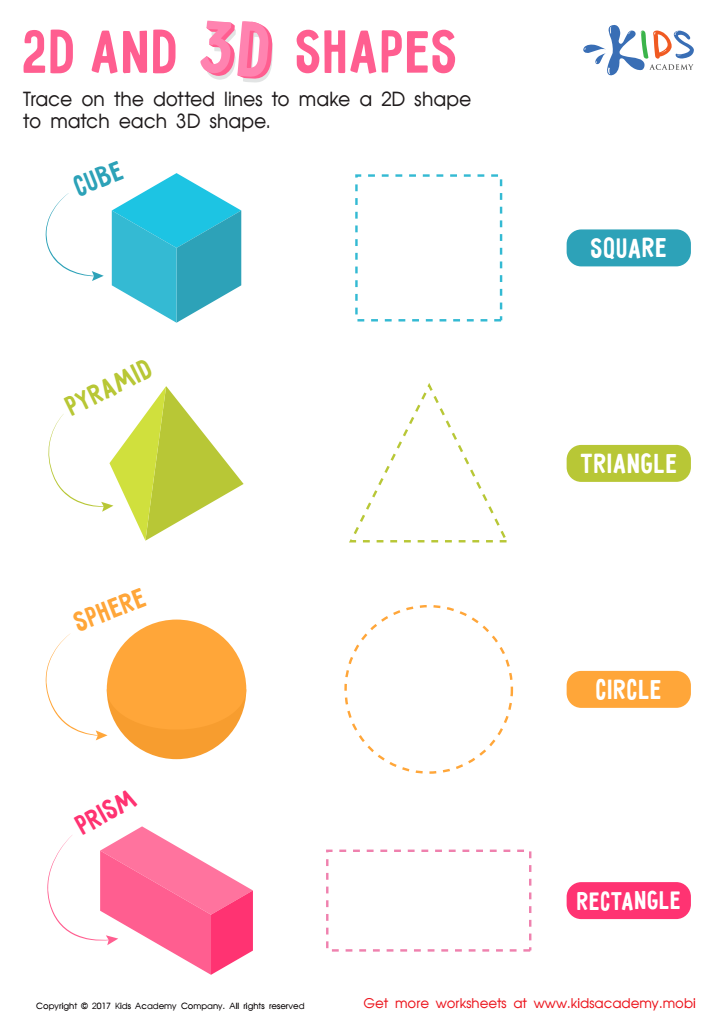
2D and 3D Shapes Worksheet








Spatial awareness is a crucial skill for children, especially between the ages of 5-9, as it forms the foundation for more complex cognitive abilities and everyday tasks. Understanding 2D shapes is integral to developing this skill. When parents and teachers engage children with activities focused on 2D shapes—such as identifying, categorizing, and manipulating shapes—they provide a stimulating environment for learning.
Firstly, spatial awareness enhances mathematical understanding. A strong grasp of shapes helps children with geometry concepts later in their education, supporting problem-solving and critical thinking. Secondly, it aids in everyday tasks such as reading maps, understanding directions, and engaging in art and design. For instance, children learn to recognize patterns, which is essential for both creativity and logical reasoning.
Moreover, activities that promote spatial awareness encourage collaborative play, enhancing social skills and teamwork. As children work together to identify and categorize shapes, they communicate, share ideas, and respect diverse perspectives. Ultimately, investing time in developing spatial awareness through 2D shape activities fosters a child's ability to navigate and interpret the world, making it essential for both academic success and everyday functioning. Engaged parents and teachers can lay the groundwork for lifelong skills that benefit the child's overall development.