Matching numbers Extra Challenge Math Worksheets for Ages 5-9
5 filtered results
Difficulty Level
Grade
Age
-
From - To
Subject
Activity
Standards
Elevate your child's math skills with our "Matching Numbers Extra Challenge Math Worksheets" designed specifically for ages 5-9. These engaging worksheets are perfect for reinforcing number recognition and developing critical thinking. With a variety of challenges, kids will enjoy matching numbers in different contexts, enhancing both their understanding and confidence. The worksheets are beautifully illustrated to keep young learners motivated and interested in math. Suitable for home or classroom use, our resources provide the perfect balance of fun and education. Start your child's math journey today and watch them excel in fundamental skills with our extra challenge worksheets!
Favorites
With answer key
Interactive
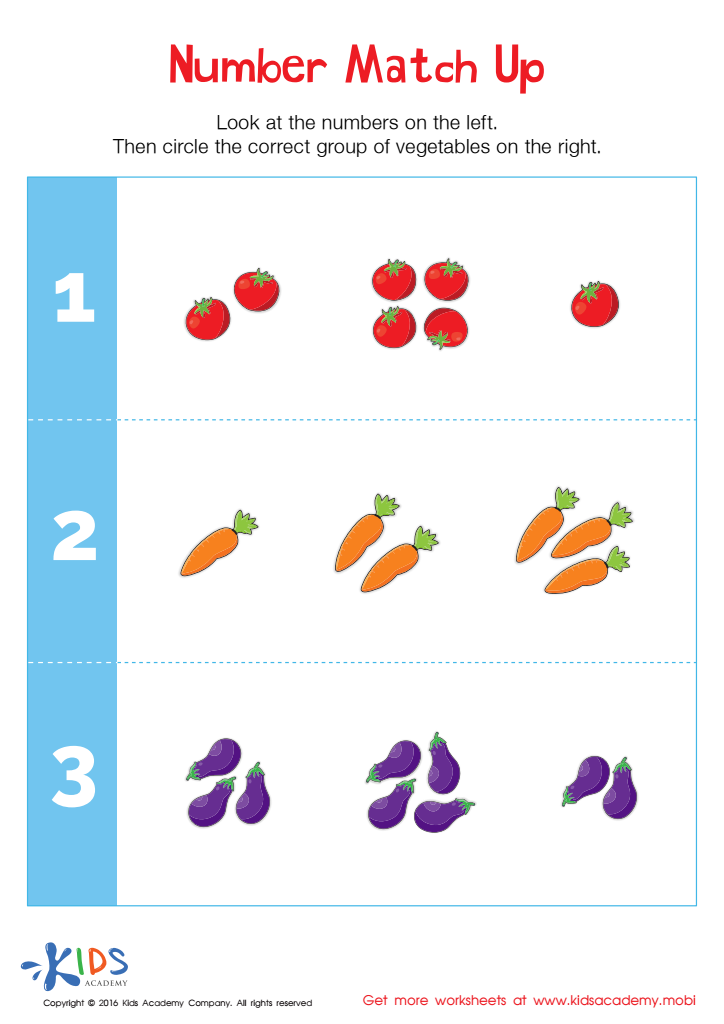
Number Match Up Worksheet
Help your child learn early math skills with this cute number match-up worksheet! Through this exercise, your preschooler can practice following directions, recognizing numbers, counting and understanding the difference between left and right. Bright and catchy pictures such as veggies make the worksheet fun and engaging. Print it out and let your child enjoy counting and matching the veggies!
 Assign to My Students
Number Match Up Worksheet
Worksheet
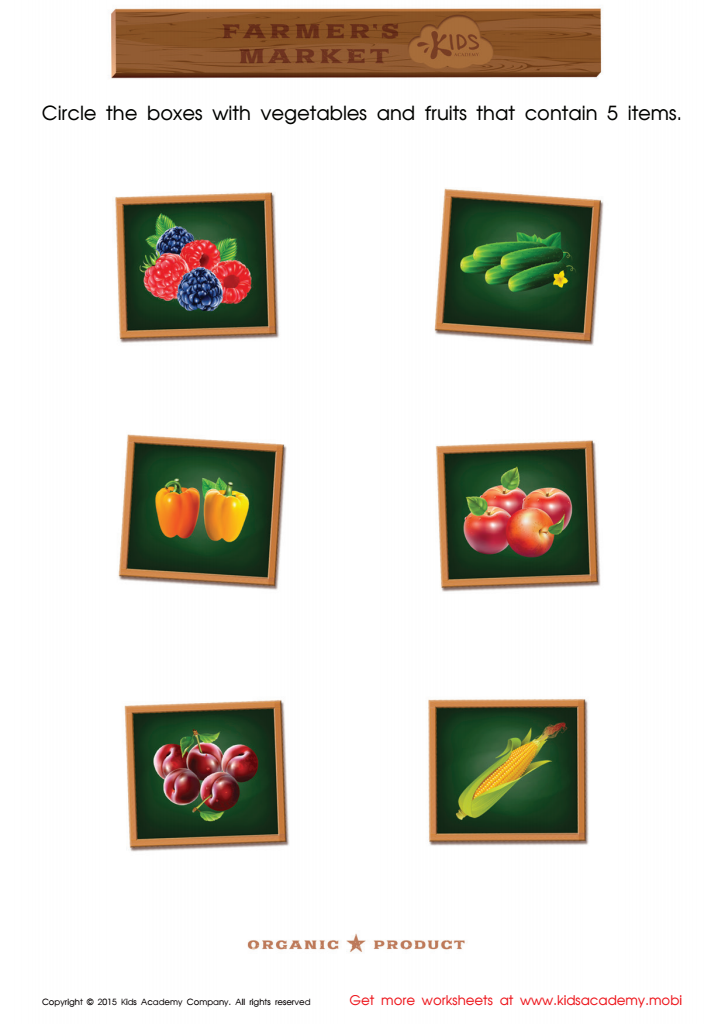
Count and Match Vegetables 1 – 7 Math Worksheet
Print this bright math worksheet from Kids Academy and give your child a fun way to enhance their counting skills. Based on Singapore Math, the colourful pictures make it easy for children to comprehend math. Get additional free worksheets here!
Count and Match Vegetables 1 – 7 Math Worksheet
Worksheet
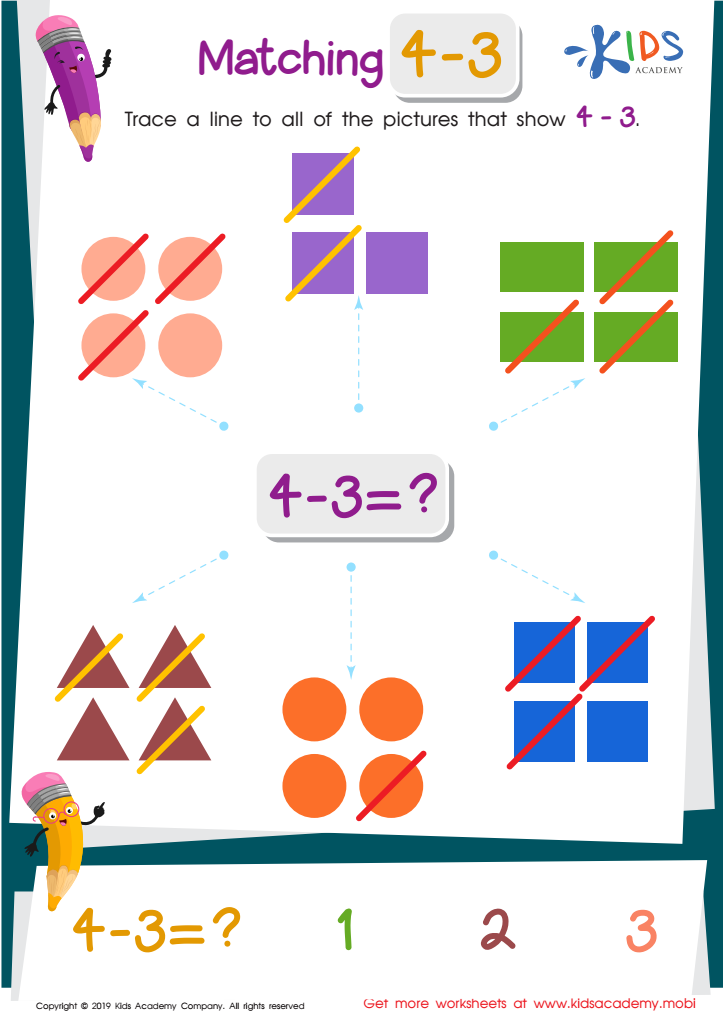
Matching 4 – 3 Worksheet
Help your kids master basic math concepts like addition and subtraction with fun exercises. Test their understanding with simple problems. For example, in this worksheet, ask them to count the objects in each picture and draw a line to the pictures that show 4 - 3 = 1. This will help them get better at solving equations.
Matching 4 – 3 Worksheet
Worksheet
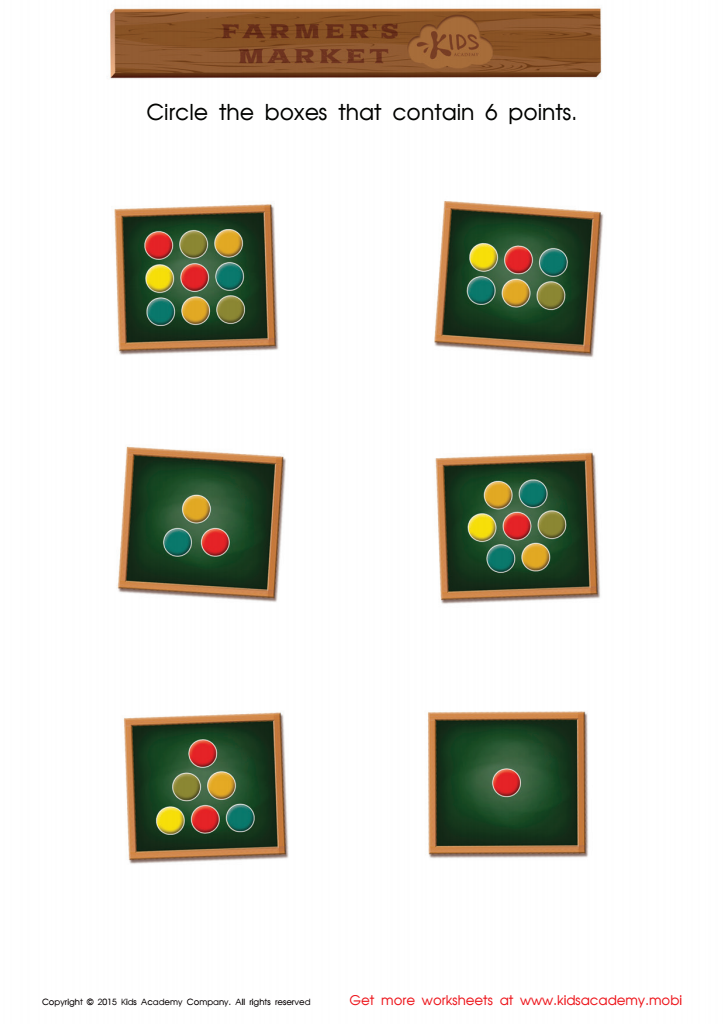
Count and Match Points 6 Math Worksheet
Help your child with mathematics by guiding them with this fun printable worksheet. They will practice counting numbers by looking at all the boxes and circling the ones containing 6 dots. Together you will gain a better understanding of mathematics.
Count and Match Points 6 Math Worksheet
Worksheet
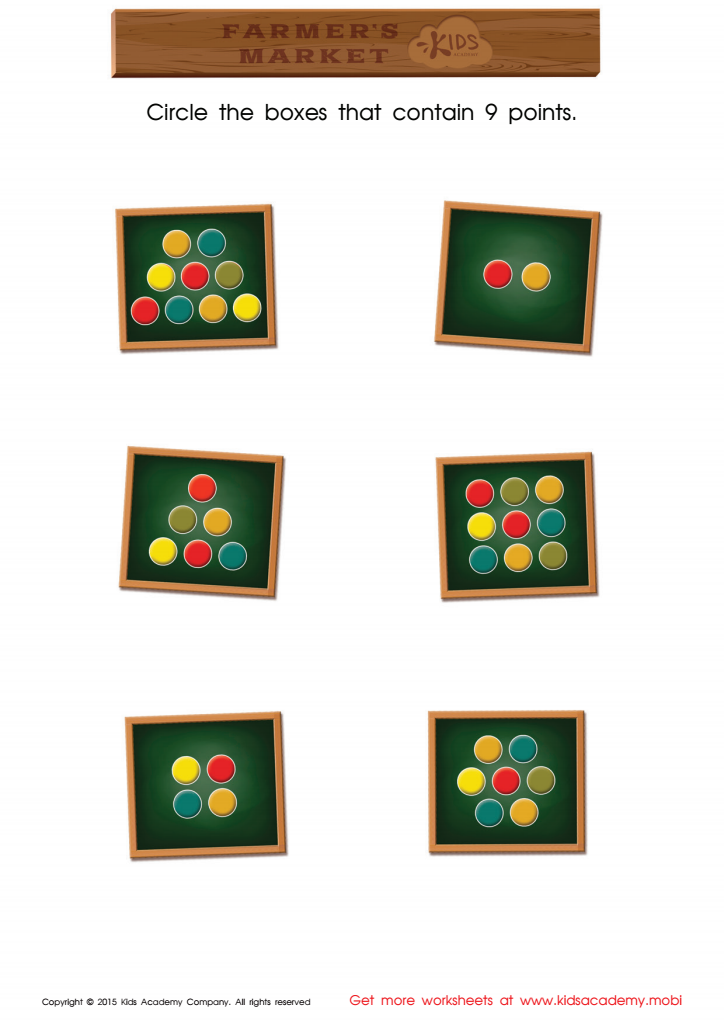
Count and Match Points 9 Math Worksheet
Circle the boxes with 9 points. Examine and count the colorful points in each of the 6 boxes. It's not easy as points are not arranged similarly, so have your child think hard and count carefully.
Count and Match Points 9 Math Worksheet
Worksheet
Join Kids Academy for Free
Who is primarily going to use this learning content?








Parents and teachers should care about the Matching Numbers Extra Challenge Math for Ages 5-9 because it serves as an engaging tool to bolster foundational math skills in young learners. In this age group, fostering a strong numerical understanding is crucial, as it lays the groundwork for more complex mathematical concepts encountered in later years.
Participating in matching numbers activities promotes critical thinking, problem-solving, and enhances cognitive development. These activities encourage children to recognize patterns, compare values, and connect numerical concepts with real-world applications. This interactive approach makes learning enjoyable and memorable, which is vital for maintaining children’s interest in math.
Additionally, interaction in math games cultivates social skills and cooperation as children learn to collaborate with peers, share strategies, and celebrate successes together. From a developmental perspective, this aligns with age-appropriate learning standards that focus on active participation.
Moreover, as parents and teachers use these challenges, they can assess each child’s unique learning style and progress, allowing for tailored support. Ultimately, emphasizing math skills through fun and interactive methods at an early age contributes to building confident, competent learners who are well-prepared for future academic challenges.