Money counting skills Extra Challenge Math Worksheets for Ages 5-9
3 filtered results
-
From - To
Elevate your child's math abilities with our "Extra Challenge Money Counting Skills Worksheets" designed for ages 5-9. These engaging and educational printable worksheets from Kids Academy help young learners boost their understanding of money handling, addition, and subtraction through fun, creative exercises. Perfect for extra practice or advanced challenges, our worksheets cover various coin combinations and real-life scenarios to enhance counting skills and financial literacy. They are aligned with early grade math curriculums and provide a stimulating way for kids to build confidence and master foundational math concepts while effectively learning the value of different denominations.
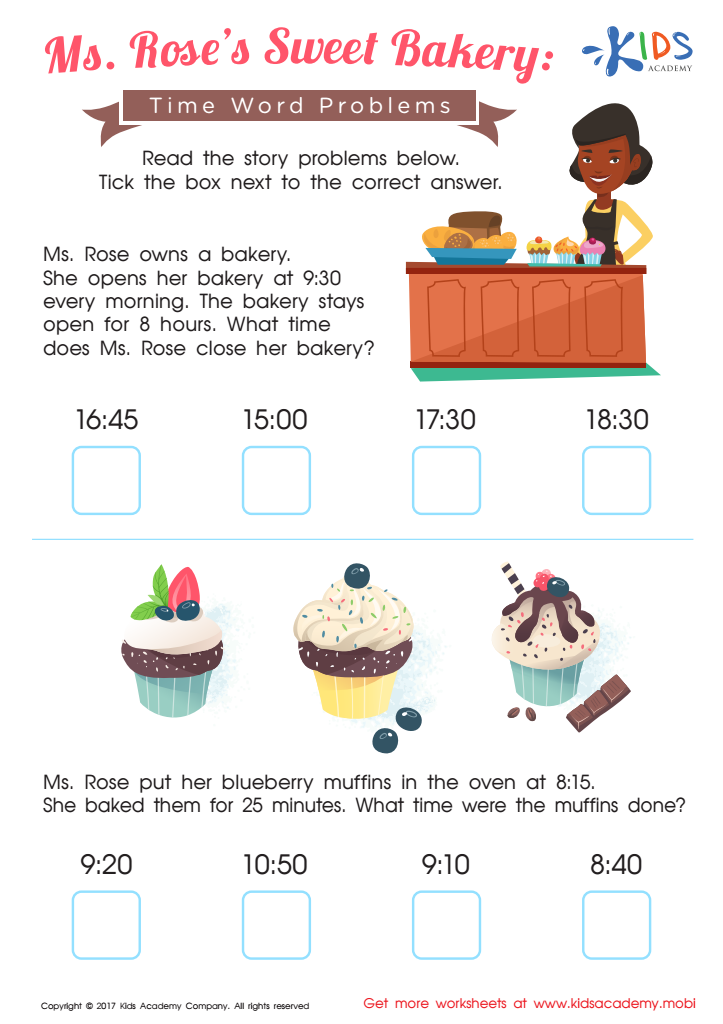
Ms. Roseв's Sweet Bakery Time Worksheet
 Assign to My Students
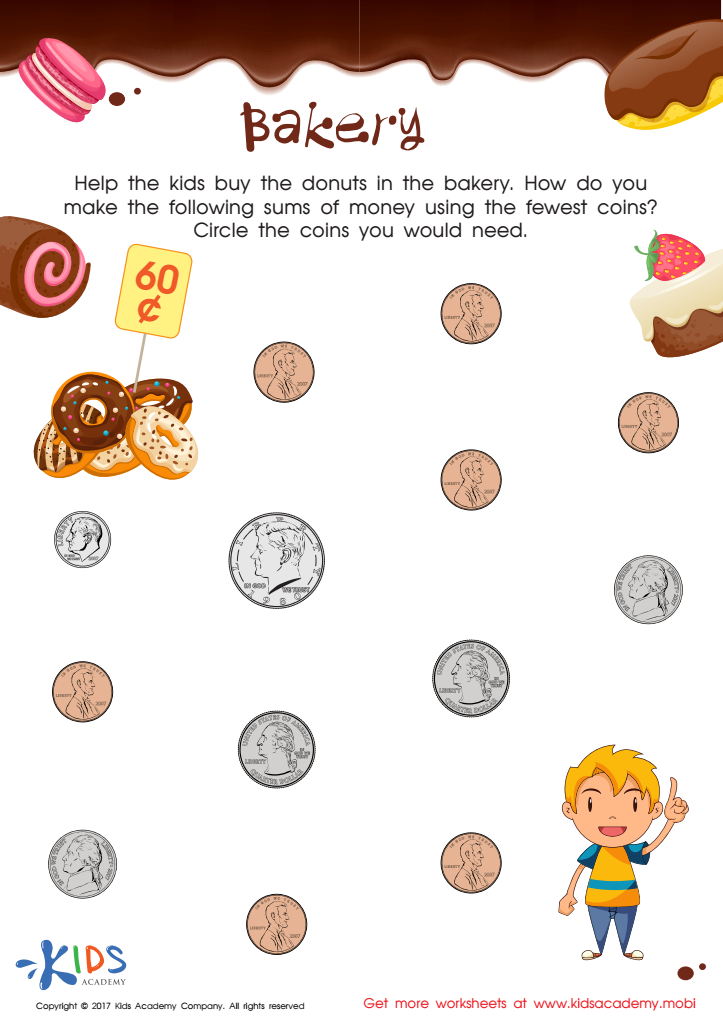
Counting Coins Worksheet
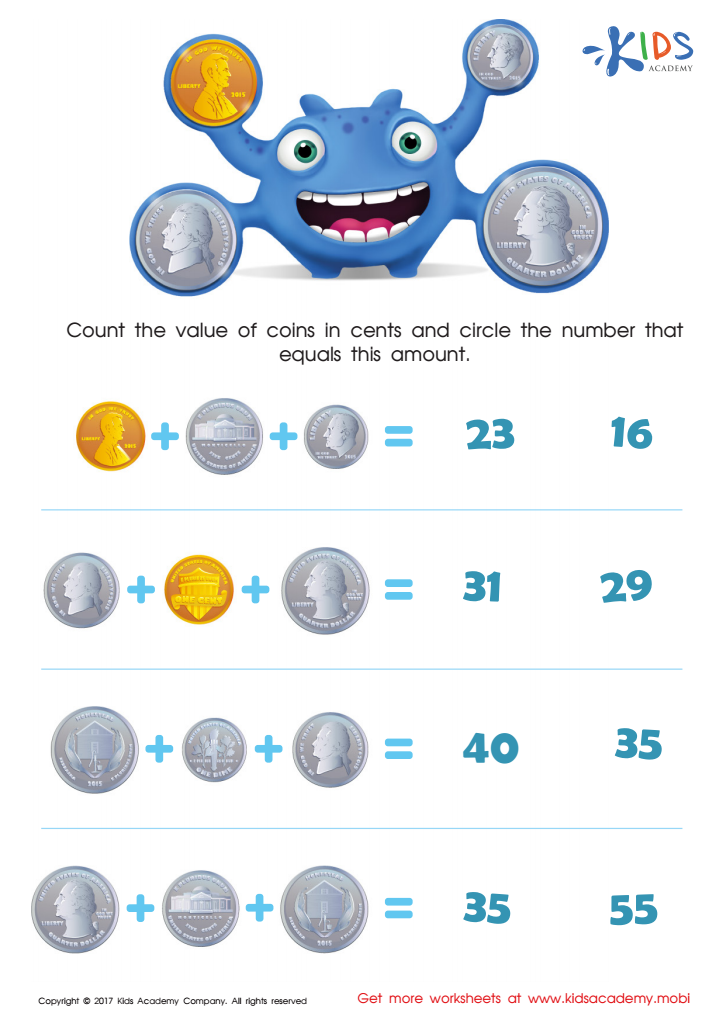
Counting the Coins Money Worksheet








Parents and teachers should prioritize cultivating money-counting skills in children aged 5-9 because mastering these skills fosters both practical and cognitive development. Firstly, early exposure to counting money offers real-world relevance; children learn to recognize different coins and bills, performing simple transactions, which are vital life skills for their future independence. Secondly, money counting inherently involves arithmetic operations like addition and subtraction, which serve to strengthen foundational math skills. When children engage in tasks like combining sums or making change, they build mental math abilities that lay the groundwork for more complex mathematical concepts.
Moreover, handling money can nurture critical thinking and problem-solving skills. Decoding which denominations to use and ensuring the right amount involves strategic decision-making. It’s not just about processing numbers; it’s about understanding value and applying it contextually.
Additionally, teaching money management at an early age instills financial literacy. Children who understand basic economic principles are better prepared to make informed financial decisions as adults. This knowledge can contribute to a mindset of value appreciation and delayed gratification, fundamental traits for fiscal responsibility. Therefore, integrating money-counting exercises in early education benefits children's academic growth and equips them with essential life skills for a secure and capable future.