Understanding bar graphs Extra Challenge Math Worksheets for Ages 5-9
4 filtered results
-
From - To
Explore our "Understanding Bar Graphs Extra Challenge Math Worksheets" designed for children ages 5 to 9. These engaging and educational worksheets provide a fun way for young learners to deepen their understanding of bar graphs. Each worksheet encourages critical thinking as students interpret data, analyze graphical information, and answer questions related to various topics. Perfect for reinforcing math concepts and enhancing analytical skills, these extra challenge activities promote independent learning while making math enjoyable. Help your child build a foundation in data interpretation and visualization with our thoughtfully crafted worksheets that cater to diverse learning styles. Dive into math and bar graphs today!
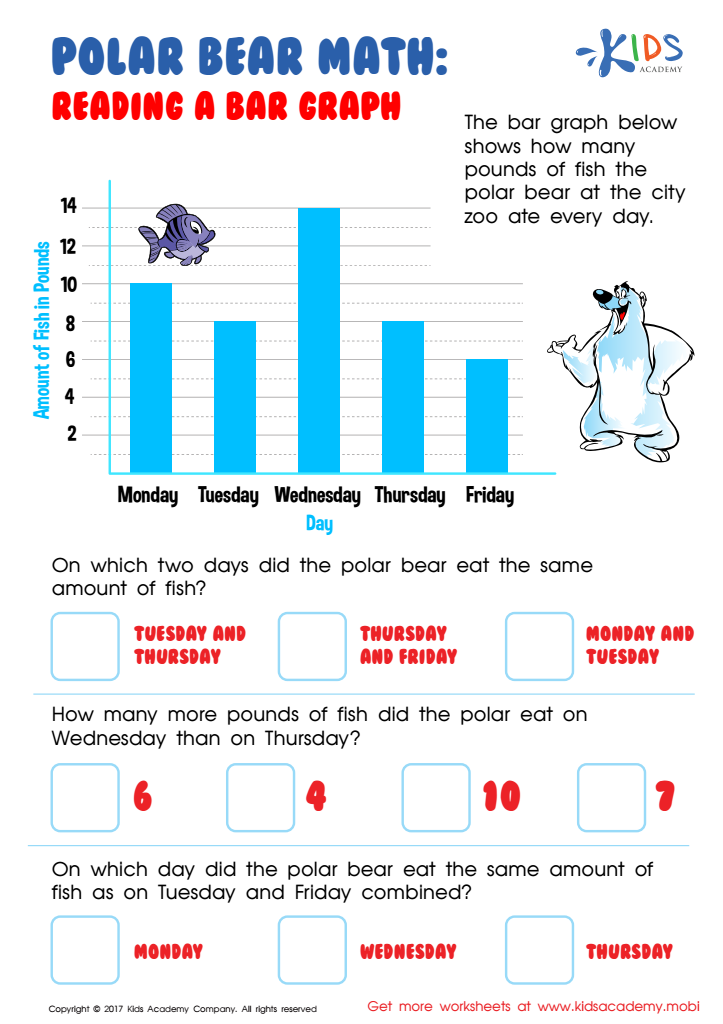
Reading Bar Graph Worksheet
 Assign to My Students
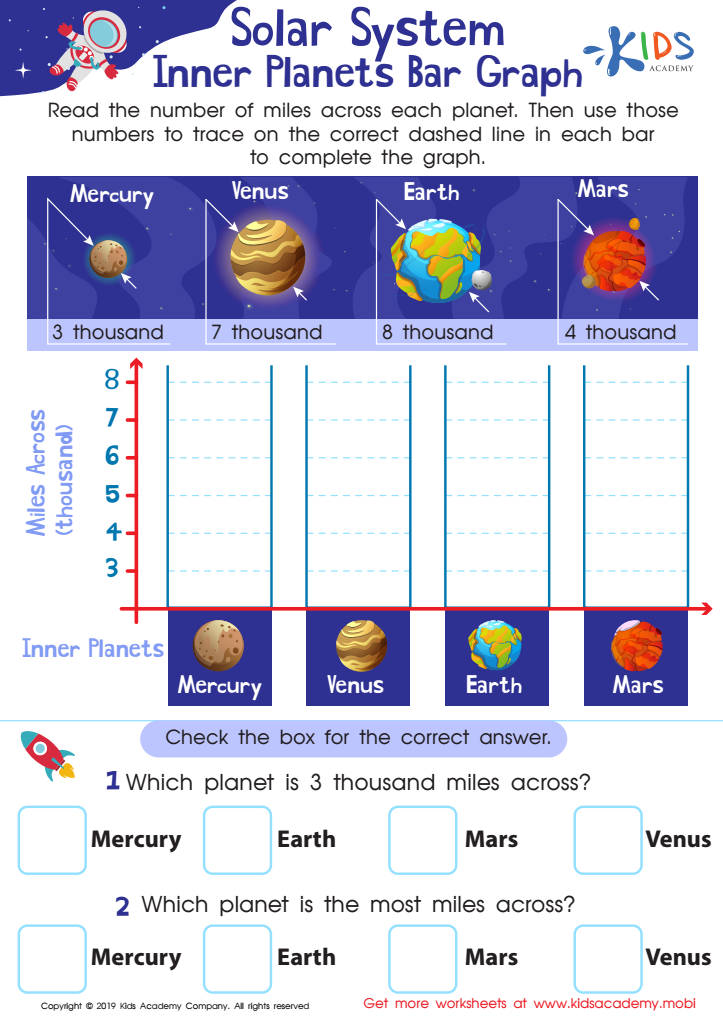
Planets Bar Graph Worksheet
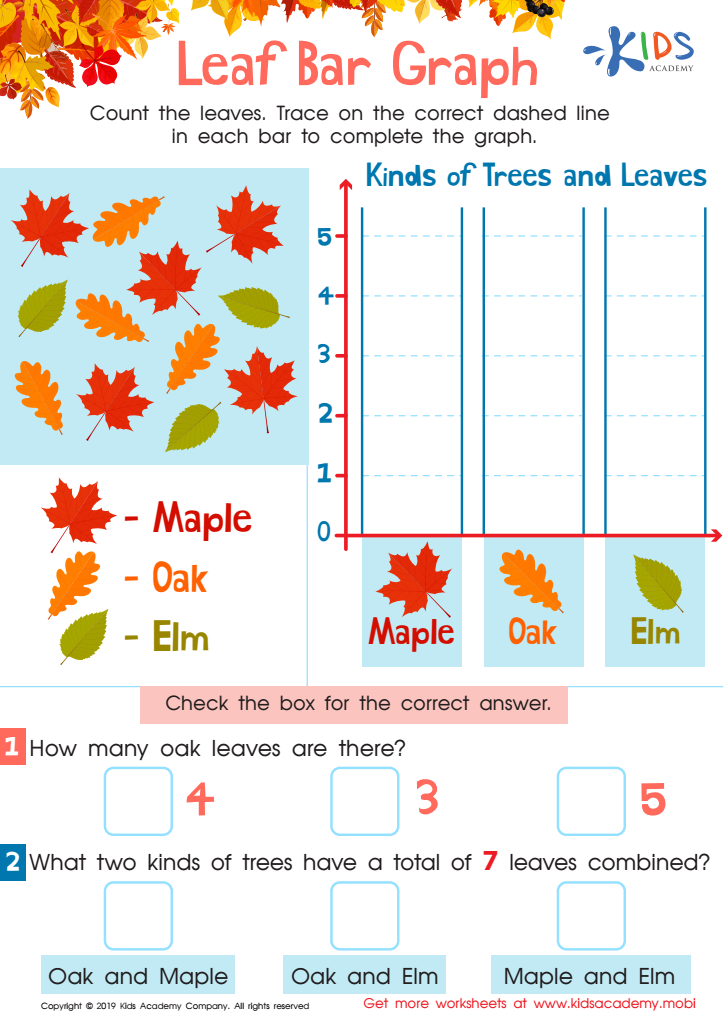
Leaf Bar Graph Worksheet
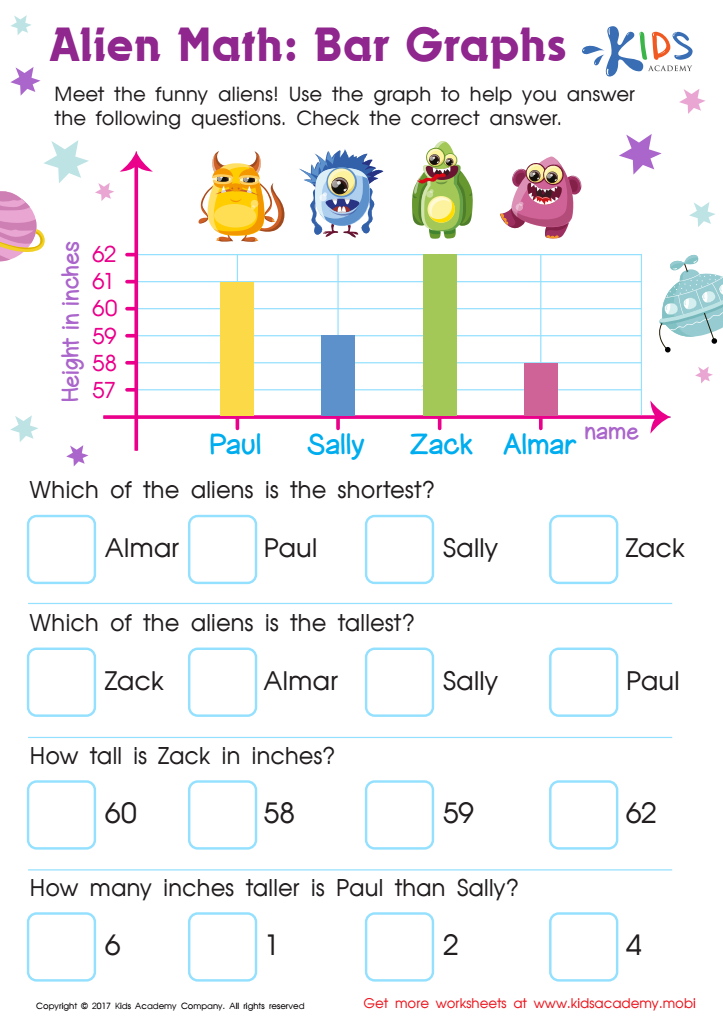
Bar Graphs Worksheet








Parents and teachers should prioritize teaching children about bar graphs, particularly through tools like "Understanding Bar Graphs Extra Challenge Math" for the ages of 5-9, for several reasons. First, bar graphs are essential in helping young learners understand data representation. They promote critical thinking as children interpret the information displayed visually. By engaging with bar graphs, children develop essential numeracy skills, learning to organize, compare, and analyze data effectively.
Second, mastering bar graphs encourages problem-solving and analytical abilities. These foundational skills are pivotal in later math education and can facilitate better comprehension in subjects that rely on data, such as science and social studies.
Moreover, familiarization with concepts of quantity and measurement through bar graphs reinforces lessons in addition and subtraction, making math more relatable and engaging. As children age, these skills extend to real-world applications, such as graphs we encounter in news articles, budgeting, or even sports statistics.
Lastly, understanding data representation fosters informed decision-making. When children learn to read and analyze bar graphs early, they empower themselves to become informed individuals capable of discerning information and making sense of the world around them. This early competency lays the groundwork for lifelong skills in critical thinking and data literacy.








