Extra Challenge Science Worksheets for Ages 5-9 - Page 2
25 filtered results
-
From - To
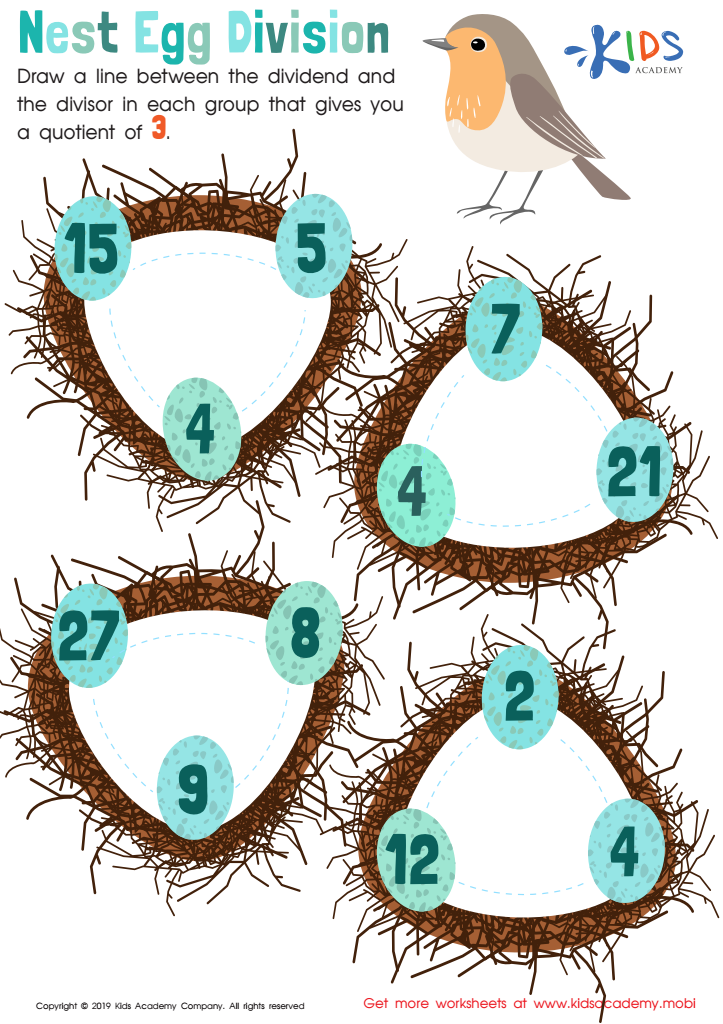
Nest Egg Division Worksheet
 Assign to My Students






Parents and teachers should care about Extra Challenge Science for ages 5-9 because it fosters critical thinking, curiosity, and a strong foundational understanding of scientific concepts. At this early age, children are naturally inquisitive, and engaging them in science empowers them to explore the world around them. Extra Challenge Science provides hands-on activities and experiments that not only enhance traditional learning but encourage children to ask questions, hypothesize, and find solutions. This nurtures a love of learning that can lead to academic success in the future.
Moreover, the program supports the development of essential skills such as problem-solving, teamwork, and communication. These competencies are vital in today's rapidly evolving world. By introducing challenges that stimulate young minds, children learn to approach problems creatively and develop resilience.
Additionally, early exposure to science promotes awareness of important topics like environmental stewardship and health, setting the stage for responsible citizenship. Ultimately, Extra Challenge Science isn't just about learning facts; it cultivates a generation of thinkers who will tackle real-world issues. For parents and teachers, supporting such programs means investing in the comprehensive development of children, ensuring they are well-equipped to navigate the complexities of the modern world.