Problem-Solving Skills Extra Challenge History Worksheets for Ages 5-9
4 filtered results
Difficulty Level
Grade
Age
-
From - To
Subject
Activity
Standards
Enhance your child's problem-solving abilities with our engaging "Problem-Solving Skills Extra Challenge History Worksheets" designed for ages 5-9. These worksheets combine history lessons with fun, interactive challenges that encourage critical thinking and creativity. Each activity is crafted to help young learners explore historical events and figures while developing essential problem-solving skills through puzzles, scenarios, and brain teasers. Perfect for homeschooling or classroom use, these worksheets provide an exciting way to make history come alive. Equip your child with the tools to think independently and tackle challenges with confidence. Start nurturing their problem-solving prowess today!
Favorites
With answer key
Interactive
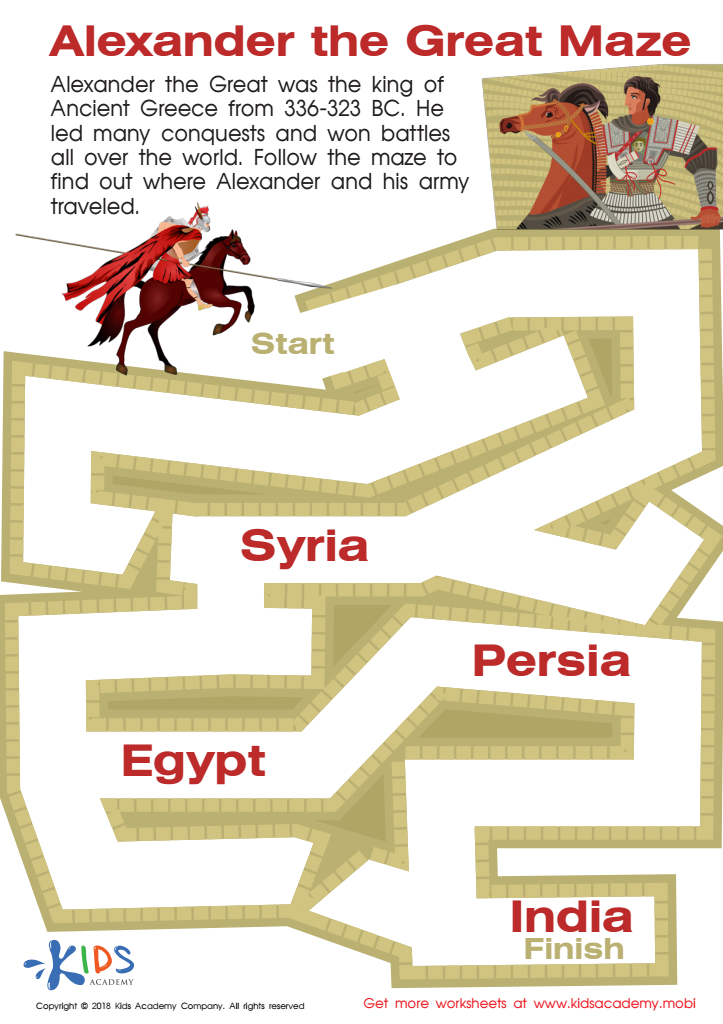
Alexander the Great Maze Worksheet
Kids Academy invites young historians to explore the legendary journey of Alexander the Great! Read the explanation and trace a path through the maze to find out where he and his army went: India! Along the way, they will learn about his amazing conquests, which made him one of the most famous figures in history.
 Assign to My Students
Alexander the Great Maze Worksheet
Worksheet
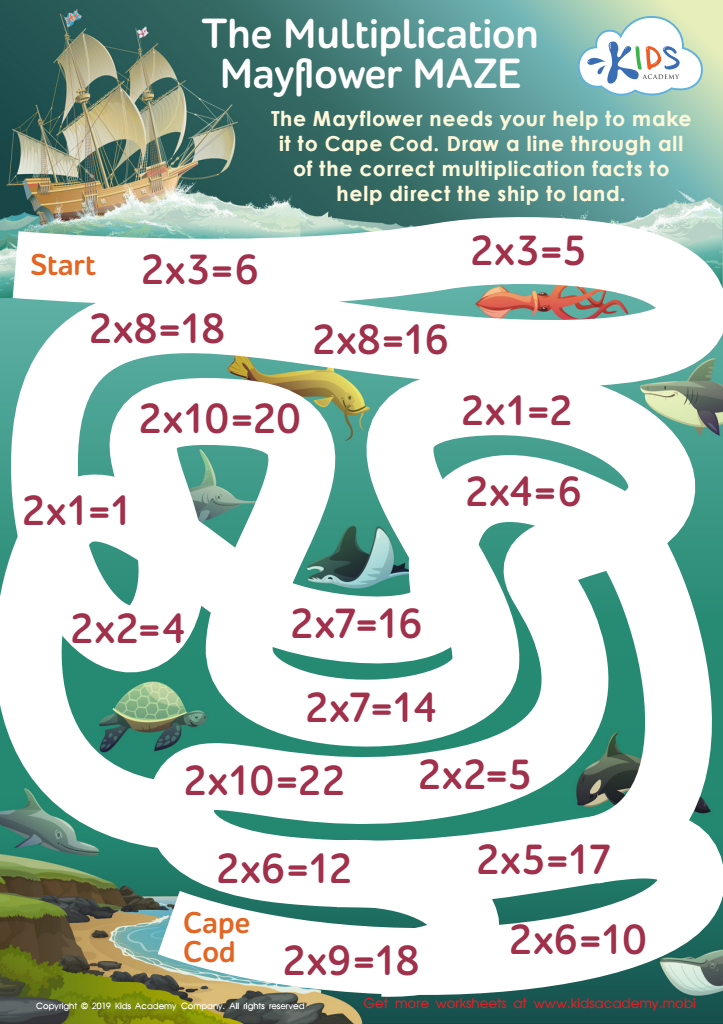
The Multiplication Mayflower Maze Worksheet
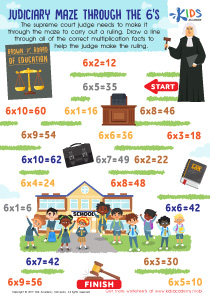
Math may not be a favorite subject but it must be tackled. To get minds engaged, use colorful, fun worksheets like this one. Ask students to draw a line connecting all the correct multiplication facts to help the Mayflower get to Cape Cod.
The Multiplication Mayflower Maze Worksheet
Worksheet
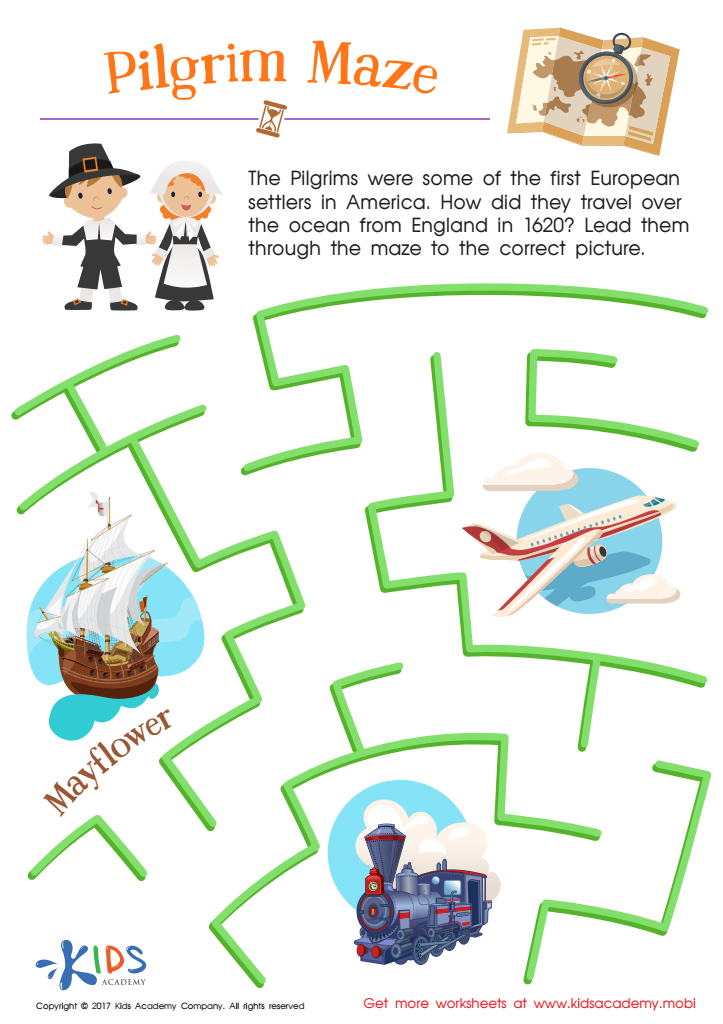
Pilgrim Maze Worksheet
This worksheet is perfect for teaching kids about an important moment in American History! Your child will have a blast solving the maze to recall that the Mayflower brought the pilgrims to the New World in 1620. It reinforces American history facts and develops visual motor and problem solving skills. It also uses modern pictures to make kids think about the right answer. Get this challenging pilgrim printable maze or a full collection of history worksheets for your little learner!
Pilgrim Maze Worksheet
Worksheet
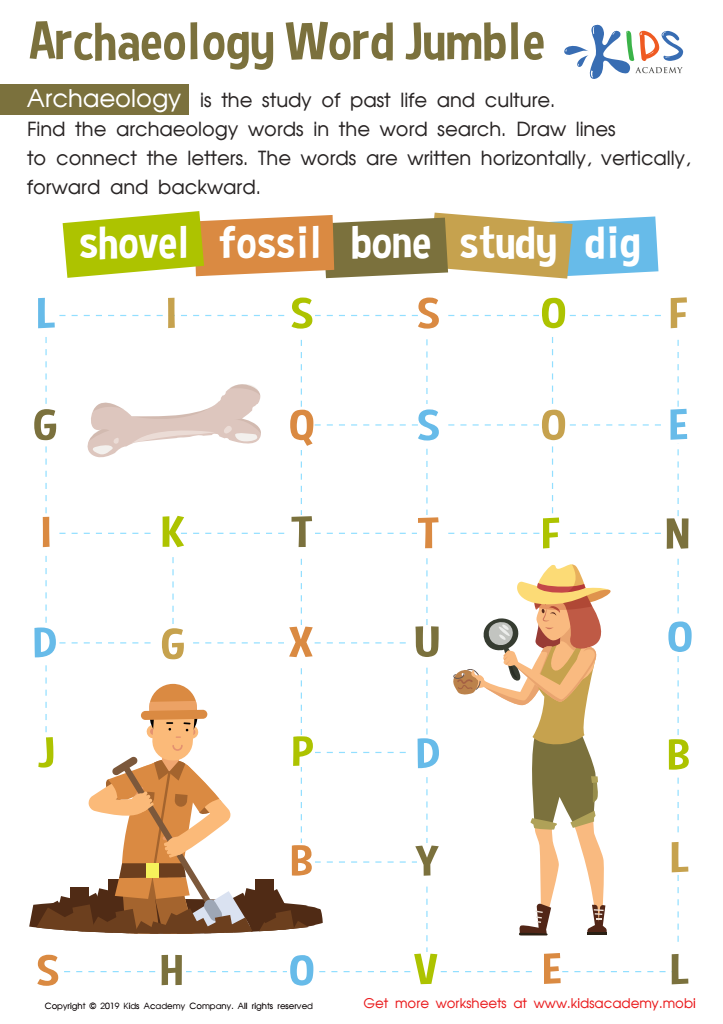
Archaeology Word Jumble Worksheet
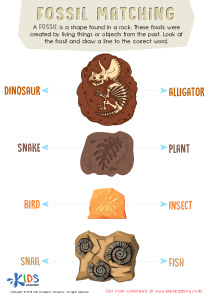
Kids will love this fun, colorful word search about archeology! Tracing the lines, they'll uncover terms related to the study of past life and cultures. As they explore, they'll learn about fossils and bones and discover new archeology words.
Archaeology Word Jumble Worksheet
Worksheet
Join Kids Academy for Free
Who is primarily going to use this learning content?








Parents and teachers should care about enhancing problem-solving skills through extra challenge history for children ages 5-9 for several compelling reasons. Firstly, early childhood is a critical period for cognitive development, and engaging in problem-solving activities fosters essential critical thinking skills. These skills enable children to analyze situations, think creatively, and develop logical reasoning abilities.
Moreover, incorporating history into problem-solving challenges helps children connect past events to present situations, fostering a sense of context and relevance. This approach not only engages their curiosity about the world but also cultivates empathy by encouraging them to understand diverse perspectives.
Additionally, problem-solving activities promote resilience. As children tackle challenges, they learn the value of persistence and adaptability when faced with difficulties—important life skills that benefit them both academically and socially.
Overall, nurturing problem-solving skills through historical challenges prepares children for future academic endeavors, enhances their emotional and social competencies, and lays the groundwork for lifelong learning. By supporting this development, parents and teachers are investing in their children’s overall growth, helping them become well-rounded, thoughtful individuals equipped to navigate the complexities of life.