Logical thinking Extra Challenge Writing Worksheets for Ages 5-9
3 filtered results
Difficulty Level
Grade
Age
-
From - To
Subject
Activity
Standards
Empower young minds with our "Logical Thinking Extra Challenge Writing Worksheets for Ages 5-9". Specifically designed to enhance critical thinking and problem-solving skills, these engaging activities blend fun with education. Perfect for sharpening logic, students explore puzzles, riddles, and brain-teasing scenarios to improve their writing and cognitive abilities. Ideal for home or classroom use, each worksheet encourages children's curiosity and strengthens their understanding through practical application. Watch as they unlock new levels of learning, all while enjoying themselves. Develop a child's logical thinking, enhancing their foundation for future academic success. Great for educators and parents alike!
Favorites
With answer key
Interactive
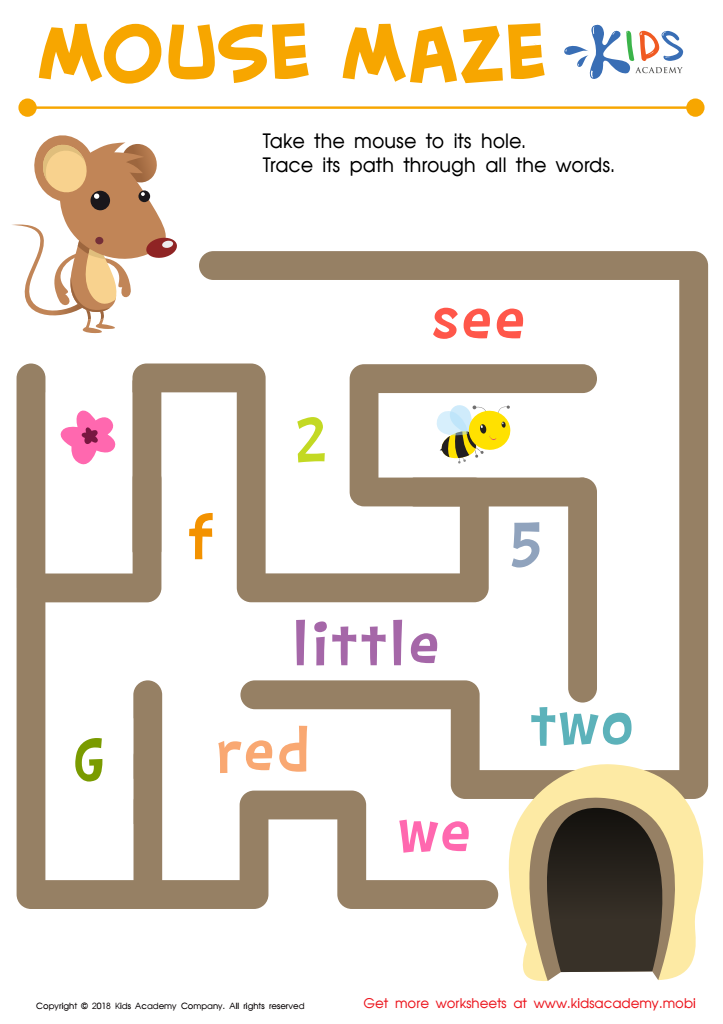
Find Words Mouse Maze Worksheet
Help your child identify words and guide the mouse home! Ask them to point out the colorful animal on the worksheet, then take their hand and show them how to trace the path, going through all the words in the maze to get the mouse back to its hole.
 Assign to My Students
Find Words Mouse Maze Worksheet
Worksheet
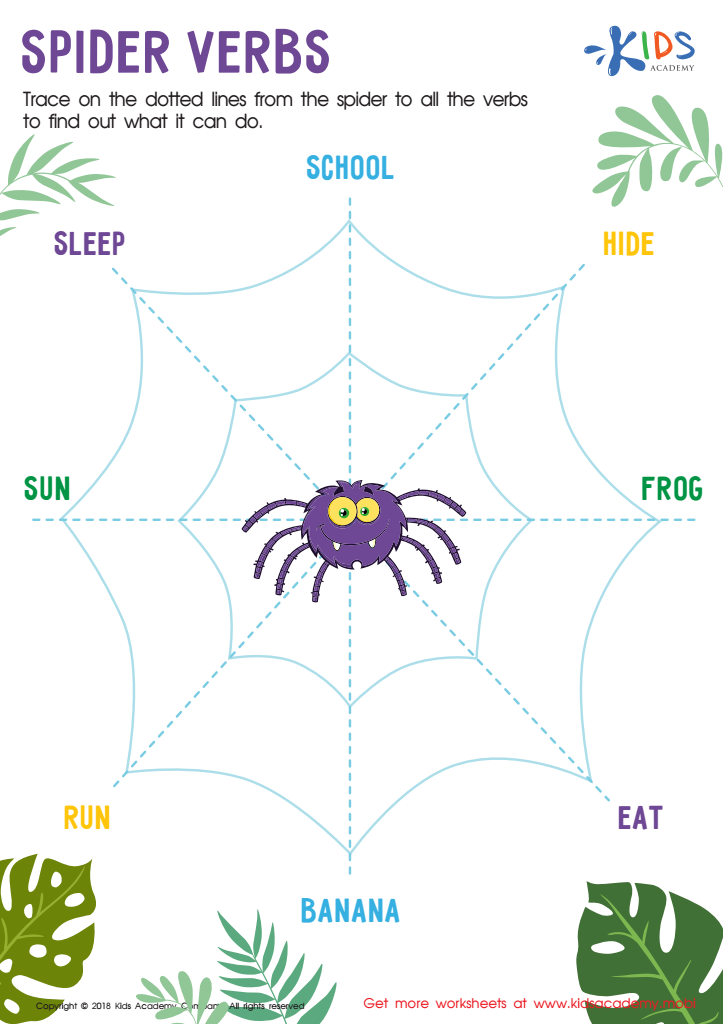
Spider Verbs Worksheet
Verbs are action words. Examples: run, play, talk. Show your child this tracing sheet for them to learn about verbs. Ask them to trace the dotted lines from the spider to the words that are verbs. These words are what the spider can do.
Spider Verbs Worksheet
Worksheet
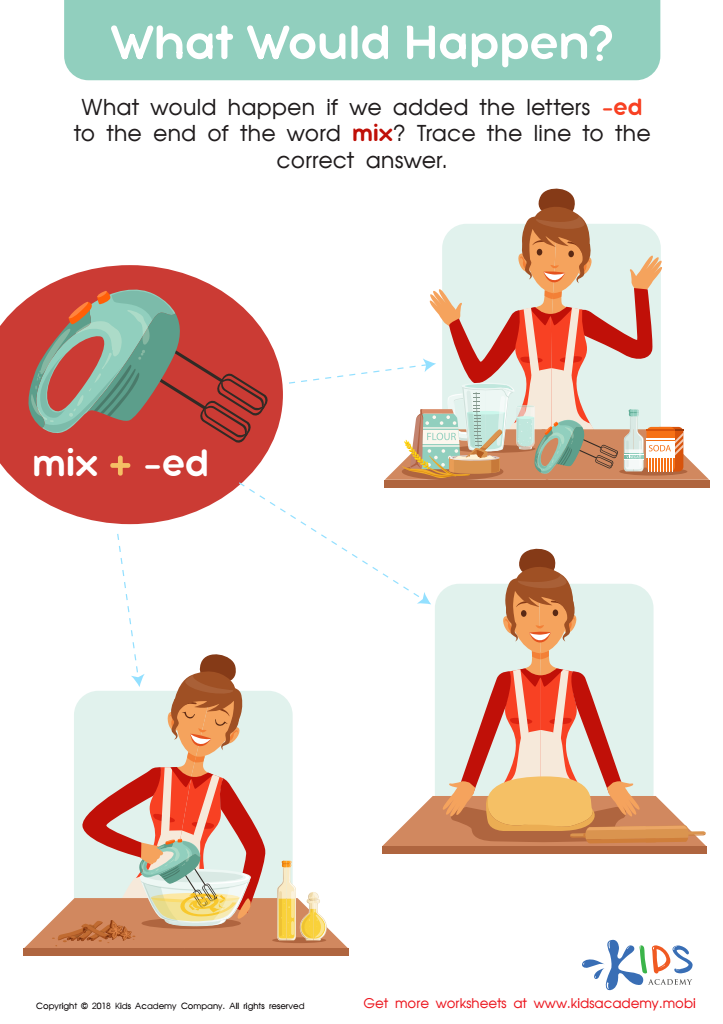
What Would Happen? Worksheet
Are your kids struggling with tenses? Use this worksheet to help them. See what they know by asking them to add '-ed' to the end of 'mix'. Guide them through the tracing sheet as they look for the correct answer.
What Would Happen? Worksheet
Worksheet
Join Kids Academy for Free
Who is primarily going to use this learning content?






Logical thinking is a fundamental skill that lays the groundwork for problem-solving, critical reasoning, and effective decision-making. Incorporating logical thinking Extra Challenge Writing for children aged 5-9 is vital for several reasons.
Firstly, at this developmental stage, children's brains are highly adaptable and capable of learning new patterns of thought. By engaging in logical thinking tasks, they enhance their cognitive abilities, becoming more adept at processing information, identifying patterns, and making connections.
Secondly, writing exercises that incorporate logic can improve a child's language and communication skills. When children are encouraged to articulate their thought processes clearly and coherently, they not only deepen their understanding of logical concepts but also become better at expressing their ideas in a structured manner. These skills are crucial not only in academics but also in everyday interactions.
Moreover, fostering logical thinking helps build a child's confidence and independence. As they solve problems and complete challenging tasks, they develop a sense of achievement and a positive mindset towards tackling new challenges. This sets a foundation for lifelong learning and adaptation in an ever-evolving world.
In summary, investing in logical thinking exercises intertwines cognitive development, language skills, and personal growth, forming a holistic approach to nurturing well-rounded, capable, and confident young minds.