
Letter recognition Extra Challenge ABC Order Worksheets for 5-Year-Olds
7 filtered results
Difficulty Level
Grade
Age
-
From - To
Subject
Activity
Standards
Enhance your 5-year-old's letter recognition skills with our engaging Extra Challenge ABC Order Worksheets! Tailored for young learners, these worksheets offer a fun and interactive way to master the alphabet in sequence. Kids will practice identifying, organizing, and writing letters while developing crucial early literacy skills. Each worksheet features colorful designs that make learning enjoyable. Perfect for home or classroom use, these worksheets are designed to keep children motivated and reinforce their understanding of letter order. Give your child the tools they need to succeed in foundational reading skills with our Extra Challenge ABC Order Worksheets! Explore today!
Favorites
With answer key
Interactive
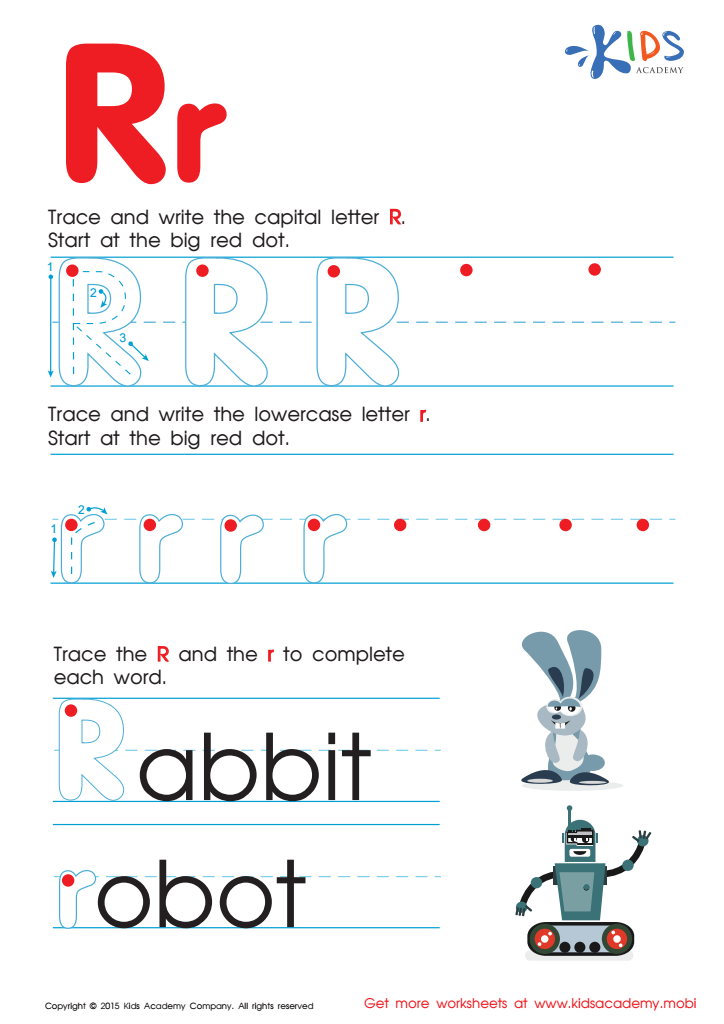
Letter R Tracing Page
Trace and write the letter "R" with this worksheet for kindergarten. Start with the uppercase, then move on to the lowercase. Write the letters several times for practice. Then help complete the words for the rabbit and robot, spelling carefully. More ABC worksheets can be found at Kids Academy.
 Assign to My Students
Letter R Tracing Page
Worksheet


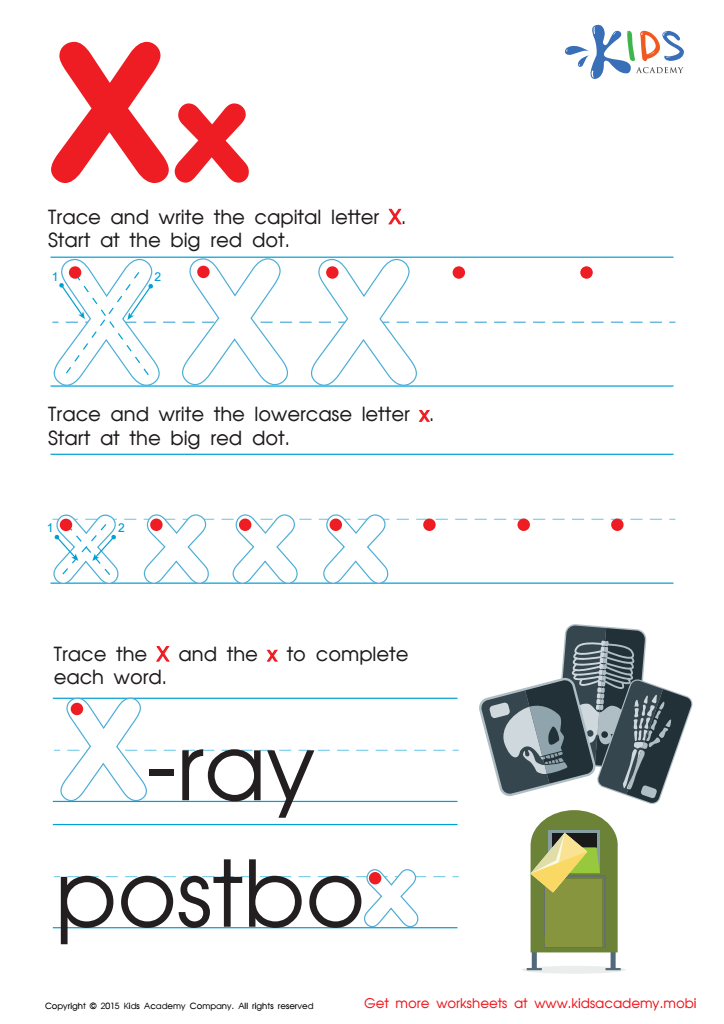
Letter X Tracing Page
Trace the uppercase letter "X" to learn, then write it yourself and practice. Then do the same with the lowercase "x" before completing the words "X-ray" and "postbox". Enjoy our alphabet printables!
Letter X Tracing Page
Worksheet
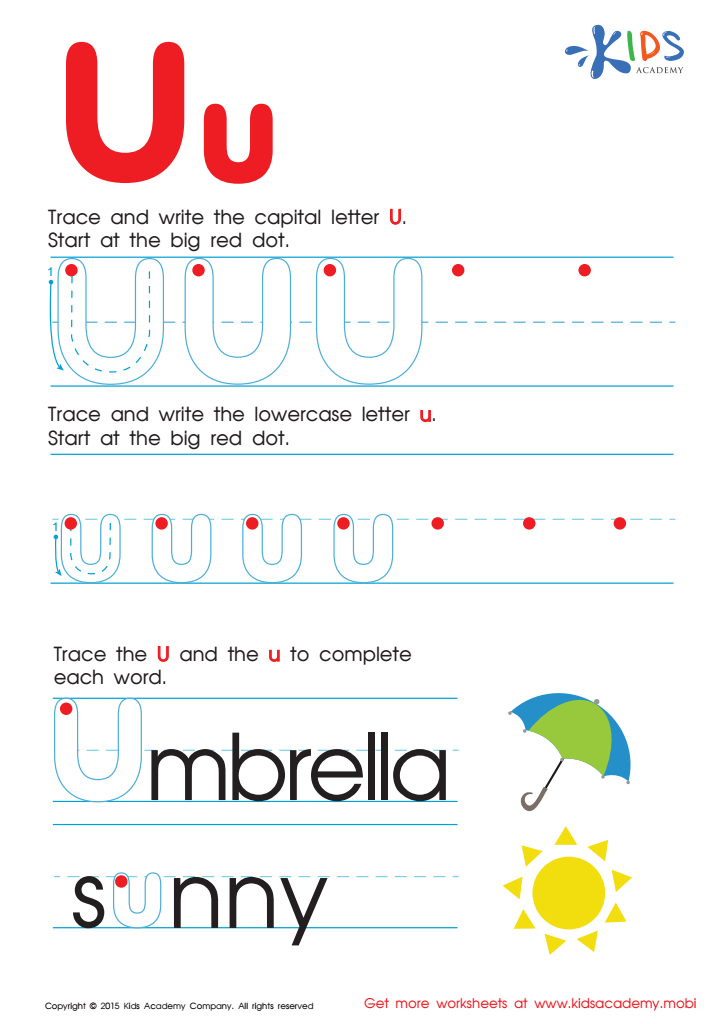
Letter U Tracing Page
Ready to trace and write the letter "U"? Use our worksheet and practice tracing both uppercase and lowercase letters. Complete the words "umbrella" and "sunny" with a capital "U". Check our full collection of alphabet printables for more activities.
Letter U Tracing Page
Worksheet
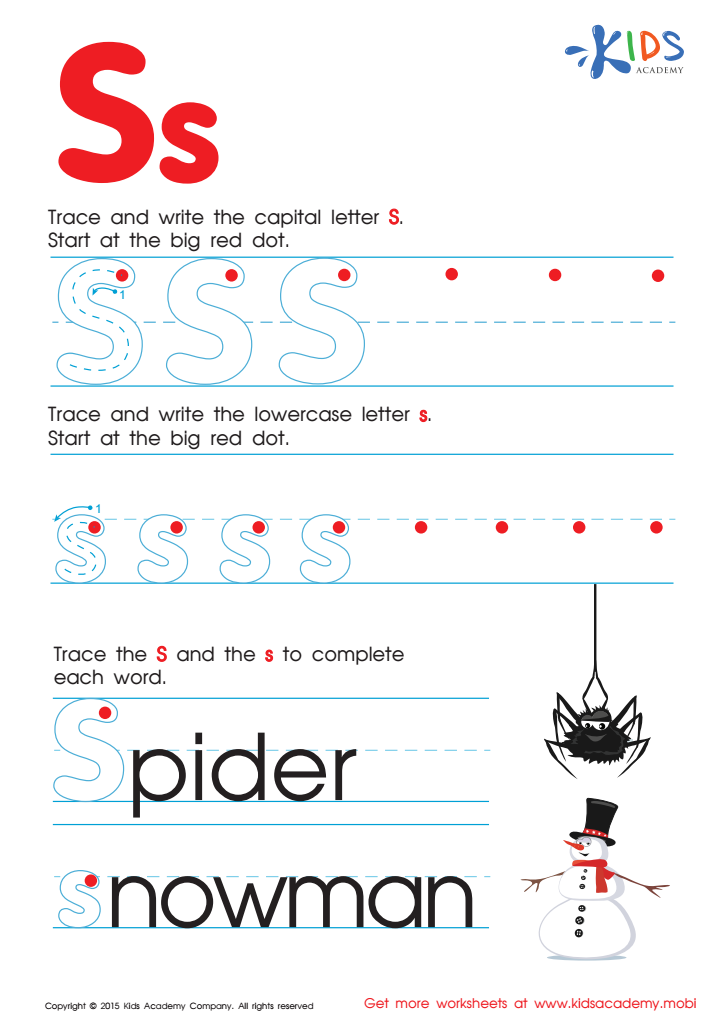
Letter S Tracing Page
Trace and write the capital and lowercase "S" on this ABC worksheet for kindergarten. Start with the big red dot and be careful. When you finish, help the spider and snowman in the pictures restore their words with the capital and lowercase letters. Continue learning the alphabet with Kids Academy.
Letter S Tracing Page
Worksheet
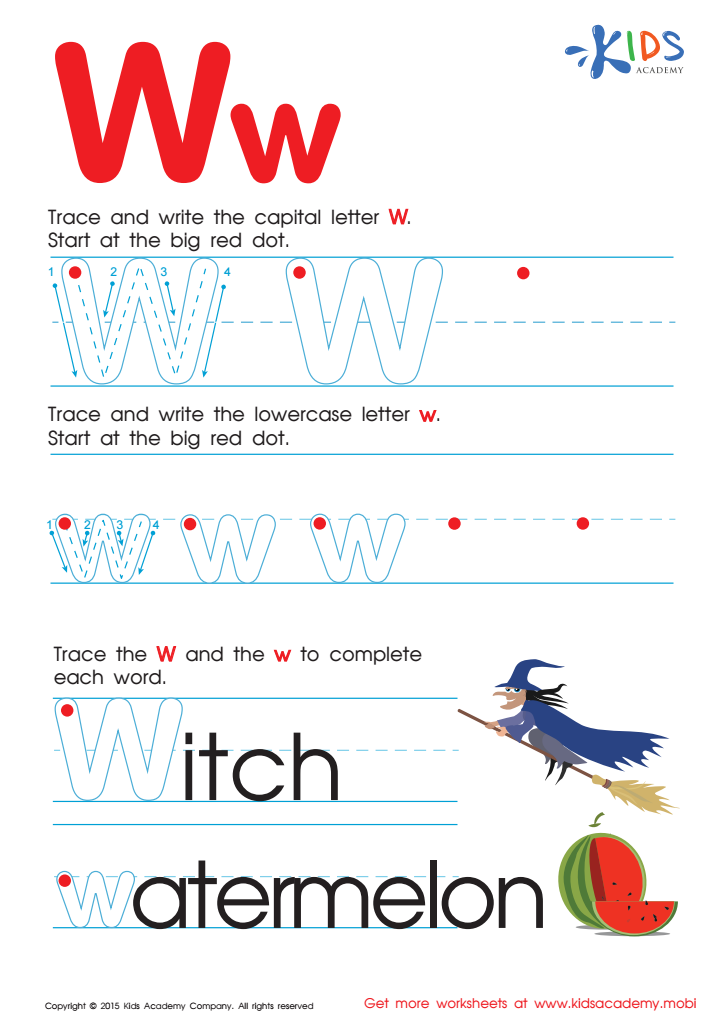
Letter W Tracing Page
Trace and write the capital and lowercase letter W with this free letter tracing worksheet by Kids Academy. Complete the words "Witch" (capital) and "watermelon" (lowercase). Check out our other kindergarten alphabet worksheets!
Letter W Tracing Page
Worksheet
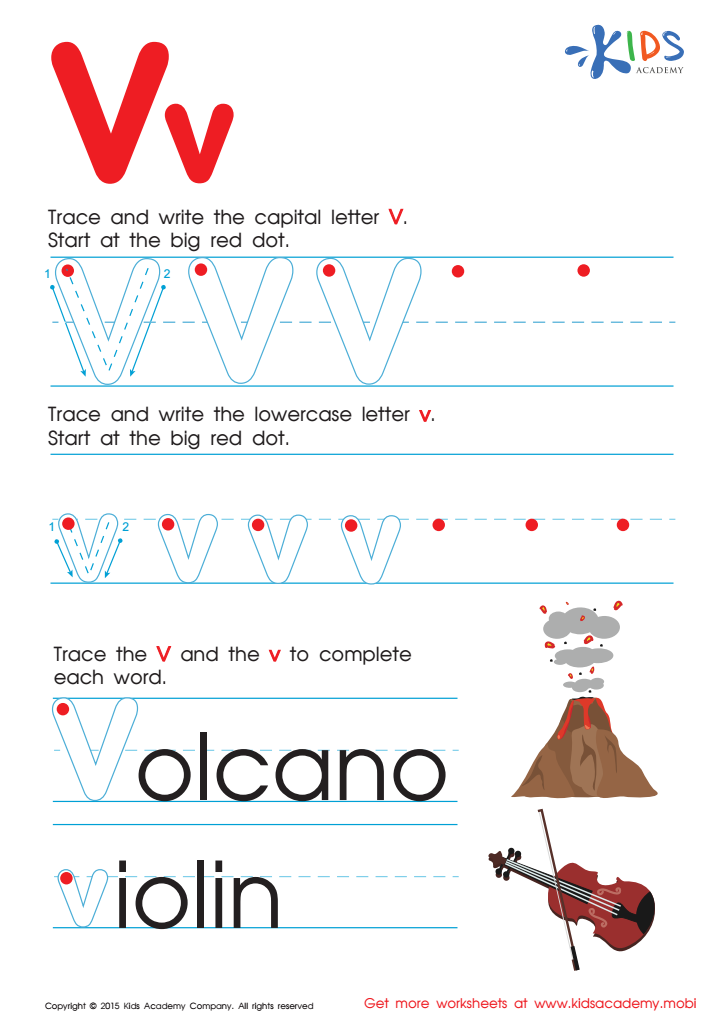
Letter V Tracing Page
Trace the uppercase and lowercase letter "V" with our kindergarten tracing worksheet. Begin at the red dot and follow the lines. Write it several times. Complete the words "Volcano" and "violin". Get more alphabet activities at Kids Academy.
Letter V Tracing Page
Worksheet
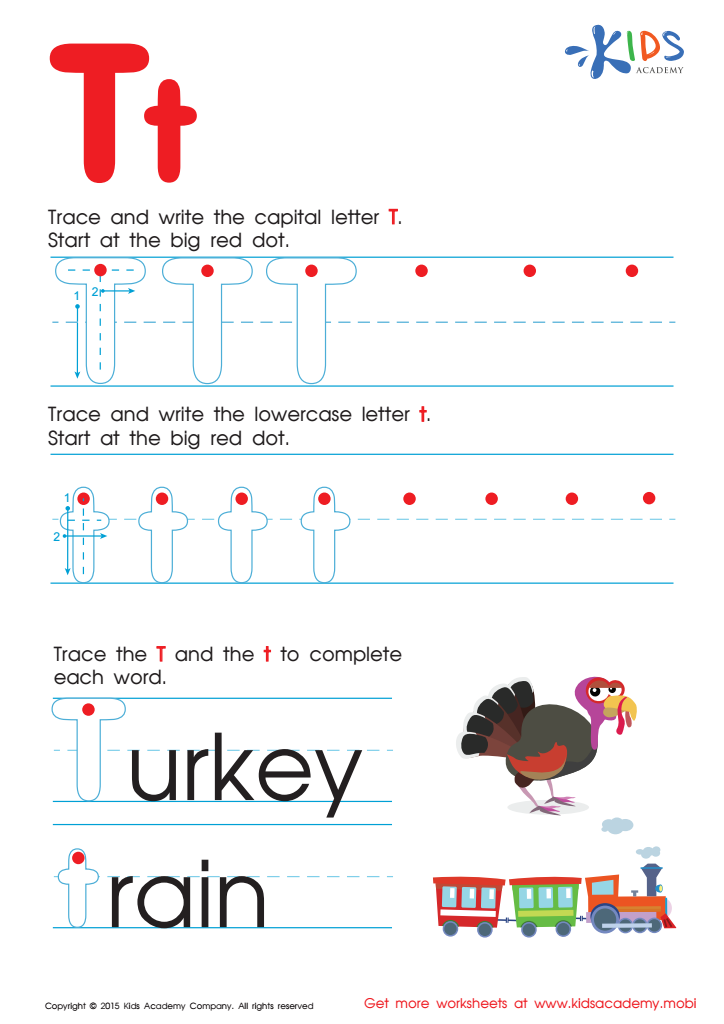
Letter T Tracing Page
Trace letters, complete words, draw pictures and see your kids having fun!
Kids Academy offers alphabet tracing worksheets to learn to write letters. Start with the big red dot, trace the letter, then write it. Practice uppercase and lowercase. Have fun completing words with a Turkey or a rain-train and draw pictures. Get more printable worksheets to make learning enjoyable.
Letter T Tracing Page
Worksheet
Join Kids Academy for Free
Who is primarily going to use this learning content?







Letter recognition and understanding the alphabet’s order are foundational skills essential for literacy development in young children. For 5-year-olds, mastering these concepts lays the groundwork for reading and writing proficiency. When parents or teachers focus on activities like "Letter Recognition Extra Challenge ABC Order," they enhance children's familiarity with letters, helping to distinguish them in both isolated forms and within context.
Engaging children in sorting letters into the correct order promotes cognitive skills, such as memory, recognition, and sequencing, which are critical for academic success. Moreover, these activities often incorporate playful elements, making learning exciting and enjoyable, thus fostering a positive attitude towards education. With increased letter recognition, children gain confidence in their reading abilities, leading to motivation to explore books and written language.
Additionally, promoting these skills early on can identify and support children who may struggle with literacy concepts, providing targeted assistance for those who need it. Overall, a strong foundation in letter recognition and alphabet order not only supports immediate learning but also sets the stage for future educational achievement. Parents and teachers play a vital role in cultivating these skills, ensuring a successful transition into more complex literacy tasks as children grow.








