Handwriting practice Extra Challenge ABC Letters Worksheets for 5-Year-Olds
5 filtered results
-
From - To
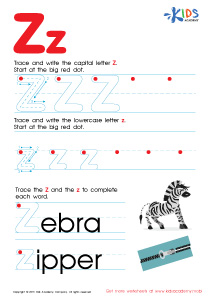
Introducing our "Handwriting Practice Extra Challenge ABC Letters Worksheets", specifically designed for 5-year-olds eager to enhance their writing skills! These engaging worksheets offer an exciting way for young learners to practice uppercase and lowercase letters through various fun activities. Each worksheet promotes fine motor skills, letter recognition, and cognitive development, ensuring children master their handwriting with confidence. From tracing and filling in letters to creative drawing prompts, our extra challenge options keep learning interesting and effective. Perfect for parents and teachers alike, these printables will help kids enjoy the writing process while preparing them for future academic success! Grab yours today!
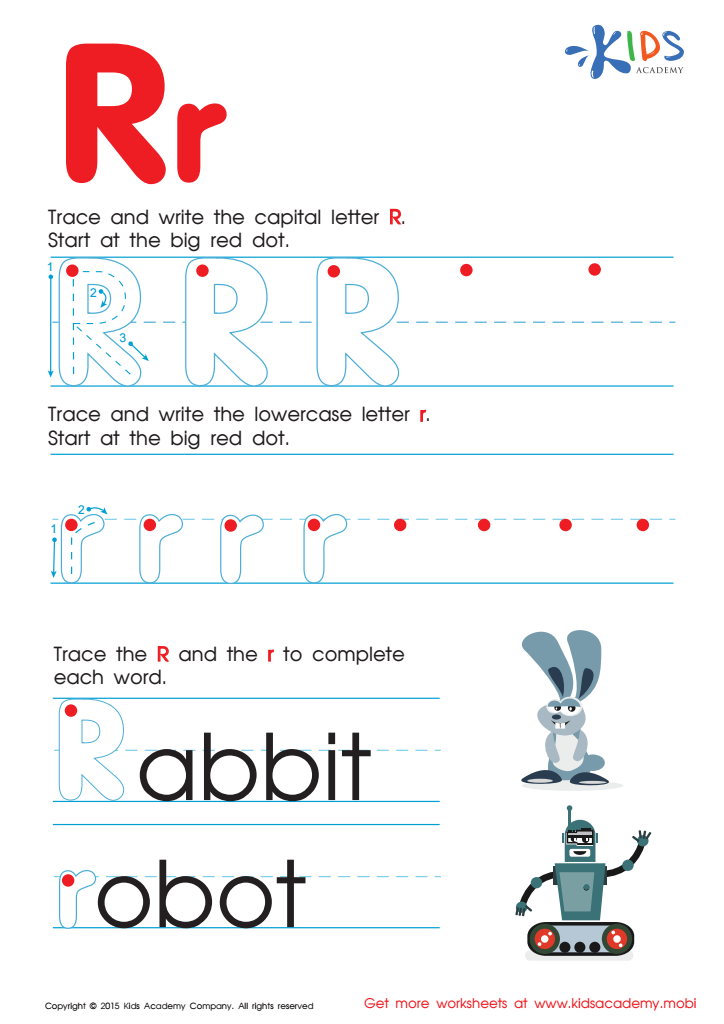
Letter R Tracing Page
 Assign to My Students




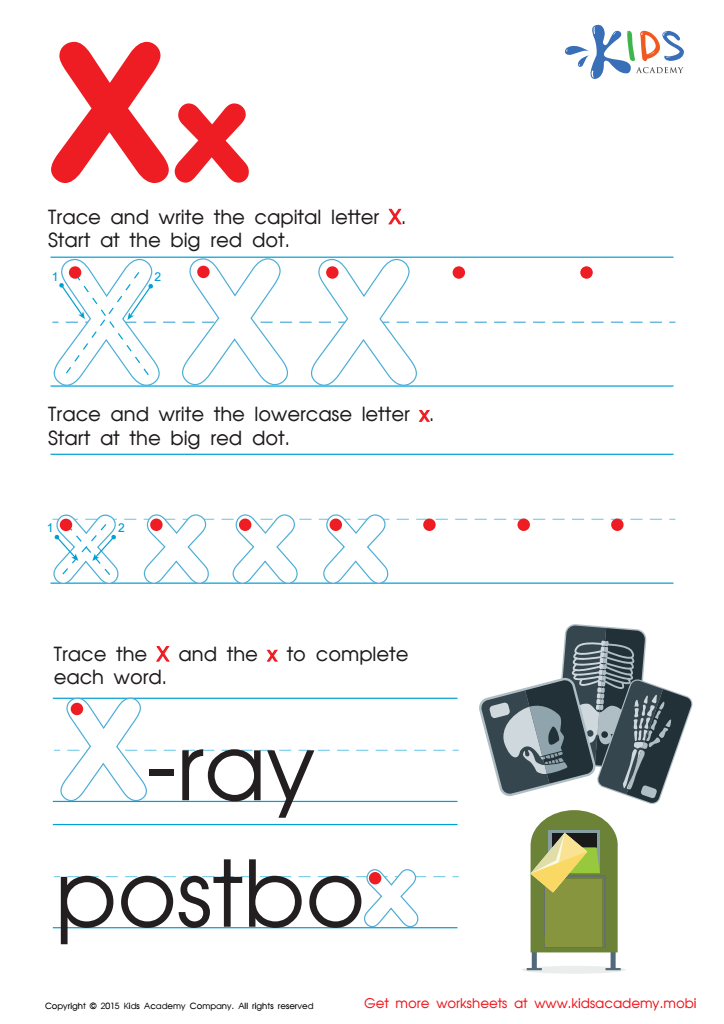
Letter X Tracing Page
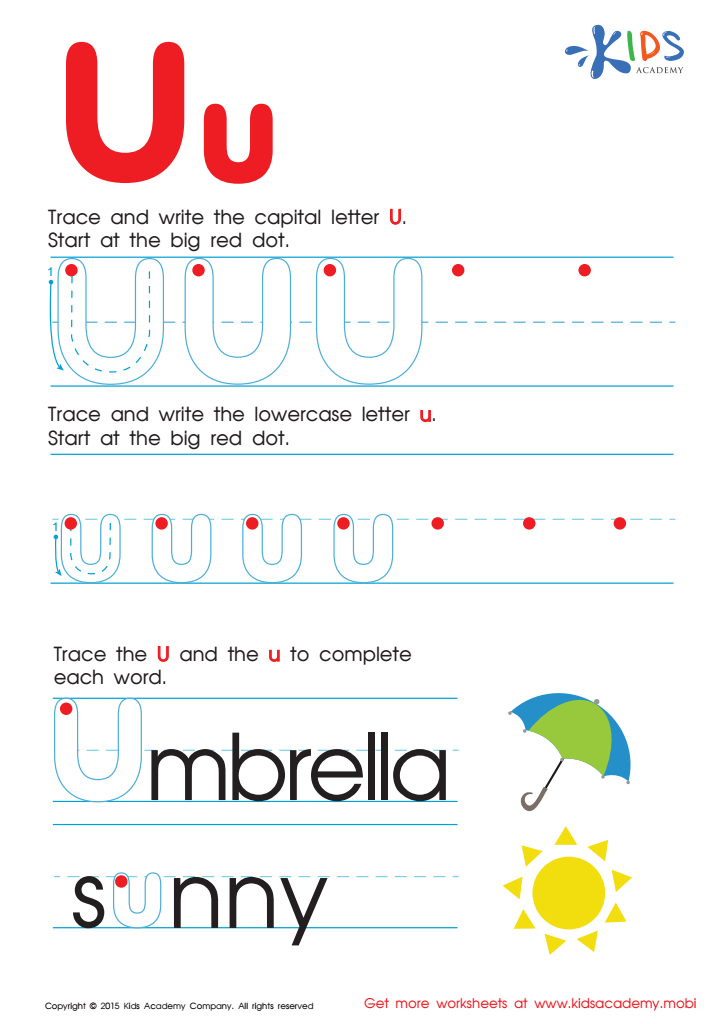
Letter U Tracing Page
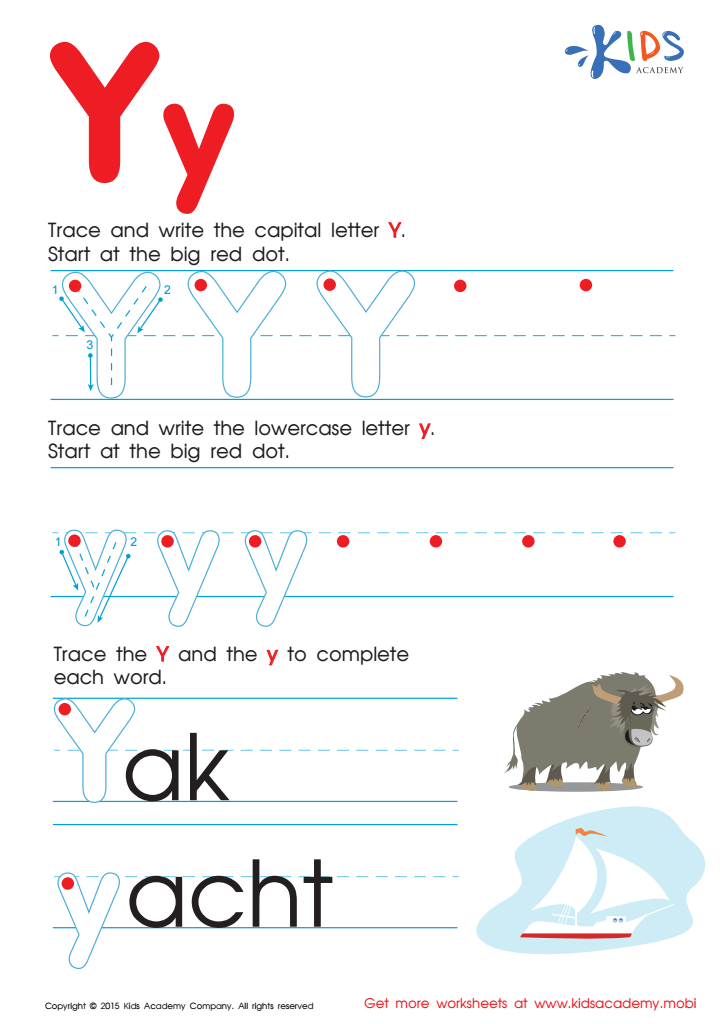
Letter Y Tracing Page
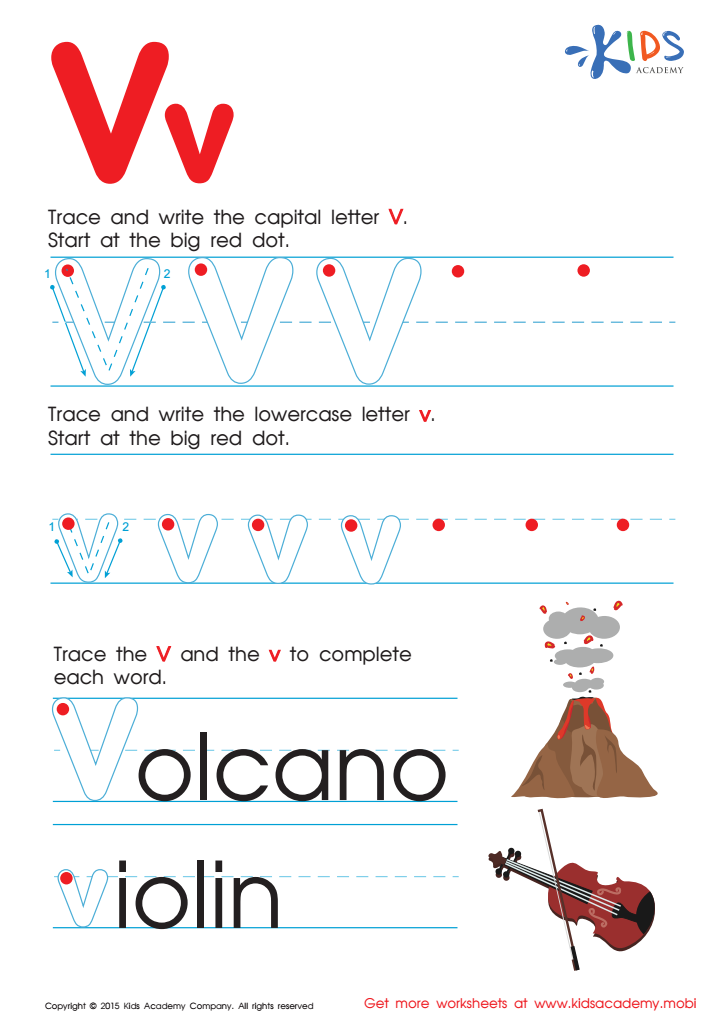
Letter V Tracing Page






Handwriting practice, especially through engaging activities like Extra Challenge ABC Letters, is crucial for 5-year-olds as it lays the foundation for their language development and literacy skills. At this age, children are developing fine motor skills, and practicing writing helps strengthen these muscles, improving their hand-eye coordination and dexterity. Moreover, writing fosters cognitive development; it encourages children to think critically about letter shapes, sounds, and the connections between letters and words.
Additionally, handwriting is directly linked to reading fluency. By repeatedly forming letters, children reinforce their understanding of letter recognition and sounds, which in turn supports their ability to decode words while reading. This foundational skill contributes to their overall academic achievement later in life.
Furthermore, handwriting practice promotes concentration and discipline. Engaging in consistent writing exercises enhances children’s ability to focus and follow through with tasks—skills that are valuable throughout their educational journey. Encouraging children with fun challenges keeps them motivated, leading to a more positive attitude about writing. Ultimately, when parents and teachers prioritize handwriting practice, they support children’s holistic development, empowering them to become confident learners as they navigate their educational experiences.