Handwriting practice Extra Challenge English for Beginners Worksheets for 5-Year-Olds
5 filtered results
-
From - To
Discover our "Handwriting Practice Extra Challenge" worksheets, designed specifically for 5-year-olds learning English as a second language. These engaging worksheets combine fun and education, helping young learners enhance their handwriting skills while improving language proficiency. Each activity encourages creativity and focus, featuring inviting illustrations and simple, clear instructions. Our extra challenges are perfect for budding writers to practice letter formation, develop motor skills, and build confidence in their writing abilities. Whether in the classroom or at home, these worksheets provide an excellent opportunity for early learners to refine their handwriting and foster a love for language. Start the handwriting adventure today!
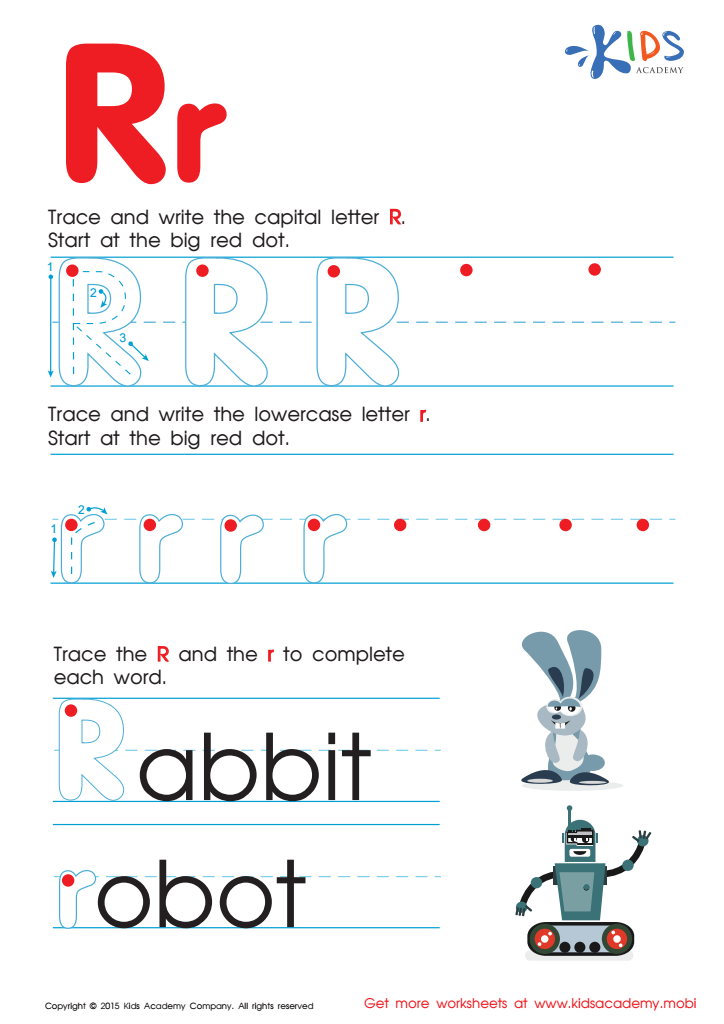
Letter R Tracing Page
 Assign to My Students
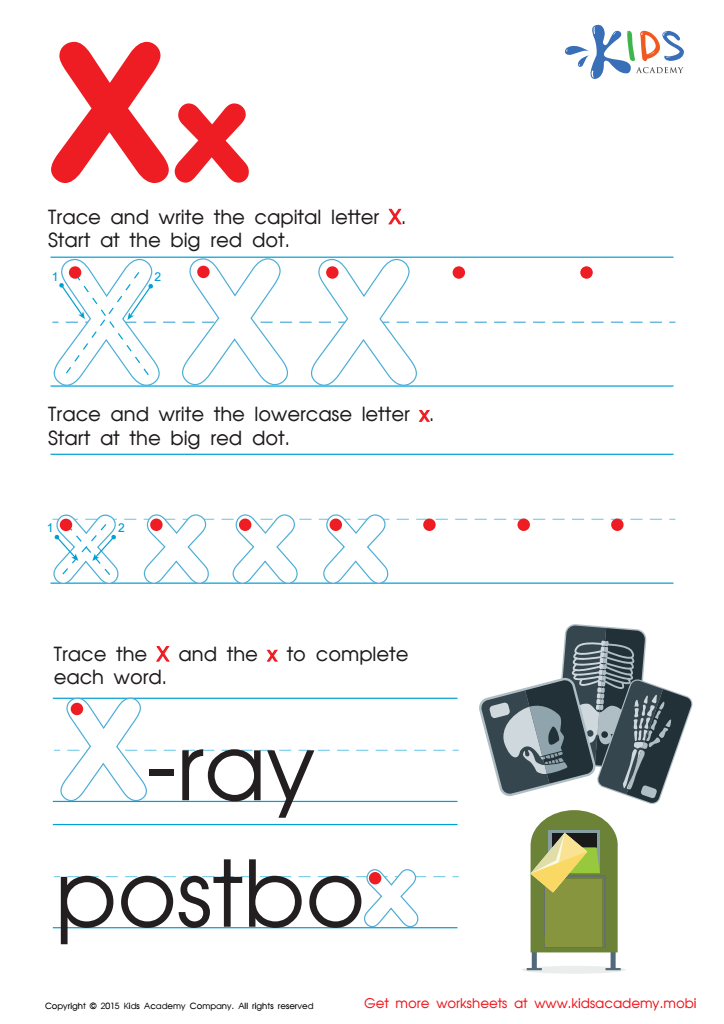
Letter X Tracing Page
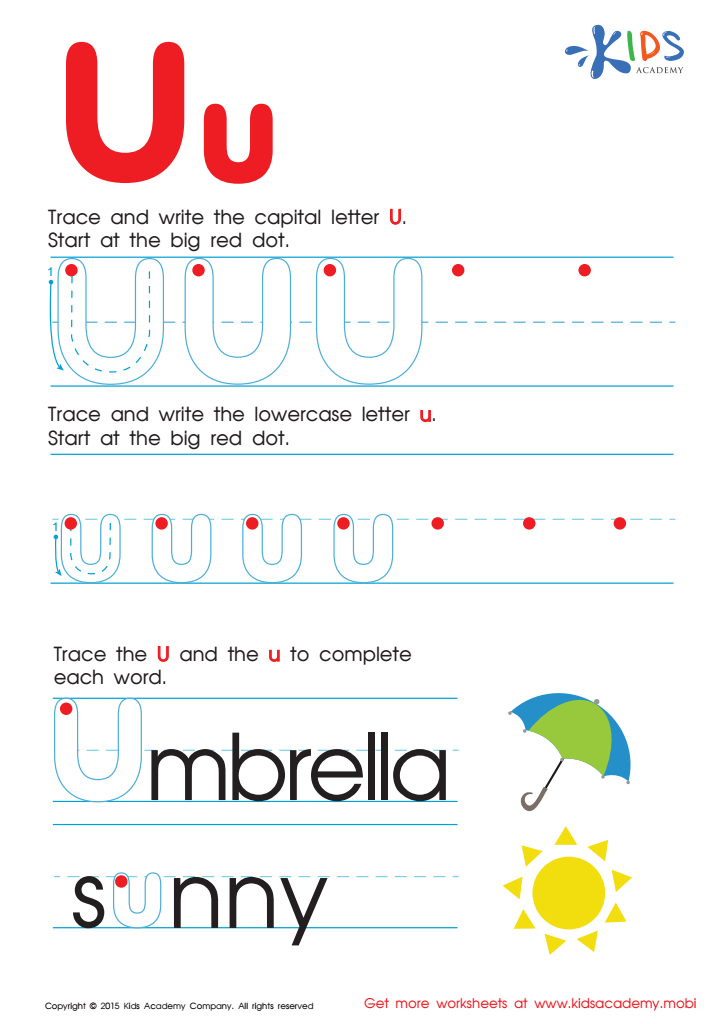
Letter U Tracing Page
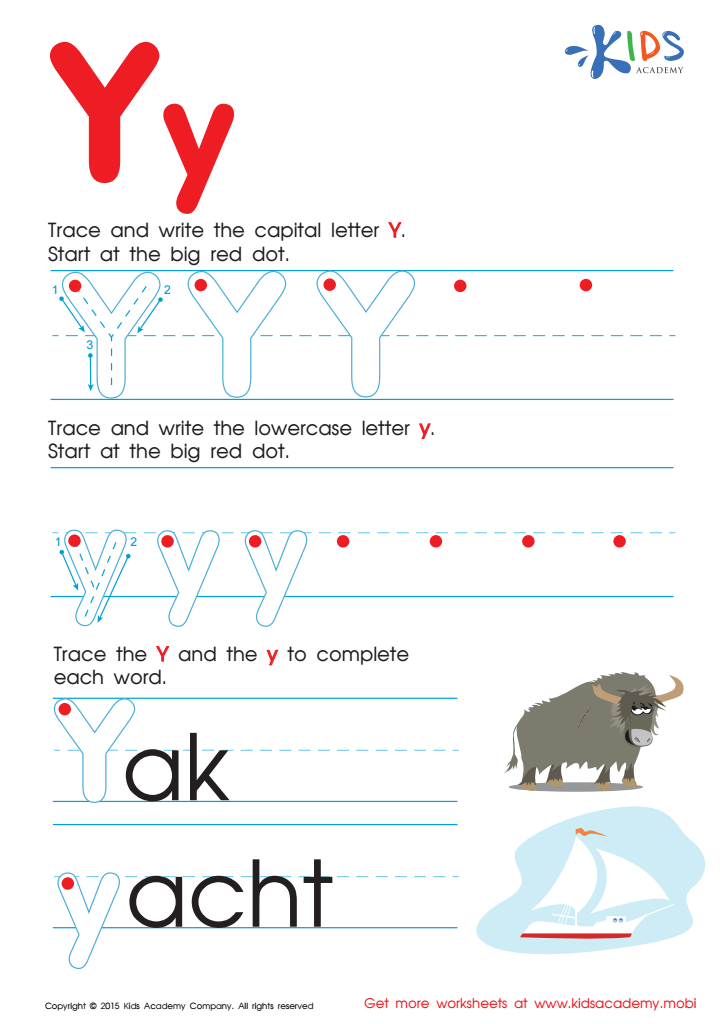
Letter Y Tracing Page
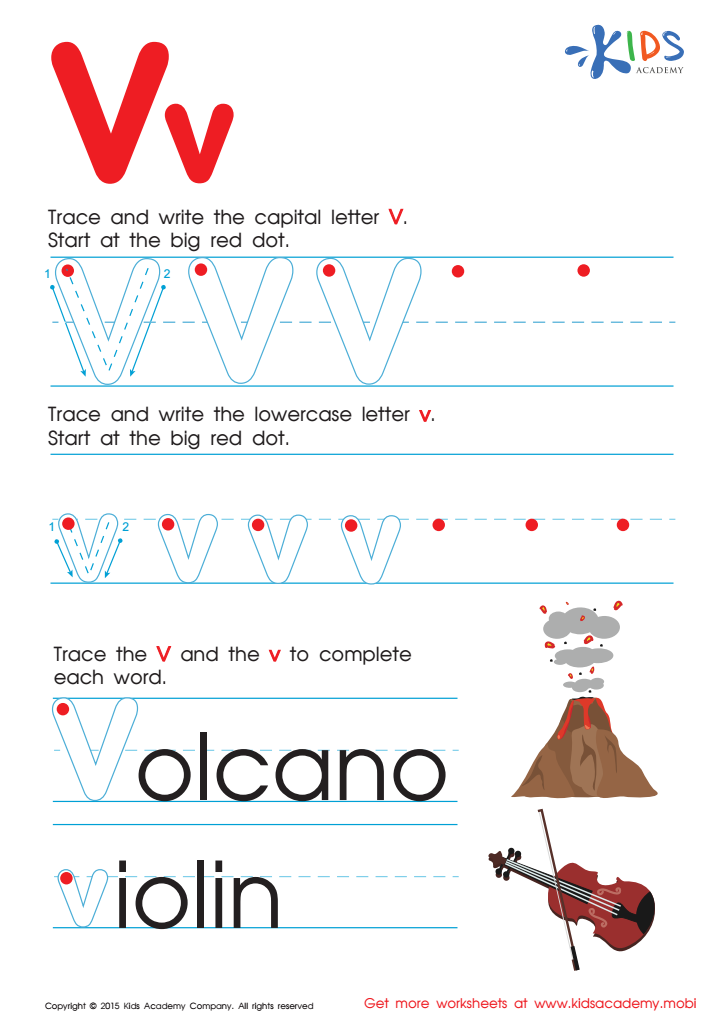
Letter V Tracing Page




Handwriting practice is crucial for 5-year-olds, as it lays the foundation for their future literacy skills. Parents and teachers should prioritize activities that enhance handwriting, such as "Extra Challenge English for Beginners," because it promotes fine motor development, necessary for tasks like writing, drawing, and self-care. When children practice handwriting, they improve their hand-eye coordination and dexterity, setting the stage for more complex skills as they progress in school.
Moreover, handwriting helps young learners develop three key elements: letter recognition, phonetic awareness, and spelling. By practicing letter formation and connections, children reinforce their understanding of how letters represent sounds and words, which is essential for reading and writing proficiency.
Consistent handwriting practice also fosters concentration and discipline. Kids learn to focus on tasks, boosting their confidence as they see their improvement over time. This sense of achievement not only enhances their self-esteem but encourages a positive attitude toward learning.
Incorporating engaging and supportive handwriting exercises, like the Extra Challenge program, makes the learning process enjoyable, allowing kids to associate writing with fun experiences. In short, an investment in handwriting practice equips children with skills critical for academic success and lifelong learning.








