Story sequencing Extra Challenge Worksheets for 5-Year-Olds
3 filtered results
-
From - To
Enhance your child's storytelling skills with our "Story Sequencing Extra Challenge Worksheets" designed specifically for 5-year-olds! These engaging worksheets offer an interactive way for young learners to develop their comprehension and critical thinking abilities. By arranging events in the correct order, children will not only practice sequencing but also boost their creativity and narrative skills. Perfect for use at home or in the classroom, these worksheets come in various themes to capture your child's interest and imagination. Encourage your little one to explore stories deeply and develop a love for reading through fun and educational challenges.
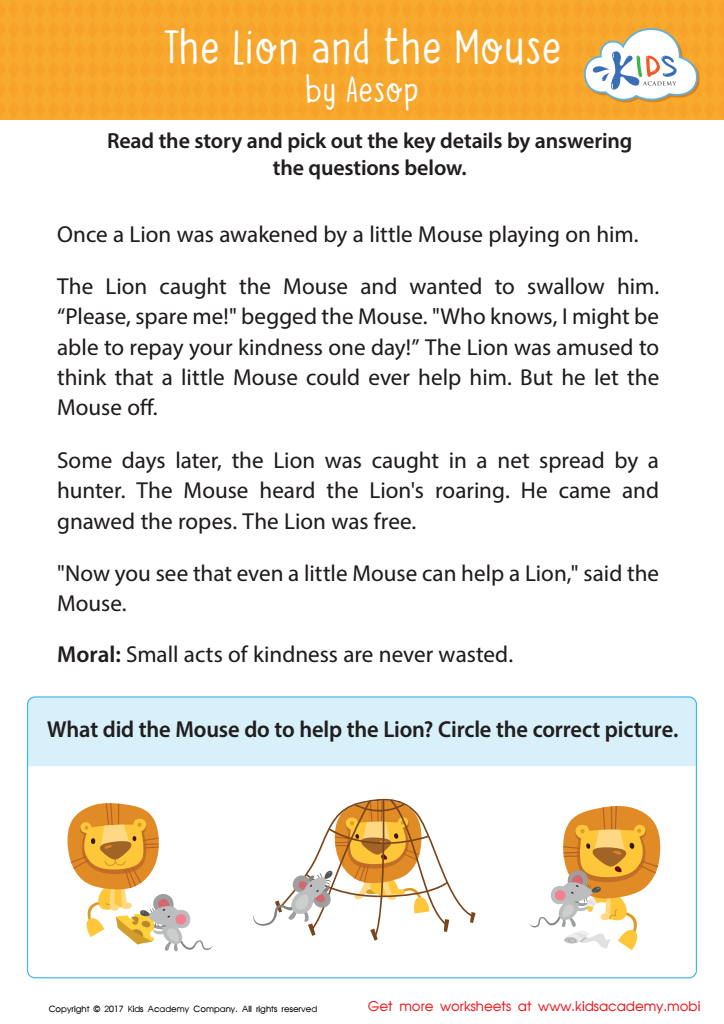
The Lion and The Mouse Sequencing Worksheet
 Assign to My Students
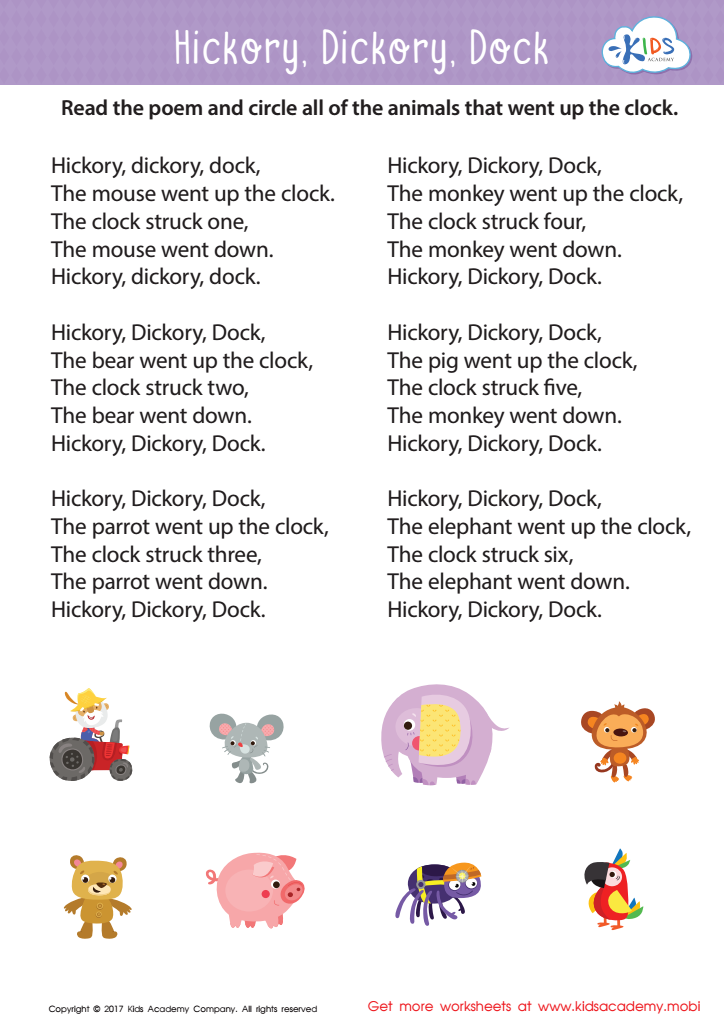
Hickory Dickory Dock Sequencing Worksheet
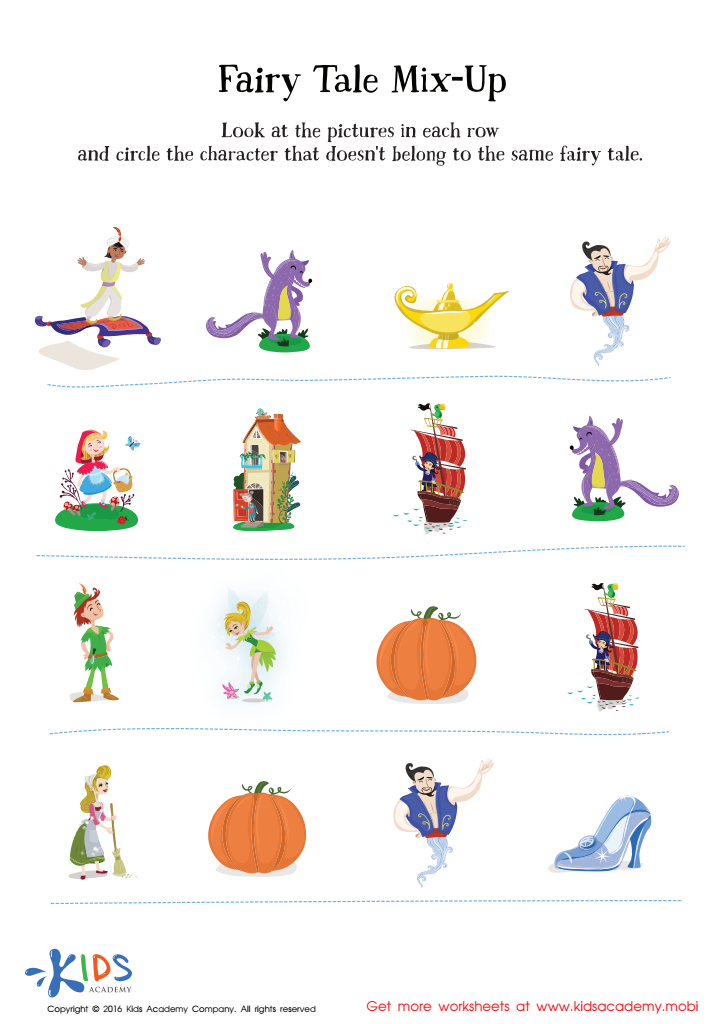
Fairy Tale Worksheet: Story Mix Up








Story sequencing is a critical skill for young children, particularly for 5-year-olds, as it lays the foundation for literacy and cognitive development. Parents and teachers should care about this extra challenge because it enhances comprehension, promotes critical thinking, and supports language development.
When children practice story sequencing, they learn to identify beginning, middle, and end, which helps them understand narrative structure. This understanding is vital for enhancing their reading skills and makes some complex concepts more accessible. Moreover, story sequencing encourages children to think critically about the relationships between events, fostering analytical skills that are essential for problem-solving in everyday life.
Additionally, engaging in this activity cultivates communication skills, as children learn to articulate their choices about the sequence of events. This can lead to richer vocabulary and more elaborate storytelling techniques.
Lastly, story sequencing can be a fun and engaging way to support social-emotional development. It allows children to express their thoughts and share ideas with peers, boosting their confidence and teamwork skills. By prioritizing story sequencing activities, parents and teachers invest in a well-rounded approach to education that promotes both academic and social competencies in children.








