Understanding plurals Extra Challenge Worksheets for 5-Year-Olds
3 filtered results
-
From - To
Introducing our "Understanding Plurals Extra Challenge Worksheets for 5-Year-Olds," thoughtfully designed to take your child's language skills to the next level. These engaging and effective worksheets utilize fun activities and vibrant illustrations to help young learners master the concept of plurals. Tailored for 5-year-olds, our extra challenge worksheets provide an opportunity for advanced practice, enhancing their understanding and usage of plural nouns in a playful and educational environment. Ideal for home or classroom use, these worksheets ensure kids practice and progress at their own pace. Watch them embrace learning while having fun!
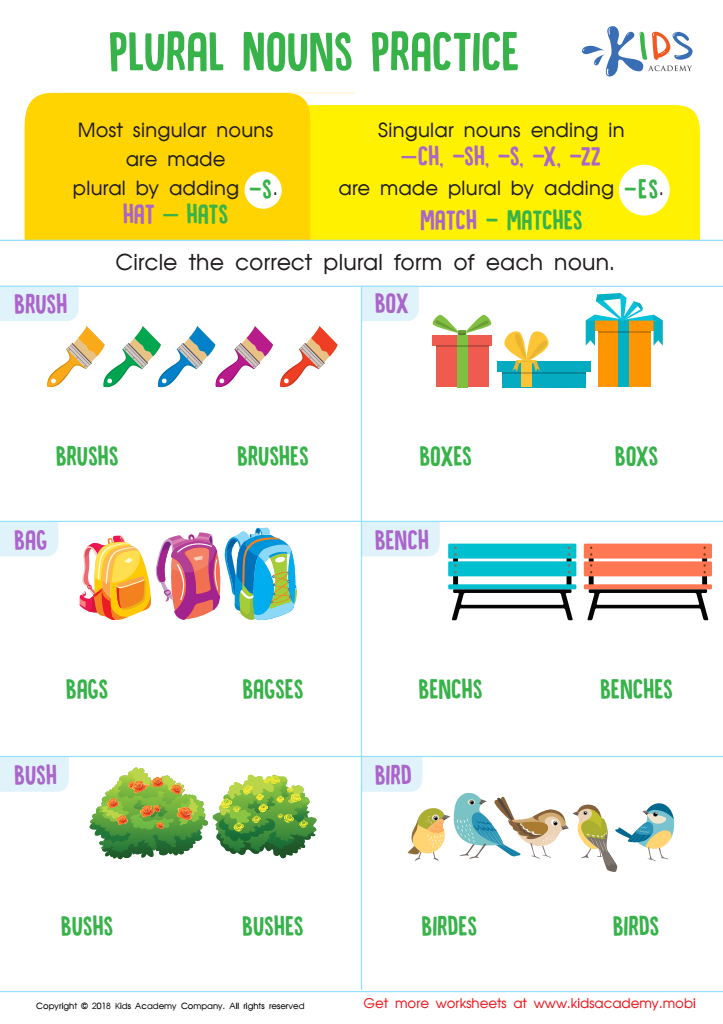
Plural Nouns Practice Worksheet
 Assign to My Students
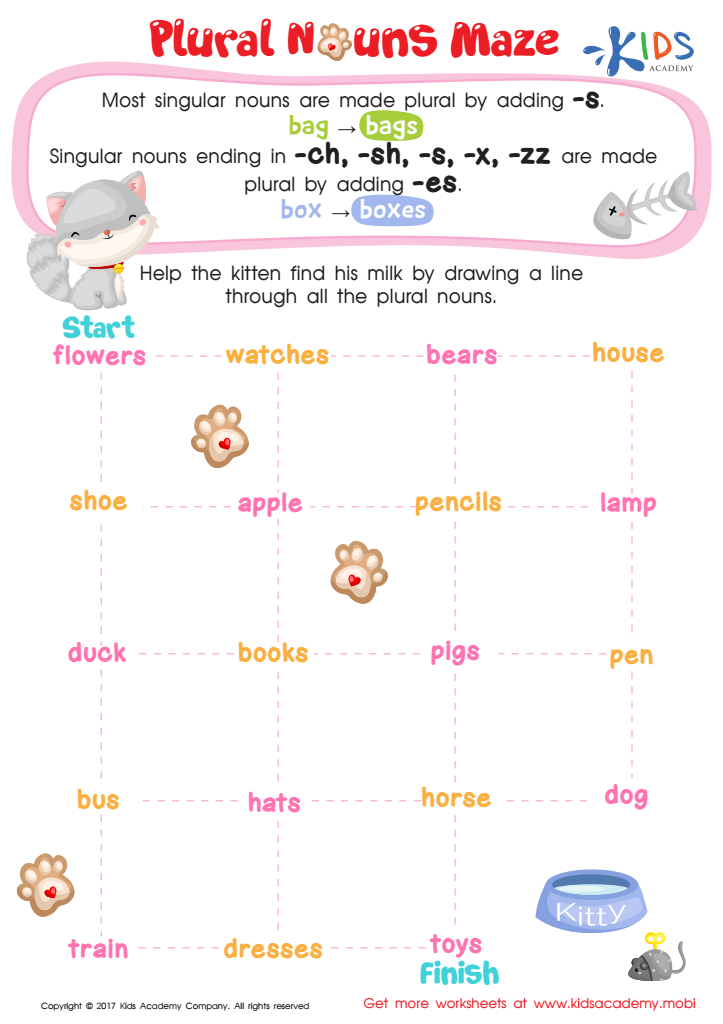
Plural Nouns Maze Worksheet
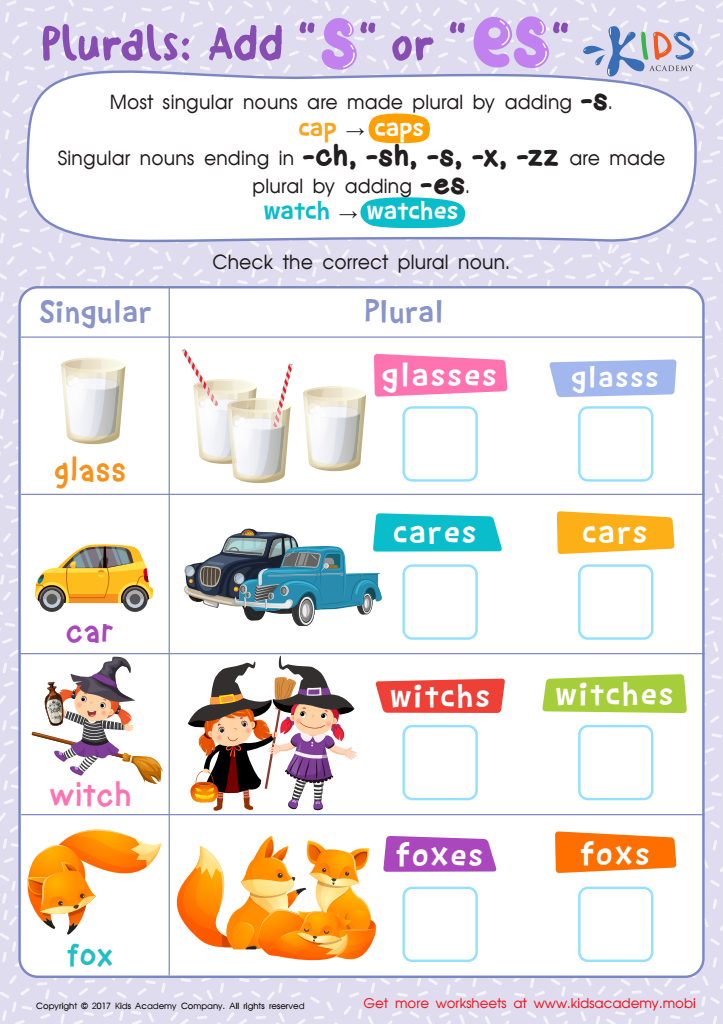
Plurals: "–es" or "–es"? Worksheet







Understanding plurals is an important part of early language development for 5-year-olds. Both parents and teachers should care about this because it's a foundation for many other language skills, including reading and writing. When children grasp how to change a noun from singular to plural, it enhances their ability to communicate more effectively. They can better express ideas, describe groups of things, and follow instructions.
Moreover, mastering plurals helps to boost children's confidence. When they realize they can correctly use and understand more words, it encourages them to participate more in conversations and stay engaged in learning activities. Additionally, understanding the concept of plurals early on prepares children for more complex grammar rules they will encounter later.
Incorporating extra challenges related to plurals for young learners can stimulate their thinking and problem-solving abilities. It provides them with opportunities to practice observation, comparison, and critical thinking skills. For instance, sorting games, plural-form puzzles, and storytelling activities require children to identify patterns and apply rules, fostering both cognitive growth and language proficiency.
Teachers and parents who actively engage children in learning about plurals contribute to a solid linguistic foundation that will support all areas of their academic journey and social interactions. This foundational understanding plays a crucial role in shaping their future success in numerous academic subjects and communication skills.








