Basic Math Skills Extra Challenge Measurement Worksheets for 5-Year-Olds
5 filtered results
-
From - To
Discover the excitement of measurement with our "Basic Math Skills Extra Challenge Measurement Worksheets" designed specifically for 5-year-olds! These engaging worksheets help young learners develop essential math skills through hands-on activities that introduce concepts like length, weight, and capacity. Each worksheet features colorful illustrations and interactive tasks that encourage children to measure objects around them, fostering curiosity and practical understanding. Ideal for home or classroom use, these extra challenge worksheets provide a perfect blend of fun and educational opportunities. Spark your child’s love for math as they explore the world of measurement with our thoughtfully crafted resources!
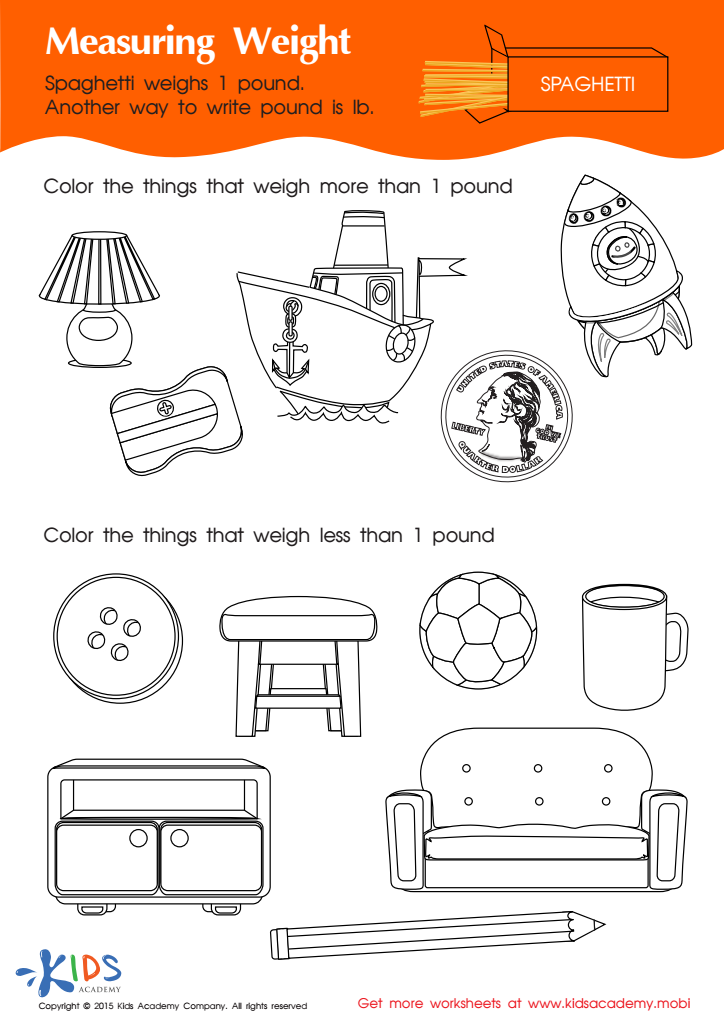
 Assign to My Students
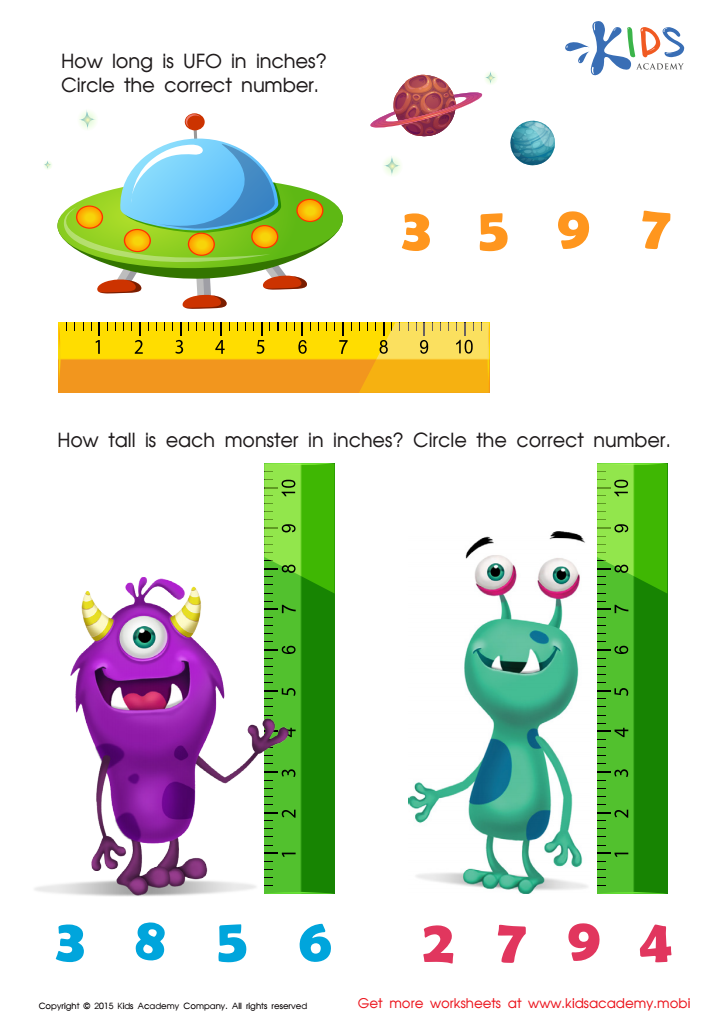
Measuring in Inches Worksheet
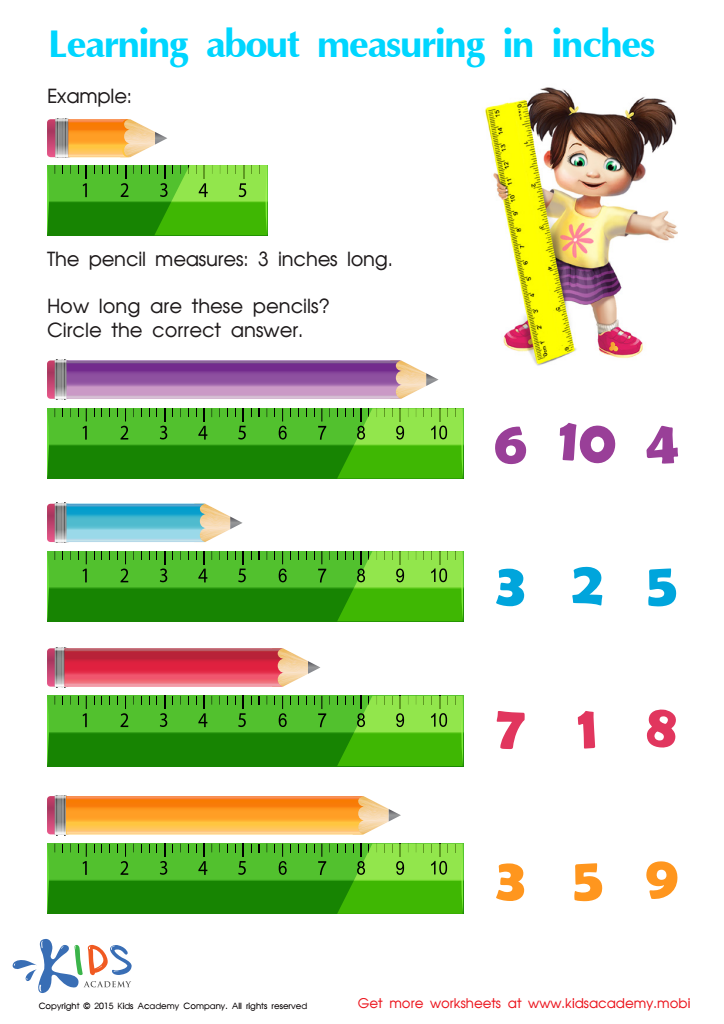
Learning About Measuring In Inches Printable
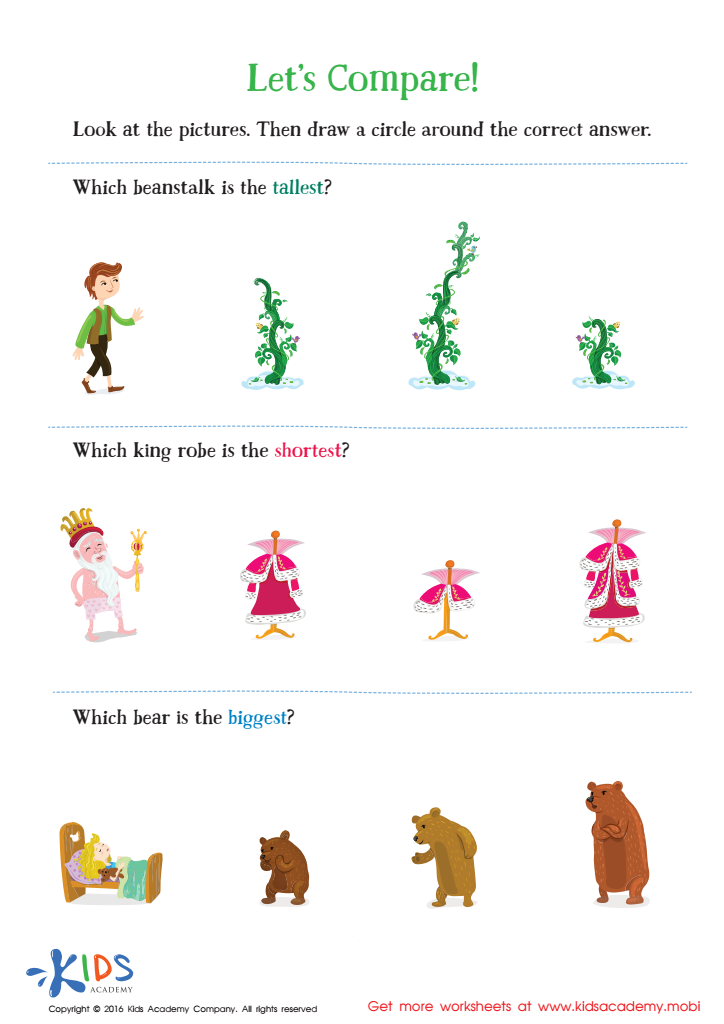
Fairy Tale Worksheet: Let's Compare
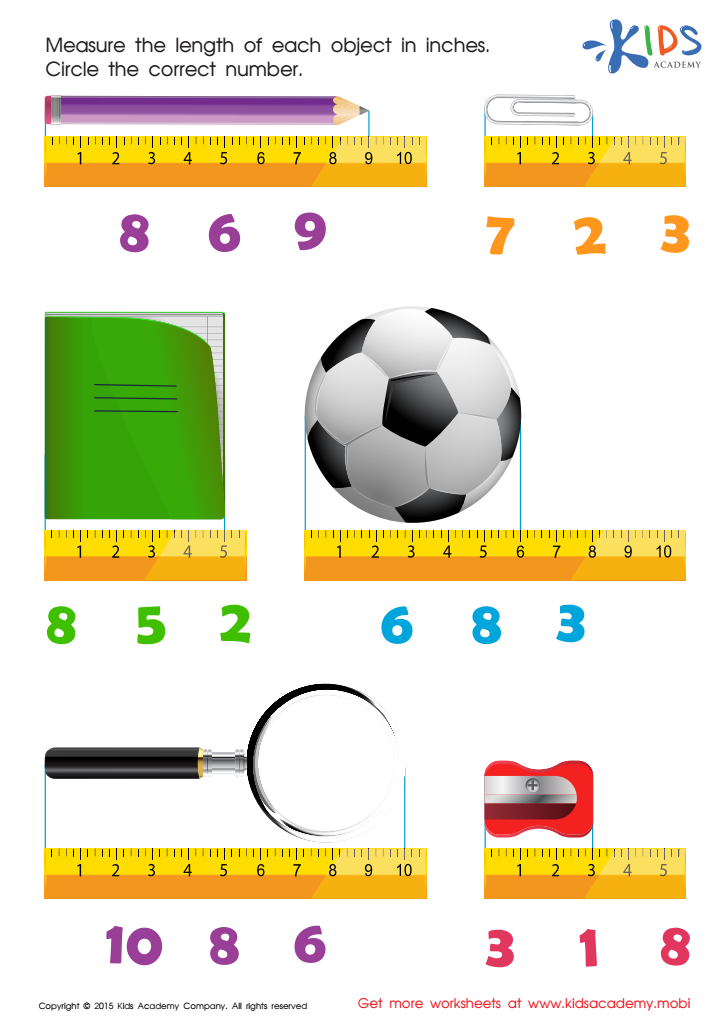
Learning measuring objects in inches Worksheet








Parents and teachers should prioritize the Basic Math Skills Extra Challenge Measurement for 5-year-olds because early math skills form the foundation for a child’s academic success and everyday problem-solving abilities. Measurement activities help children develop spatial awareness, understand quantities, and recognize standard units, which are key concepts in their cognitive development. Engaging students in measuring activities encourages them to observe, compare, and quantify objects in their environment, fostering critical thinking and analytical skills.
Moreover, at this age, children are naturally curious and eager to explore, making it the perfect time to introduce measurement concepts in a fun and interactive manner. Incorporating games and practical experiences with measurements, such as building blocks or cooking, builds enthusiasm and strengthens their understanding. When children grasp these fundamental concepts early on, they are better equipped for advanced math topics in later grades, reducing the likelihood of math anxiety.
Additionally, measurement activities align with various learning standards and promote essential skills like teamwork, communication, and logical reasoning. By focusing on these early math skills, parents and teachers not only enhance the child's mathematical competence but also cultivate a lifelong love for learning. Ultimately, developing these skills provides children with confidence, preparing them for future academic challenges and everyday tasks.