Understanding plurals Extra Challenge Writing Worksheets for 5-Year-Olds
3 filtered results
-
From - To
Introducing "Understanding Plurals Extra Challenge Writing Worksheets for 5-Year-Olds" – an engaging resource designed to strengthen young learners' grammar skills! These carefully crafted activities help children grasp the concept of singular and plural nouns through fun and interactive exercises. Tailored for 5-year-olds, each worksheet encourages critical thinking while boosting writing proficiency. By practicing with different nouns and varied contexts, kids will develop confidence in using plurals accurately. Perfect for classroom use or additional practice at home, these worksheets make learning grammar enjoyable and effective. Set your child on a path to language mastery with our extra challenge worksheets today!
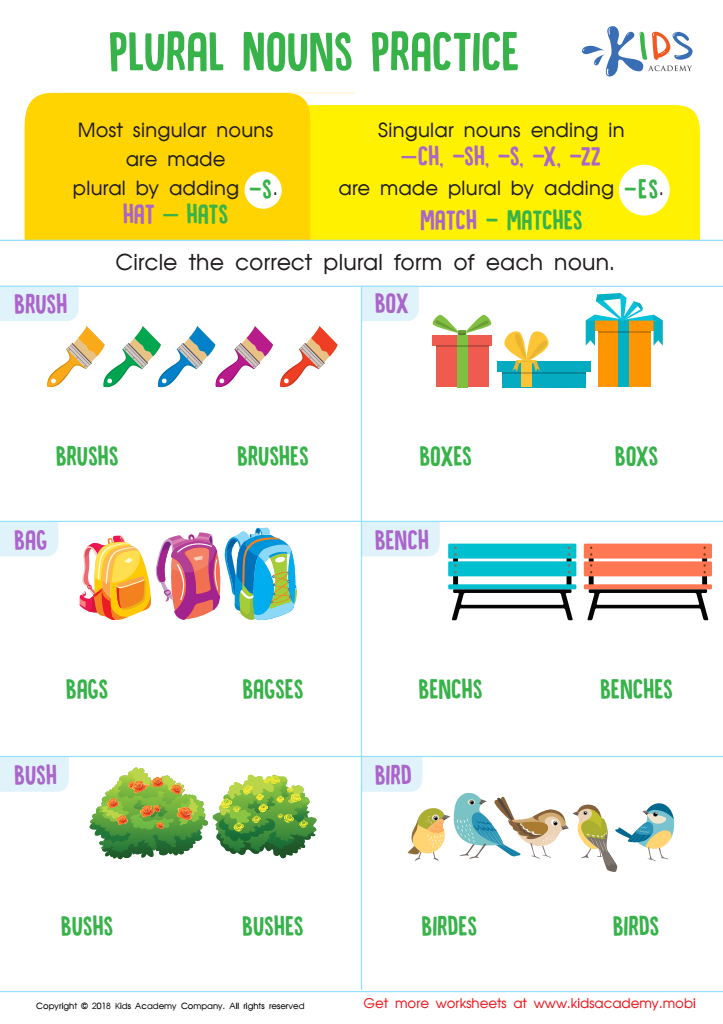
Plural Nouns Practice Worksheet
 Assign to My Students
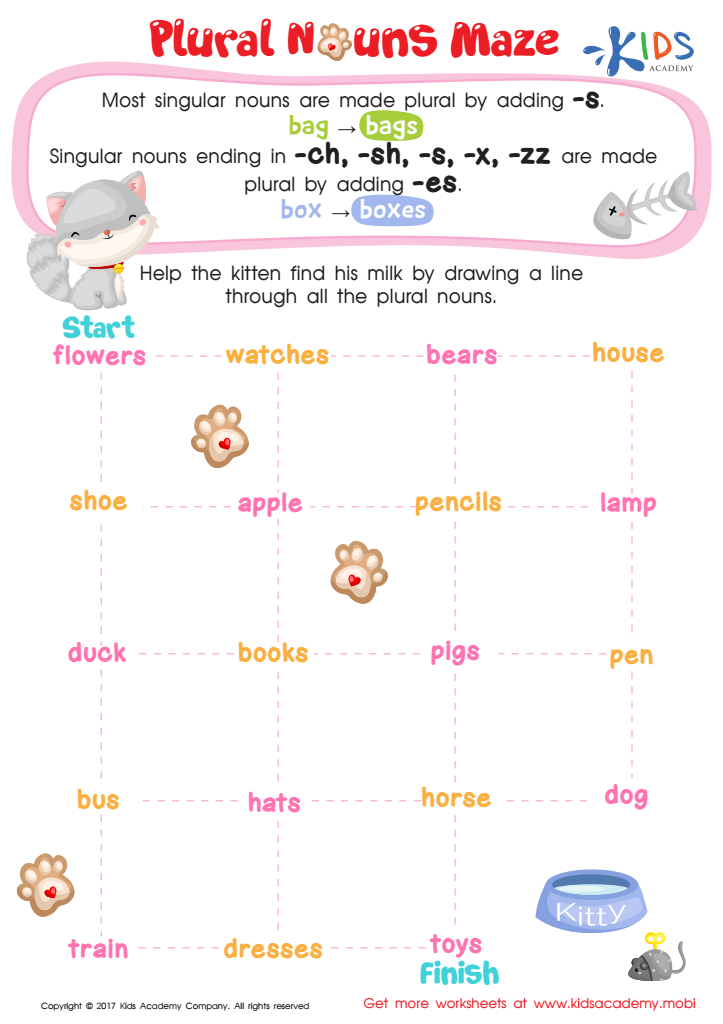
Plural Nouns Maze Worksheet
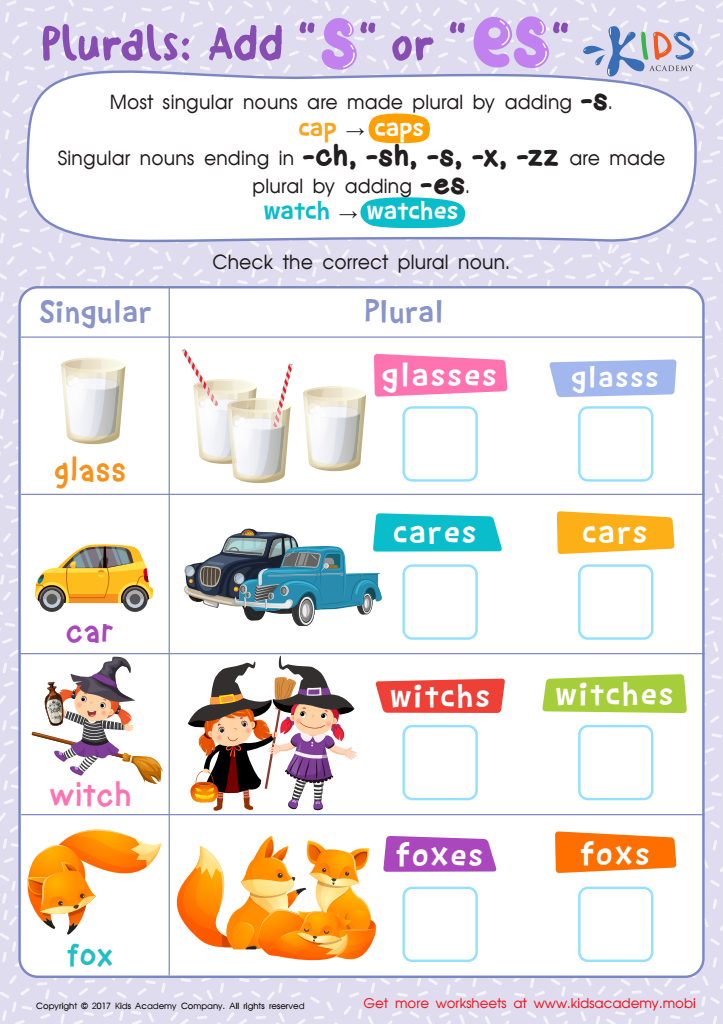
Plurals: "–es" or "–es"? Worksheet







Understanding plurals is a crucial language foundation for 5-year-olds, and both parents and teachers play vital roles in facilitating this learning. Mastery of plurals helps in children's overall language development and communication skills. When children grasp the difference between singular and plural forms, they better understand and convey meaning, which boosts their comprehension abilities and allows them to express ideas more clearly.
From a cognitive perspective, learning plurals aids pattern recognition and rule application, which are essential for problem-solving and logical thinking. Engaging in plural-focused challenges strengthens memory and aids in the development of more complex language structures. This preparation is necessary for future academic tasks, such as reading and writing.
Furthermore, plural understanding is integral for social interactions. As children learn to use correct plurals, they receive and convey accurate information, fostering better friendships and collaborative playing. Extra challenge writing tasks provide practice and reinforce these skills, fostering confidence and competence in young learners.
By supporting exercises that focus on understanding and using plurals, parents and teachers provide children with tools for continued educational success and vital life skills. This foundational knowledge bridges early learning with future literacy development, laying the groundwork for effective communication and academic achievement.