Alphabet Recognition Extra Challenge ABC Letters Worksheets for Ages 6-7
3 filtered results
-
From - To
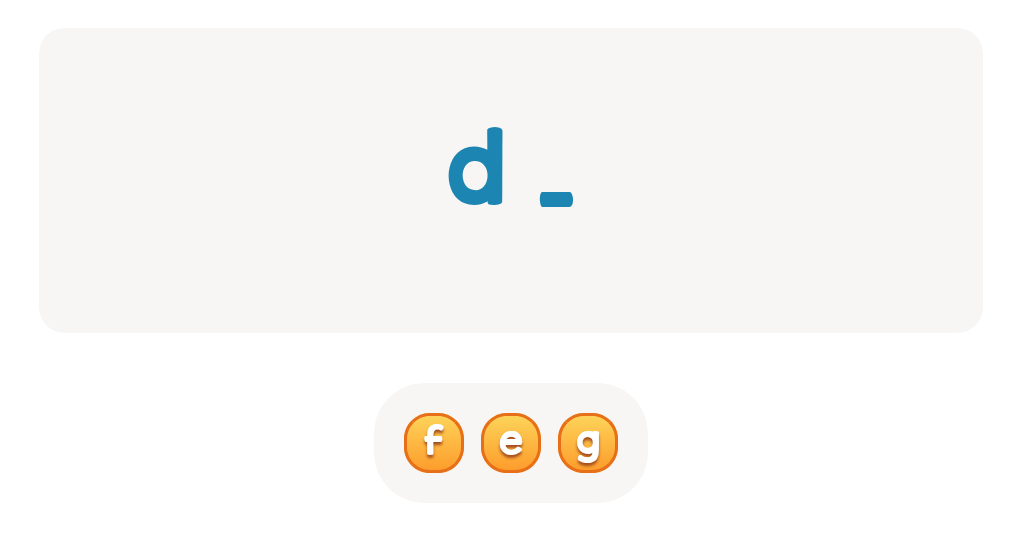
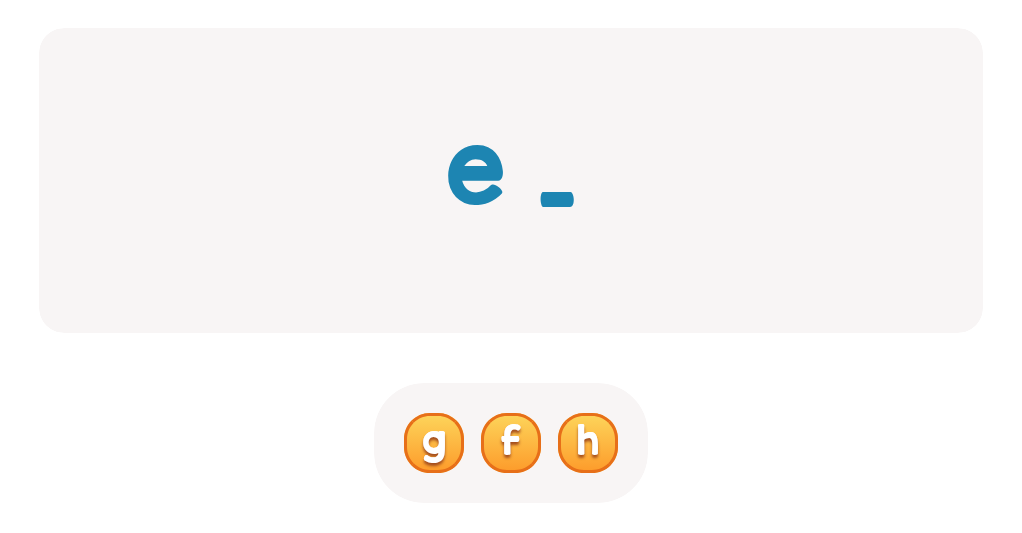
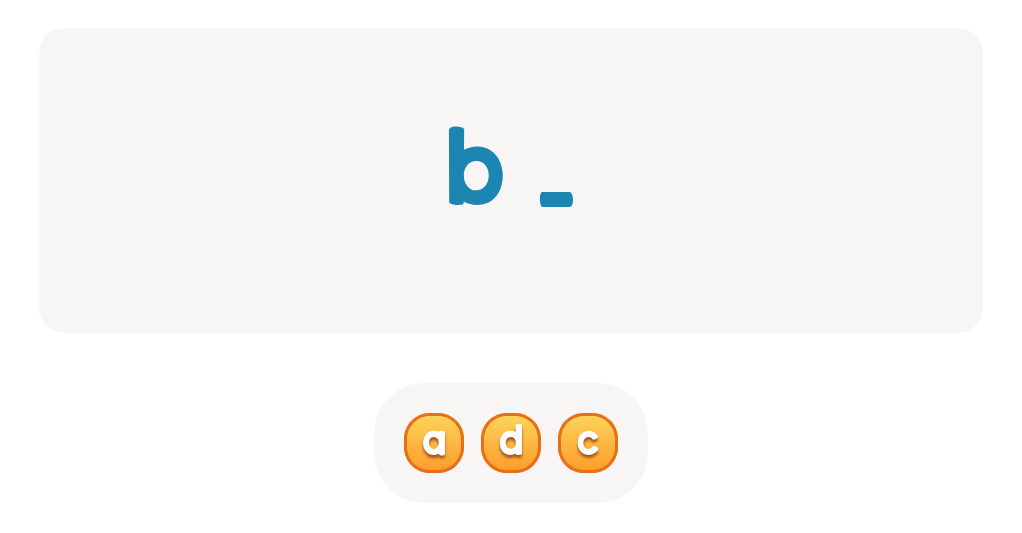
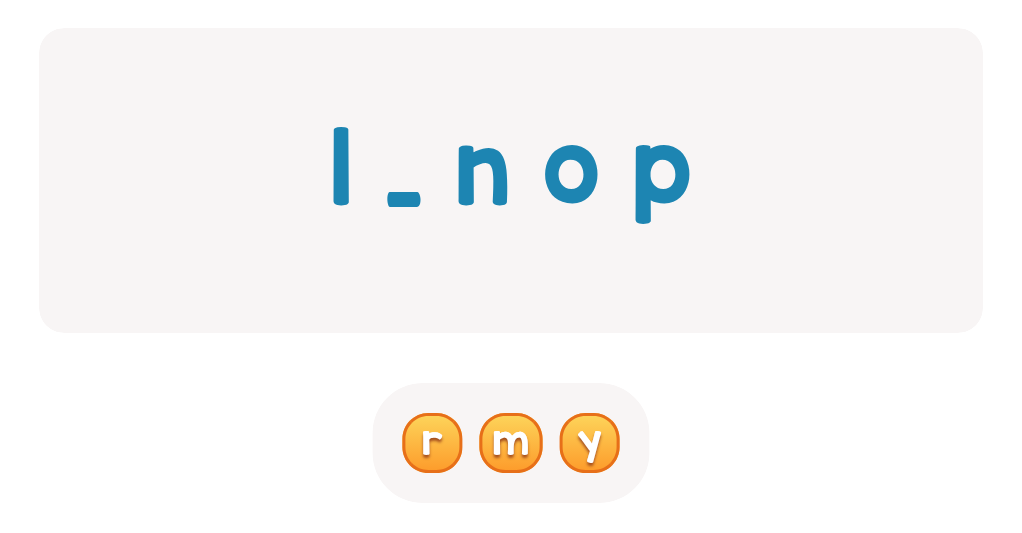
Enhance your child's literacy skills with our "Alphabet Recognition Extra Challenge ABC Letters Worksheets" for ages 6-7! Designed to reinforce letter recognition, these engaging worksheets introduce fun and interactive activities that promote critical thinking and creativity. Your little learner will embark on exciting challenges, mastering uppercase and lowercase letters while developing their handwriting skills. Each worksheet is crafted to refine cognitive abilities, encouraging children to identify and differentiate letters through various exercises. Perfect for homeschooling or supplemental learning, these worksheets foster independence and confidence in young readers. Empower your child to become a letter whiz today with our themed resources!

Letter A Tracing Page
 Assign to My Students




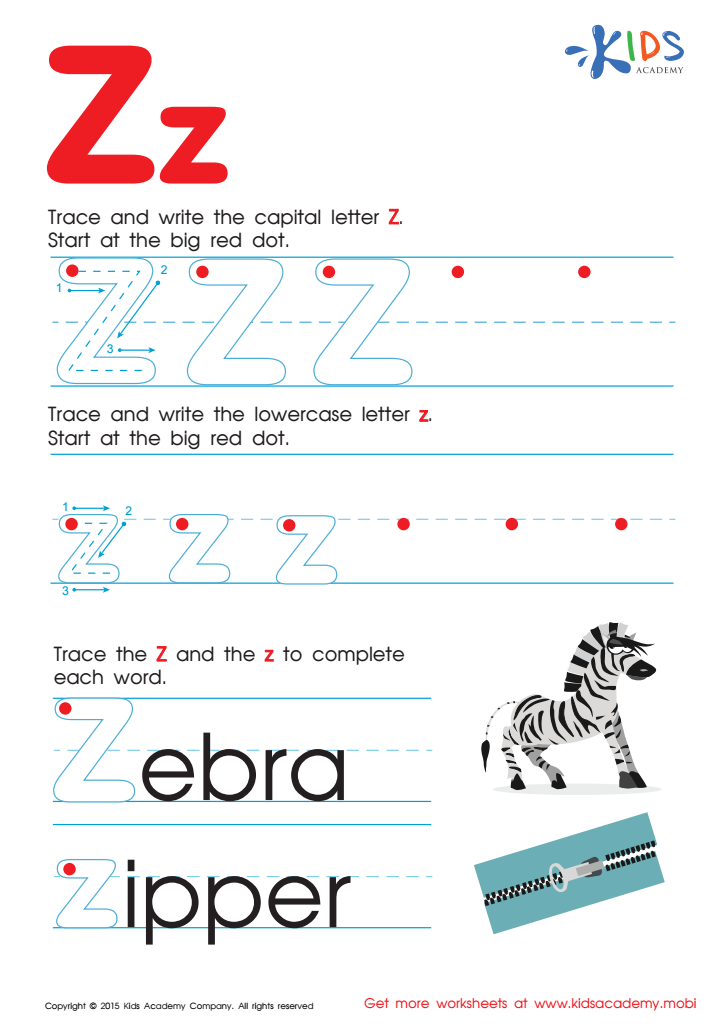
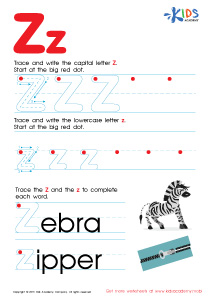
Letter Z Tracing Page
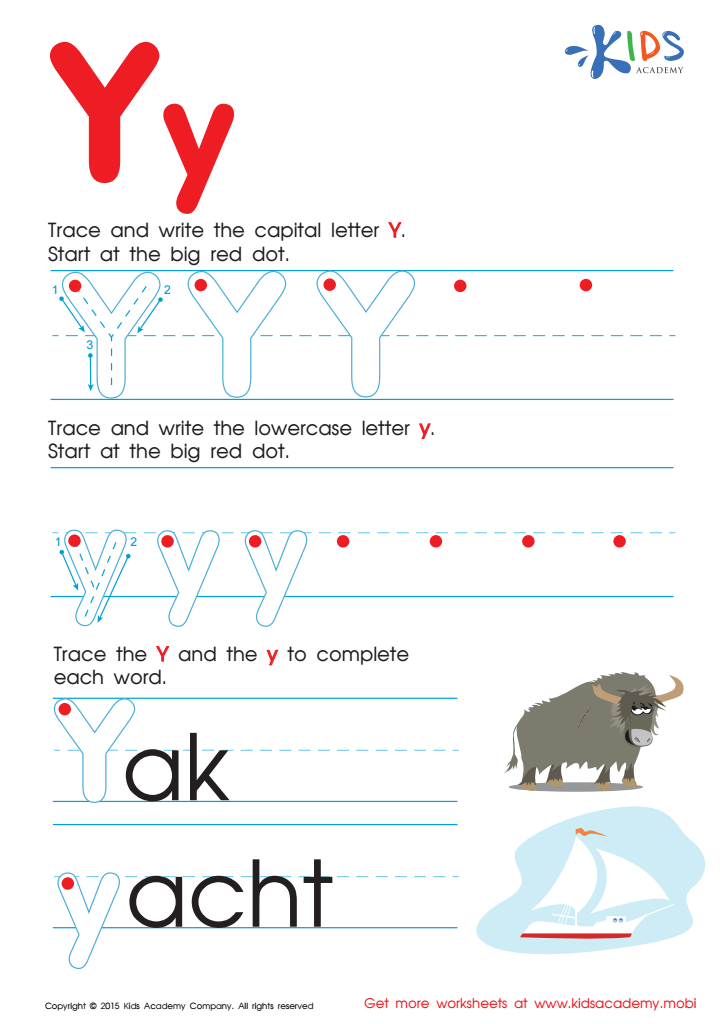
Letter Y Tracing Page








Alphabet recognition is a foundational skill for early literacy, crucial for children aged 6-7 who are transitioning from recognizing letters to using them in reading and writing. The "Alphabet Recognition Extra Challenge ABC Letters" program offers parents and teachers an effective way to enhance this important skill in a fun and engaging manner.
Firstly, familiarity with the alphabet promotes phonemic awareness, which is essential for decoding words. As children learn to recognize letters quickly, they gain the confidence needed to tackle more complex literacy tasks. Engaging with challenges can also help students retain knowledge better, turning learning into an interactive experience.
Moreover, this program can identify children who may struggle with letter recognition, allowing early intervention strategies that are vital for their literacy development. For parents and teachers, using structured challenges means integrating play with education, fostering a love for learning. It supports diverse learning styles and keeps students motivated through rewarding their progress.
Ultimately, actively participating in activities that emphasize alphabet recognition encourages children to appreciate language, setting them on a strong path for academic success, critical thinking, and effective communication skills in the years to come.