Alphabet Recognition Extra Challenge Tracing Letters Worksheets for Ages 6-7
3 filtered results
-
From - To
Boost your child's alphabet mastery with our "Alphabet Recognition Extra Challenge: Tracing Letters Worksheets for Ages 6-7." Tailored for young learners, these worksheets provide fun and engaging activities to strengthen letter recognition, handwriting, and fine motor skills. Designed to challenge and stimulate, each page guides children through tracing uppercase and lowercase letters, ensuring they gain confidence and precision in their writing. With vibrant illustrations and diverse exercises, these alphabet tracing worksheets turn learning into an enjoyable adventure. Perfect for home or classroom use, set your child on the path to academic success with this essential literacy resource!
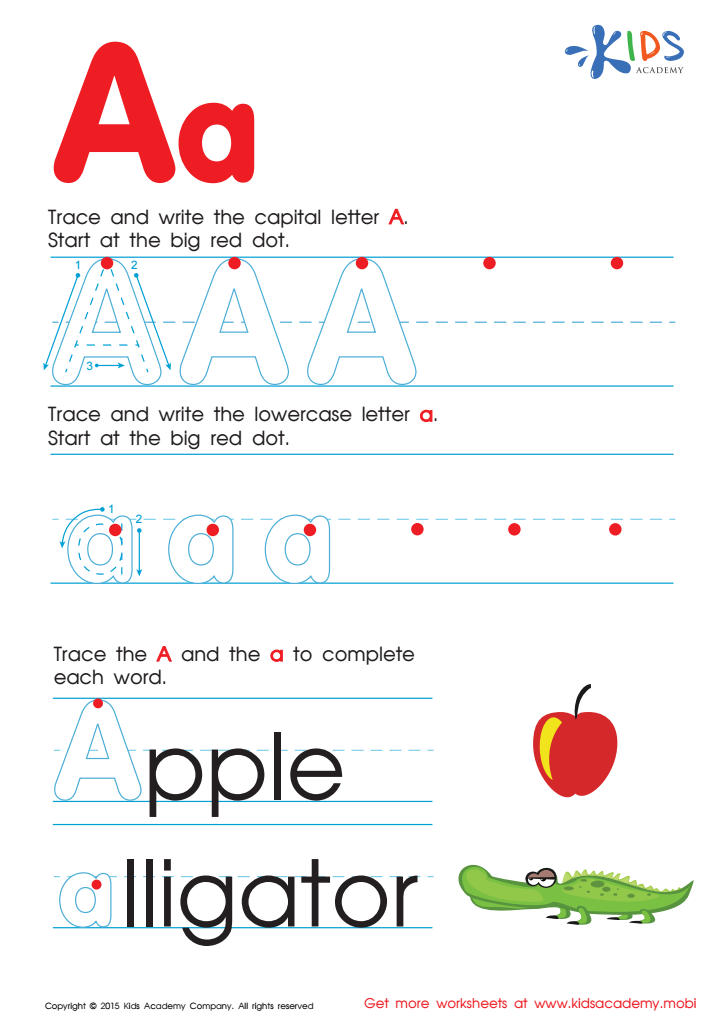
Letter A Tracing Page
 Assign to My Students
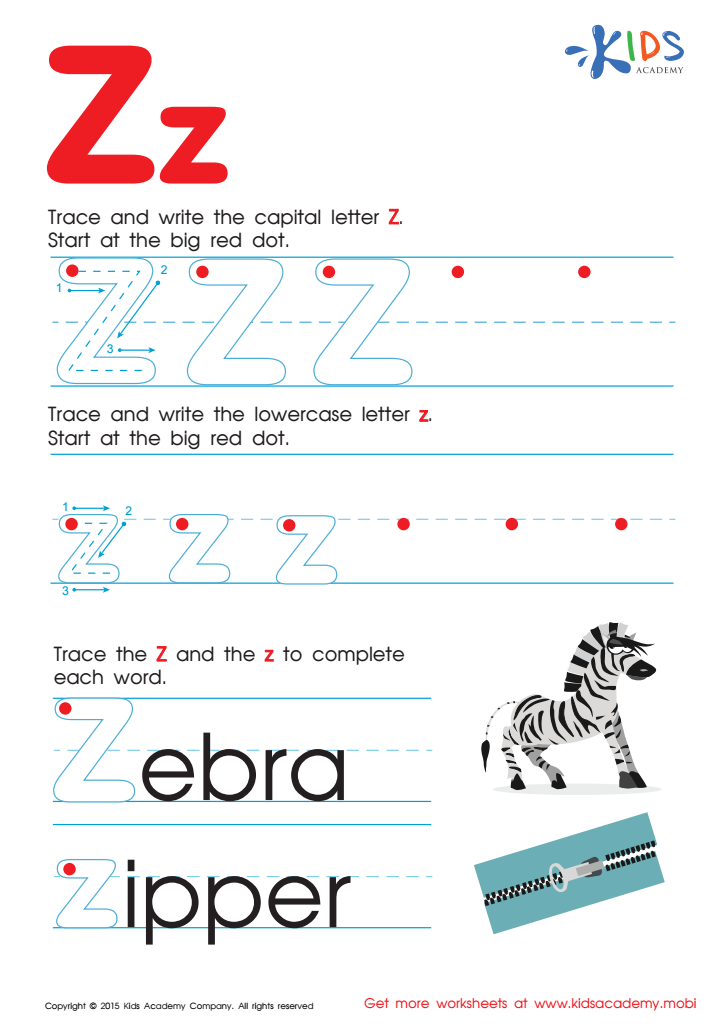
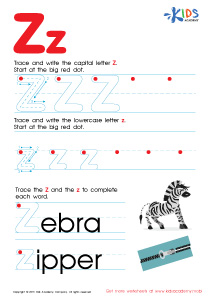
Letter Z Tracing Page
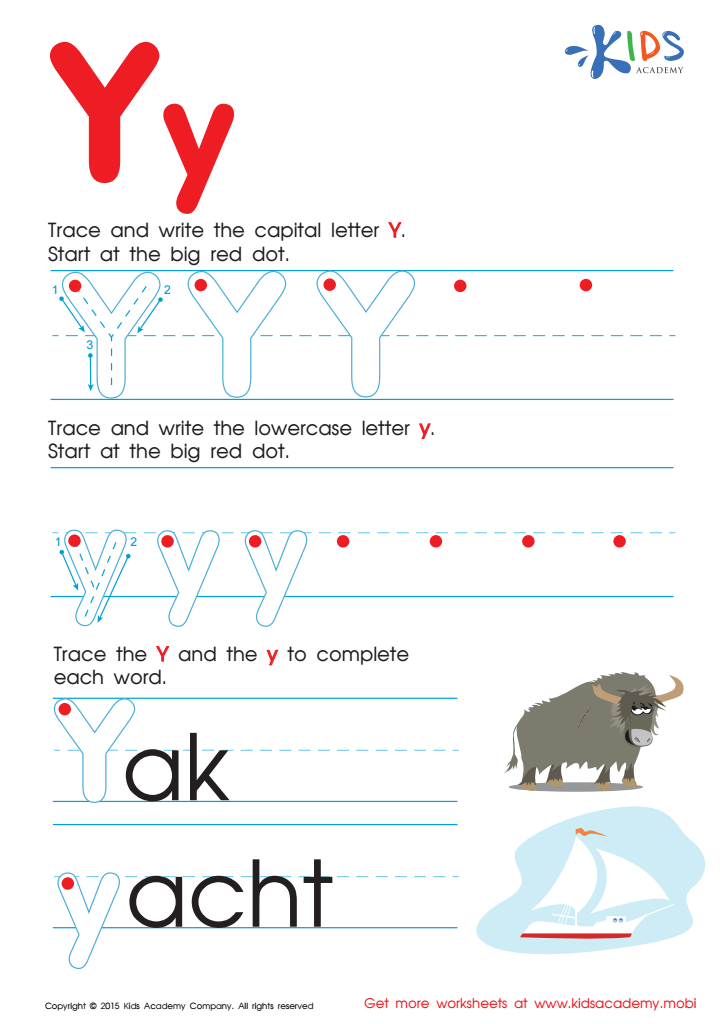
Letter Y Tracing Page








Alphabet recognition is a critical foundational skill that significantly impacts a child's literacy development. When parents or teachers engage children aged 6-7 in an Alphabet Recognition Extra Challenge, they contribute to reinforcing essential reading and writing skills. This specific age group is often emerging from early childhood education to more structured literacy learning. Mastering letter identification and formation through tracing activities offers several key benefits.
Firstly, tracing letters helps improve fine motor skills, control, and hand-eye coordination as children learn to accurately form each letter. These skills are necessary for efficient writing. Secondly, the repeated exposure and active engagement with letters deepen recognition, supporting reading fluency and comprehension. Children who can quickly identify and differentiate letters are better prepared to decode words and read more efficiently.
Furthermore, these activities provide opportunities for children to practice patience, attention to detail, and following instructions, which are critical cognitive skills not only for literacy but for broader academic and life success. Importantly, the sense of achievement children feel when they successfully trace and recognize letters boosts their confidence and encourages a positive attitude toward learning.
Thus, incorporating comprehensive tracing workouts in their routine ensures that young learners are not only able to recognize letters but also develop a firm grasp of foundational literacy skills critical for their future academic endeavors.