Understanding currency Extra Challenge Worksheets for Ages 6-7
3 filtered results
-
From - To
Explore our "Understanding Currency Extra Challenge Worksheets" designed for ages 6-7! These engaging worksheets help young learners develop essential math skills while familiarizing them with the concepts of money and currency. Through a variety of fun activities, children will tackle exercises that reinforce their counting abilities, coin identification, and basic financial literacy. Ideal for classroom enrichment or at-home practice, these extra challenges promote critical thinking and boost confidence in handling everyday currency. Equip your child with the knowledge to navigate money matters smoothly. Dive into our worksheets and watch them excel in understanding the value of money today!
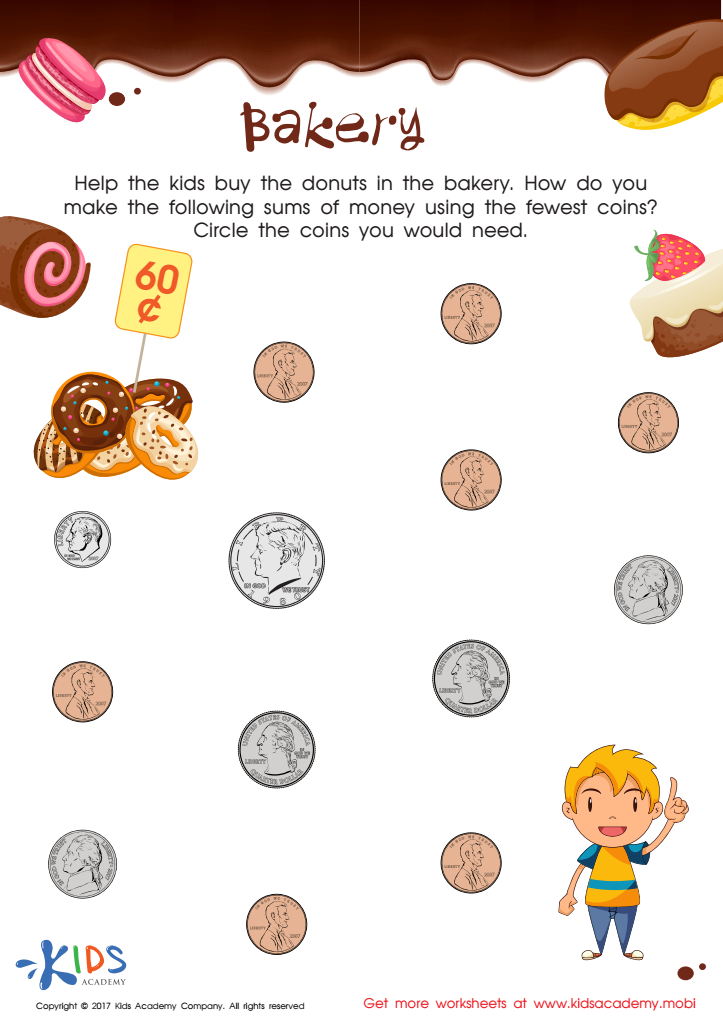
Counting Coins Worksheet
 Assign to My Students
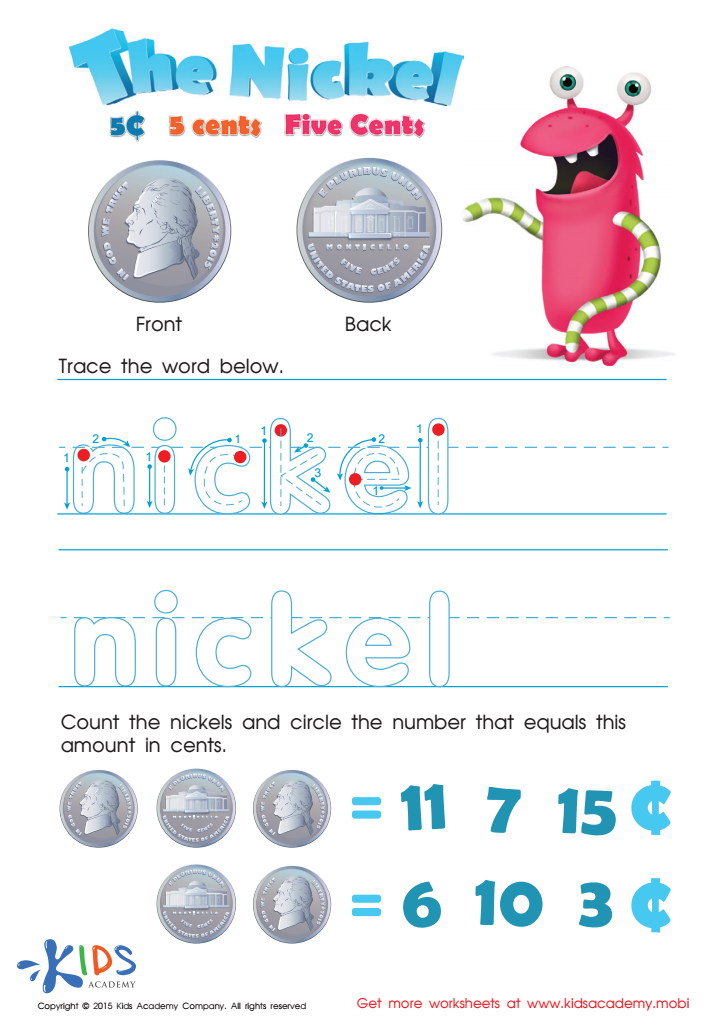
Five Cents or the Nickel Money Worksheet
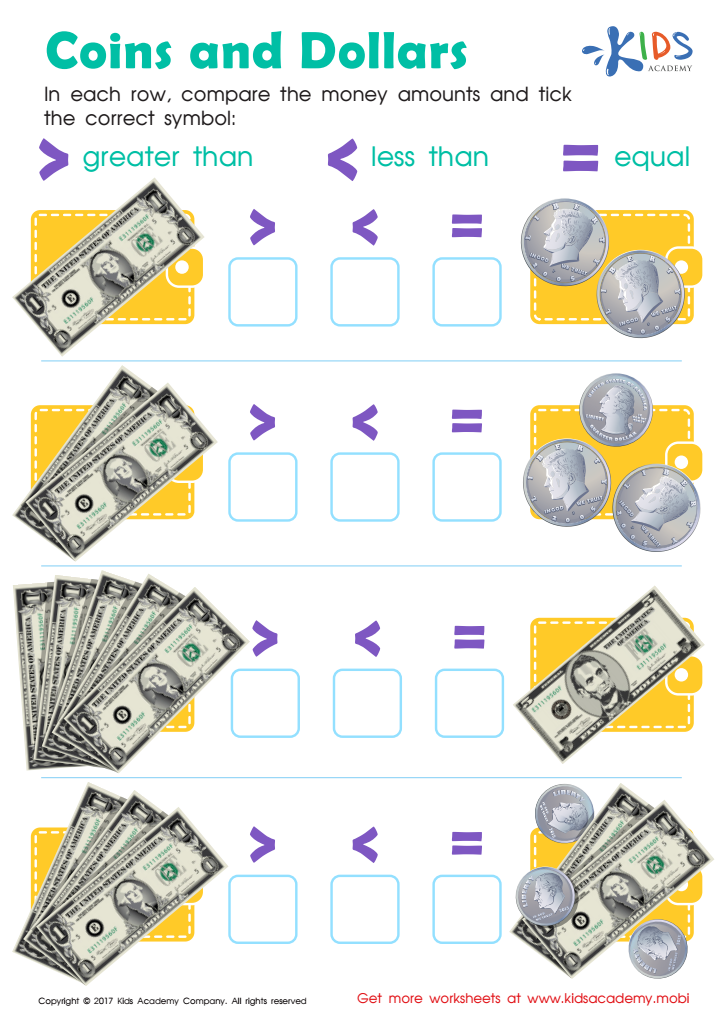
Money: Coins Dollars Printable








Understanding currency is a crucial skill for children aged 6-7, making it essential for parents and teachers to prioritize its teaching. At this developmental stage, children are learning about basic math concepts such as addition and subtraction, which can be applied in real-world contexts through money management. Familiarity with currency helps instill values like budgeting and saving, laying a foundation for responsible financial behavior later in life.
When children grasp the concept of currency, they also enhance their critical thinking and decision-making skills. Engaging with different denominations allows them to practice counting, recognizing patterns, and understanding the concept of value. This knowledge boosts their confidence and autonomy, enabling them to make informed choices when they encounter currency in real life, such as while shopping or managing their allowance.
Moreover, understanding currency fosters discussions about the economy, diversity, and cultural practices related to money. It encourages a sense of responsibility as children begin to grasp the implications of their purchases and how transactions affect others. By integrating this learning into everyday experiences, parents and teachers can help children build essential life skills, preparing them for healthier financial habits in adulthood. This foundational knowledge goes beyond math by promoting overall cognitive and social development.








