Recognizing shapes Extra Challenge Math Worksheets for Ages 6-7
3 filtered results
-
From - To
Discover our "Recognizing Shapes Extra Challenge Math Worksheets" designed specifically for children ages 6 to 7! These engaging worksheets are perfect for enhancing shape recognition skills while encouraging critical thinking. With various challenges that go beyond basic identification, children will explore shape properties, classifications, and comparative analysis in a fun and interactive way. Ideal for reinforcing classroom learning or enhancing at-home education, our worksheets help develop spatial awareness and problem-solving skills. Encourage your child's mathematical growth with an exciting range of activities that will make mastering shapes enjoyable. Download now to enrich your child’s learning experience!
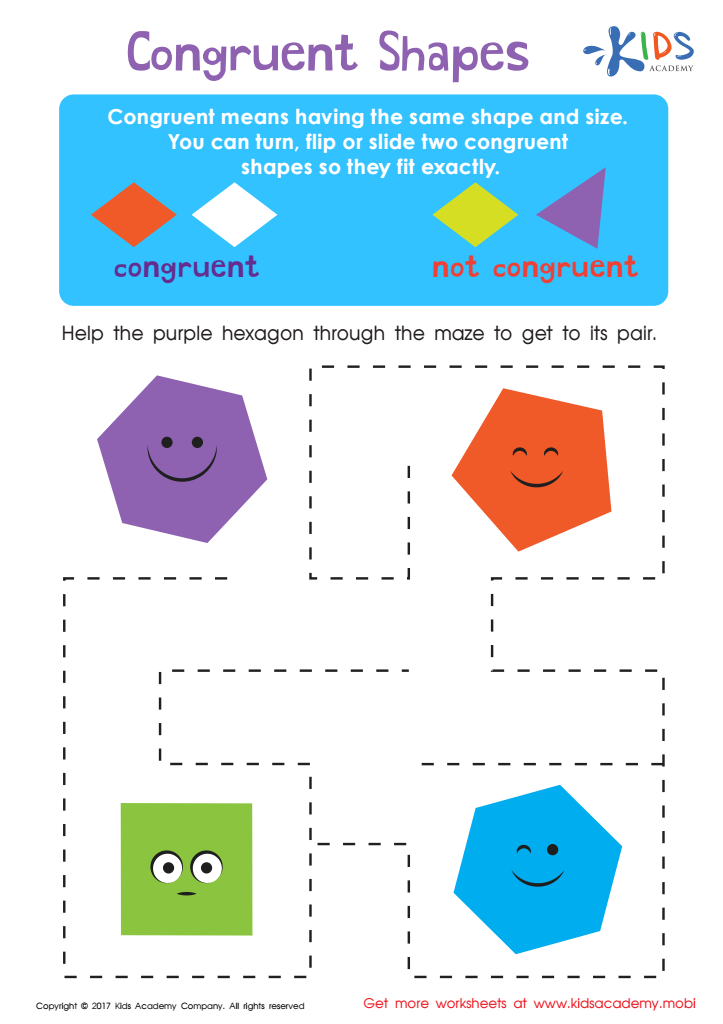
Congruent Shapes Worksheet
 Assign to My Students
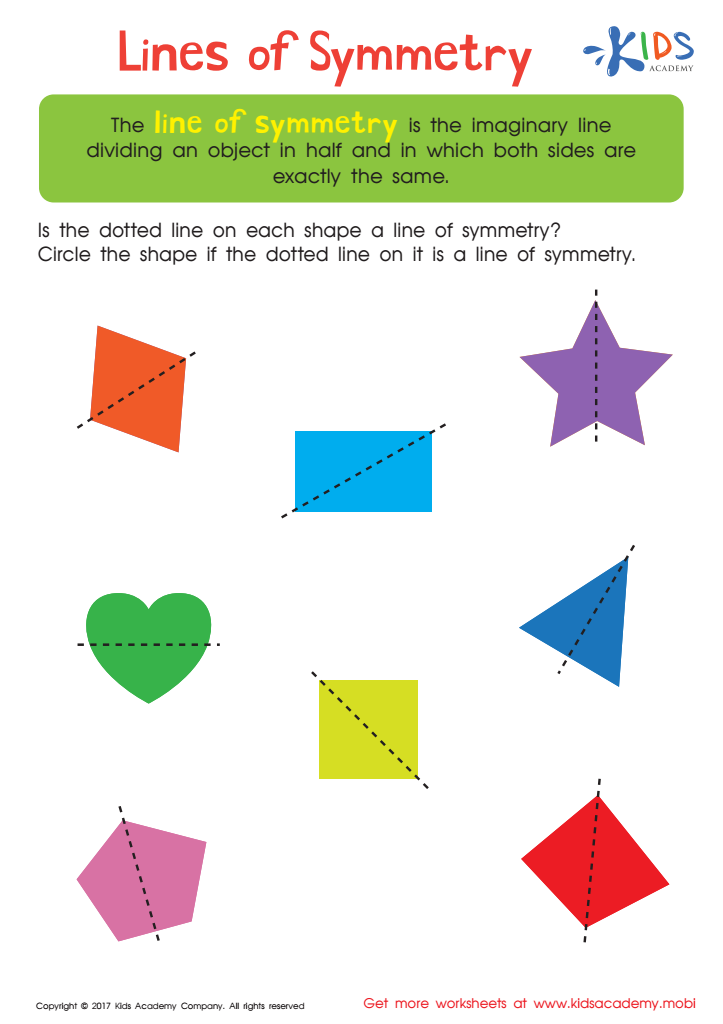
Lines of Symmetry Printable
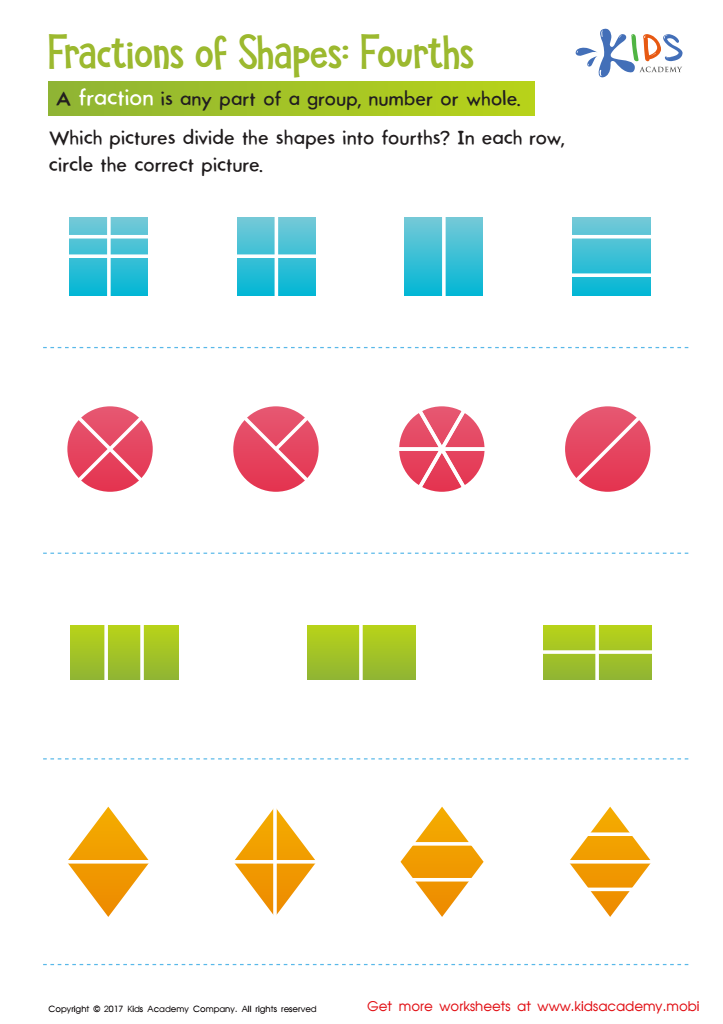
Fractions of Shapes Worksheet


.jpg)





Recognizing shapes is a fundamental mathematical concept that lays the groundwork for more complex problem-solving skills in young learners aged 6-7. Parents and teachers should prioritize this skill for several reasons. First, shape recognition fosters spatial awareness, which is crucial for tasks ranging from reading maps to understanding geometry. It enhances children's ability to visualize and manipulate objects in their minds, aiding in both math and everyday tasks.
Moreover, recognizing shapes supports logical thinking and classification skills. As children identify and categorize different shapes, they develop critical thinking abilities that are applicable across subjects. For instance, recognizing patterns in shapes can lead to problem-solving skills important in science and engineering.
Additionally, engaging children in shape recognition through fun activities transforms learning into a dynamic, enjoyable experience. This interest can motivate further exploration in math and science.
Furthermore, proficiency in recognizing shapes is directly linked to future academic success in mathematics. By investing time in Extra Challenge Math activities, parents and teachers can build a strong mathematical foundation that encourages confidence and curiosity in young learners. These skills not only contribute to academic performance but also prepare children for real-world applications, making it vital for educators and parents to emphasize shape recognition in early education.