Addition Practice Extra Challenge Worksheets for Ages 6-8 - Page 2
25 filtered results
-
From - To
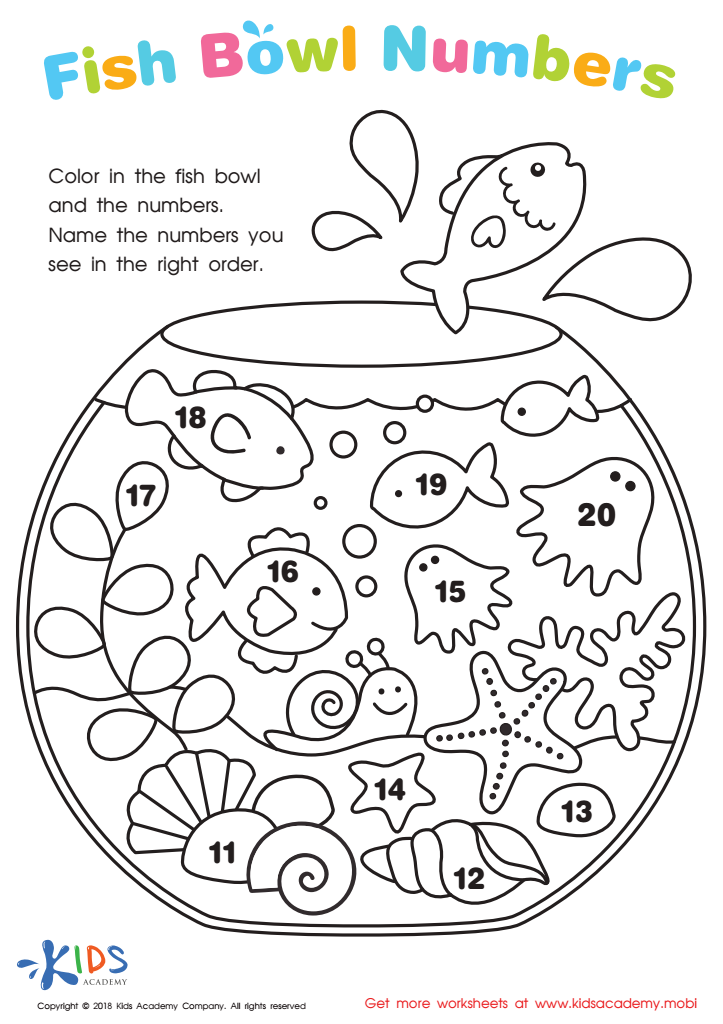
Fish Bowl Numbers Worksheet
 Assign to My Students







Fostering addition practice in young children, specifically ages 6-8, is crucial for developing a solid math foundation. At this formative age, children are naturally curious and capable of absorbing fundamental skills that serve as building blocks for more complex mathematical concepts. Addition practice enhances their numerical fluency and helps in understanding the relationship between numbers, thereby forming a key component of their mathematical toolkit.
Children's cognitive development undergoes significant growth during these years, and engaging in extra challenges sharpens their problem-solving abilities and critical thinking. Furthermore, regular practice improves memory retention and boosts their confidence in handling numbers. This early mastery of addition translates to greater ease when tackling advanced topics like subtraction, multiplication, and division, promoting a positive attitude towards math throughout their educational journey.
Parents should care because strong math skills are correlated with better academic performance and greater opportunities in the future. Meanwhile, teachers should recognize that personalized and consistent addition practice caters to the diverse learning paces within a classroom. Providing extra challenges keeps advanced students stimulated and those who need more practice engaged. Through supportive guidance, both parents and teachers can nurture a child's love for learning and build a formidable foundation for lifelong educational success.








