Categorization skills Extra Challenge Worksheets for Ages 6-8
3 filtered results
-
From - To
Enhance your child’s categorization skills with our Extra Challenge Worksheets designed for ages 6-8! These engaging and fun worksheets are perfect for young learners who are ready to take their abilities to the next level. Each worksheet encourages critical thinking as children sort, group, and classify various items based on different attributes. With vibrant illustrations and age-appropriate challenges, these extra worksheets motivate students to explore and expand their understanding of relationships between objects. Perfect for classroom use or at-home learning, our worksheets make mastering categorization skills enjoyable and effective. Download and empower your young learners today!
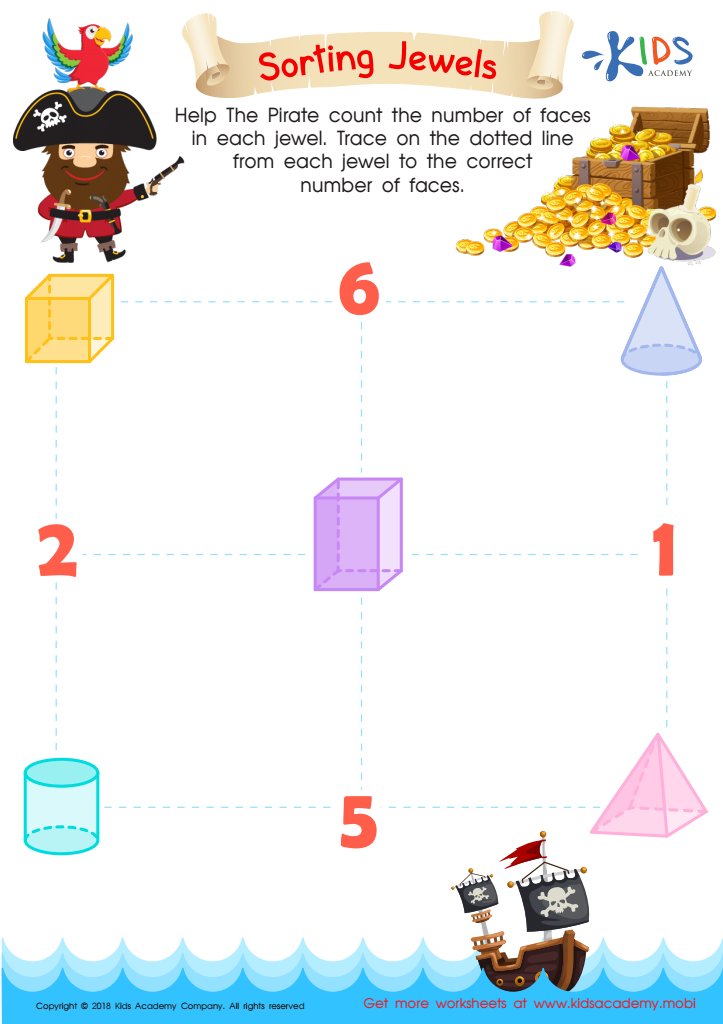
Sorting Jewels Worksheet
 Assign to My Students
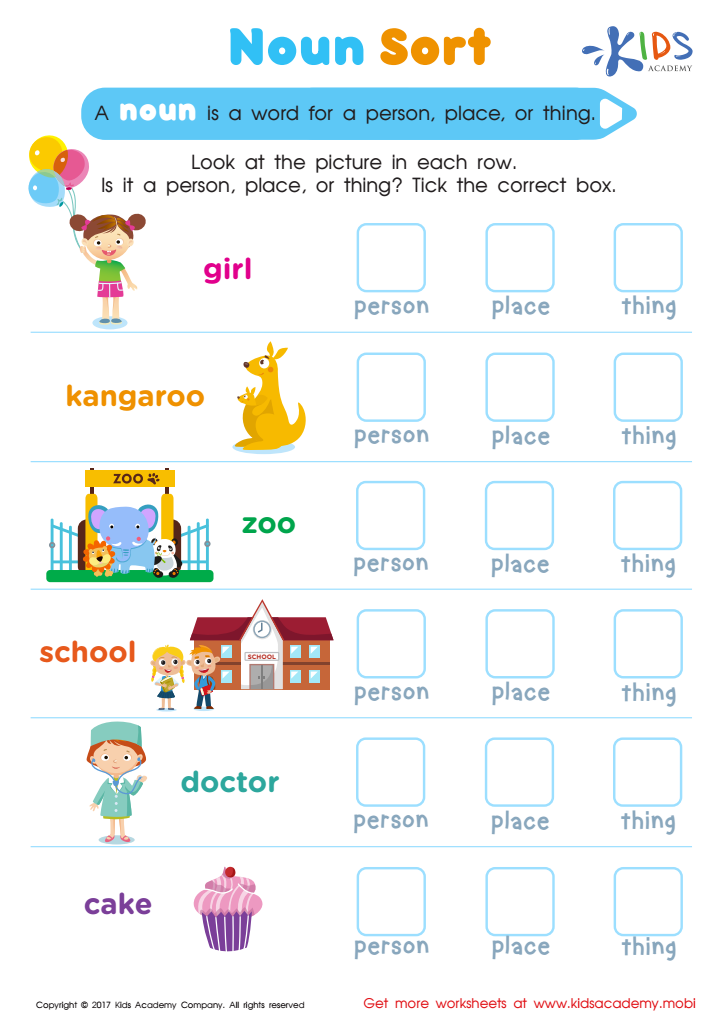
Noun Sort Printable
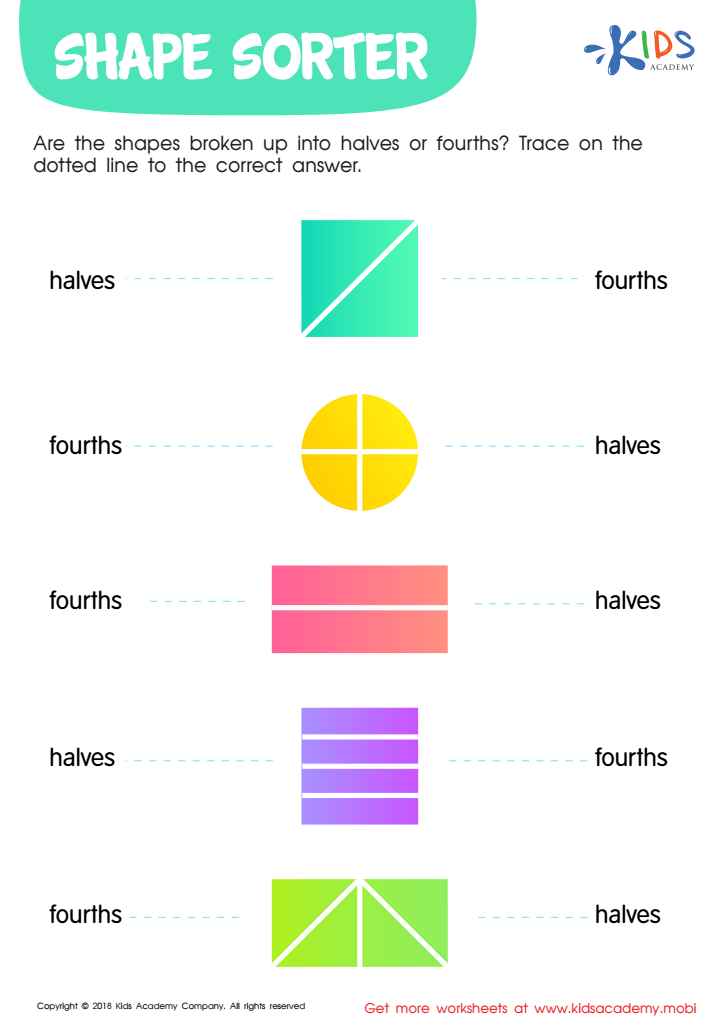
Shape Sorter Worksheet


.jpg)




Categorization skills are crucial for children aged 6-8, and parents and teachers should prioritize their development for several reasons. First, categorization aids in cognitive development. By learning to group objects, ideas, or concepts together based on shared characteristics, children enhance their critical thinking and problem-solving abilities. This foundational skill sharpens their ability to analyze information and draw connections, which are essential for academic success.
Furthermore, categorization skills play a vital role in language development. As children sort items or concepts, they expand their vocabulary and improve their understanding of how words relate to one another. This, in turn, strengthens their communication abilities, aiding both oral and written expression.
Socially, categorization allows children to understand their environment better. They learn to identify similarities and differences among peers, which fosters empathy and helps them navigate social situations effectively.
Extra challenges in categorization can stimulate creativity and encourage children to think outside the box. Engaging in these challenges promotes persistence and adaptability, traits beneficial for lifelong learning. Ultimately, by supporting the enhancement of categorization skills, parents and teachers are investing in children’s overall cognitive, linguistic, and social development, setting them up for future success.








