Chess strategy learning Extra Challenge Worksheets for Ages 6-8
7 filtered results
-
From - To
Discover our Chess Strategy Learning Extra Challenge Worksheets, specially designed for young minds aged 6-8. These engaging worksheets are perfect for kids who are eager to dive deeper into the game of chess and sharpen their strategic thinking. Featuring fun puzzles and challenging exercises, this collection helps children practice essential chess moves and tactics, enhancing their problem-solving skills. Our worksheets promote focus and patience, fostering a love for strategic play in a playful, educational environment. Ideal for budding chess enthusiasts, these worksheets make learning chess strategies both enjoyable and rewarding. Give your child the extra edge with our comprehensive chess challenge sheets today!
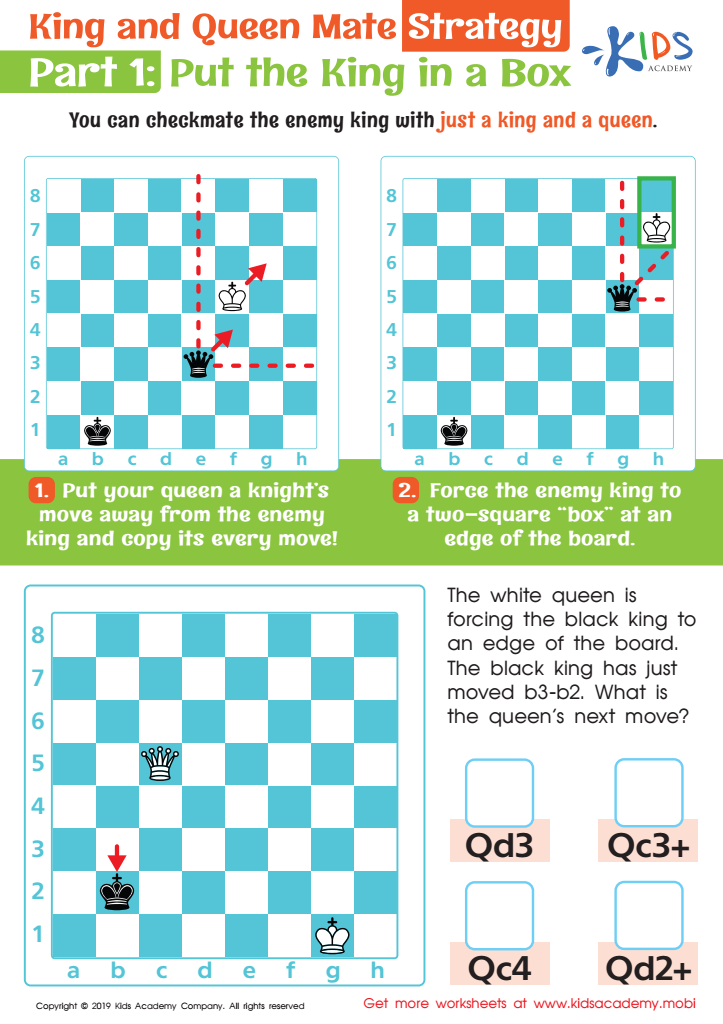
King and Queen Mate Strategy: Part 1 Worksheet
 Assign to My Students
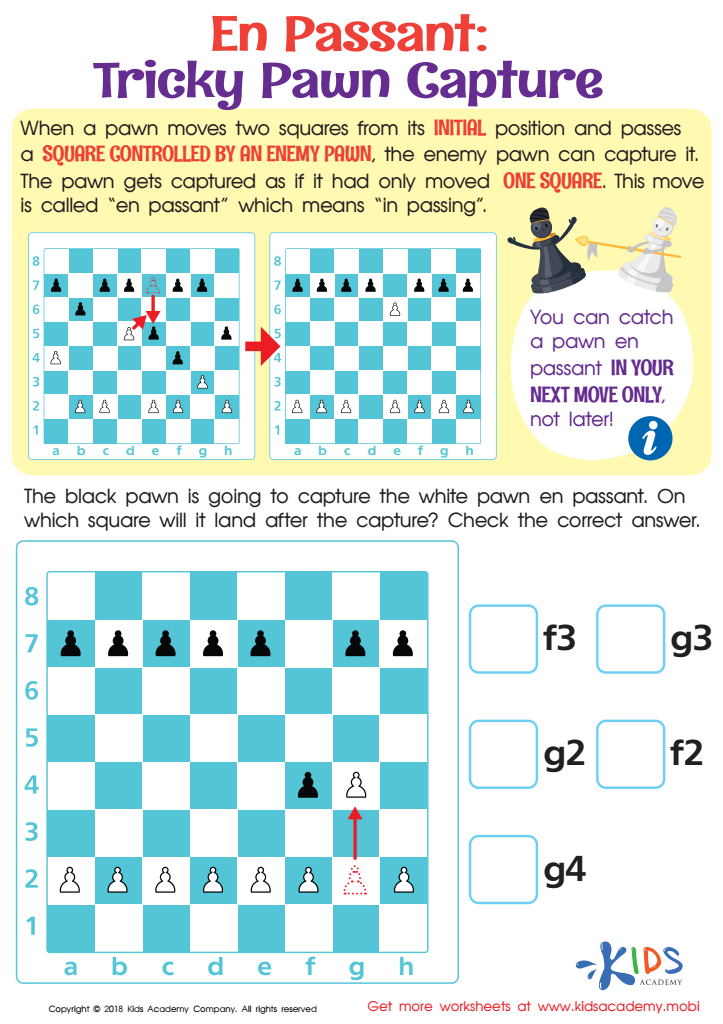
En Passant: Tricky Pawn Capture Worksheet
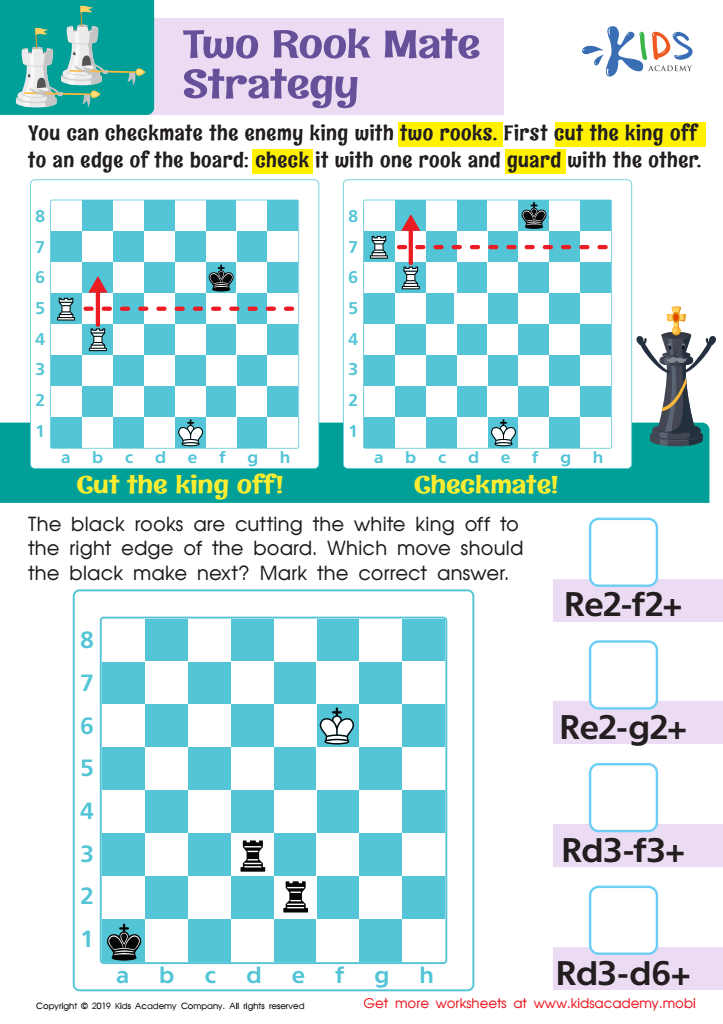
Two Rook Mate Strategy Worksheet
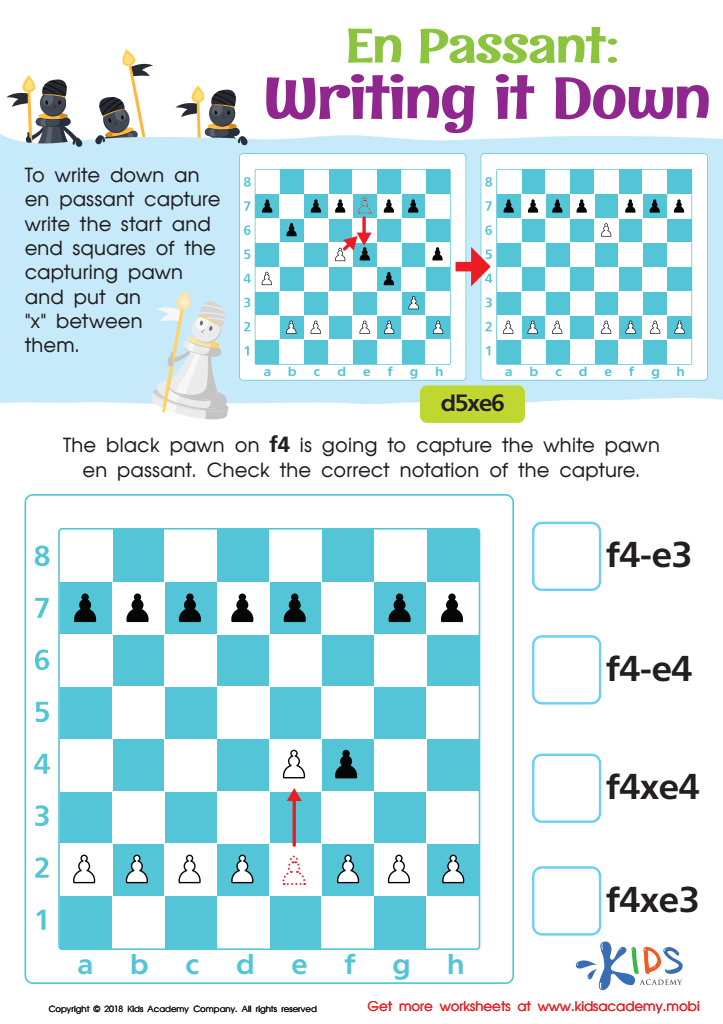
En Passant: Writing it Down Worksheet
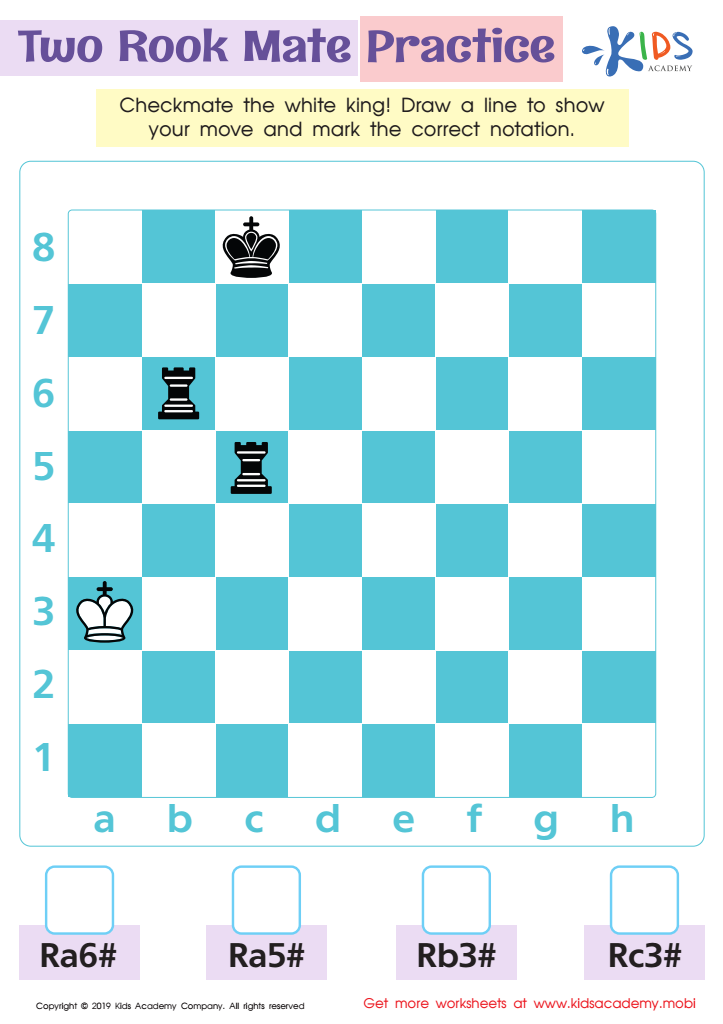
Two Rook Mate Practice Worksheet
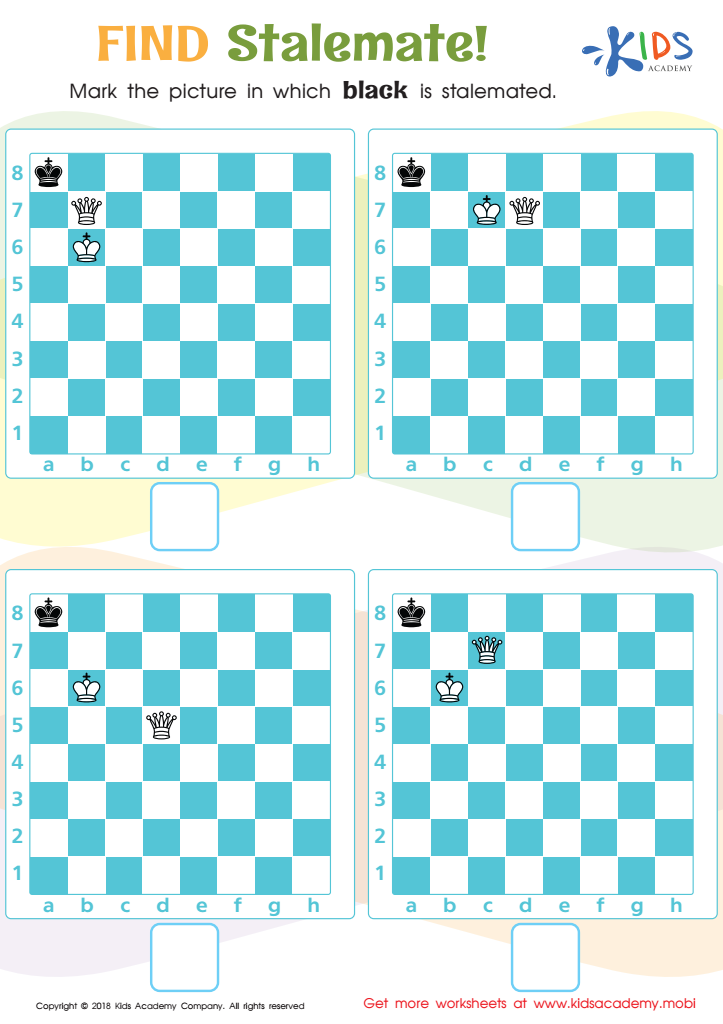
Find Stalemate! Worksheet
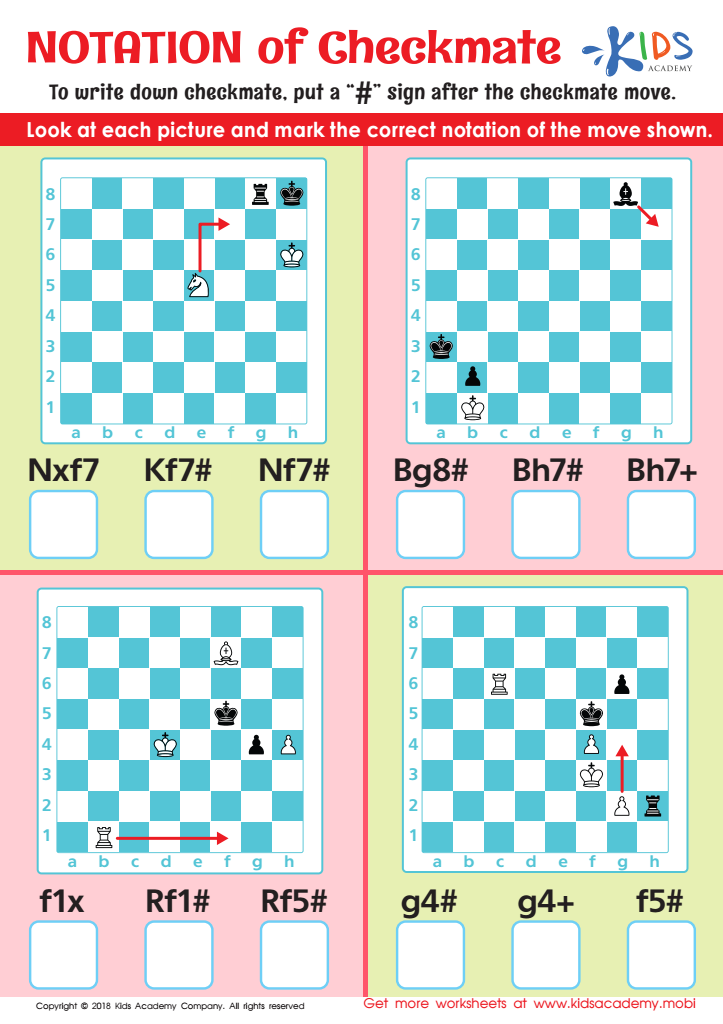
Notation of Checkmate Worksheet






Introducing chess strategy learning to children aged 6-8 offers numerous benefits that extend well beyond the game itself. First, playing chess helps develop critical thinking and problem-solving skills. Young children learn to anticipate the opponent's moves and think multiple steps ahead, fostering a mindset geared towards planning and strategic thinking.
Moreover, chess teaches patience and perseverance. Given the game's nature, children learn to wait for the right opportunities and understand the benefits of thinking through their actions rather than rushing. This can translate into better self-control and greater focus in both academic and social settings.
Additionally, chess promotes creativity and imagination. The board becomes a playground for experimenting with different moves and strategies, nurturing children's innovative thinking. It encourages them to recognize patterns, improving their cognitive development and organizational skills.
Another key benefit is self-esteem. Successfully executing a well-planned strategy or overcoming a challenging opponent boosts children’s confidence, teaching them the value of effort and persistence.
Social skills are also enhanced through chess. Playing with peers encourages teamwork, sportsmanship, and communication, which are essential life skills. Thus, incorporating chess strategy learning as an extra challenge for young children not only enriches their intellectual capabilities but also supports their emotional and social development.








