Comparing objects Extra Challenge Worksheets for Ages 6-8
3 filtered results
-
From - To
Discover our "Comparing Objects Extra Challenge Worksheets" designed for children aged 6-8. These engaging worksheets promote critical thinking and enhance observational skills as students explore similarities and differences between various objects. Perfect for enhancing core counting, sorting, and categorization skills, our extra challenges elevate the learning experience beyond the basics. Ideal for both classroom and home use, these worksheets encourage independent thought and creativity. With vibrant illustrations and interactive activities, young learners will enjoy diving into the world of comparison. Foster a love for learning while helping your child master this essential skill. Perfect for educators and parents alike!
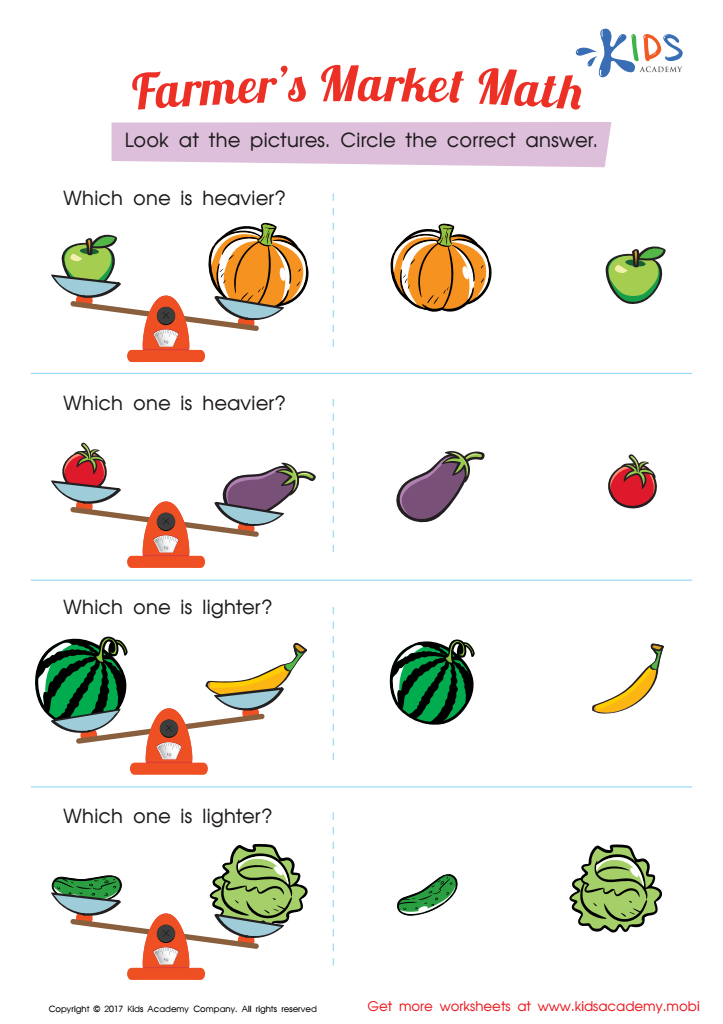
Which One Is Heavier Worksheet
 Assign to My Students
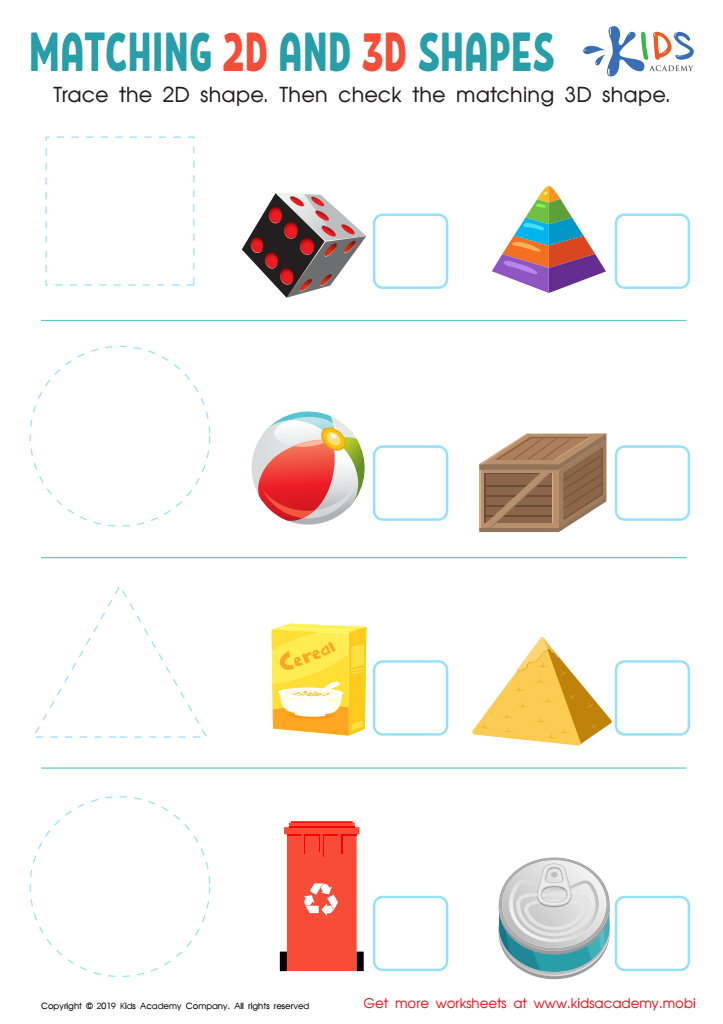
Matching 2D and 3D Shapes Worksheet
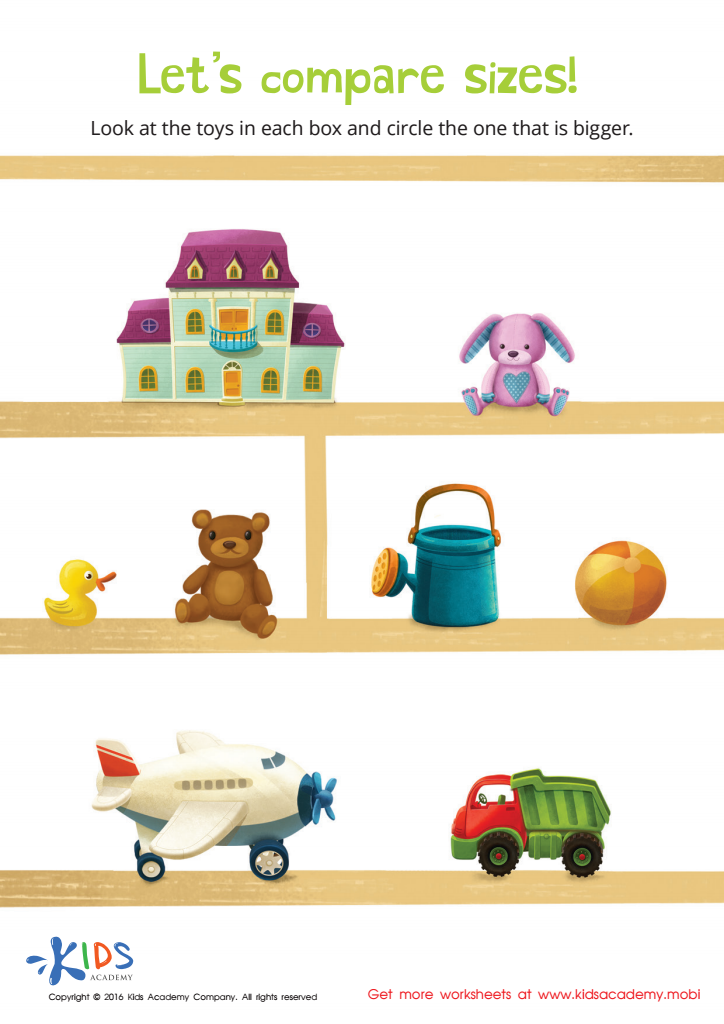
Classifying by Size Sorting Worksheet






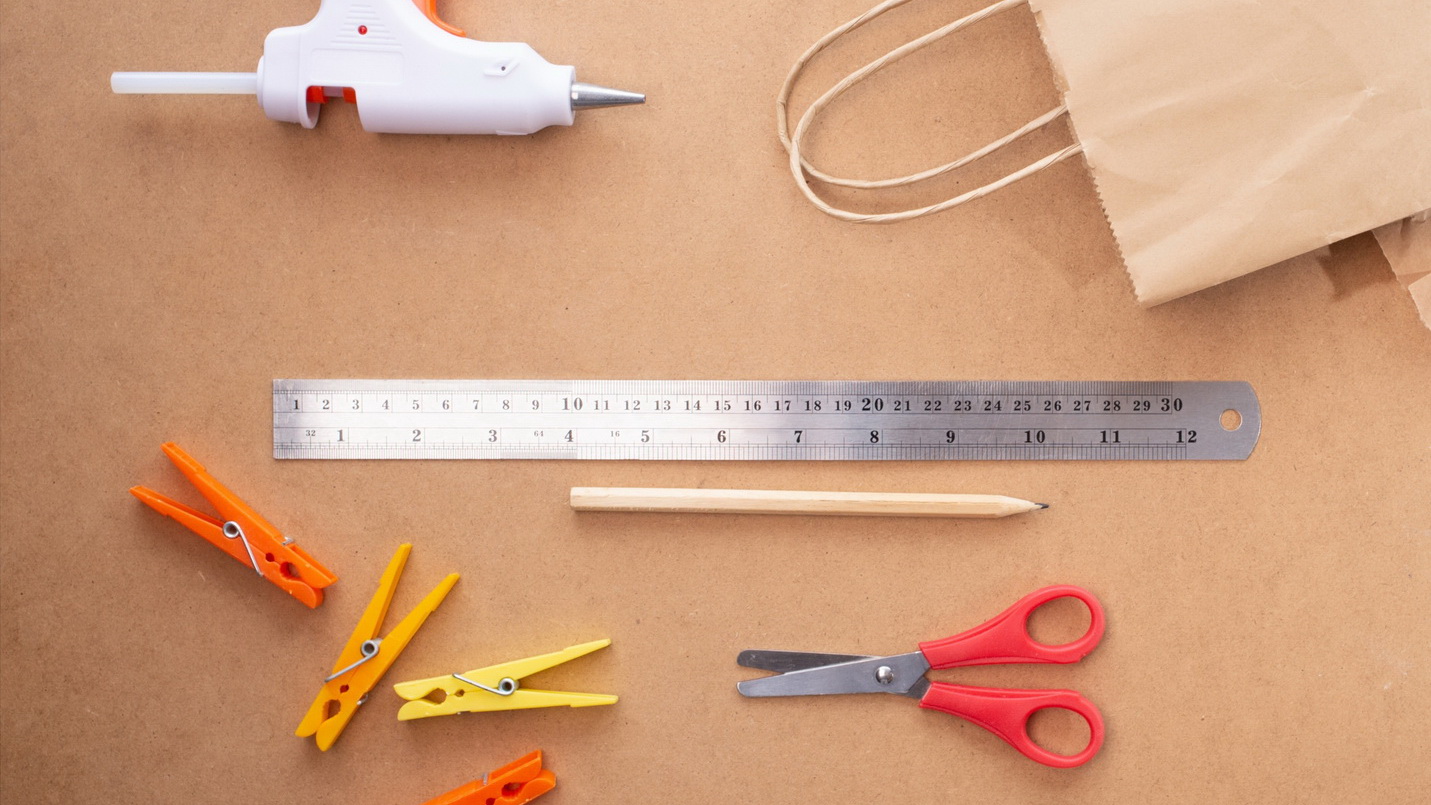
Comparing objects is a fundamental skill that plays a crucial role in the cognitive development of children aged 6-8. Parents and teachers should care about introducing challenges that promote this skill, as it lays the foundation for advanced mathematical concepts and critical thinking. When children compare objects based on attributes such as size, weight, or shape, they engage in hands-on problem-solving, which enhances their observational skills and encourages logical reasoning.
Moreover, this challenge stimulates linguistic development. As children articulate their reasons for differences and similarities, they expand their vocabulary and improve communication skills. It also fosters social interaction, as comparing objects can be a group activity that promotes teamwork and collaboration.
Furthermore, working with comparisons encourages a deeper understanding of the world around them, cultivating analytical thinking and decision-making skills that are vital for future learning challenges. Engaging in such tasks not only makes learning fun but reinforces persistence in problem-solving, an attitude that nurtures resilience. Therefore, by prioritizing these experiences, parents and teachers can significantly impact children's academic and personal growth, equipping them with essential skills for later stages of education and life.








