Data interpretation Extra Challenge Worksheets for Ages 6-8
3 filtered results
-
From - To
Discover our engaging "Data Interpretation Extra Challenge Worksheets for Ages 6-8"! Designed to enhance young learners' analytical skills, these worksheets provide exciting activities that focus on understanding data through graphs, charts, and tables. Perfect for educators and parents seeking to challenge students beyond the basics, each worksheet encourages critical thinking, making math concepts fun and accessible. Your child will develop essential skills in interpreting information, drawing conclusions, and solving problems, all while building confidence. Explore a variety of unique challenges tailored specifically for ages 6-8 and support your child's cognitive growth today! Access this invaluable resource online!
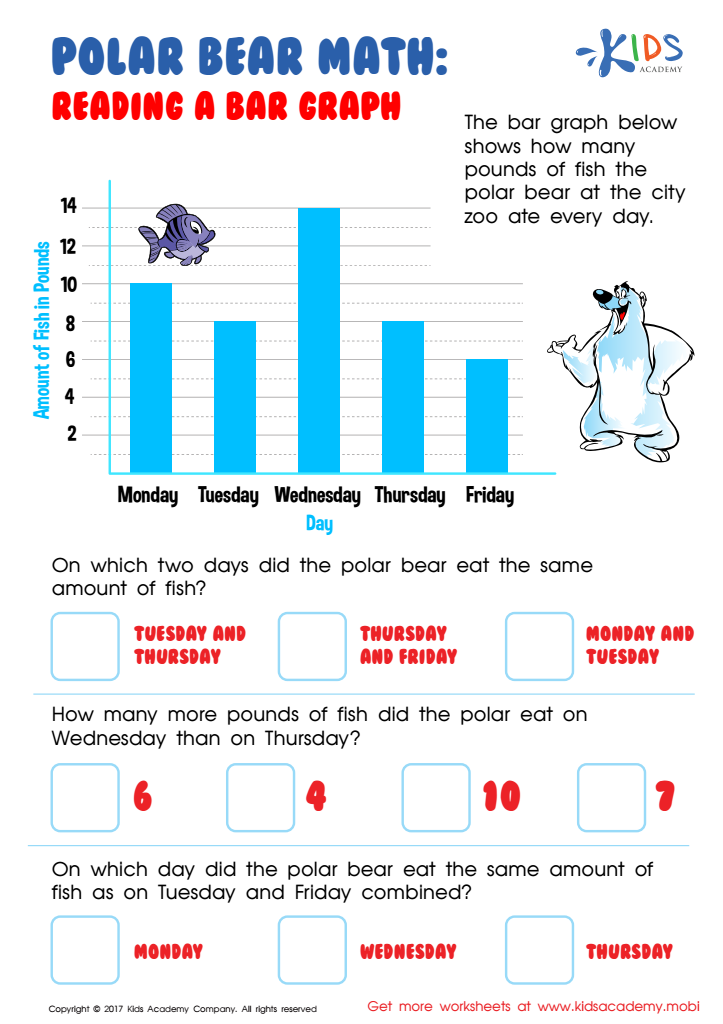
Reading Bar Graph Worksheet
 Assign to My Students
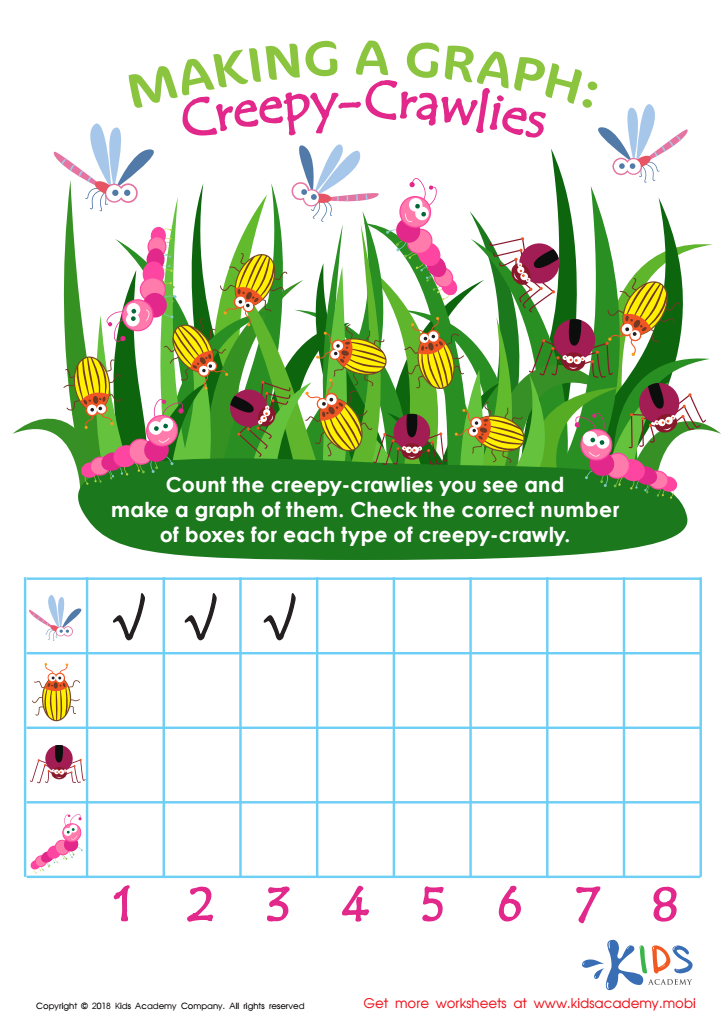
Making a Graph: Creepy Crawlies Worksheet
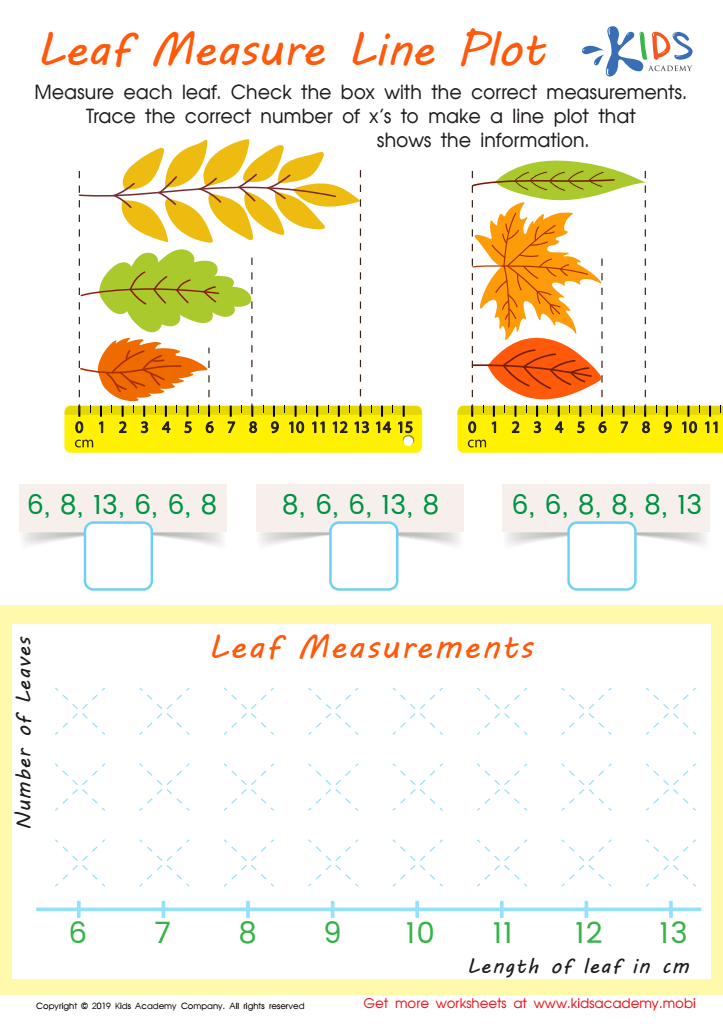
Leaf Measure Line Plot Worksheet








Data interpretation is a valuable skill for children aged 6-8, and parents and teachers should prioritize it for several reasons. First, data interpretation develops critical thinking skills. When children learn to read graphs, charts, and data sets, they enhance their ability to analyze and draw conclusions, skills essential for academic success across subjects.
Second, data interpretation fosters a sense of curiosity and exploration. By engaging with data, children discover patterns and relationships that stimulate their natural inquisitiveness, encouraging them to ask questions and seek answers. This active engagement in learning promotes a growth mindset, where children feel motivated to tackle challenging problems.
Moreover, understanding data helps children make informed decisions in everyday life. Whether it's interpreting the results of a survey, evaluating sports stats, or assessing environmental changes, these skills empower children as critical consumers of information.
Lastly, data skills are foundational for future learning in mathematics and sciences, paving the way for deeper understanding in advanced topics. By incorporating data interpretation into education, parents and teachers equip children with essential tools for their academic journey and future career paths, making it both a vital and practical focus in early education.








