Understanding fractions Extra Challenge Geometry Worksheets for Ages 6-8
8 filtered results
-
From - To
Discover our "Understanding Fractions Extra Challenge Geometry Worksheets" designed specifically for children aged 6-8! These engaging, interactive worksheets help young learners grasp fundamental concepts of fractions through innovative geometry activities. Each worksheet incorporates vibrant visuals and real-life scenarios, making math fun and relatable. Through exciting challenges, kids will enhance their problem-solving skills, mastering fraction identification, comparison, and addition. Our resources are tailored to build confidence and ensure a solid understanding of fractions while aligning with educational standards. Perfect for classroom use or at-home practice, these worksheets are a fantastic way to foster a love for math in early learners! Start the journey today!
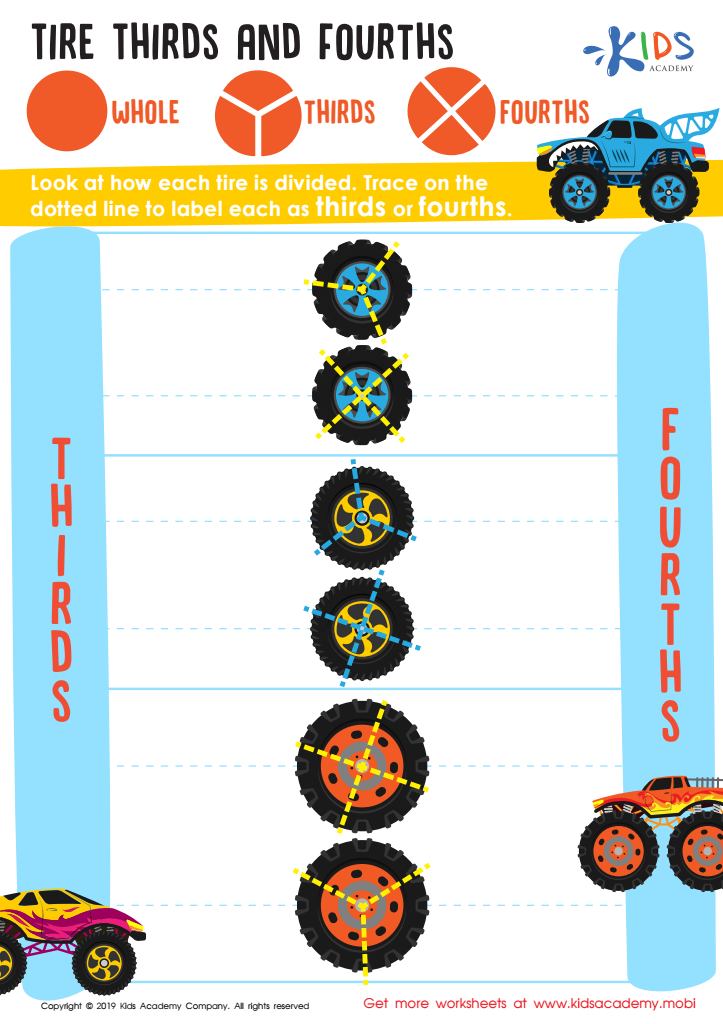
Tire Thirds and Fourths Worksheet
 Assign to My Students











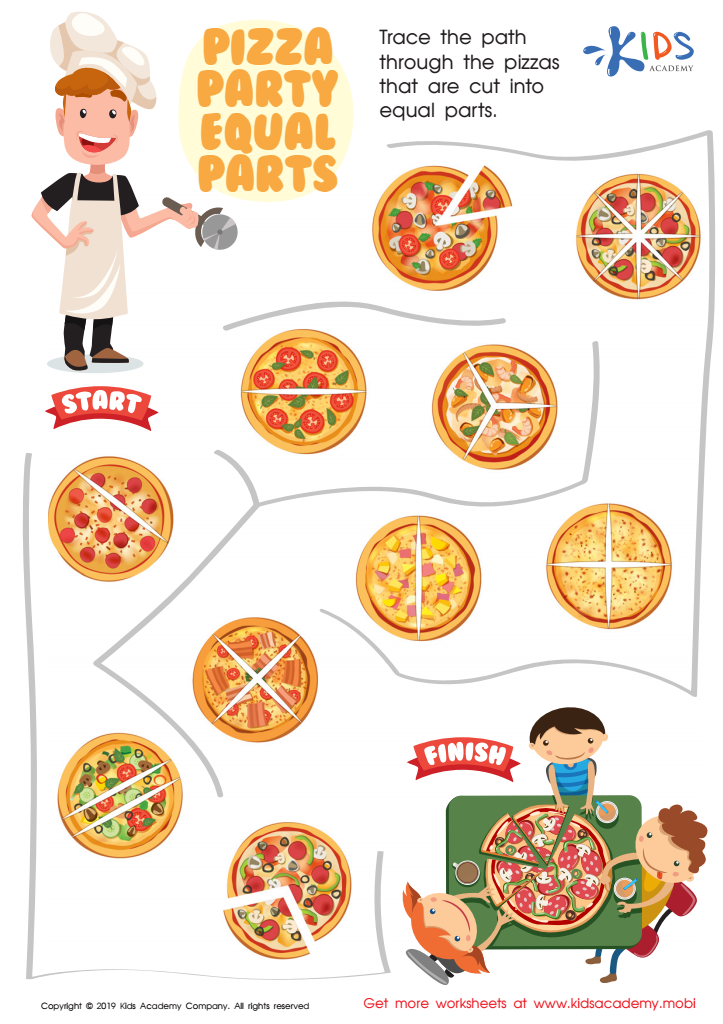
Pizza Party Equal Parts Worksheet
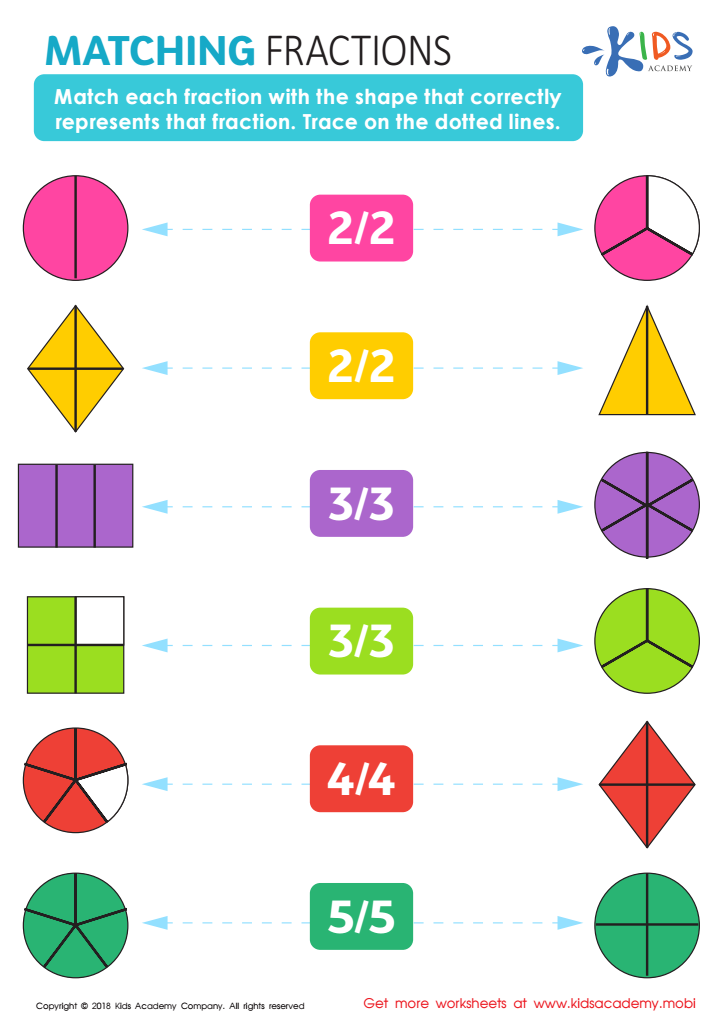
Matching Fractions Worksheet
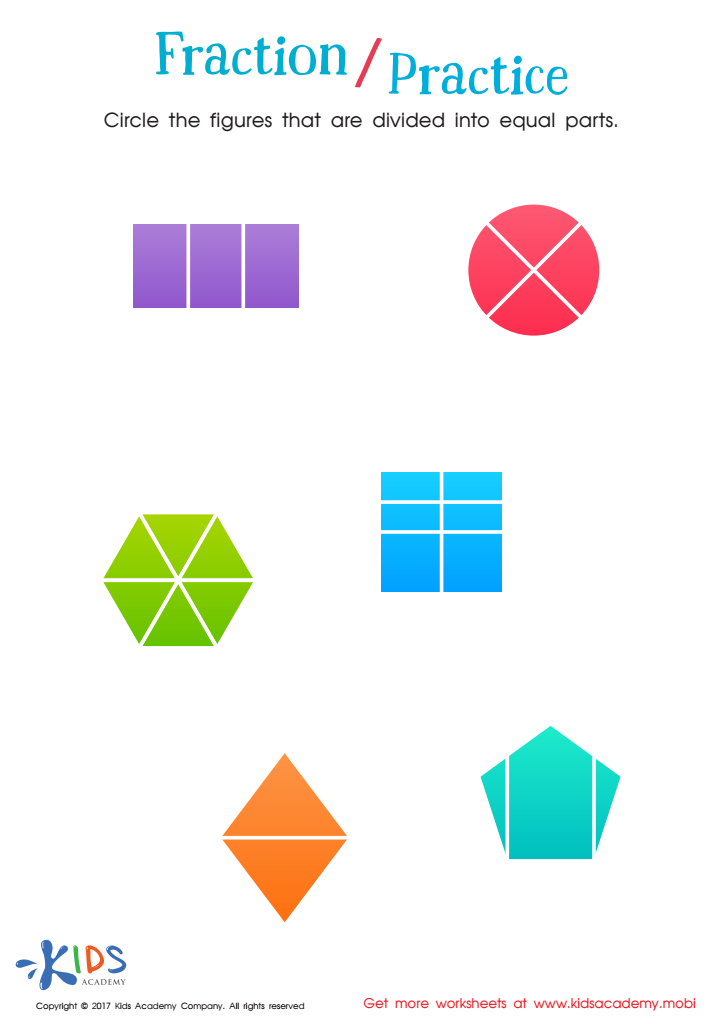
Fractions: Shapes Worksheet
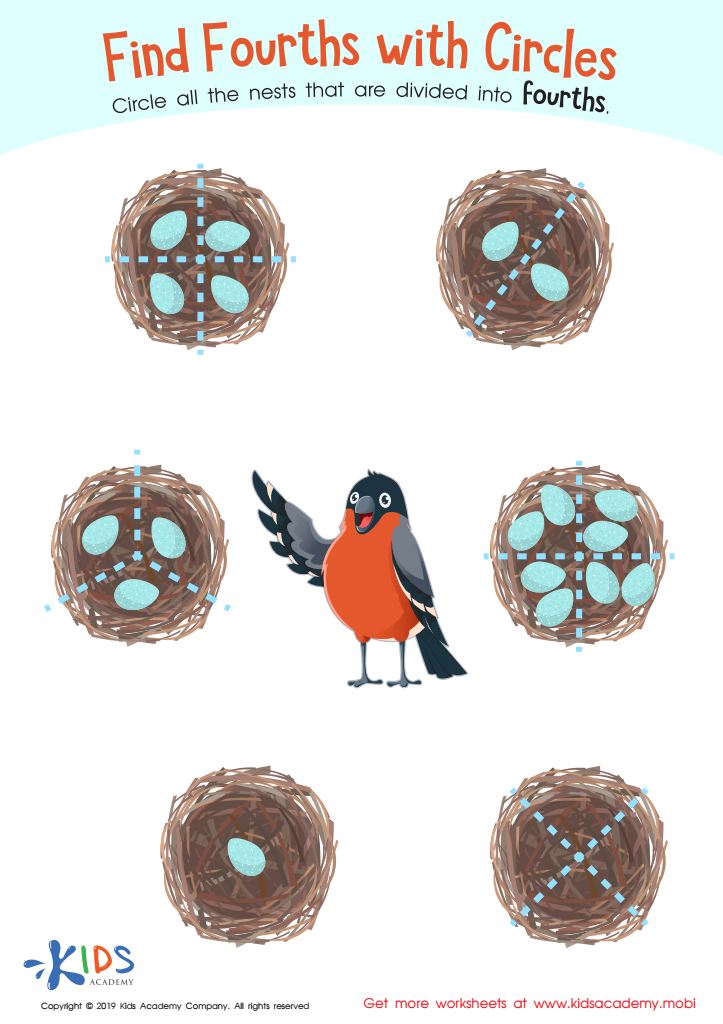
Find Fourths Circles Worksheet
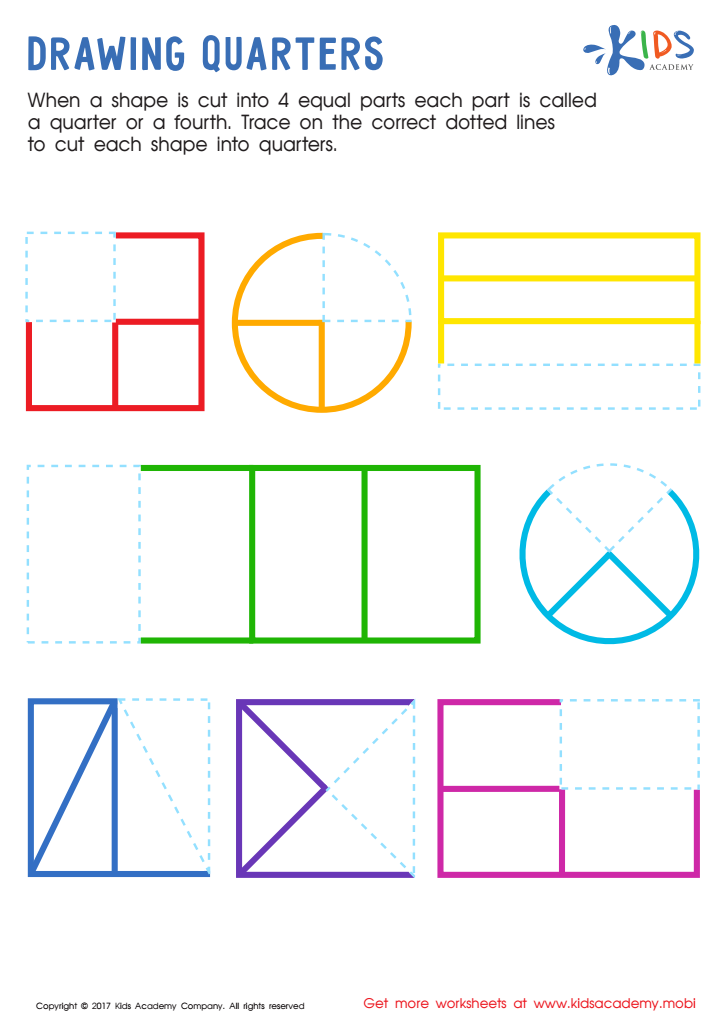
Drawing Quarters Worksheet
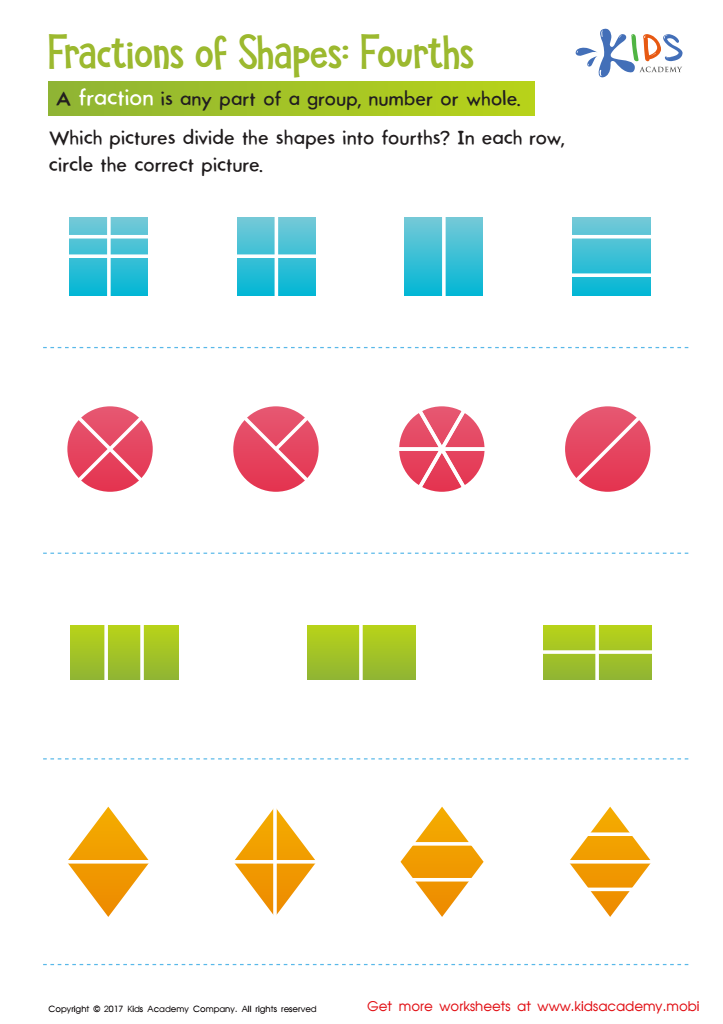
Fractions of Shapes Worksheet
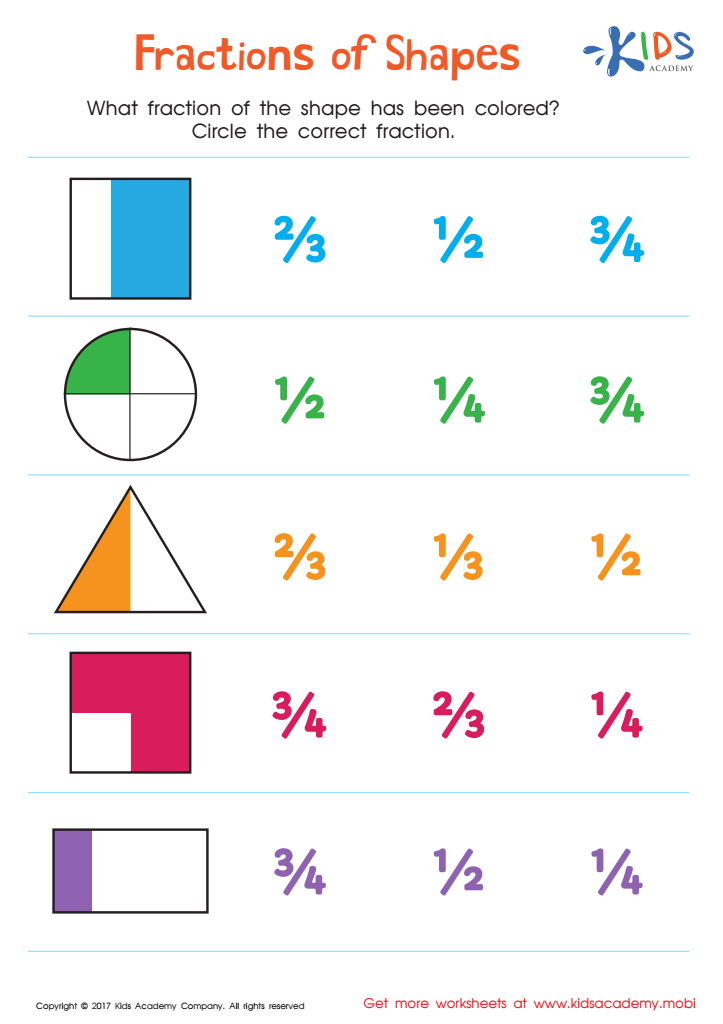
Fractions of Shapes: Math Concept Worksheet








Understanding fractions and geometry is vital for the academic growth of children aged 6-8. At this developmental stage, students are beginning to grasp fundamental mathematical concepts that form the foundation for more advanced topics. By introducing extras like "Understanding Fractions" and "Extra Challenge Geometry," parents and teachers can enrich students' learning experiences.
Fractions help children understand parts of a whole, which is crucial for real-life applications, such as cooking, dividing snacks, or sharing items. Mastery of fractions fosters critical thinking and problem-solving skills, encouraging students to think about numbers in new ways. This foundational understanding builds confidence and lays the groundwork for more complex math.
Geometry, on the other hand, introduces students to shapes, spatial reasoning, and measurement. Engaging in geometrical challenges promotes their observational skills and helps them understand how mathematics applies to the world around them, such as in art, architecture, and nature.
By emphasizing these areas through challenges, the learning is made fun and interactive, enhancing engagement and retention. Parents and teachers should care about these skills as they not only boost immediate academic success but also cultivate a lifelong appreciation for mathematics, encouraging future learning and exploration.








