Vocabulary Building Extra Challenge Writing Worksheets for Ages 6-8
3 filtered results
Difficulty Level
Grade
Age
-
From - To
Subject
Activity
Standards
Enhance your child's language skills with our "Vocabulary Building Extra Challenge Writing Worksheets for Ages 6-8." These engaging and educational worksheets are designed to expand young learners' vocabulary through fun and challenging activities. Each worksheet encourages children to explore new words, enhance their understanding, and improve their writing skills. Perfect for kids in early elementary levels, these resources make learning new vocabulary exciting and accessible. By incorporating these worksheets into their daily routine, children can effectively broaden their language abilities, leading to better reading comprehension and communication skills. Unlock your child's potential with these exciting vocabulary-building worksheets!
Favorites
With answer key
Interactive
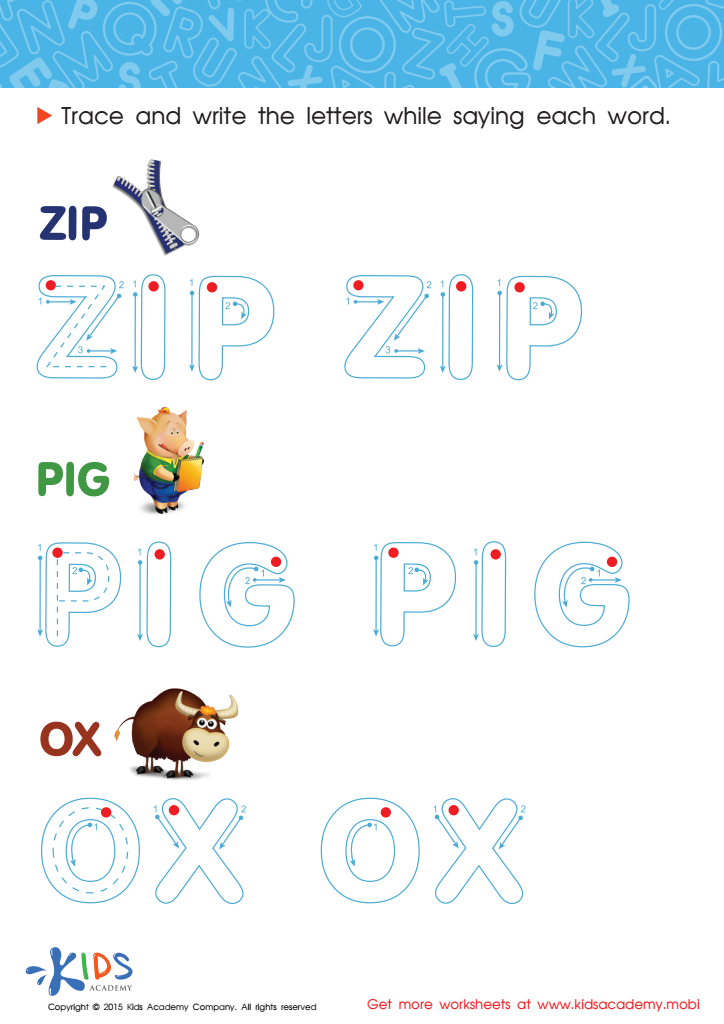
A Zip, a Pig and an Ox Spelling Worksheet
Check out this vocabulary building worksheet with three new words. Learn to say them, then trace and write them. Have fun with Kids Academy's writing practice worksheets and build your vocab! Do the tasks with care.
 Assign to My Students
A Zip, a Pig and an Ox Spelling Worksheet
Worksheet
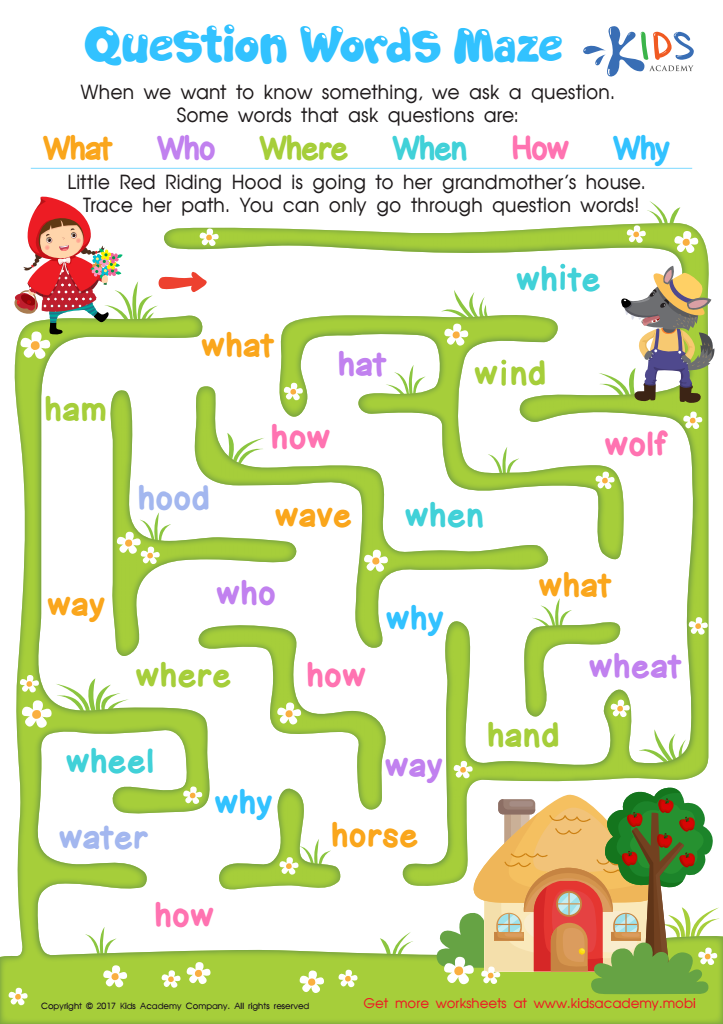
Question Words Maze Worksheet
Start each query with the right words: practice using the "who", "what", "where", "when" and "how" of questions in this fun maze. Guide Little Red Riding Hood away from the wolf and to her grandmother's house with a pencil, tracing a path through the question words only, leaving the wolf and other words behind.
Question Words Maze Worksheet
Worksheet
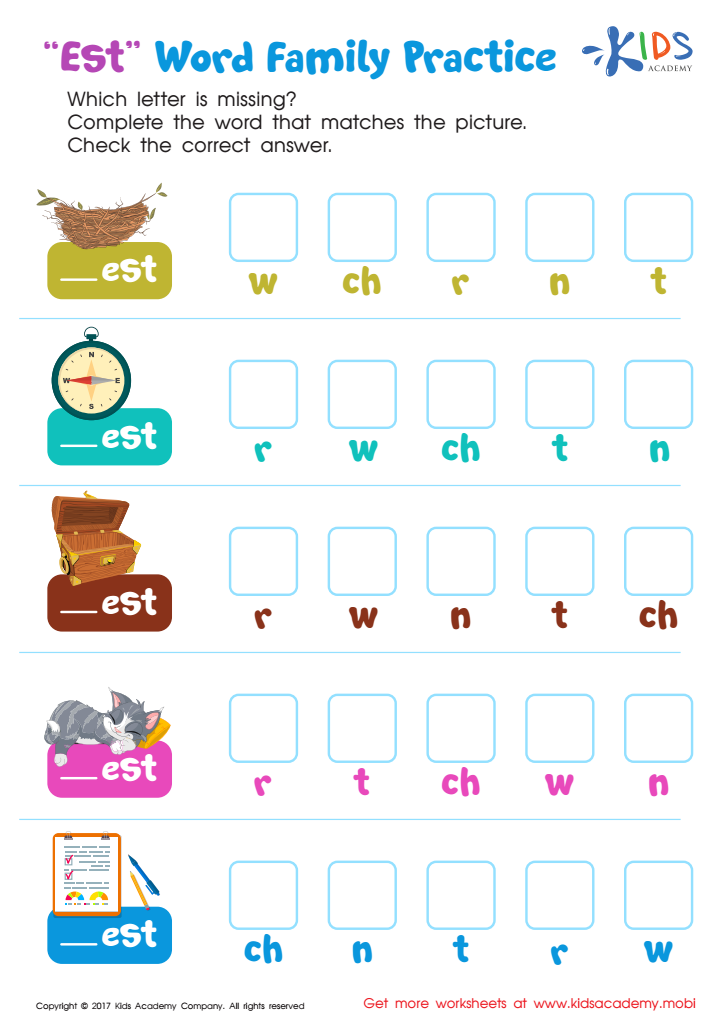
Words Family "est" Spelling Worksheet
Pictures are great for motivating kids as they learn. This spelling worksheet on words ending in "est" will help kids gain confidence and recognition in their spelling ability.
Words Family "est" Spelling Worksheet
Worksheet
Join Kids Academy for Free
Who is primarily going to use this learning content?






Vocabulary Building Extra Challenge Writing activities are crucial for children aged 6-8 because they lay the foundation for strong communication skills and academic success. At this developmental stage, children are naturally curious and ready to absorb new information, making it the perfect time to expand their vocabulary. A richer vocabulary helps children articulate their thoughts and feelings more effectively, which is essential for both social interactions and academic performance.
When parents and teachers prioritize vocabulary-building exercises, they also nurture critical thinking and creativity. These activities often require children to understand word meanings in different contexts, thereby enhancing comprehension skills. Writing challenges, in particular, encourage children to use new words actively, solidifying their understanding and retention.
Moreover, a strong vocabulary fosters a love for reading. Children who are comfortable with a wide range of words are more likely to engage with diverse texts, further improving their literacy skills. This creates a positive feedback loop, where reading improves vocabulary, and a strong vocabulary enhances reading experience.
By investing in vocabulary-building exercises, parents and teachers give children a significant advantage. This not only prepares them for future academic challenges but also sets them up for a lifetime of effective communication and critical thinking.