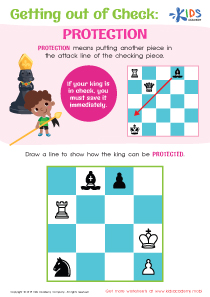
Critical thinking development Extra Challenge Chess Worksheets for Ages 6-9
4 filtered results
-
From - To
Unlock the power of young minds with our "Critical Thinking Development Extra Challenge Chess Worksheets for Ages 6-9". Specially crafted to stimulate critical thinking and strategic planning, these worksheets fuse fun with cognitive skill-building. Each printable challenge encourages children to foresee outcomes, recognize patterns, and experiment with ultracool chess moves, all tailored to reduce stress but increase problem-solving abilities. Suitable for beginners yet engaging for avid younger players, they offer an exciting way to master chess fundamentals while enhancing core learning skills. Checkmate the boredom, and elevate intellectual growth with these essential resources!
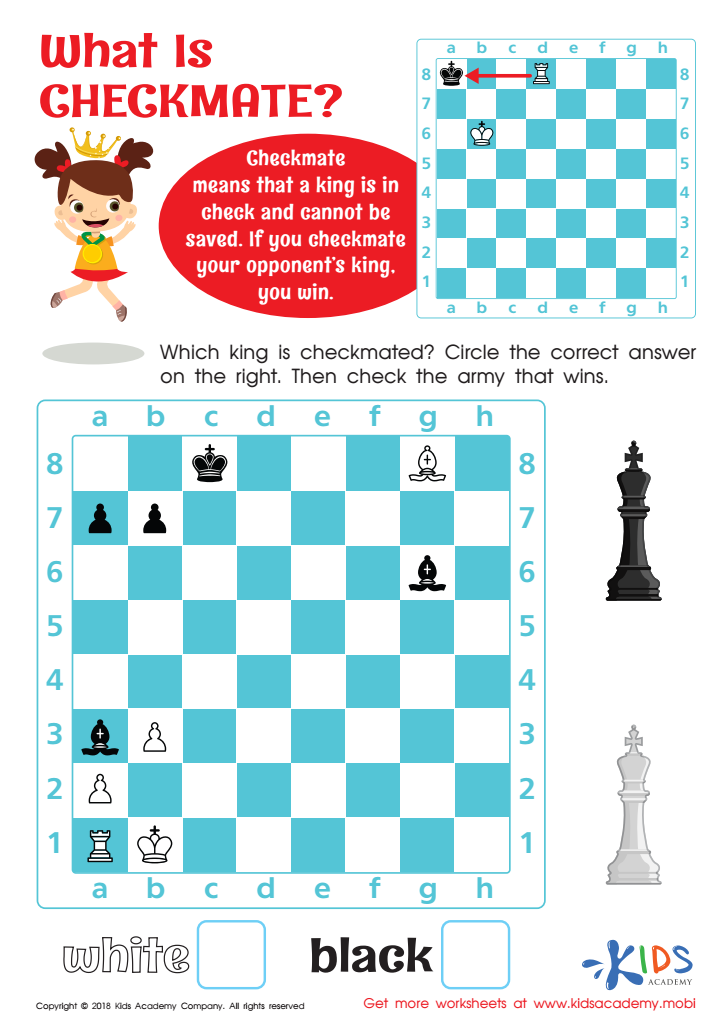
What is Checkmate? Worksheet
 Assign to My Students
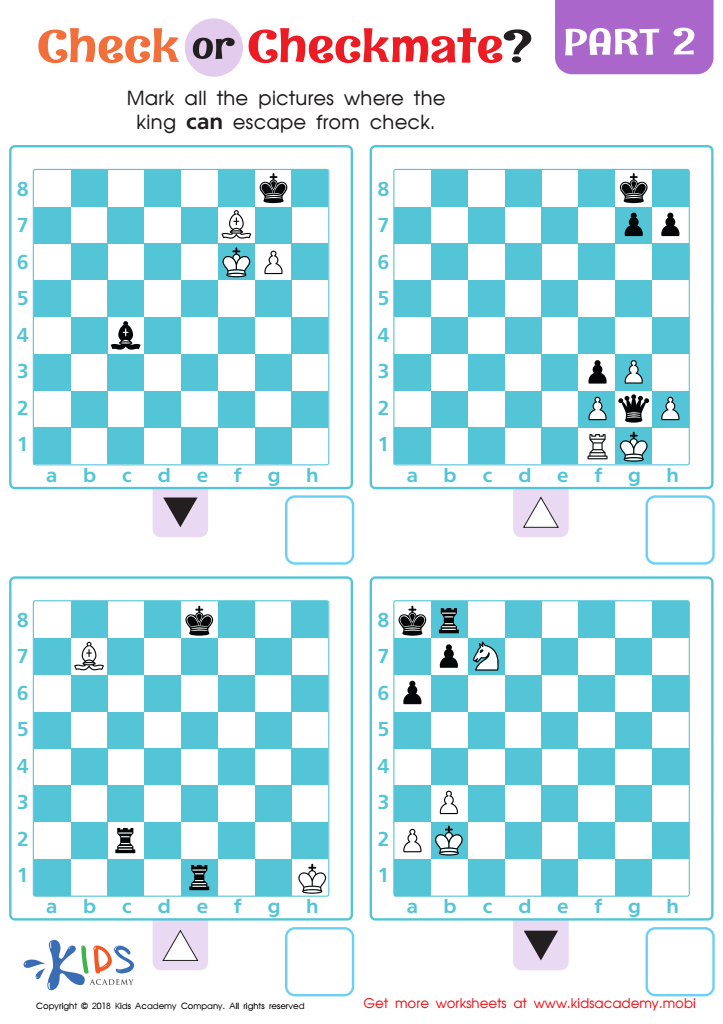
Check or Checkmate: Part 2 Worksheet
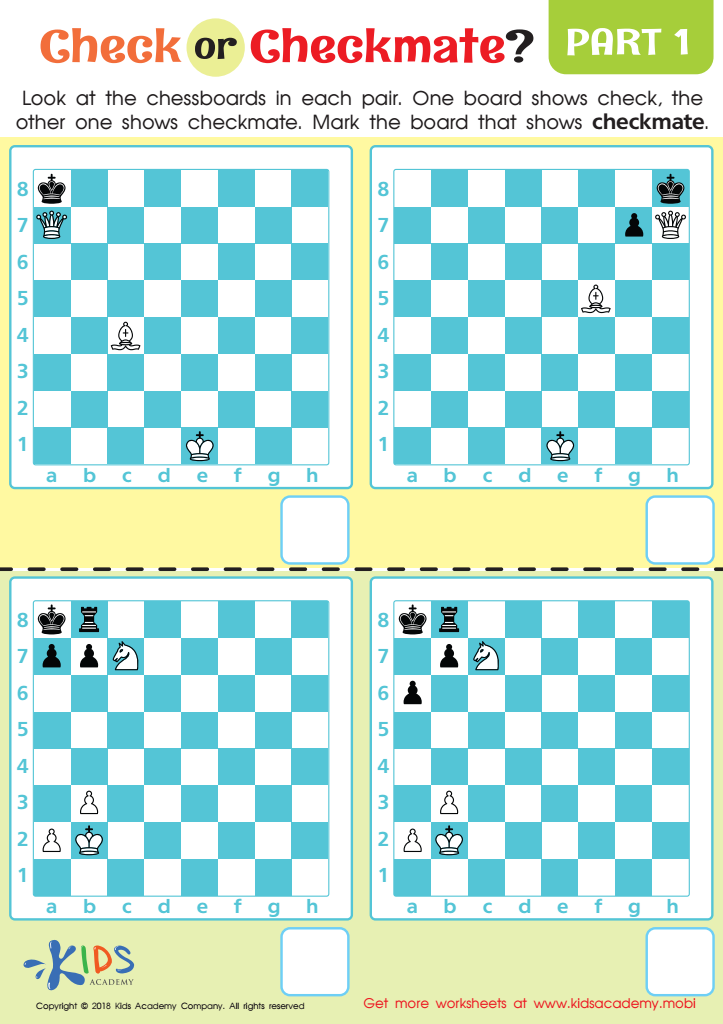
Check or Checkmate: Part 1 Worksheet
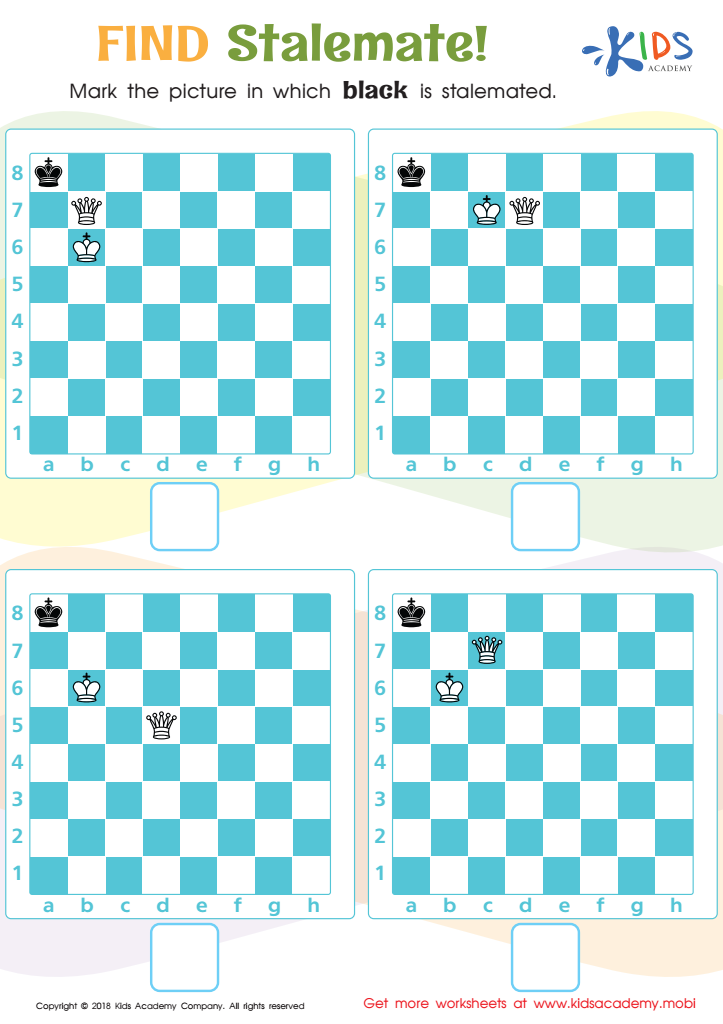
Find Stalemate! Worksheet








Developing critical thinking in children aged 6-9 is fundamental for their cognitive growth, and introducing them to challenging activities like Extra Challenge Chess can significantly foster this skill. At this developmental stage, kids are honing their logical reasoning and problem-solving capabilities. Chess is an exceptional tool for stimulating their minds because it demands strategic thinking, foresight, and the anticipation of opponents' moves.
Engaging with Extra Challenge Chess pushes young learners beyond standard gameplay, requiring them to think multiple steps ahead and consider various possibilities. This deepens their analytical skills and enhances their ability to approach complex problems methodically. Children learn the importance of patience, planning, and adaptability, which are critical aspects of critical thinking.
For teachers and parents, supporting critical thinking through chess offers a structured yet enjoyable way to boost a child's mental abilities. It strengthens concentration, improves memory, and fosters resilience against challenges. Beyond academics, these skills have profound long-term benefits, empowering children to navigate life's unpredictable situations with confidence and creativity.
To summarize, Extra Challenge Chess is more than a game; it's an educational tool that equips young minds with essential critical thinking skills, preparing them for future academic and personal success.