Enhance your child’s letter recognition skills with our "Letter Recognition Extra Challenge Worksheets" designed specifically for beginners aged 6-9. These engaging activities promote early literacy by making learning fun and interactive. Each worksheet offers unique challenges that help reinforce letter identification, both uppercase and lowercase, along with sound recognition and writing practice. Perfect for ESL learners, these resources encourage independent work and critical thinking while boosting confidence in reading and writing. Explore our carefully crafted worksheets to support your child’s journey in mastering the alphabet today!

Check out this FREE Trial Lesson on English for Beginners for age 6-9!

X

Favorites
With answer key
Interactive
  • 6-9
  • Letter recognition
  • English for Beginners
  • Extra Challenge
Letter R worksheets
Letter R worksheets

Letter R Tracing Page

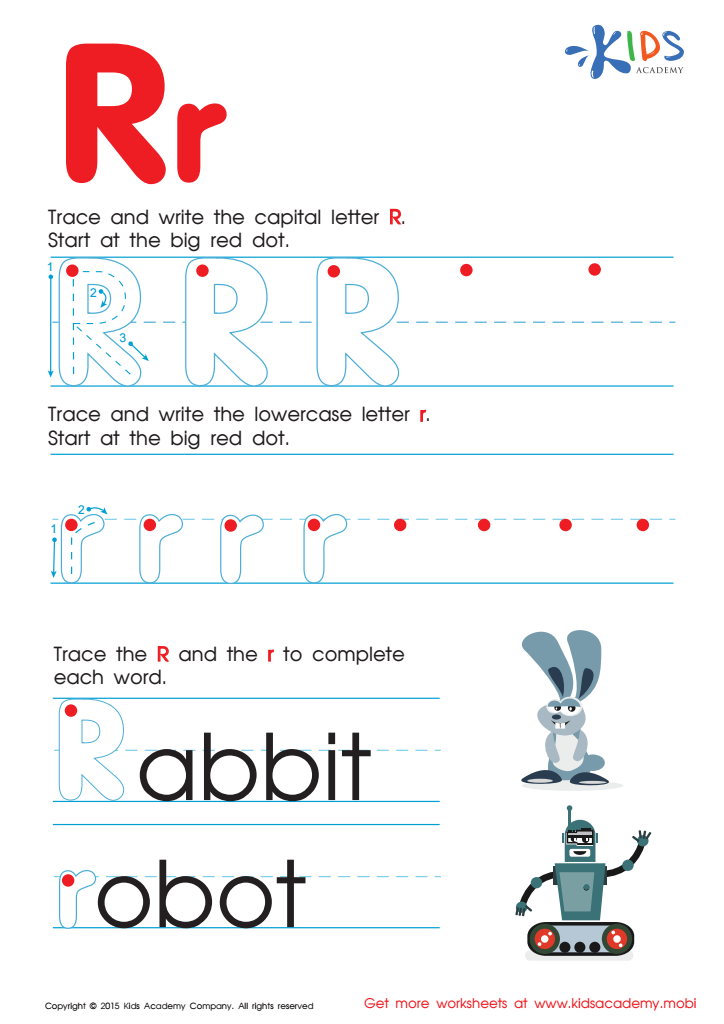
Trace and write the letter "R" with this worksheet for kindergarten. Start with the uppercase, then move on to the lowercase. Write the letters several times for practice. Then help complete the words for the rabbit and robot, spelling carefully. More ABC worksheets can be found at Kids Academy.
Letter R Tracing Page
Worksheet
Letter X worksheets
Letter X worksheets

Letter X Tracing Page

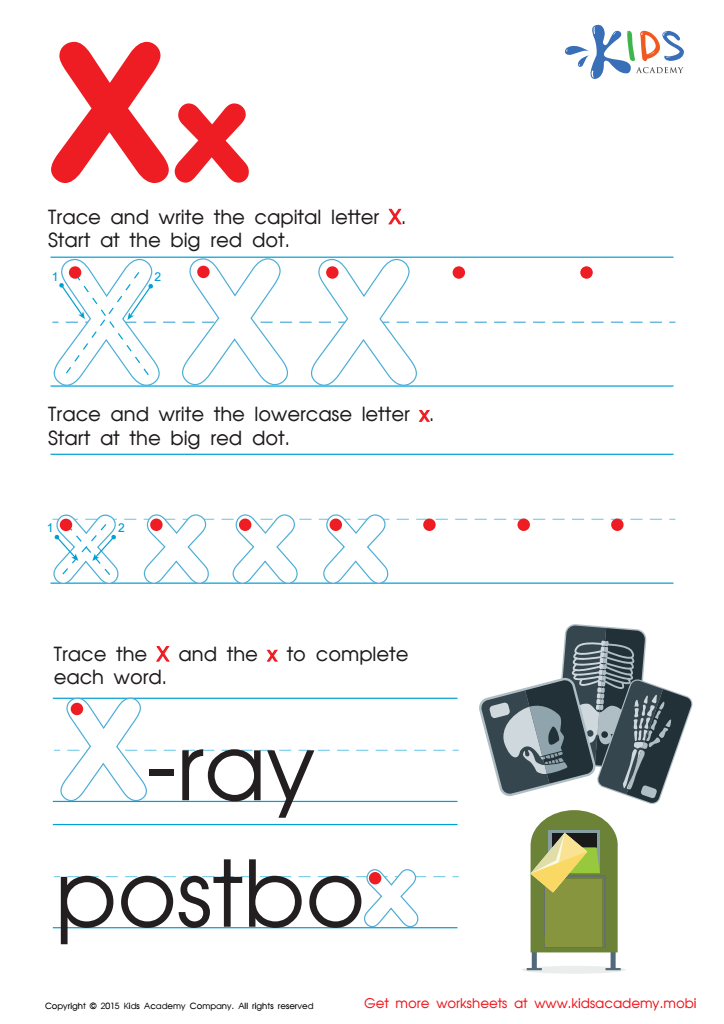
Trace the uppercase letter "X" to learn, then write it yourself and practice. Then do the same with the lowercase "x" before completing the words "X-ray" and "postbox". Enjoy our alphabet printables!
Letter X Tracing Page
Worksheet
Letter U worksheets
Letter U worksheets

Letter U Tracing Page

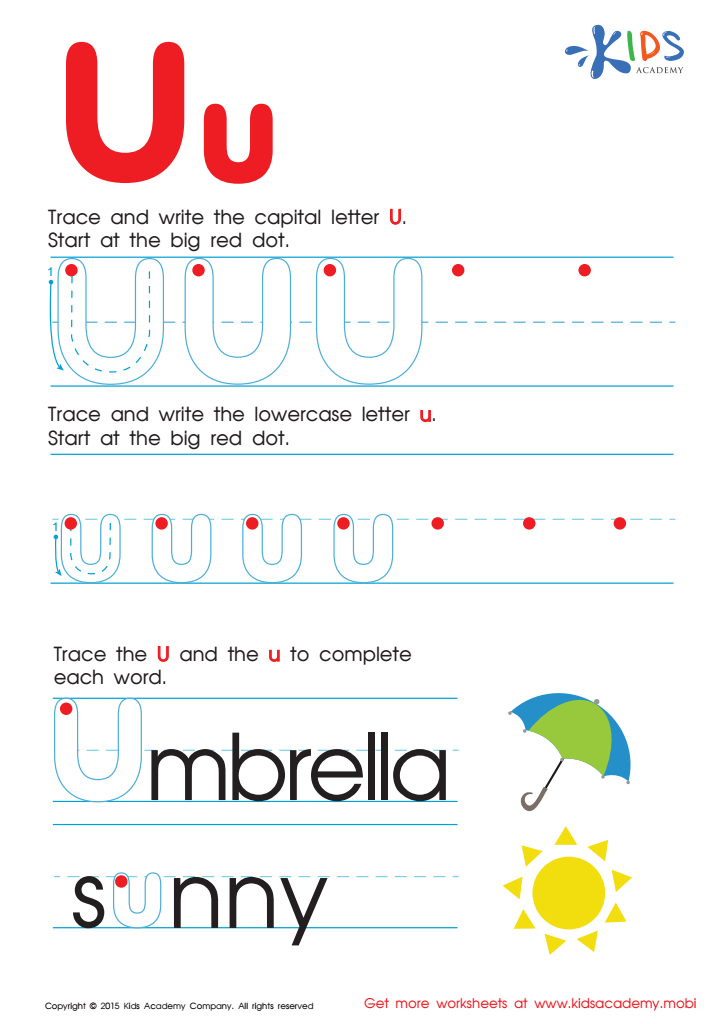
Ready to trace and write the letter "U"? Use our worksheet and practice tracing both uppercase and lowercase letters. Complete the words "umbrella" and "sunny" with a capital "U". Check our full collection of alphabet printables for more activities.
Letter U Tracing Page
Worksheet
Letter S worksheets
Letter S worksheets

Letter S Tracing Page

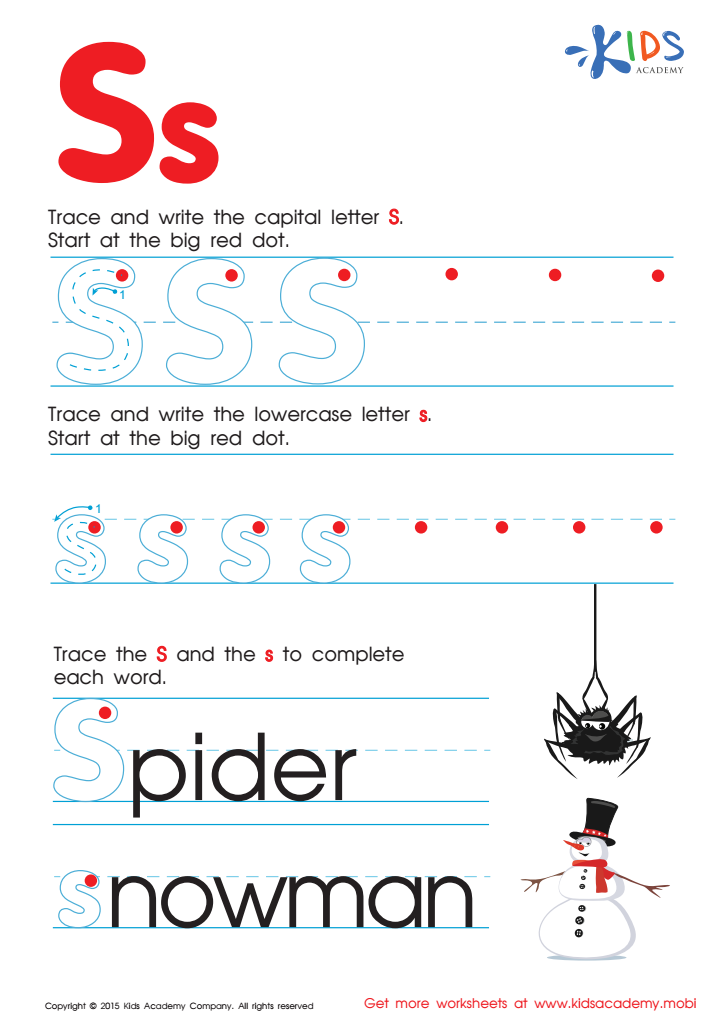
Trace and write the capital and lowercase "S" on this ABC worksheet for kindergarten. Start with the big red dot and be careful. When you finish, help the spider and snowman in the pictures restore their words with the capital and lowercase letters. Continue learning the alphabet with Kids Academy.
Letter S Tracing Page
Worksheet
Letter W worksheets
Letter W worksheets

Letter W Tracing Page

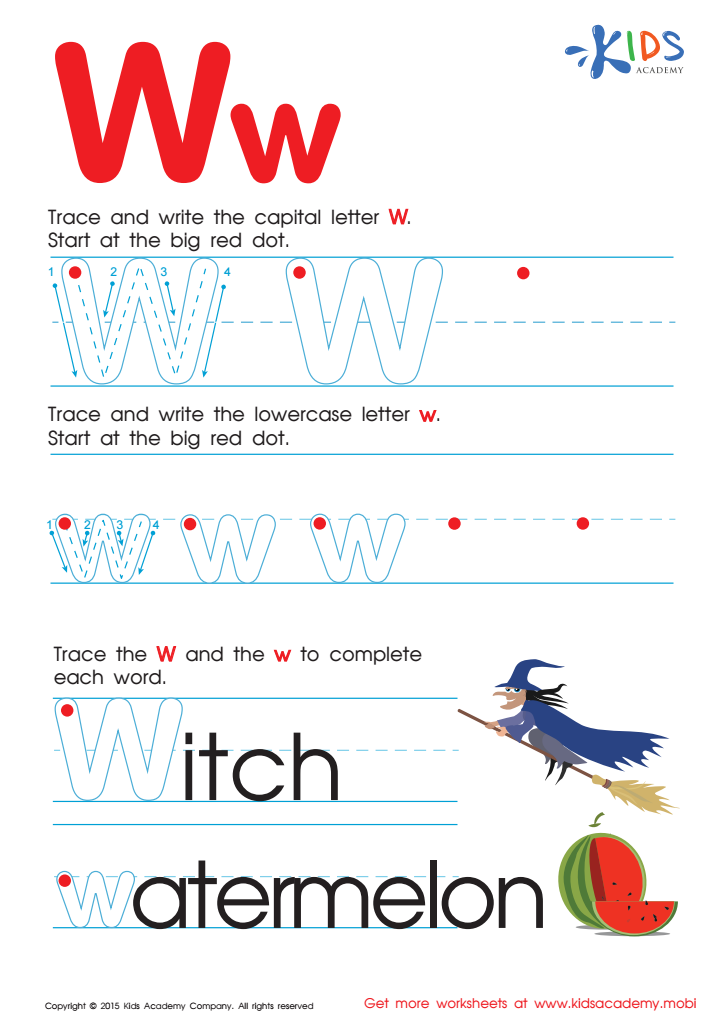
Trace and write the capital and lowercase letter W with this free letter tracing worksheet by Kids Academy. Complete the words "Witch" (capital) and "watermelon" (lowercase). Check out our other kindergarten alphabet worksheets!
Letter W Tracing Page
Worksheet
Letter V worksheets
Letter V worksheets

Letter V Tracing Page

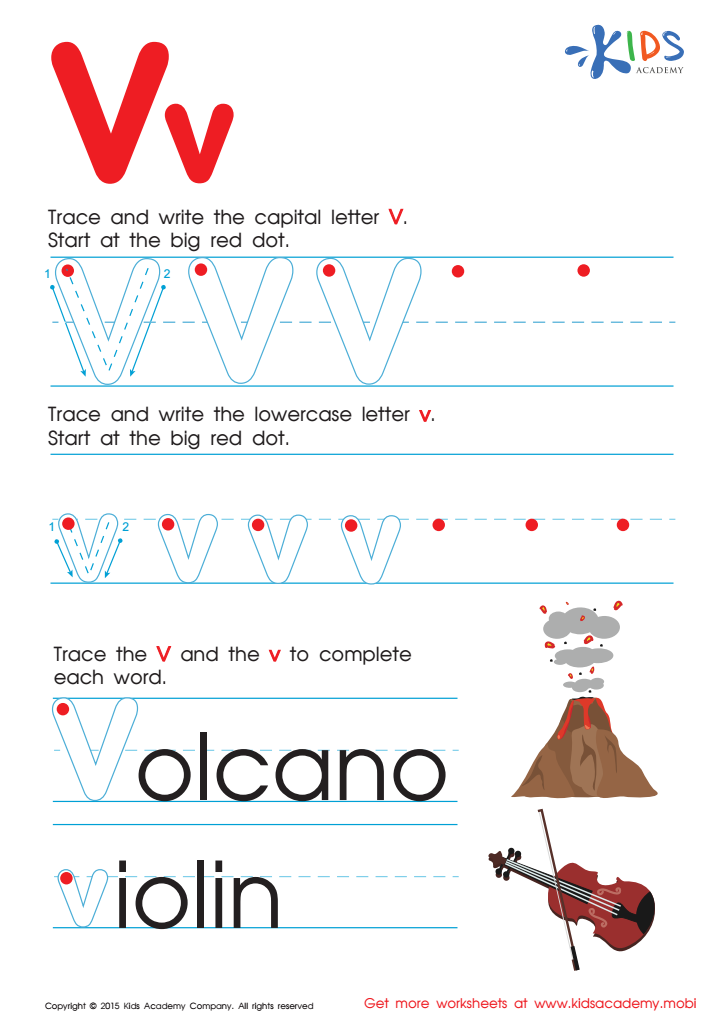
Trace the uppercase and lowercase letter "V" with our kindergarten tracing worksheet. Begin at the red dot and follow the lines. Write it several times. Complete the words "Volcano" and "violin". Get more alphabet activities at Kids Academy.
Letter V Tracing Page
Worksheet
Letter T worksheets
Letter T worksheets

Letter T Tracing Page

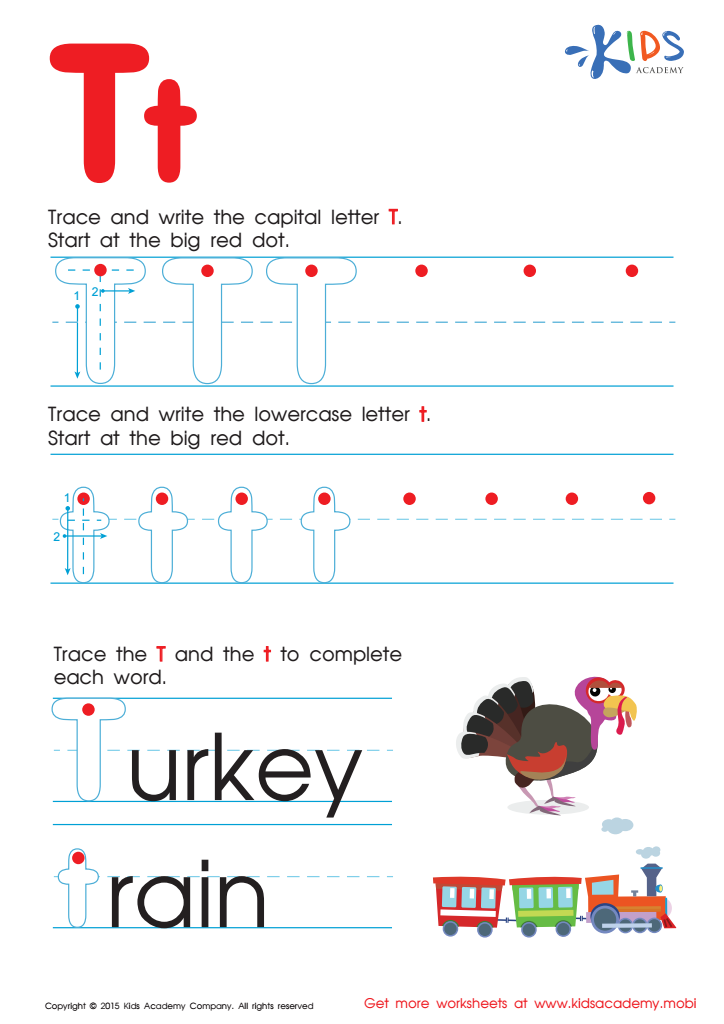
Trace letters, complete words, draw pictures and see your kids having fun! Kids Academy offers alphabet tracing worksheets to learn to write letters. Start with the big red dot, trace the letter, then write it. Practice uppercase and lowercase. Have fun completing words with a Turkey or a rain-train and draw pictures. Get more printable worksheets to make learning enjoyable.
Letter T Tracing Page
Worksheet


Letter recognition is a fundamental skill that lays the groundwork for literacy development in young children. For parents and teachers working with beginners aged 6-9, fostering this skill through an "Extra Challenge" program can significantly enhance a child's reading and writing abilities. When children can quickly identify and name letters, they can connect these symbols to their corresponding sounds, which is crucial for phonics development.

Moreover, strong letter recognition promotes confidence in literacy skills and encourages a lifelong love for reading. Engaging activities that challenge students can prevent them from feeling disengaged or overwhelmed. Additionally, children who master letter recognition early on tend to have better spelling and vocabulary skills as they progress through their education.

Practicing letter recognition not only supports academic success but also nurtures cognitive development, coordination, and attention span. These skills are essential as they begin to tackle more complex literacy tasks. By prioritizing letter recognition through fun and interactive lessons, educators and caregivers can provide invaluable support, ensuring that children are well-equipped for future learning challenges. In an increasingly literacy-driven world, enhancing letter recognition is an investment in a child's overall academic journey.