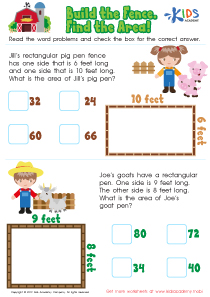
Matching numbers Extra Challenge Numbers Worksheets for Ages 6-9
3 filtered results
-
From - To
Introducing our "Matching Numbers Extra Challenge Worksheets for Ages 6-9"! Perfectly designed to boost number recognition and counting skills, these worksheets offer an engaging way for young learners to master numbers. Suitable for children aged 6 to 9, each worksheet provides a variety of fun and challenging exercises that enhance mathematical confidence. With colorful graphics and diverse activities, kids develop crucial early numeracy skills while enjoying their learning journey. Whether for classroom use or home study, these worksheets keep young minds captivated as they progress in their mathematical endeavors. Unlock your child's potential with our expertly crafted matching numbers worksheets!

Count and Match Vegetables 1 – 7 Math Worksheet
 Assign to My Students
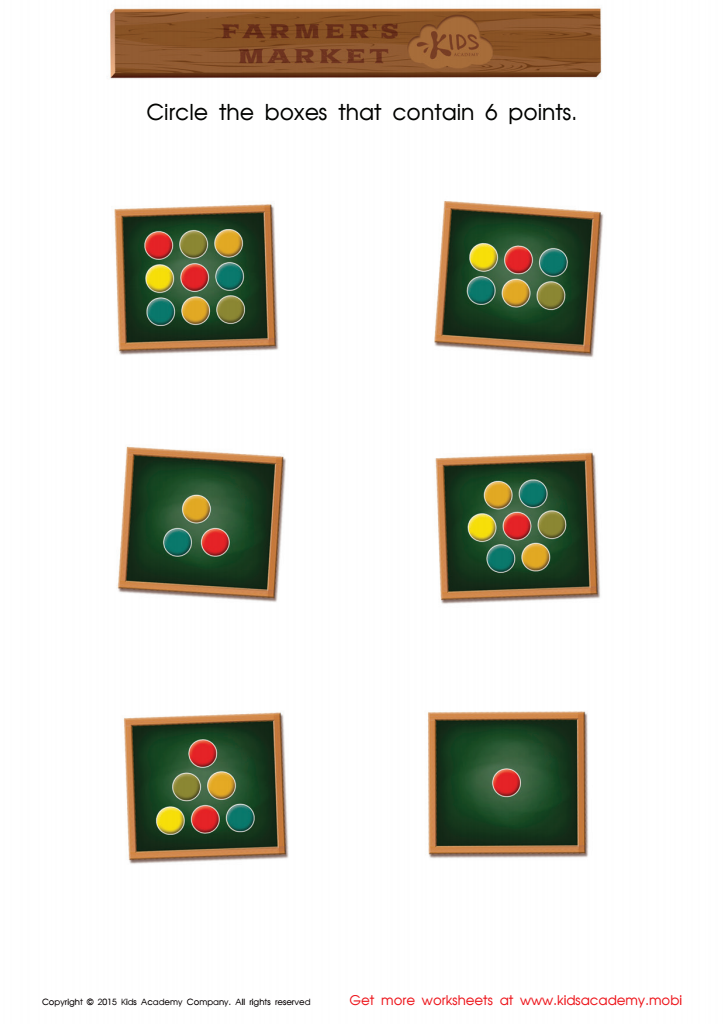
Count and Match Points 6 Math Worksheet
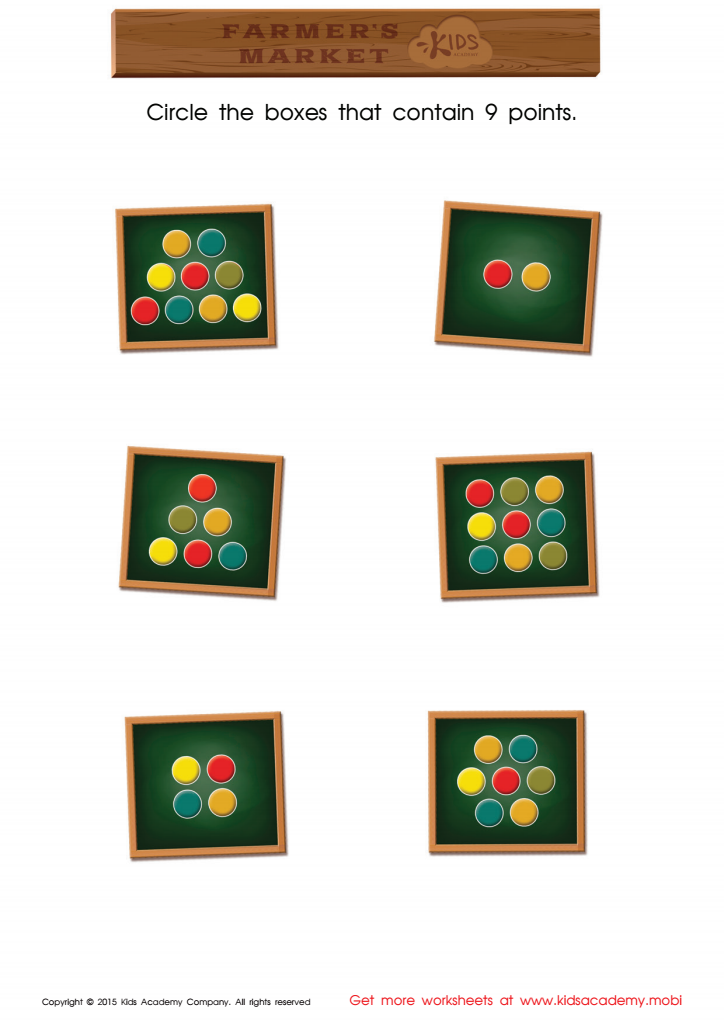
Count and Match Points 9 Math Worksheet






Matching numbers and extra challenge numbers are critical activities for children aged 6-9, as they foster essential mathematical and cognitive skills. At this developmental stage, children are cultivating their foundational understanding of numbers, patterns, and relationships. Engaging in matching numbers activities sharpens their number recognition and helps them understand numerical order and value, which are crucial for more advanced arithmetic concepts.
Moreover, extra challenge numbers introduce an element of problem-solving and critical thinking, encouraging children to go beyond mere memorization. These challenges stimulate mental arithmetic skills, requiring kids to think on their feet and apply what they have learned in practical ways. This not only reinforces their numerical concepts but also boosts their confidence in their math abilities.
From a developmental perspective, activities that require concentration and problem-solving help enhance cognitive development by improving memory, attention span, and logical thinking. They also promote perseverance and resilience, as children learn to approach complex problems with patience and determination.
Additionally, these activities can be highly engaging and enjoyable, turning learning into a fun experience. When children find excitement and satisfaction in solving math challenges, they are more likely to develop a lifelong interest in the subject. This can lead to better academic performance, not just in mathematics but across other disciplines that require analytical thinking.