Alphabet Recognition Extra Challenge ABC Order Worksheets for 6-Year-Olds
3 filtered results
-
From - To
Boost your child's alphabet recognition skills with our engaging "Alphabet Recognition Extra Challenge ABC Order Worksheets" designed specifically for 6-year-olds. These worksheets provide a fun and interactive way to practice identifying, ordering, and recognizing letters of the alphabet. Tailored to challenge young learners, they incorporate a variety of activities that foster critical thinking and enhance early literacy skills. Our carefully crafted exercises encourage independent learning while ensuring children build a strong foundation for future reading success. Explore our resource-packed worksheets, perfect for classrooms or at-home learning, and watch your child gain confidence in their ABCs while enjoying the learning process!
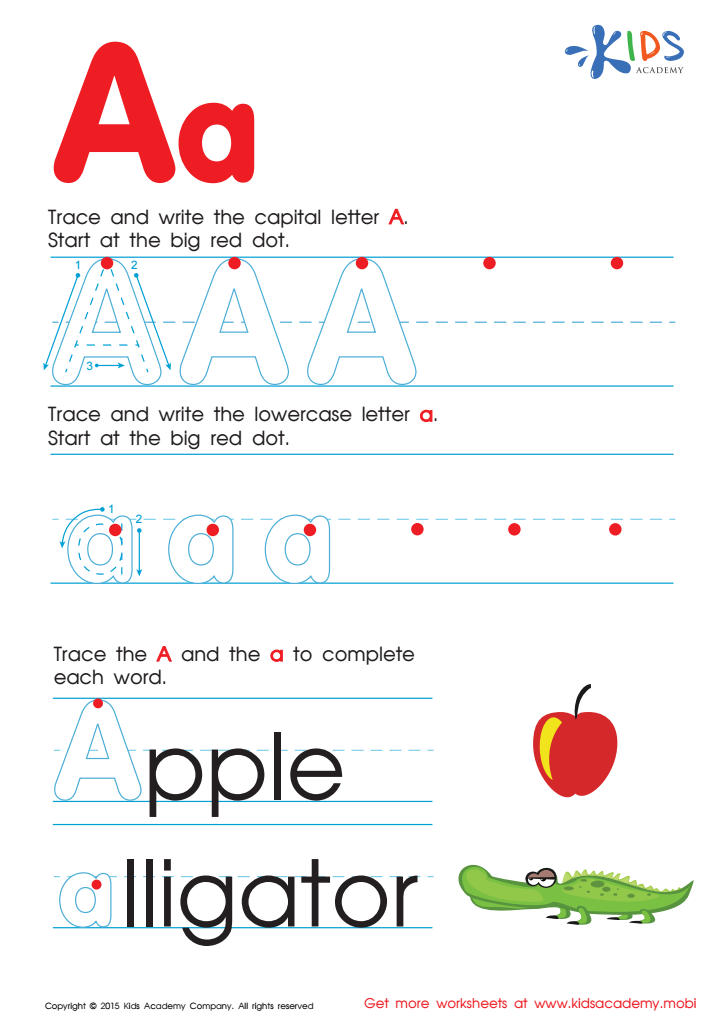
Letter A Tracing Page
 Assign to My Students


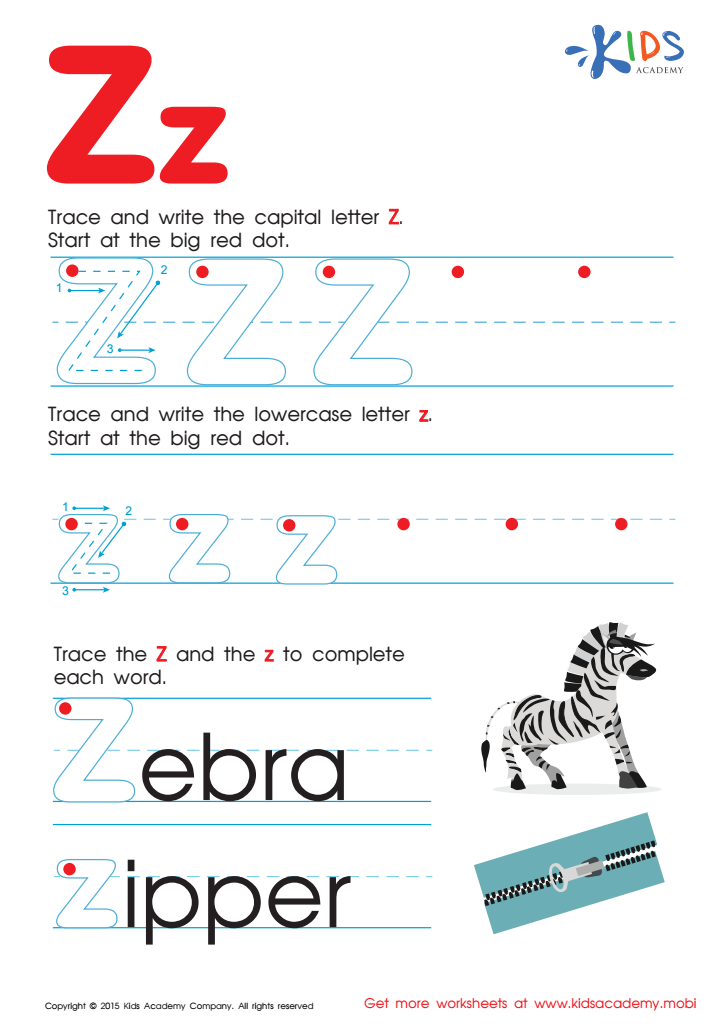
Letter Z Tracing Page
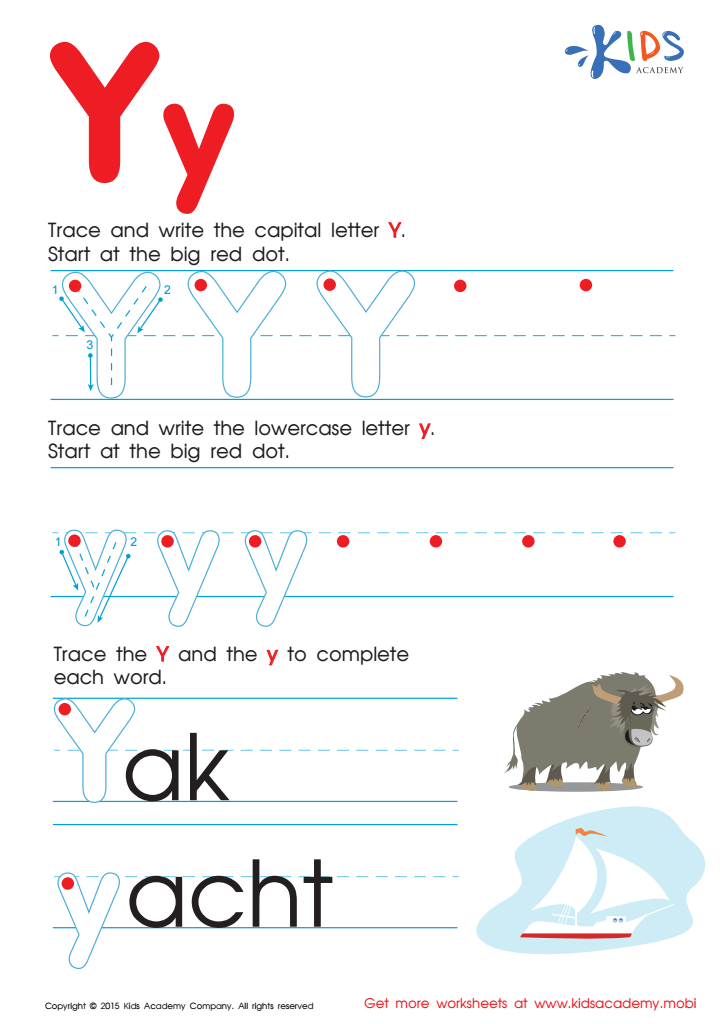
Letter Y Tracing Page








Alphabet recognition is a foundational skill for literacy development in young children, making it crucial for parents and teachers to emphasize activities like the Alphabet Recognition Extra Challenge ABC Order for 6-year-olds. Mastering the alphabet helps children understand the relationship between letters, sounds, and written words, ultimately enhancing their reading and writing abilities.
This challenge creates an engaging way for kids to familiarize themselves with the sequence of letters, promoting not just recognition but also cognitive skills such as memory and auditory processing. As children learn to arrange letters in order, they develop critical thinking skills and gain confidence in their ability to manipulate the alphabet, preaping them for future academic tasks, including spelling and grammar.
Parents and teachers should also recognize that the ability to quickly identify letters in alphabetical order contributes to a child's ease with library systems, dictionaries, and other reference materials as they continue their education. Additionally, the challenge can foster a love for learning by making the process enjoyable and interactive, broadening children's understanding of language and communication. By investing time in alphabet recognition activities, adults significantly contribute to a child's literacy journey and overall academic success.








