Filters

8 filtered results

Clear all filters
Favorites
With answer key
Interactive

8 filtered results

Difficulty Level

Grade


Introduce your 6-year-old to the excitement of mastering the alphabet with our Fine Motor Skills Extra Challenge Alphabet Worksheets. Expertly designed to enhance fine motor development, these printable worksheets feature engaging activities that promote letter recognition, writing skills, and hand-eye coordination. Each worksheet is meticulously crafted to challenge and motivate young learners, transforming practice into an enjoyable adventure. Perfect for homeschooling, classroom, or additional home practice, these worksheets provide a fun and effective way to bolster foundational skills essential for academic success. Watch as your child gains confidence and dexterity with every completed exercise.

Check out this FREE Trial Lesson on Alphabet for age 6!

X

Favorites
With answer key
Interactive
  • 6
  • Fine Motor Skills
  • Alphabet
  • Extra Challenge
Letter a worksheets
Letter a worksheets

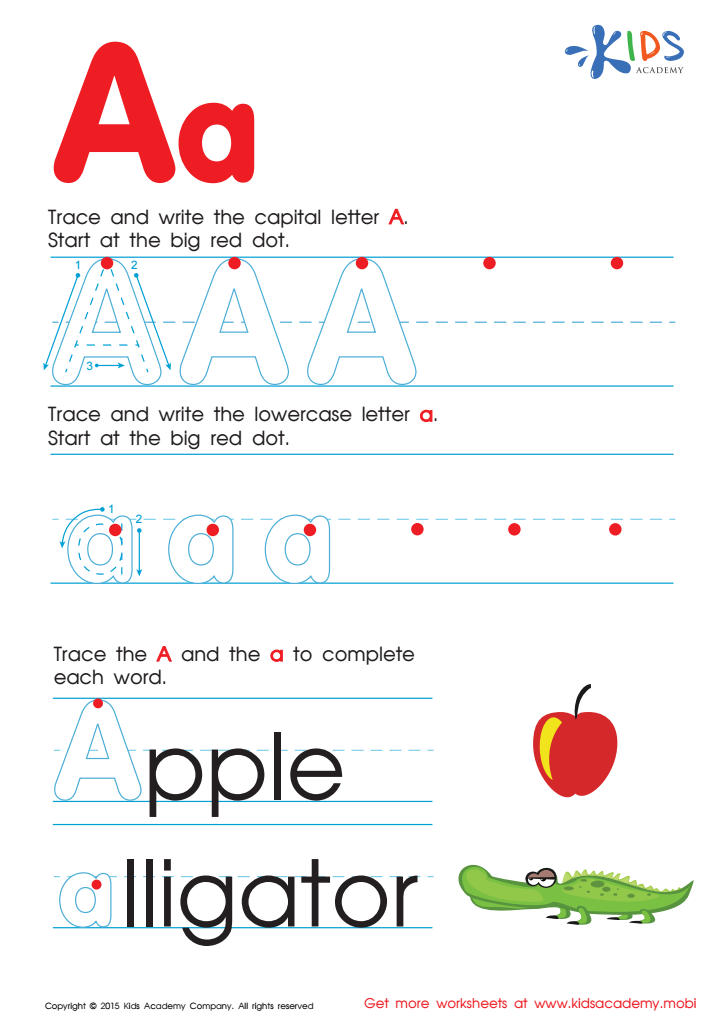
Letter A Tracing Page

Trace and write the letter "A"! Start with the big red dot, then do the capital and lowercase versions. Then write it again with two words - apple and alligator. Download more tracing worksheets at Kids Academy.
Letter A Tracing Page
Worksheet
Letter Z worksheets
Letter Z worksheets

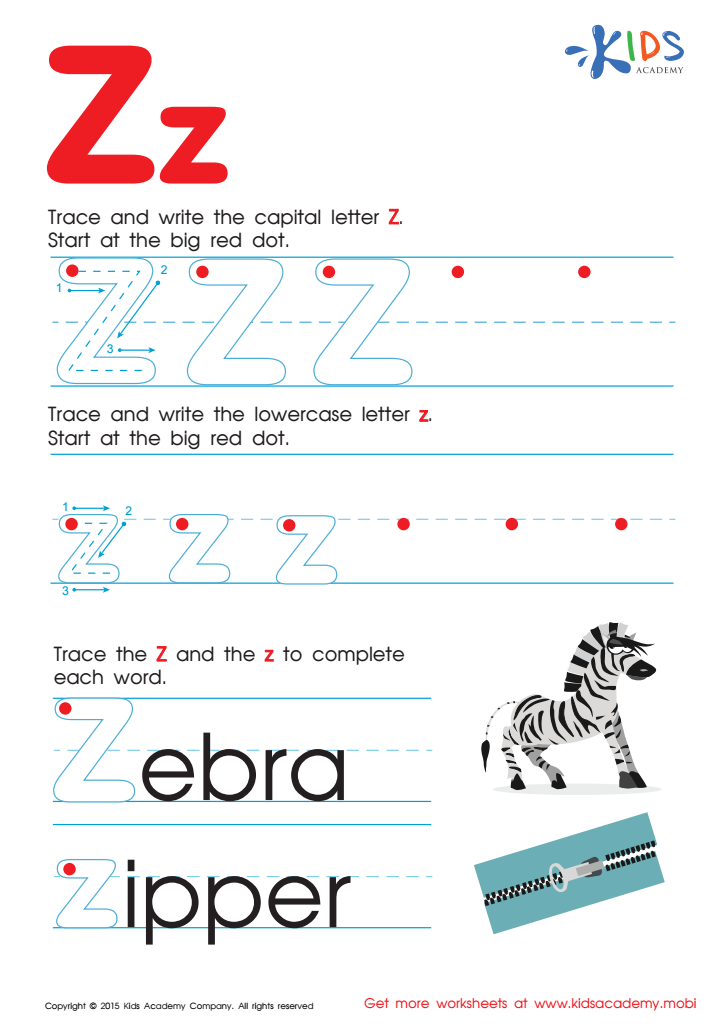
Letter Z Tracing Page

Trace and write capital "Z" and lowercase "z". Complete words "zebra" and "zipper". Be attentive and have fun! (80 words)
Letter Z Tracing Page
Worksheet
Baa Baa Black Sheep printable worksheet

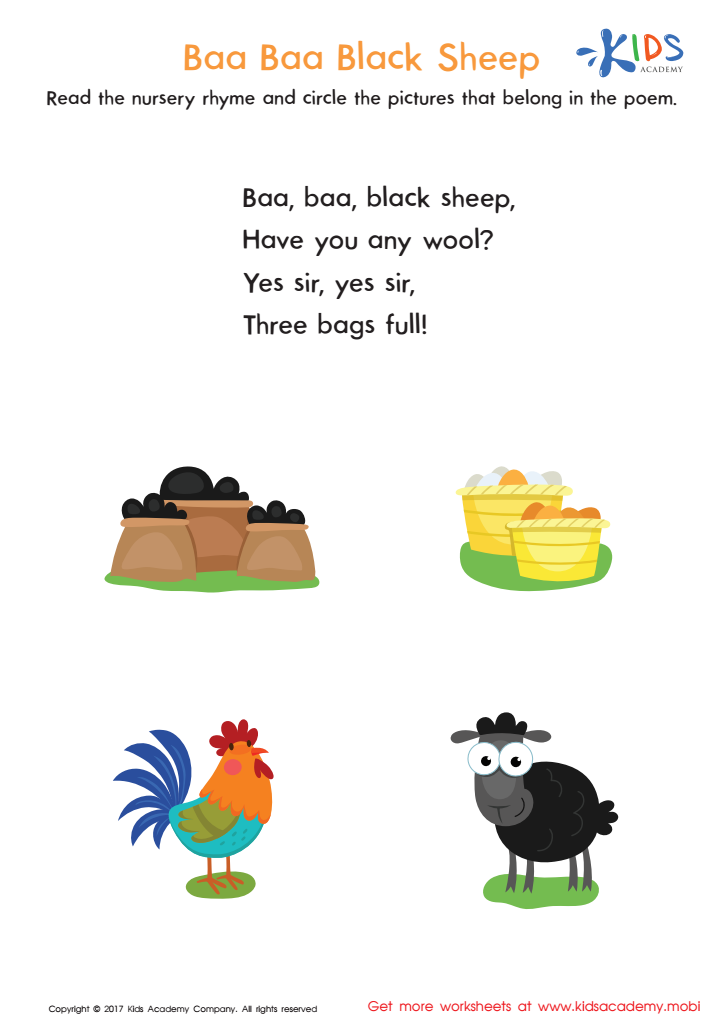
Baa Baa Black Sheep Printable

Jumpstart your child's reading skills with this printable Baa Baa Black Sheep worksheet! Recite the lines with them, then have them select the pictures associated with the poem to test comprehension. Fun and educational!
Baa Baa Black Sheep Printable
Worksheet
Letter R worksheets
Letter R worksheets

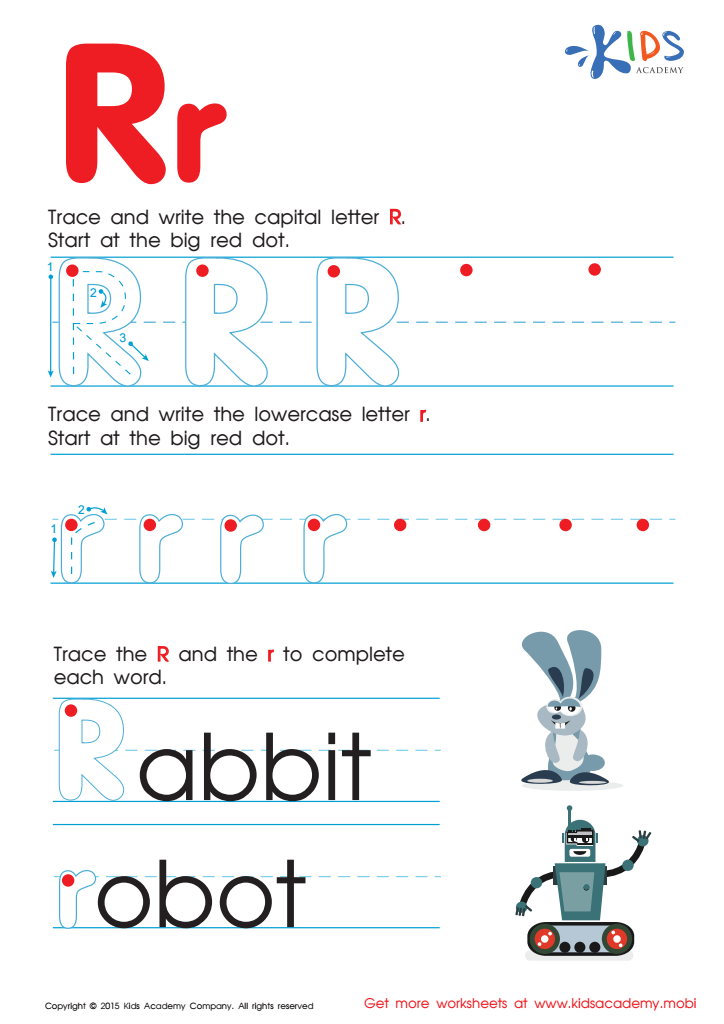
Letter R Tracing Page

Trace and write the letter "R" with this worksheet for kindergarten. Start with the uppercase, then move on to the lowercase. Write the letters several times for practice. Then help complete the words for the rabbit and robot, spelling carefully. More ABC worksheets can be found at Kids Academy.
Letter R Tracing Page
Worksheet
Letter X worksheets
Letter X worksheets

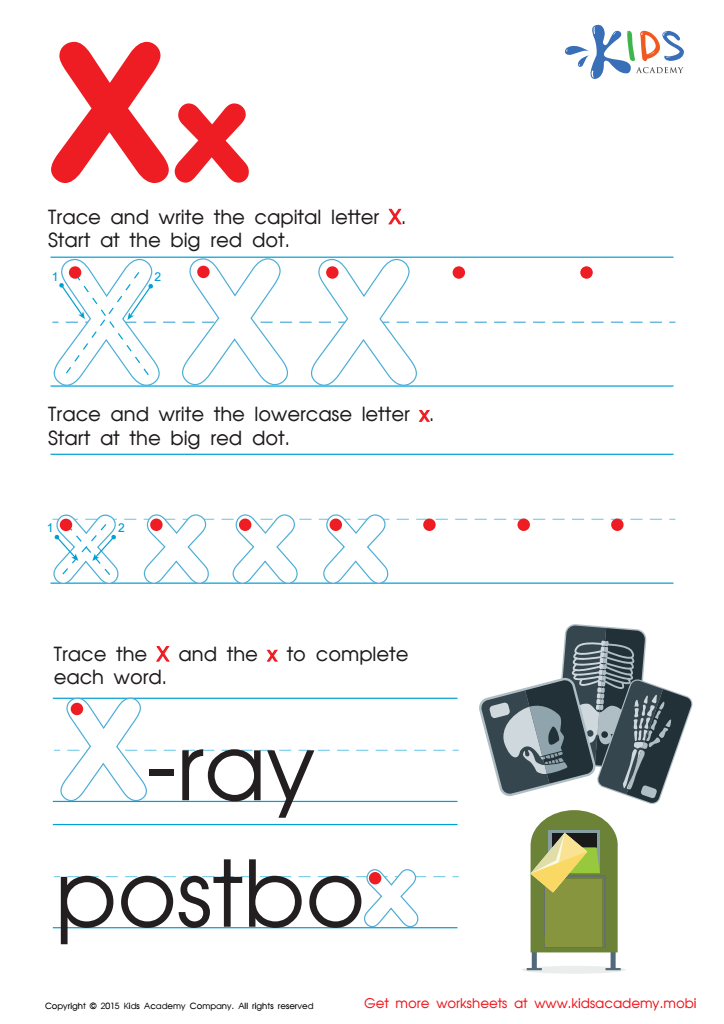
Letter X Tracing Page

Trace the uppercase letter "X" to learn, then write it yourself and practice. Then do the same with the lowercase "x" before completing the words "X-ray" and "postbox". Enjoy our alphabet printables!
Letter X Tracing Page
Worksheet
Letter U worksheets
Letter U worksheets

Letter U Tracing Page

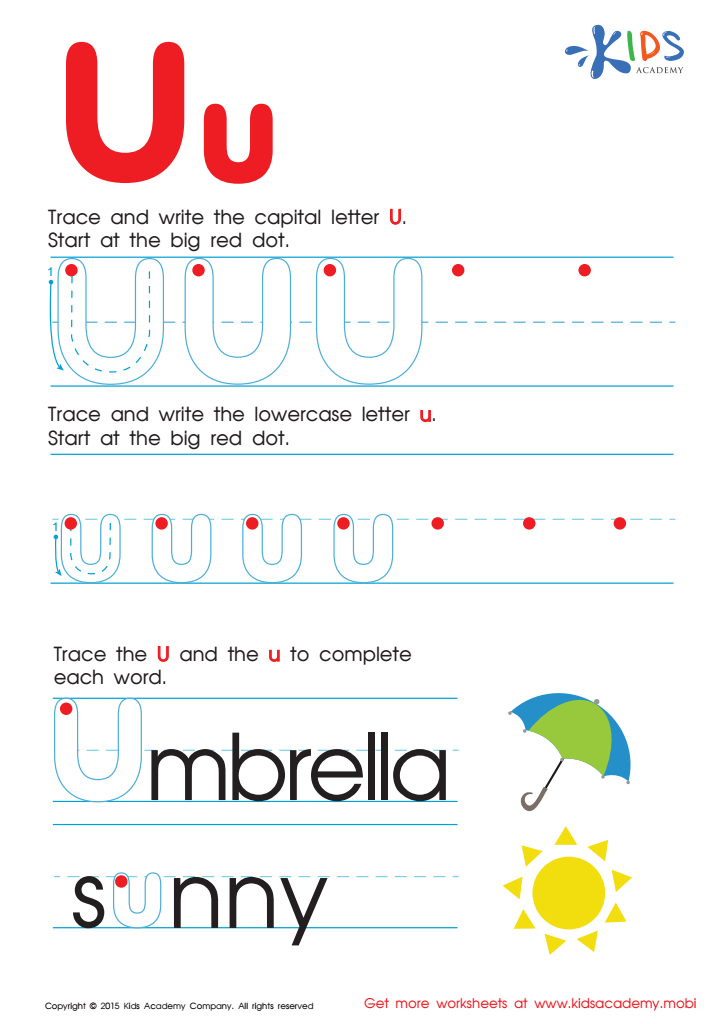
Ready to trace and write the letter "U"? Use our worksheet and practice tracing both uppercase and lowercase letters. Complete the words "umbrella" and "sunny" with a capital "U". Check our full collection of alphabet printables for more activities.
Letter U Tracing Page
Worksheet
Letter V worksheets
Letter V worksheets

Letter V Tracing Page

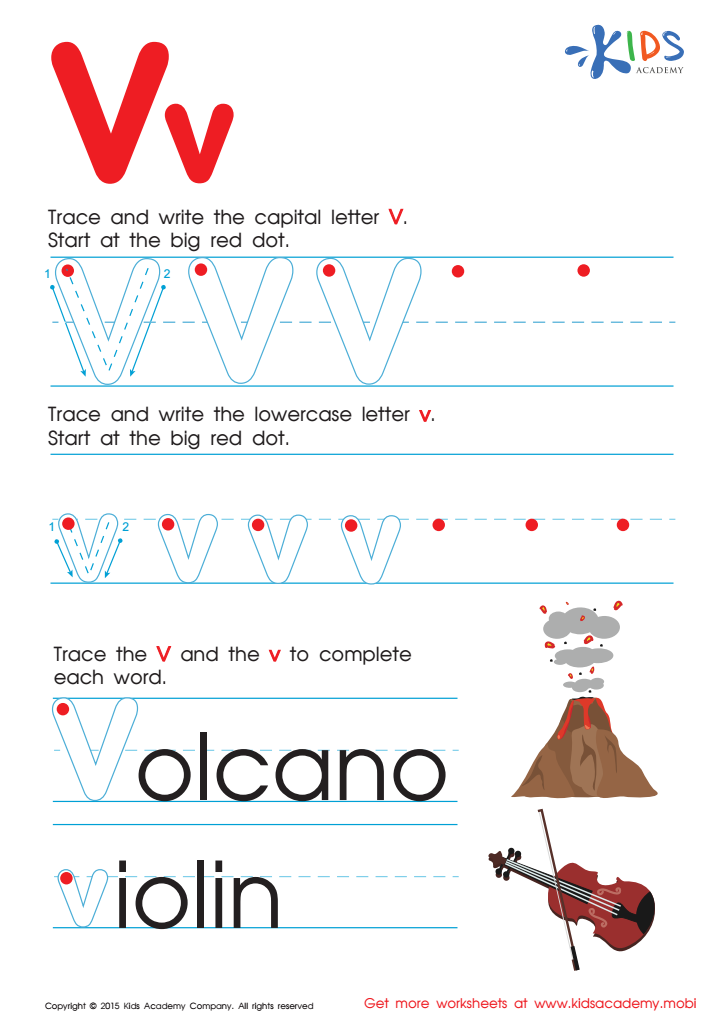
Trace the uppercase and lowercase letter "V" with our kindergarten tracing worksheet. Begin at the red dot and follow the lines. Write it several times. Complete the words "Volcano" and "violin". Get more alphabet activities at Kids Academy.
Letter V Tracing Page
Worksheet
Letter T worksheets
Letter T worksheets

Letter T Tracing Page

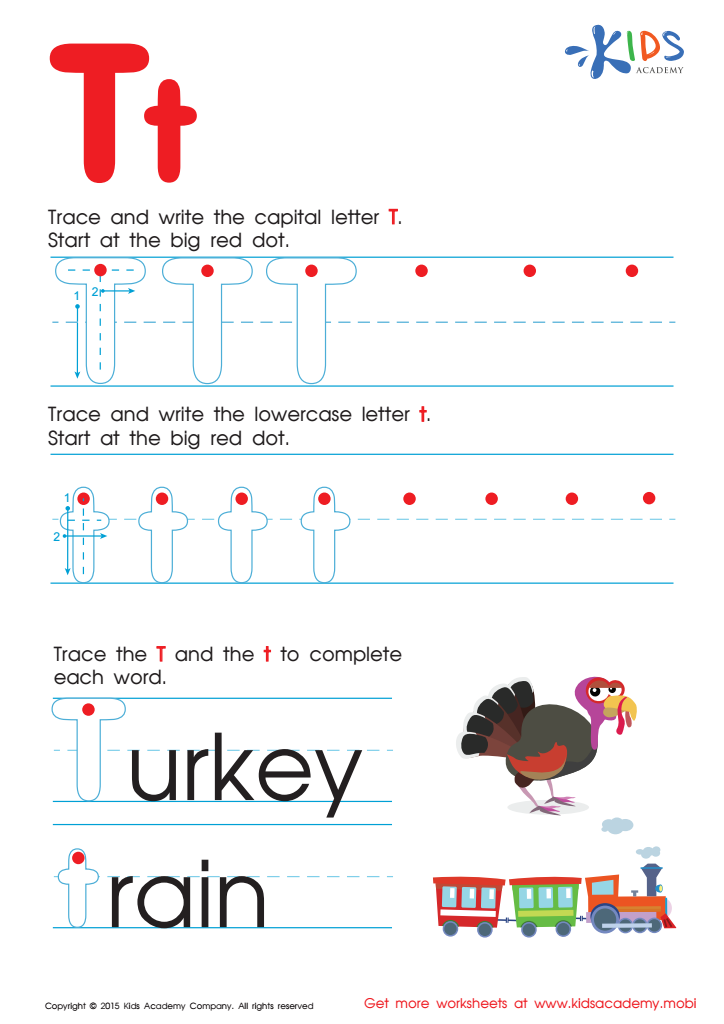
Trace letters, complete words, draw pictures and see your kids having fun! Kids Academy offers alphabet tracing worksheets to learn to write letters. Start with the big red dot, trace the letter, then write it. Practice uppercase and lowercase. Have fun completing words with a Turkey or a rain-train and draw pictures. Get more printable worksheets to make learning enjoyable.
Letter T Tracing Page
Worksheet


Parents and teachers should prioritize the development of fine motor skills in 6-year-olds, as these skills form the fundamental basis for essential academic and everyday tasks. Fine motor skills exercises requiring young children to manipulate the alphabet through activities like tracing, cutting, or arranging letters enhance dexterity, coordination, and muscle strength in their small hand muscles.

Fostering fine motor skills is particularly vital in the context of handwriting. Before children can write fluently, they need to form letters accurately, which relies heavily on the precise control of hand movements. Alphabet-related fine motor activities also enhance cognitive development and reinforce letter recognition and phonics—all crucial for literacy. Such tactile learning often succeeds where rote memorization fails because it creates a physical and contextual association with the letters.

Moreover, fine motor practice supports independence in daily activities, such as buttoning clothes, tying shoelaces, or using utensils, thereby boosting a child's self-esteem. For educators, these exercises can aid in identifying any developmental delays early, allowing for timely intervention.

Thus, incorporating alphabet-based fine motor activities not only aligns with educational objectives but also supports holistic child development, laying a strong foundation for future skills.