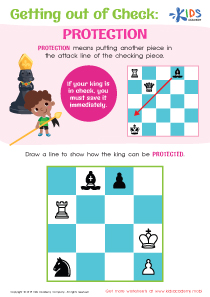
Critical thinking development Extra Challenge Chess Worksheets for 6-Year-Olds
4 filtered results
-
From - To
Introduce your young learners to the fascinating world of chess with our "Critical Thinking Development Extra Challenge Chess Worksheets for 6-Year-Olds." These specially designed worksheets engage children in advanced chess strategies, fostering critical thinking and problem-solving skills. Perfect for enthusiastic beginners, each worksheet offers extra challenges to develop logical reasoning while exploring chess tactics. With vibrant illustrations and step-by-step guidance, your child will build confidence in their game. Unlock the potential of young minds by combining fun and learning in our chess worksheets, paving the way for success on and off the board. Visit us to turn strategy into a favorite pastime!
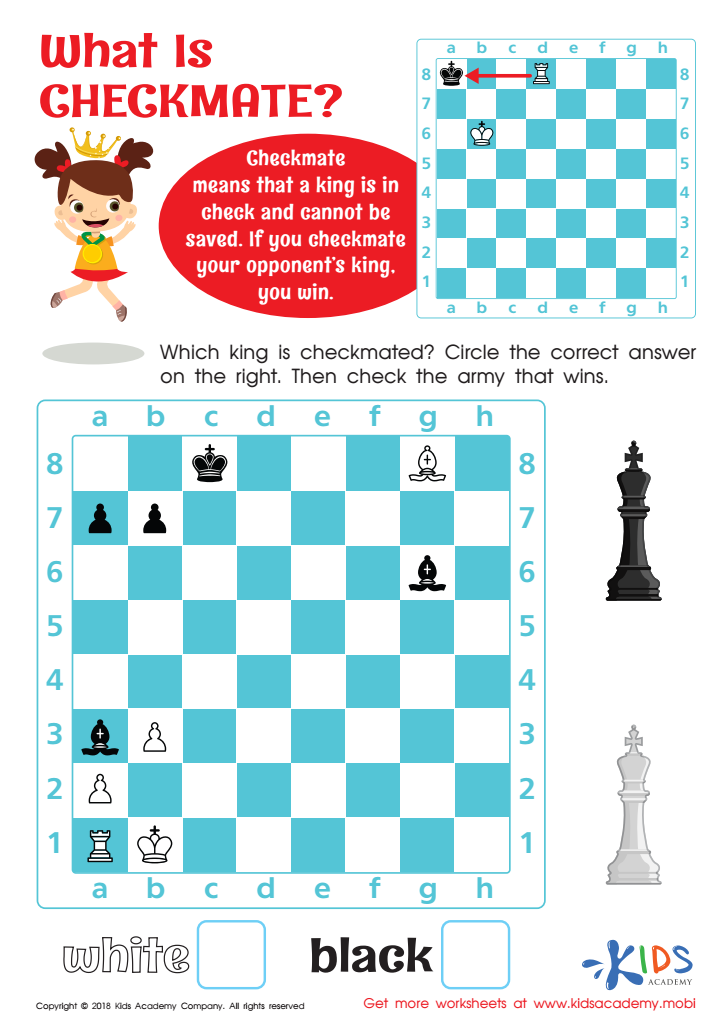
What is Checkmate? Worksheet
 Assign to My Students
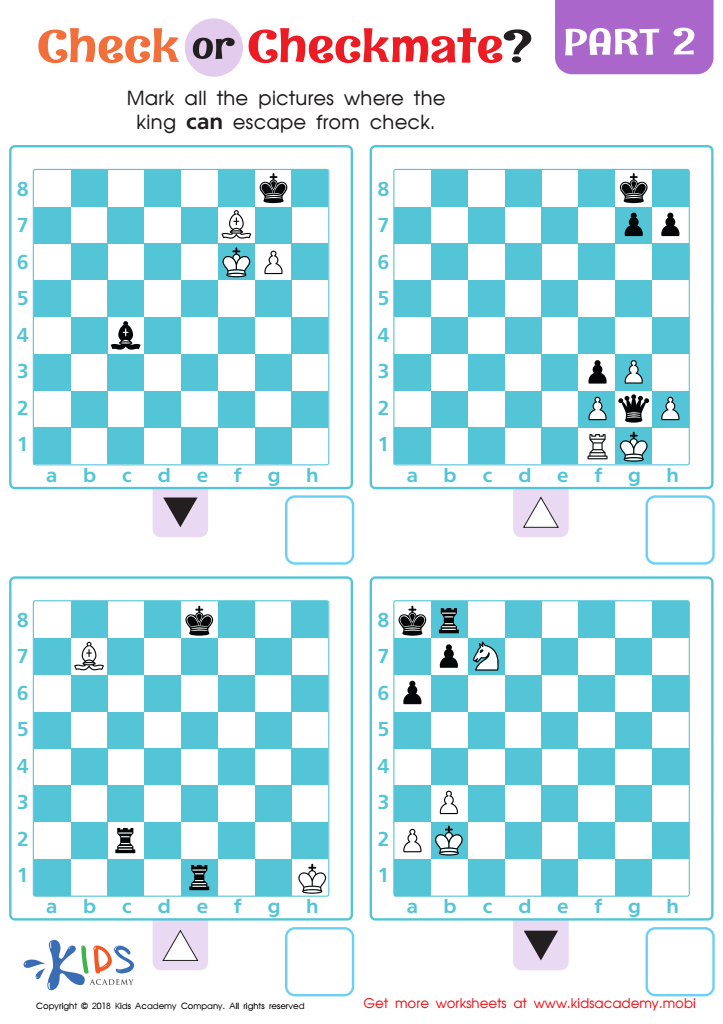
Check or Checkmate: Part 2 Worksheet
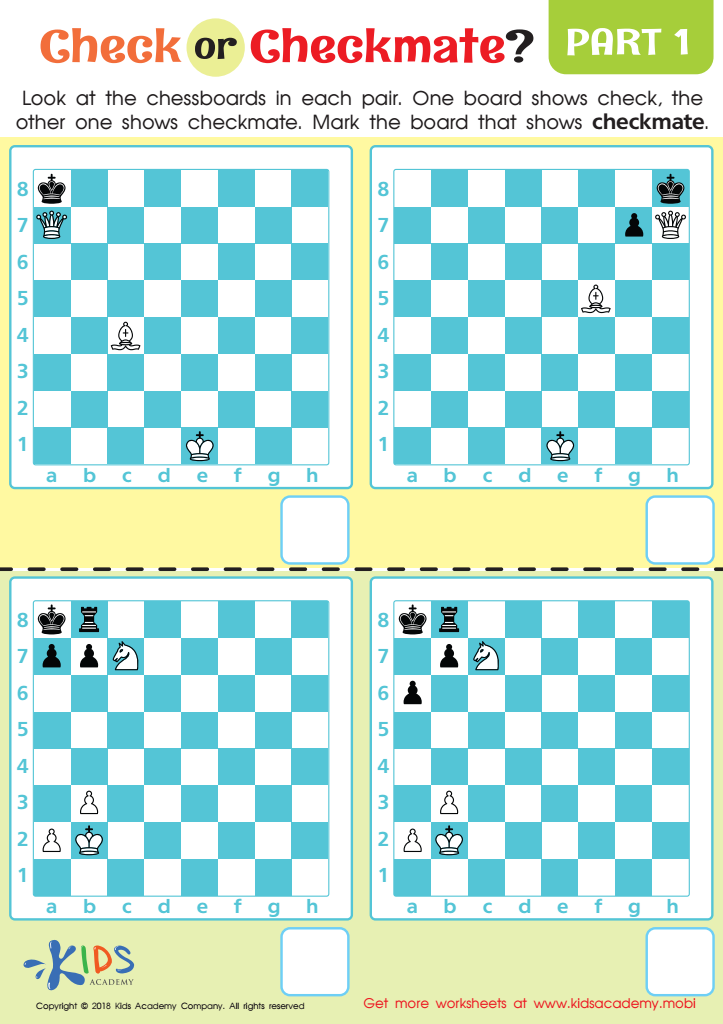
Check or Checkmate: Part 1 Worksheet
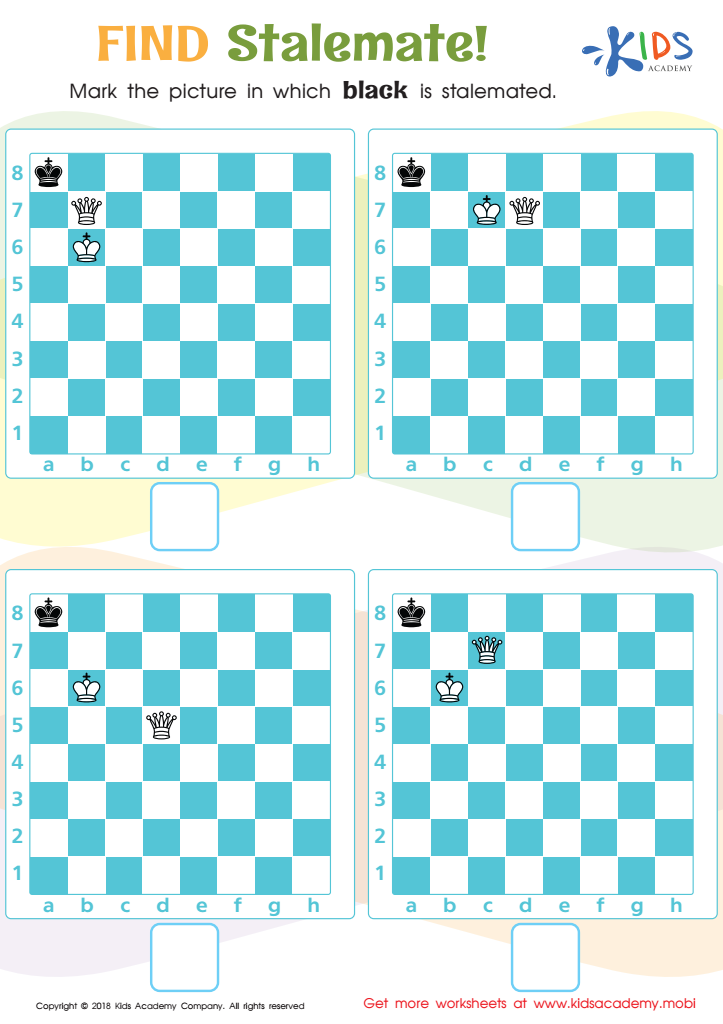
Find Stalemate! Worksheet


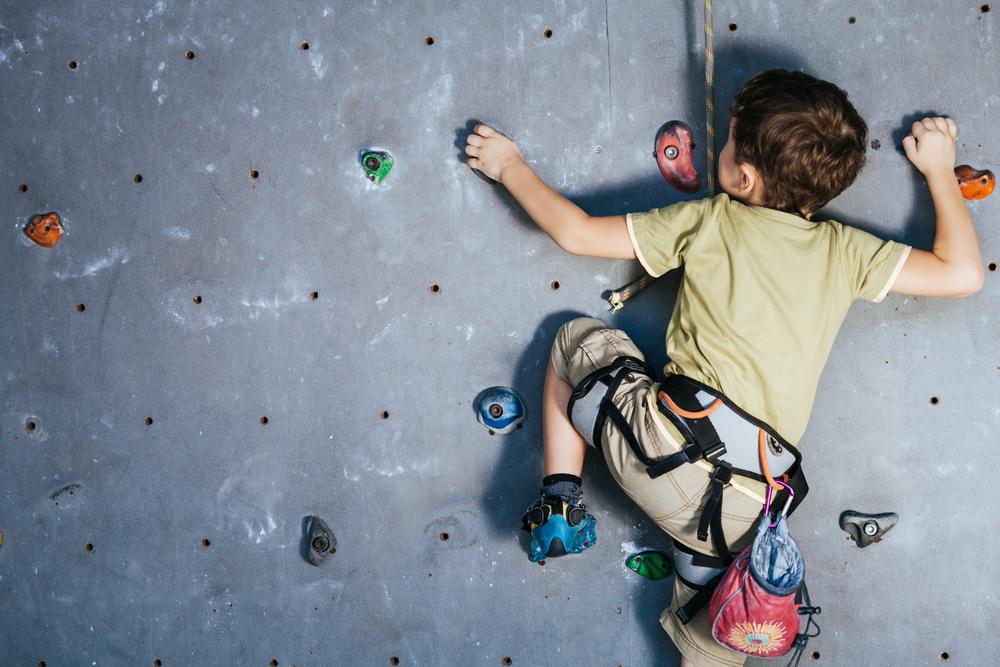



Critical thinking is a fundamental skill that lays the foundation for effective problem-solving, decision-making, and creative thinking throughout life. For 6-year-olds, developing critical thinking can be significantly reinforced through engaging activities like the Extra Challenge Chess program. This tailored approach offers several compelling benefits:
First, chess teaches children to think ahead and plan strategically. Each move holds a consequence, prompting players to evaluate various possibilities and anticipate opponents' actions. This advanced planning nurtures foresight and an analytical mindset.
Second, the game strengthens decision-making skills. As young players continuously assess the board, they must make informed decisions under time constraints, enhancing their ability to make judicious choices quickly.
Third, participating in chess instills patience and perseverance. Children learn that success often requires sustained effort and that setbacks are opportunities for analysis and improvement rather than failures.
Additionally, Extra Challenge Chess encourages pattern recognition and logical reasoning. Kids learn to identify and predict potential threats and opportunities based solely on emerging patterns and sequences, fostering advanced cognitive abilities in a fun and engaging manner.
Finally, this type of program cultivates a love for learning and intellectual growth, providing a supportive environment where kids can improve their critical thinking through play. Parents and teachers should embrace such opportunities, as these foundational skills are relevant across all areas of study and future life experiences.