Understanding plurals Extra Challenge Worksheets for 6-Year-Olds
3 filtered results
-
From - To
Our "Understanding Plurals Extra Challenge Worksheets for 6-Year-Olds" are designed to give your child a deeper grasp of pluralization. These engaging and educational sheets help young learners master adding 's' or 'es' to make plurals, irregular plural forms, and more. With fun illustrations and hands-on activities, kids can regularly practice and reinforce these language skills. Ideal for home or classroom use, these worksheets are crafted to challenge young minds while supporting their growth and confidence in grammar. Turn learning into an exciting journey and ensure your child’s success with our expertly designed resources.
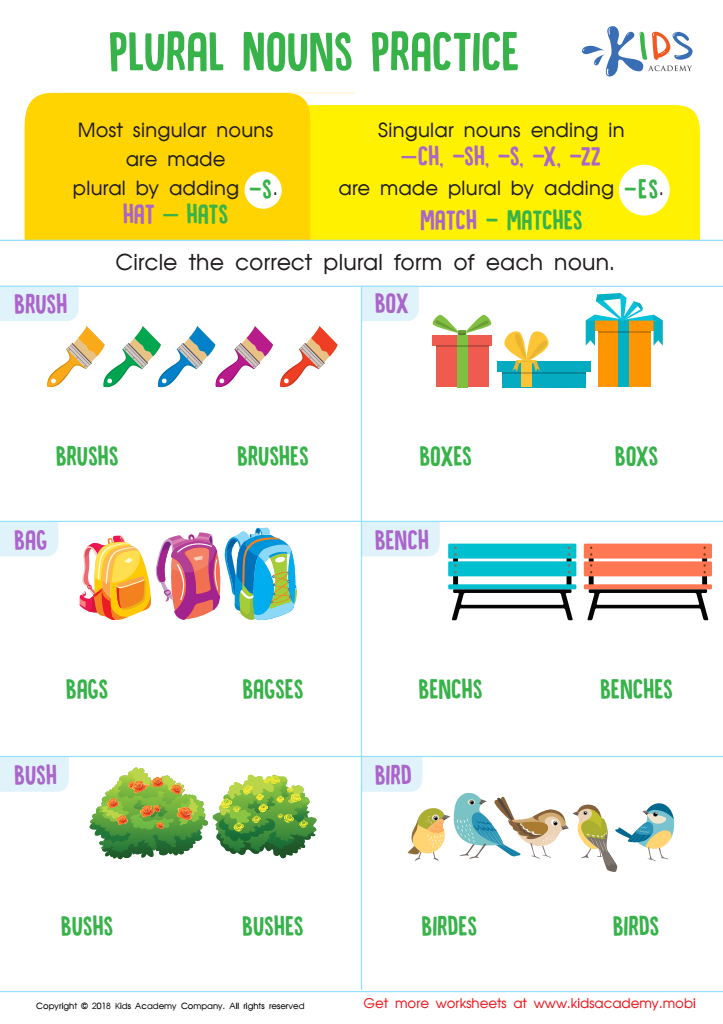
Plural Nouns Practice Worksheet
 Assign to My Students
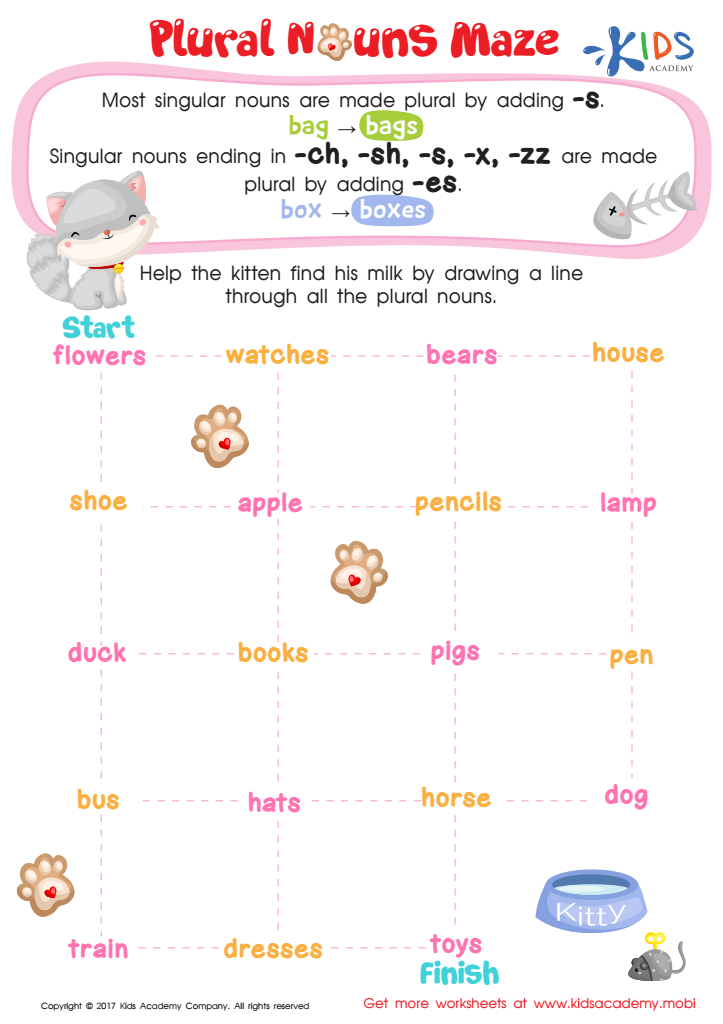
Plural Nouns Maze Worksheet
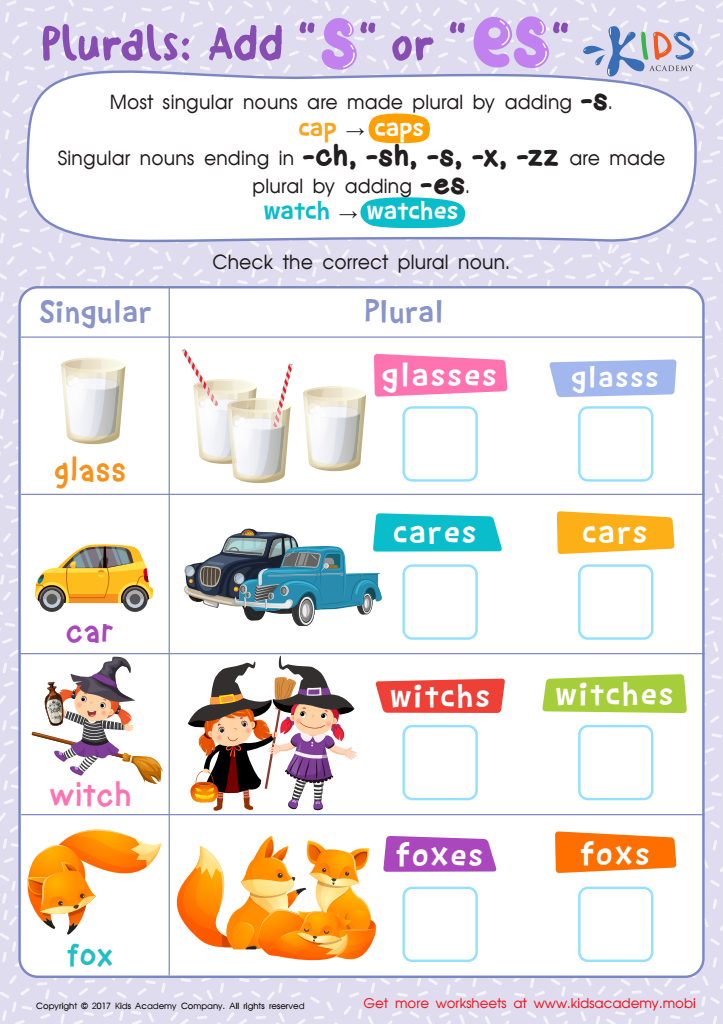
Plurals: "–es" or "–es"? Worksheet






Understanding plurals is a crucial aspect of early language development for 6-year-olds. At this age, children are expanding their vocabulary and starting to grasp more complex language structures, and recognizing plurals aids in this growth. When they learn about plurals, they improve their grammar and flexibility in using language, enabling them to communicate more effectively. For parents and teachers, focusing on plurals through extra challenges can considerably enhance a child's ability to express thoughts, describe experiences, and narrate stories clearly and accurately.
These challenges also promote cognitive development as children learn to identify patterns, remember rules, and apply them in appropriate contexts. Consistent practice with plurals improves literacy skills, including reading and writing, by exposing children to the plural forms of words in varied contexts, making texts more comprehensible. Moreover, mastering plurals at an early age sets a strong foundation for future linguistic learning, reducing the likelihood of difficulties in more advanced grammar concepts later on.
Incorporating playful and interactive plural exercises can make this learning process enjoyable, thus boosting a child’s enthusiasm for learning. Therefore, taking the time to introduce and reinforce plurals will undoubtedly aid in a child's overall educational journey and linguistic confidence.








