Financial literacy Extra Challenge Coins Worksheets for 6-Year-Olds
3 filtered results
-
From - To
Introducing our "Financial Literacy Extra Challenge Coins Worksheets for 6-Year-Olds" – a fantastic resource designed to make learning about money fun and engaging! Tailored specifically for first graders, these printable worksheets from Kids Academy offer a variety of challenging exercises that help young learners understand coin values, recognize different coins, and practice simple calculations. Combining interactive activities with vibrant illustrations, these worksheets not only build foundational math skills but also foster financial literacy from an early age. Perfect for both classroom use and at-home practice, these worksheets ensure that your child enjoys the journey of learning all about money!
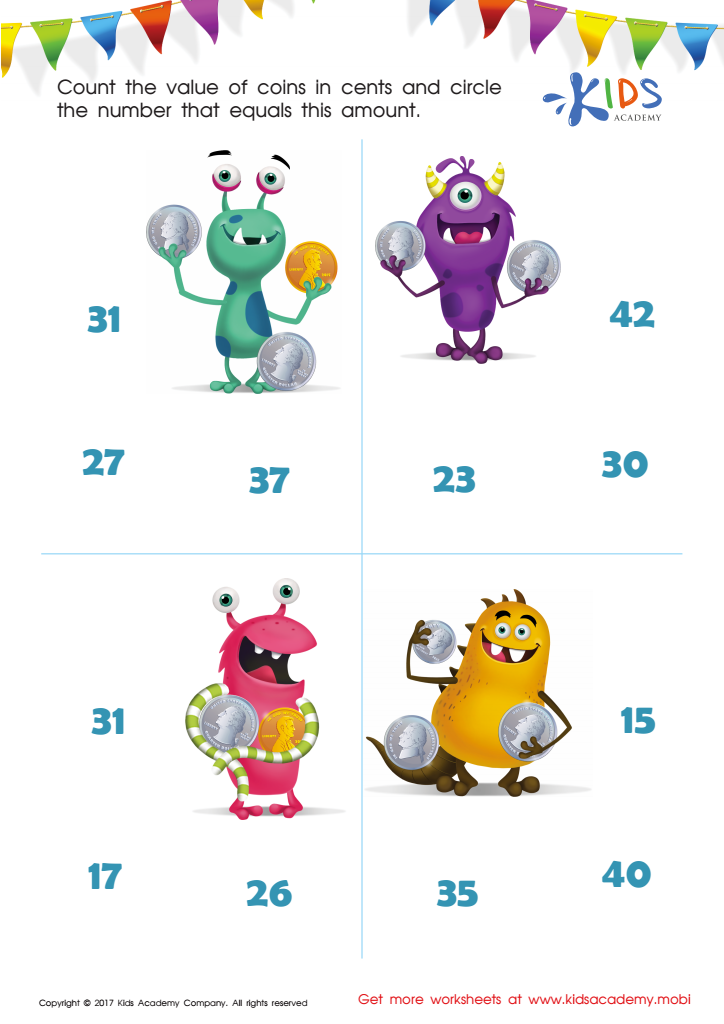
How Many Coins Money Worksheet
 Assign to My Students
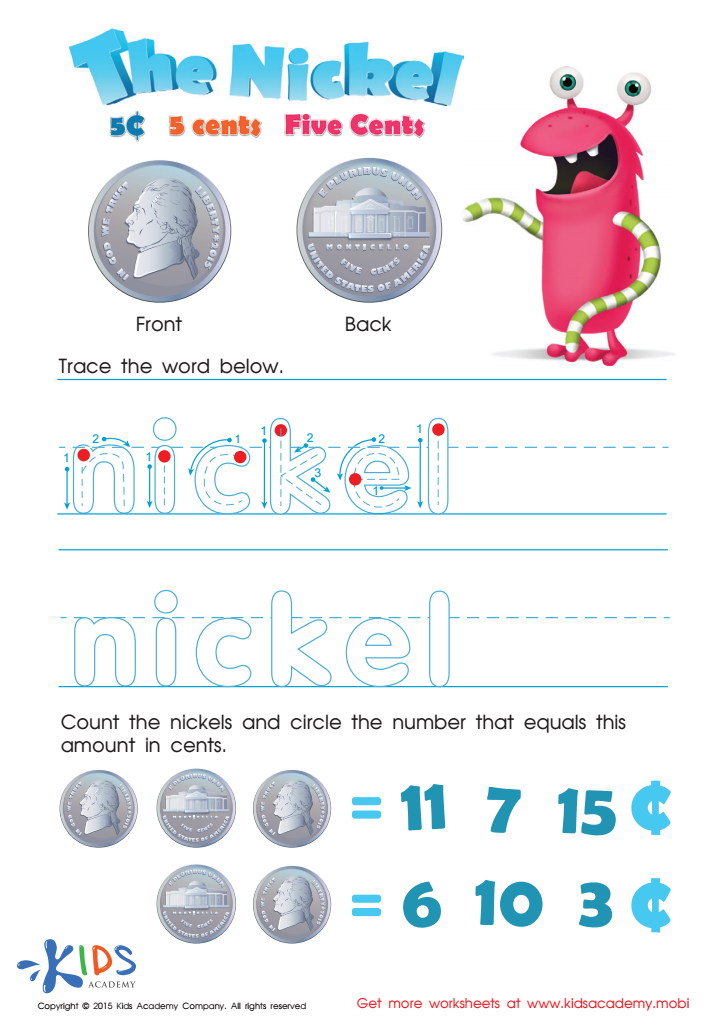
Five Cents or the Nickel Money Worksheet
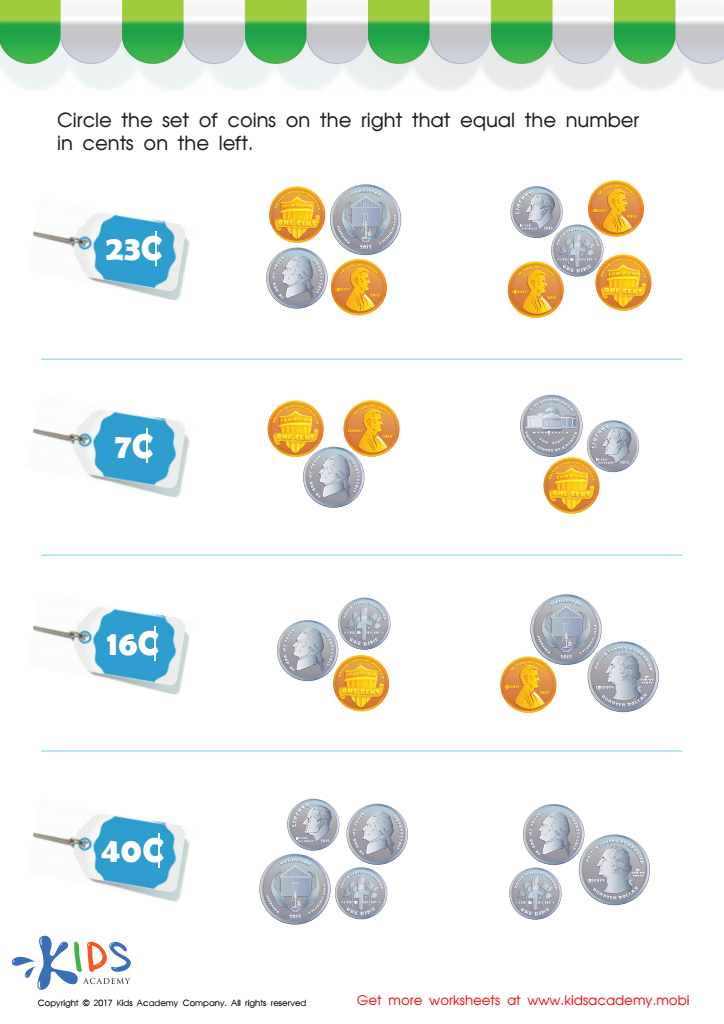
Picking the Coins You Need Money Worksheet








Absolutely, teaching financial literacy to young children is crucial, and using Extra Challenge Coins for 6-year-olds can be a highly motivating and effective method. At this early age, children are highly impressionable and can absorb new concepts quickly. Introducing financial concepts through a rewarding system like Extra Challenge Coins not only makes learning fun but also establishes a strong foundation for future financial habits.
Using Challenge Coins can help gamify the learning process, transforming otherwise abstract concepts like saving, spending, and budgeting into tangible and exciting challenges. When children save coins to "purchase" simple rewards or privileges, they begin to understand the value of money, the importance of saving, and making choices. This can foster a sense of responsibility and long-term thinking.
Moreover, these activities can spark important parent-child or teacher-student discussions about financial decisions, thus reinforcing the lessons. Children will learn through action and discussion, making the educational experience more holistic.
With financial literacy skills sparingly present in traditional schooling systems, introducing such concepts via engaging tools like Challenge Coins bridges that gap. This early intervention can lay the groundwork for financial stability and smart decision-making well into adulthood, ultimately sending children on the path to a secure and prosperous future.








