Comparing objects Extra Challenge Math Worksheets for 6-Year-Olds
3 filtered results
-
From - To
Boost your 6-year-old’s math skills with our Comparing Objects Extra Challenge Math Worksheets! Perfectly designed for young learners, these engaging worksheets help children enhance their ability to compare and analyze different objects based on size, length, weight, and quantity. Each worksheet presents fun and relatable scenarios to captivate their interest while building foundational math concepts. By tackling these extra challenges, kids not only develop critical thinking and problem-solving abilities but also gain confidence in their mathematical journey. Ideal for both classroom use and at-home practice, these worksheets are a fantastic way to foster a love for learning in your child.
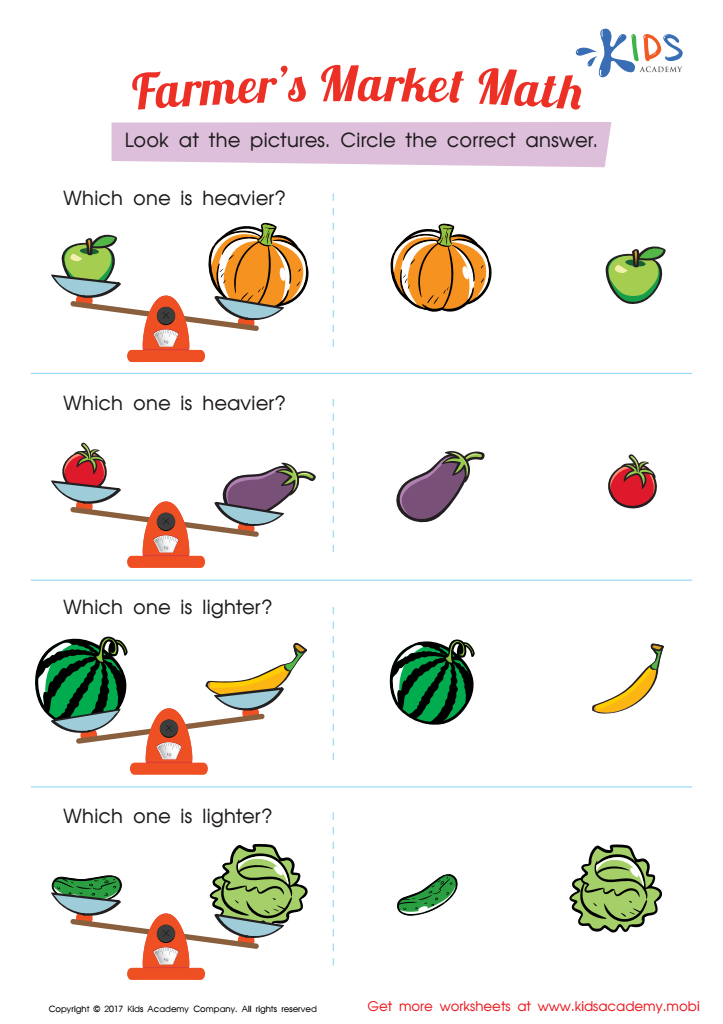
Which One Is Heavier Worksheet
 Assign to My Students
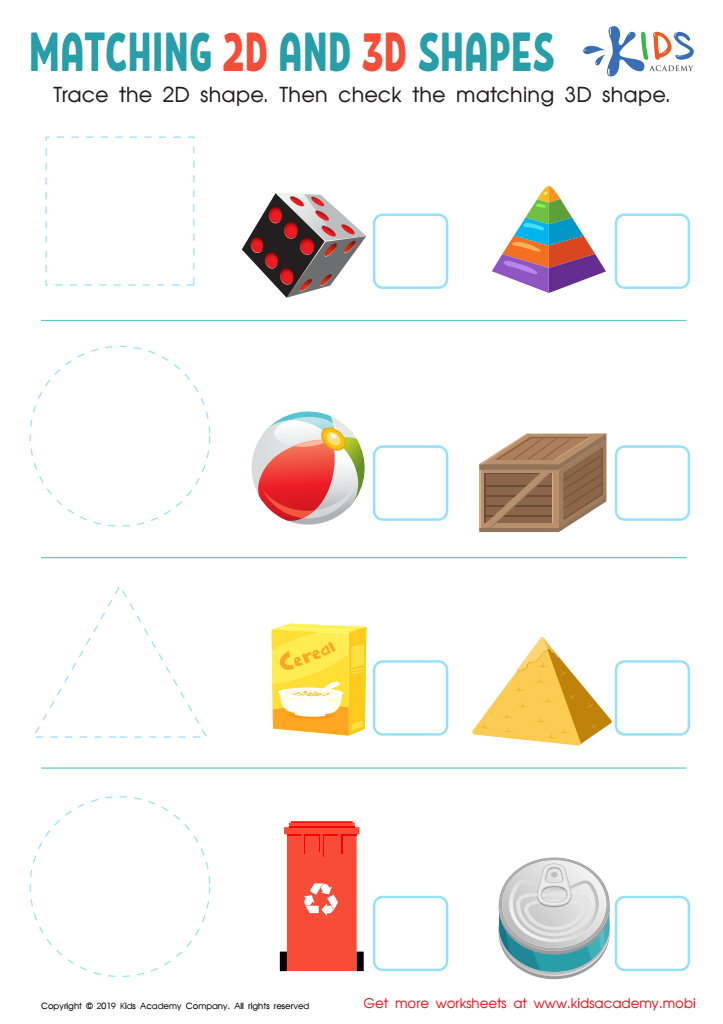
Matching 2D and 3D Shapes Worksheet
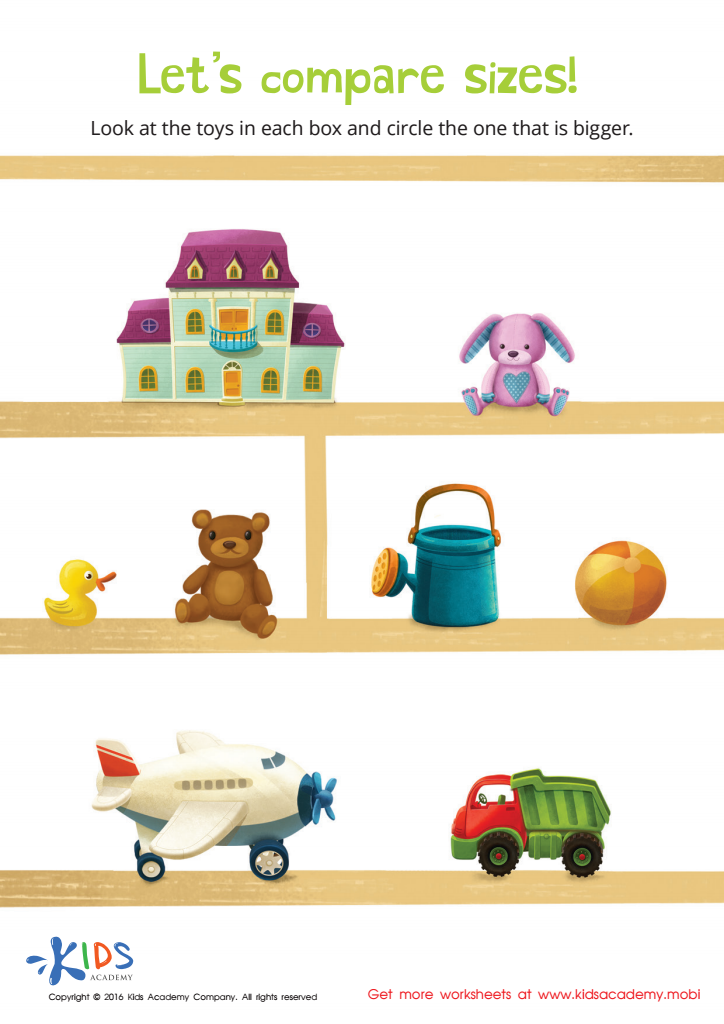
Classifying by Size Sorting Worksheet







Comparing objects in extra challenge math activities is essential for 6-year-olds as it lays a foundational understanding of early math concepts and enhances cognitive development. At this age, children are in a critical phase of learning where they begin to understand and differentiate between various sizes, weights, lengths, and other measurable features. These skills are integral to their overall math competency as they provide the basic framework for more advanced mathematical thinking.
When parents and teachers involve children in such activities, they help develop a child's analytical and observational abilities. Comparing objects encourages children to identify patterns, make inferences, and draw conclusions based on their observations, which are crucial cognitive skills. Additionally, these activities foster problem-solving abilities as children decide how to measure and compare different attributes.
These exercises also align perfectly with important curriculum standards and learning goals for young kids. Early engagement in such practical math activities nurtures a positive attitude towards math by making it fun and interactive. This eliminates the intimidation often associated with math as they grow older.
Moreover, these comparison tasks promote language skills as children learn to describe objects using comparative vocabulary like 'longer', 'shorter', 'heavier', or 'lighter'. These discussions further aid in their overall developmental repertoire, integrating fine motor skills used in measuring and handling objects. Hence, such activities are invaluable in fostering a well-rounded early learning experience for 6-year-olds.








