Handwriting practice Extra Challenge English for Beginners Worksheets for Ages 7-8
5 filtered results
-
From - To
Enhance your child's handwriting with our "Handwriting Practice Extra Challenge English for Beginners Worksheets for Ages 7-8". Specifically designed for young learners, these worksheets strengthen writing skills and improve letter formation. Each activity emphasizes repetitive practice, ensuring children master each letter and word effortlessly. Perfect for ESL students or those needing extra support, these worksheets combine fun and education through engaging exercises focused on age-appropriate vocabulary. Build your child’s confidence in handwriting while supporting their overall literacy development. Empower your 7-8 year old with the tools they need for academic success through consistent and enjoyable handwriting practice.
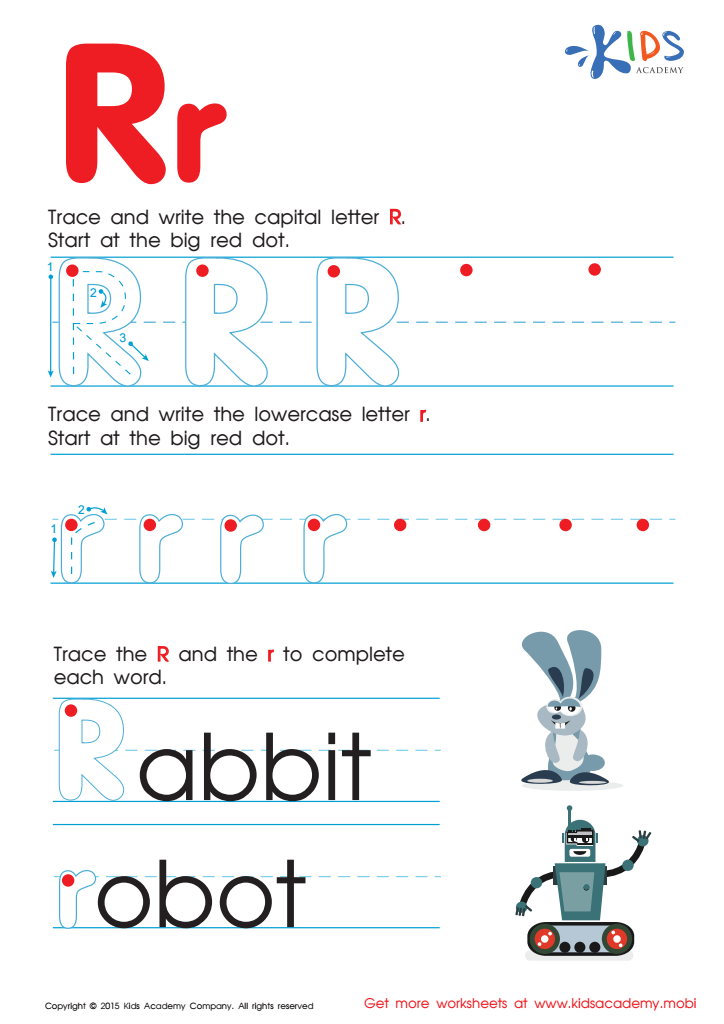
Letter R Tracing Page
 Assign to My Students
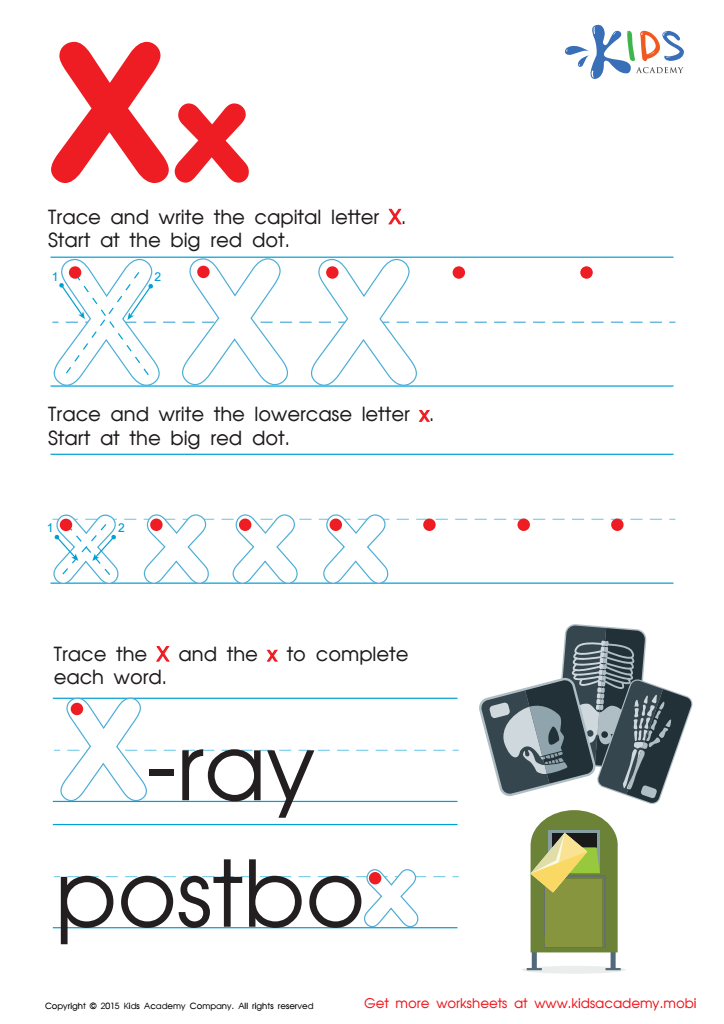
Letter X Tracing Page
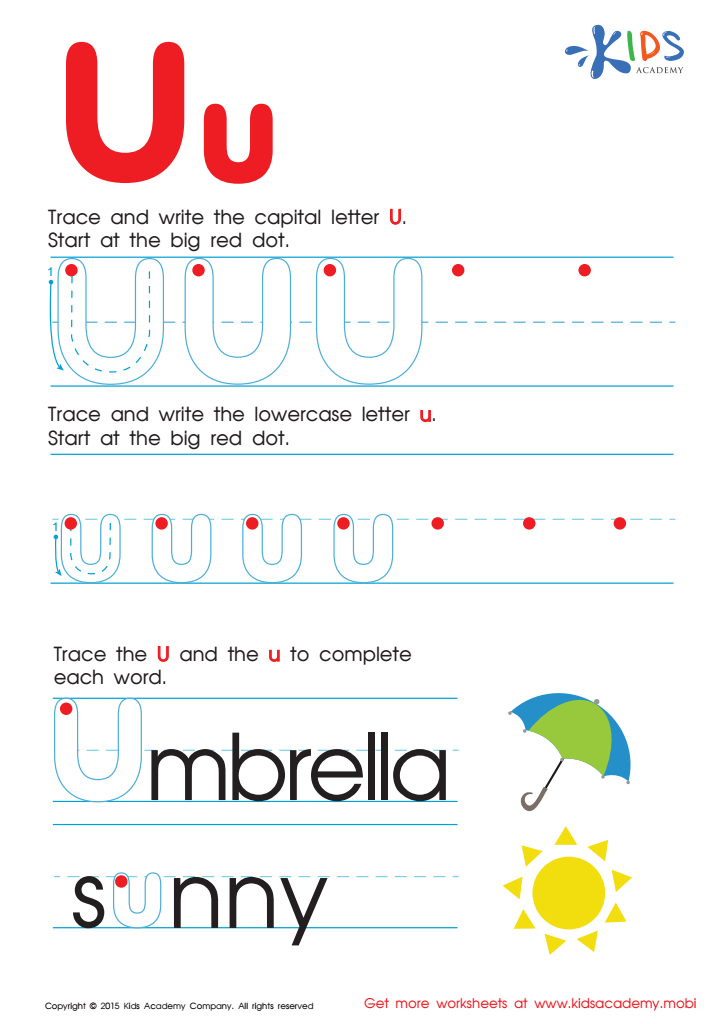
Letter U Tracing Page
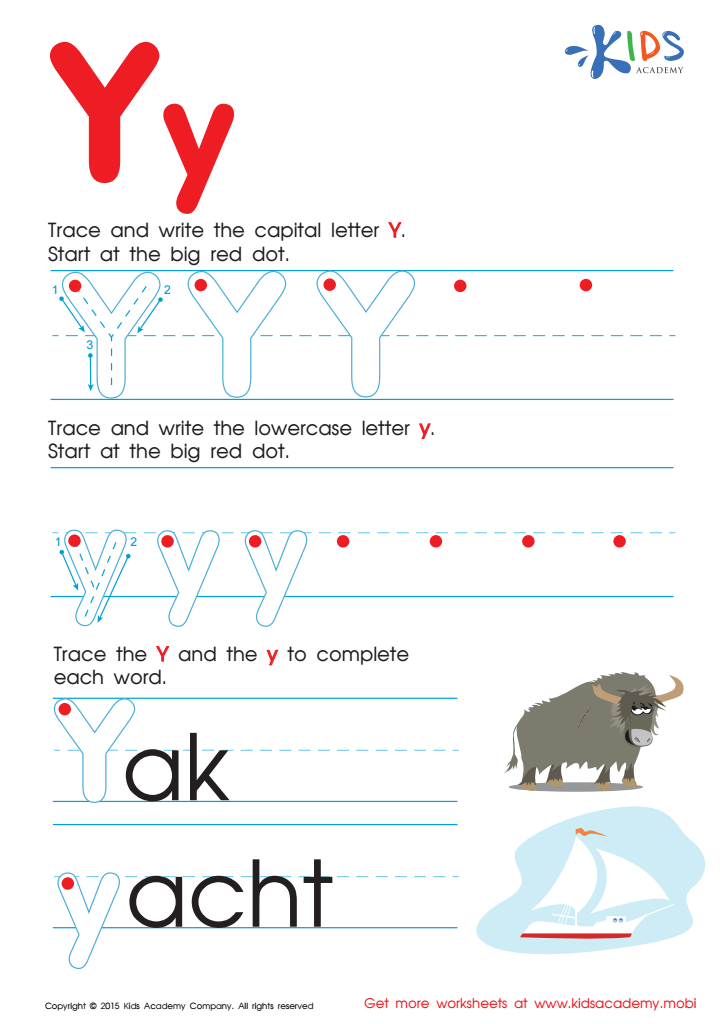
Letter Y Tracing Page
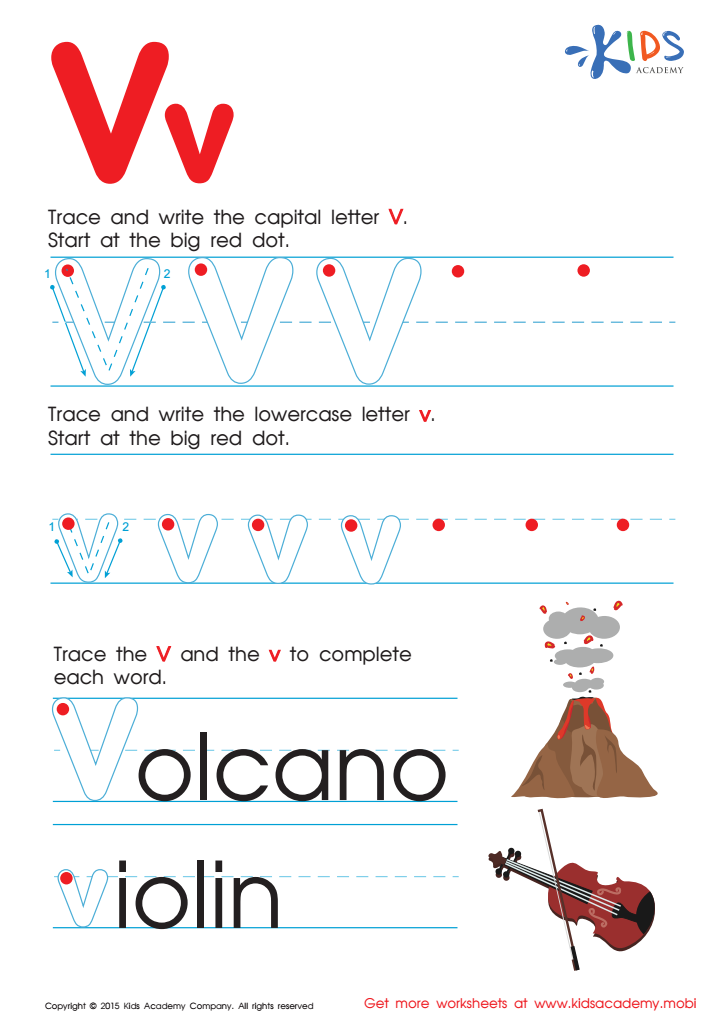
Letter V Tracing Page





Handwriting practice is a vital aspect of a child's education, especially for beginners aged 7-8. At this age, children transition from early literacy skills to more complex reading and writing tasks. Investing in handwriting practice offers numerous cognitive, academic, and developmental benefits.
First, handwriting practice reinforces letter recognition and reading skills. As children repeatedly form letters, they develop a deeper understanding of letter shapes and sounds, making reading easier. Teacher and parent involvement in these activities strengthens the learning process.
Secondly, handwriting improves fine motor skills and hand-eye coordination. Holding a pencil and controlling its movement requires agility and strength that children develop through practice. These motor skills are foundational for other activities, including sports, playing musical instruments, and even typing.
Additionally, handwriting aids in cognitive development, enhancing memory and creativity. Writing by hand engages more of the brain than typing does, leading to better retention of information and the ability to articulate thoughts coherently. This is especially crucial in early education.
Lastly, good handwriting instills a sense of accomplishment and boosts self-esteem. Clear, legible handwriting allows children to take pride in their work, which encourages a positive attitude toward learning.
Therefore, teachers and parents should prioritize handwriting practice to provide children with solid foundational skills that support their overall educational journey.








