
Chess strategy understanding Extra Challenge Worksheets for Ages 7-8
9 filtered results
Difficulty Level
Grade
Age
-
From - To
Subject
Activity
Standards
Unlock your child's potential with our "Chess Strategy Understanding Extra Challenge Worksheets" designed for ages 7-8! These printable worksheets provide young learners with engaging, age-appropriate exercises that enhance their critical thinking and strategic skills. Packed with fun challenges, children will delve into essential chess concepts such as piece value, basic tactics, and planning moves to outsmart their opponents. Each worksheet is thoughtfully crafted to build confidence while promoting a deeper understanding of chess. Perfect for both classroom use and home practice, these extra challenges will inspire a lifelong love for chess and improve problem-solving abilities. Start your chess journey today!
Favorites
With answer key
Interactive
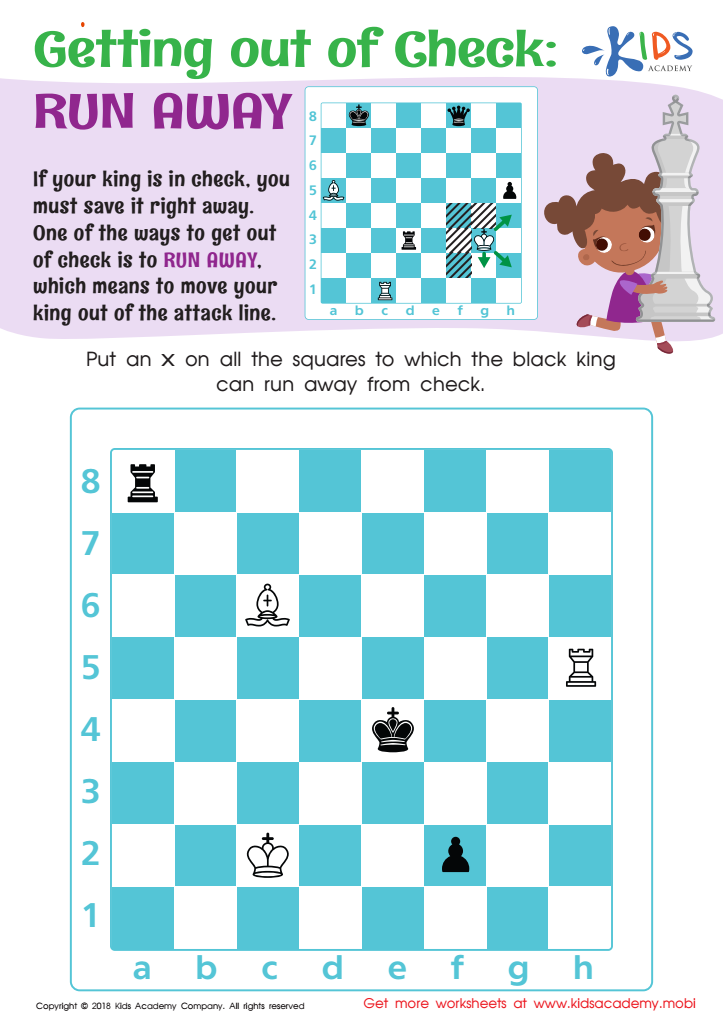
Getting out of Check: Run Away Worksheet
Playing chess boosts your children's brainpower and this worksheet helps them out of sticky situations. It teaches them how to flee with their king to avoid checkmate, as well as how to initiate their own strategic moves on the board. Get your kids on the road to success with this helpful PDF.
 Assign to My Students
Getting out of Check: Run Away Worksheet
Worksheet
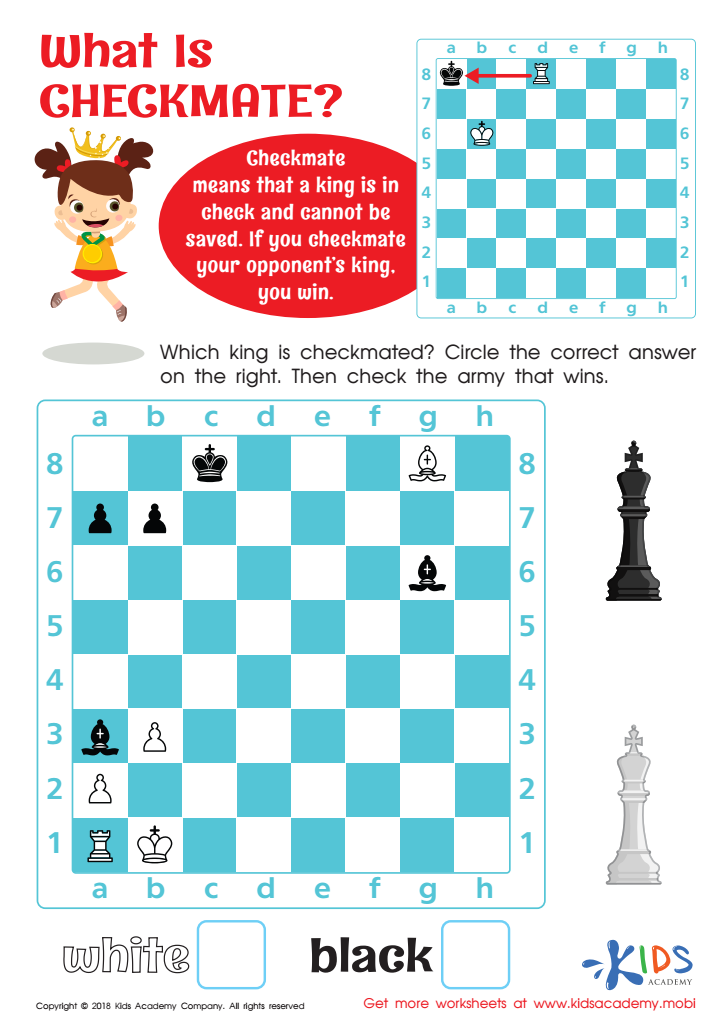
What is Checkmate? Worksheet
This downloadable PDF worksheet lets your child practice identifying when a king is checkmated and how it looks on a chessboard. Checkmate is the best move and with this colorful worksheet, they'll learn that it means their opponent's king is in check and cannot be saved, so they can win!
What is Checkmate? Worksheet
Worksheet
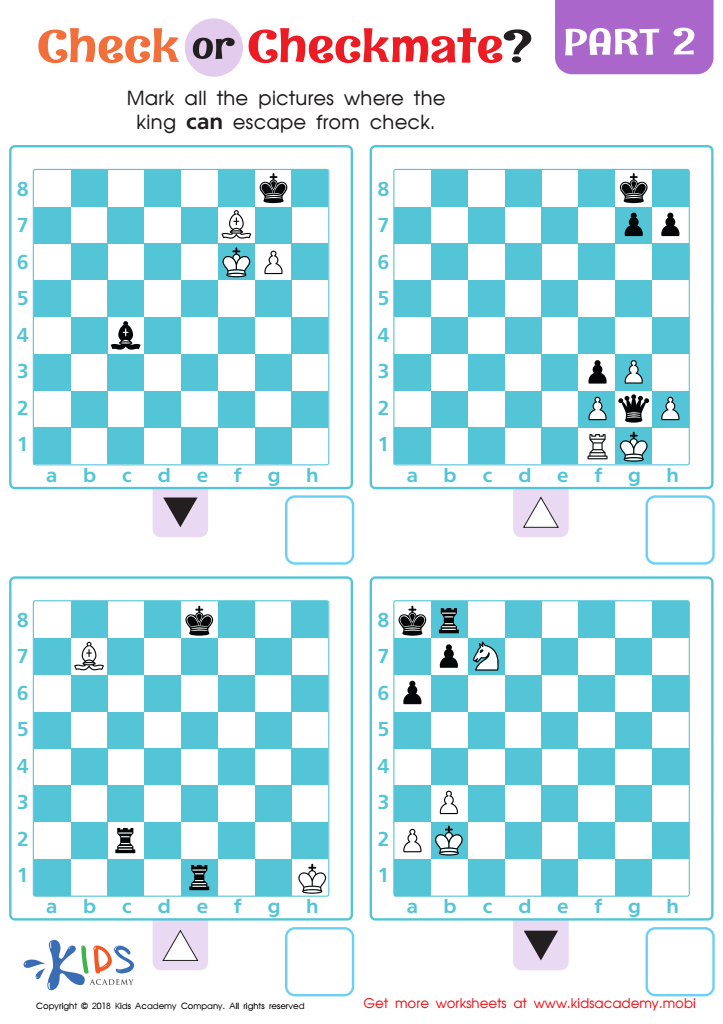
Check or Checkmate: Part 2 Worksheet
Chess is a fun and competitive way for your child to practice strategic thinking, problem-solving and critical reasoning. This free PDF will help them sharpen their skills, by analyzing boards and marking ones where the king can escape check. An invaluable skill when playing on real boards.
Check or Checkmate: Part 2 Worksheet
Worksheet
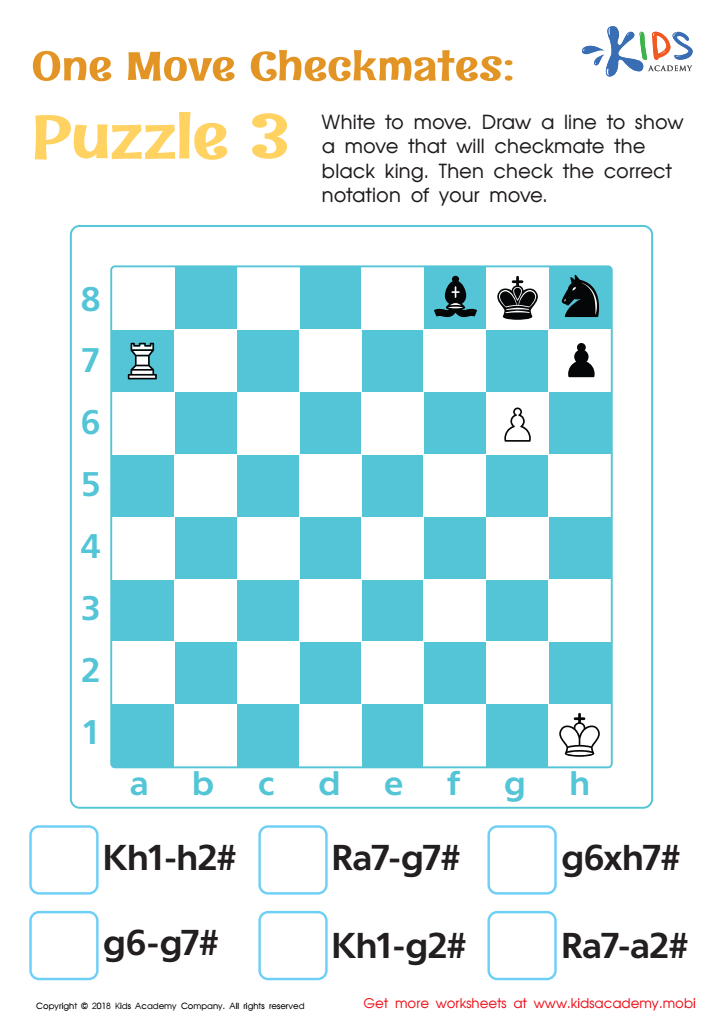
One Move Checkmates: Puzzle 3 Worksheet
Boost your child's critical thinking and strategy skills with this fun puzzle activity. They'll use their logical thinking to plot ways to checkmate the black king, and then check their answer with the given choices. A great way to improve their skills and have a blast doing it!
One Move Checkmates: Puzzle 3 Worksheet
Worksheet
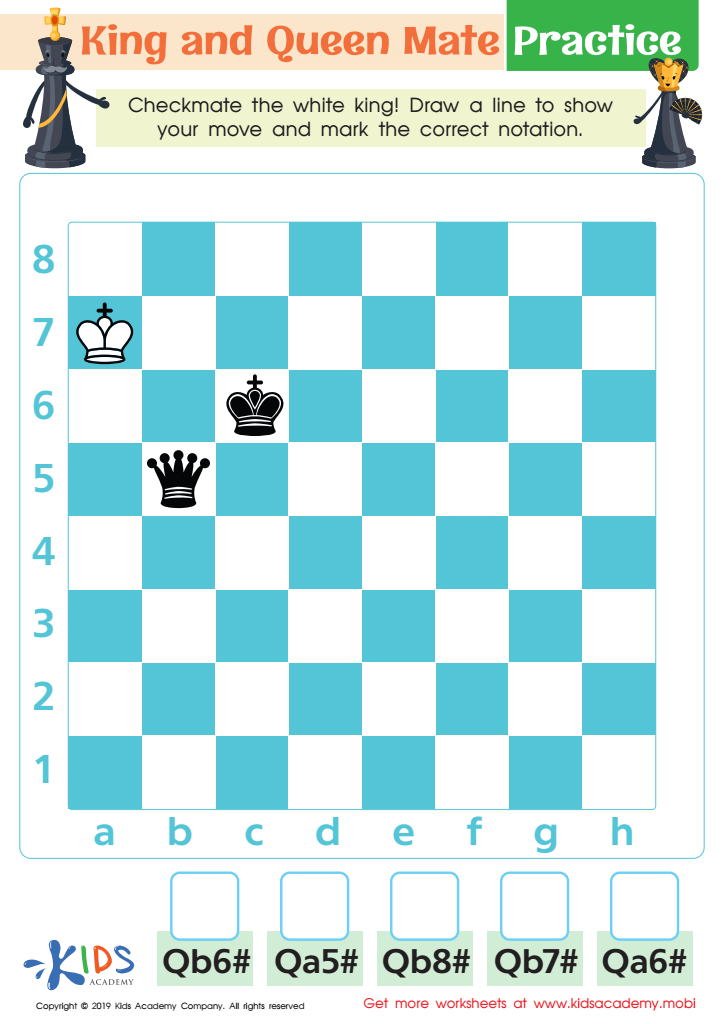
King and Queen Mate Practice Worksheet
Learning chess can open up a world of strategy, problem-solving and reasoning for your child! Our free worksheet gives them the opportunity to practice checkmating with their king and queen pieces. It also helps them develop fine-motor skills, as they draw lines to show the right moves and check off the correct notation. All without screens!
King and Queen Mate Practice Worksheet
Worksheet
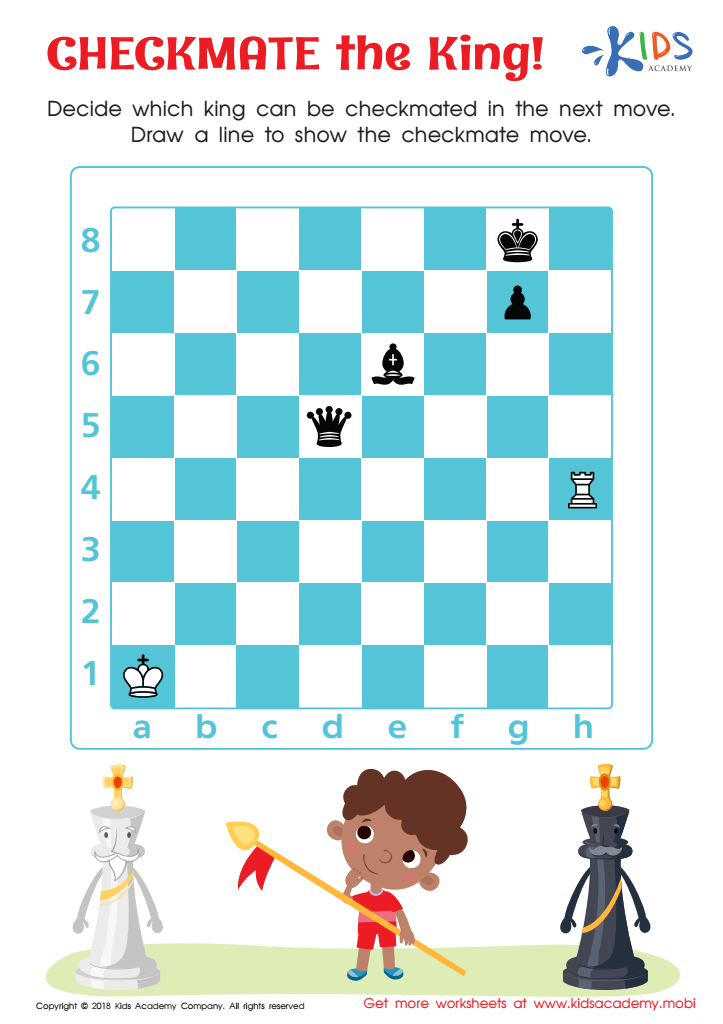
Checkmate the King Worksheet
Chess is great for growing problem-solving and critical thinking skills in children, and it's even better if they have fun winning! This worksheet will help kids practice checkmating their opponent's king. They can use the sample board to draw the line of their winning move. Who doesn't love being a winner?!
Checkmate the King Worksheet
Worksheet
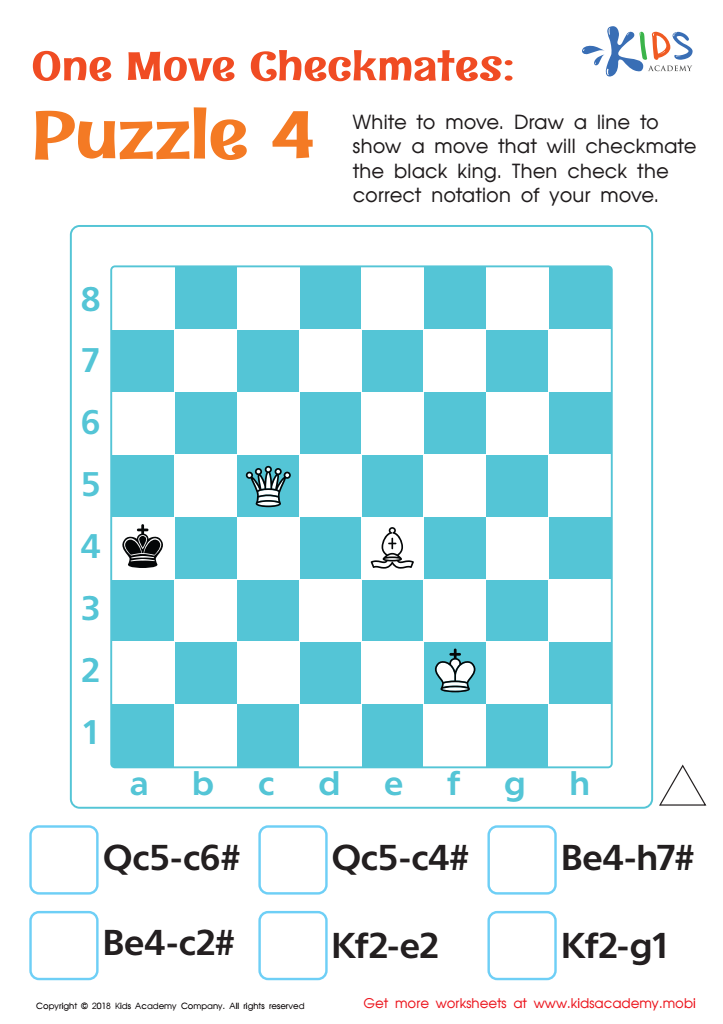
One Move Checkmates: Puzzle 4 Worksheet
Want to challenge your logistician? This engaging PDF worksheet tests their critical thinking, strategy and visual-spatial skills. They must plot to overtake and checkmate the king and use the answer choices to check if they've strategized correctly. It's a fun way to build problem-solving skills needed for higher-level math.
One Move Checkmates: Puzzle 4 Worksheet
Worksheet
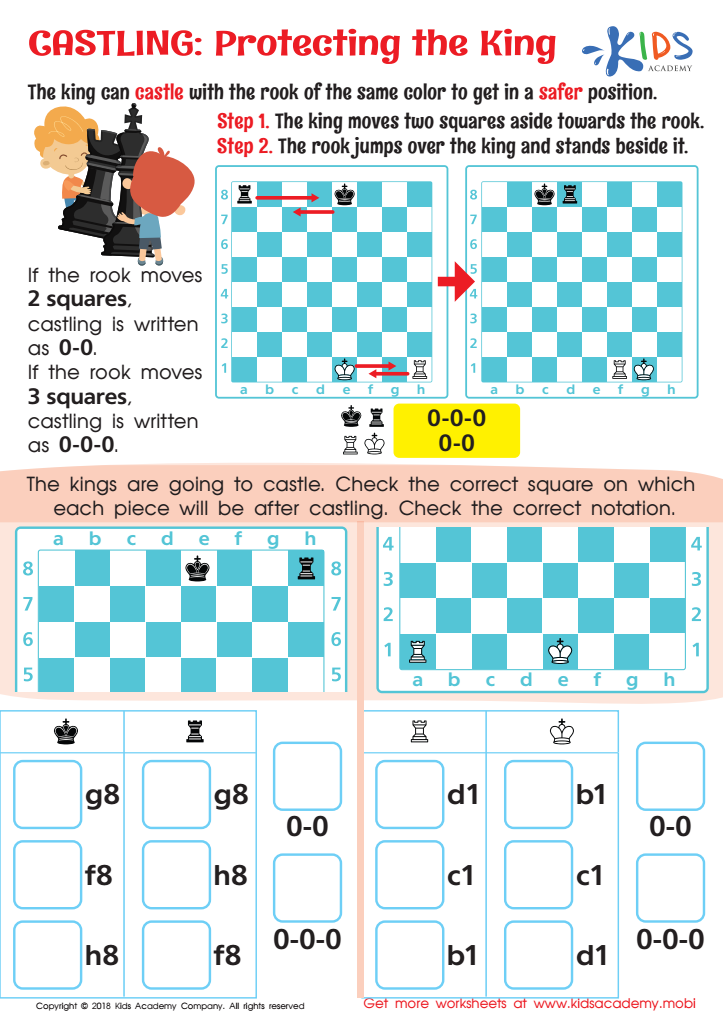
Castling: Protecting the King Worksheet
Castle your king with the rook to get into a safer position! Write 0-0 for a two-square move, or 0-0-0 for a three-square move. Look at the worksheet with your child; on the first chessboard, the king has moved two squares and the rook is beside it. On the second, the rook has jumped over the king. Let your child use their castling knowledge to answer the questions in the easy pdf.
Castling: Protecting the King Worksheet
Worksheet
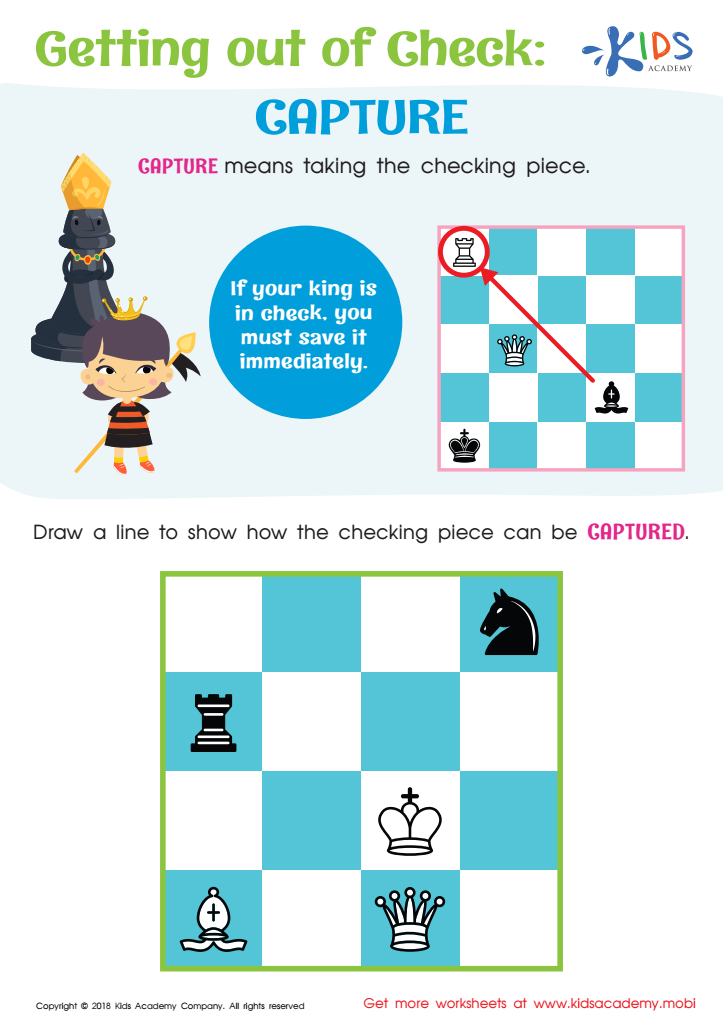
Getting out of Check: Capture
Kids love chess because it combines strategy and the thrill of outwitting their opponents! This free chess strategy worksheet teaches kids how to protect and capture the threatening piece when their king is in danger. The downloadable includes sample boards to practice with. Get it today and have your chess whiz mastering the game in no time!
Getting out of Check: Capture
Worksheet
Learning Skills
Join Kids Academy for Free
Who is primarily going to use this learning content?




Understanding chess strategy is important for both parents and teachers, particularly for children ages 7-8, as it cultivates critical cognitive skills. First, chess enhances problem-solving and decision-making abilities. Engaging with various strategies in the game challenges young minds to think ahead, consider potential outcomes, and evaluate different scenarios—skills invaluable in both academic and real-world situations.
Additionally, chess promotes patience and emotional resilience. Kids learn to cope with losses constructively, fostering a growth mindset that encourages them to view challenges as opportunities for improvement rather than setbacks. This emotional development can translate into better peer relationships, as handling wins and losses gracefully is a valuable social skill.
Moreover, chess is a fun and interactive way to strengthen focus and concentration levels. The complexity of strategies involved keeps children engaged and teaches them to maintain attention over extended periods, which is crucial for success in their schooling.
Lastly, introducing children to chess strategy also lays a strong foundation for future learning. Understanding the game’s intricacies nurtures intellectual curiosity and creativity, encouraging children to explore not just chess, but other complex subjects with enthusiasm. For these reasons, fostering chess strategy understanding in young learners is a meaningful endeavor for both parents and teachers.








