Number Sequencing Extra Challenge Worksheets for Ages 7-8
3 filtered results
-
From - To
Boost your child's mathematical skills with our "Number Sequencing Extra Challenge Worksheets for Ages 7-8"! Designed to enhance number recognition, logical reasoning, and problem-solving capabilities, these worksheets offer an engaging way for your child to master sequencing concepts. Each worksheet features a variety of challenging exercises that encourage critical thinking, from filling in missing numbers to arranging sequences in correct order. Perfect for supplemental practice at home or in the classroom, these worksheets will not only sharpen skills but also foster a love for numbers. Help your young learner tackle these exciting challenges and build a strong foundation for future math adventures!
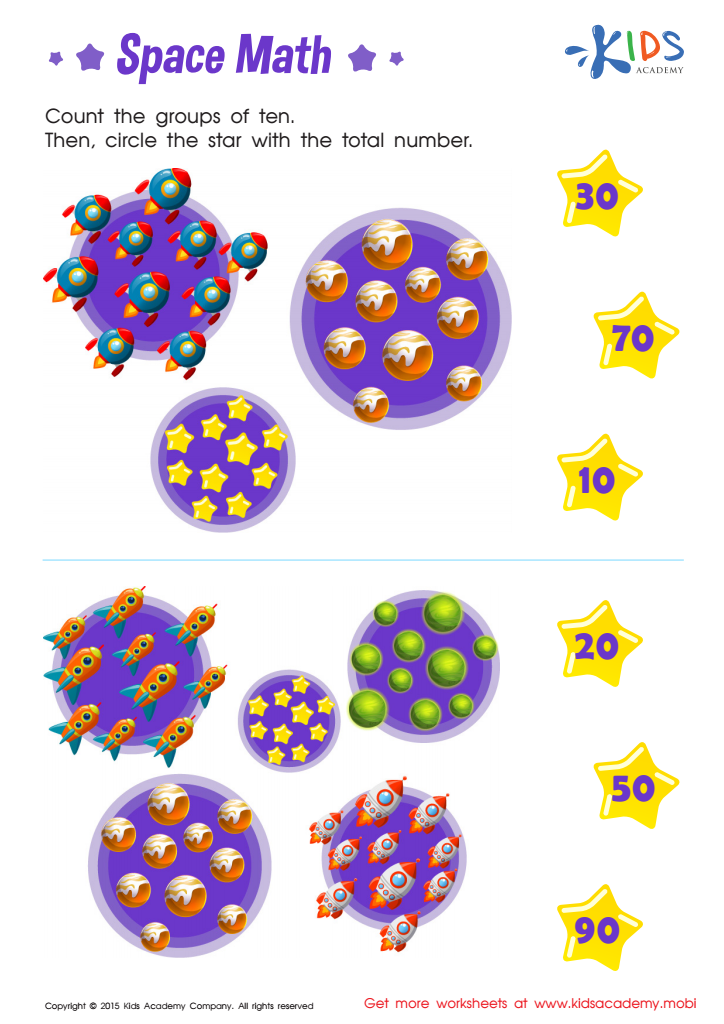
Learn dozens: Space math Worksheet
 Assign to My Students
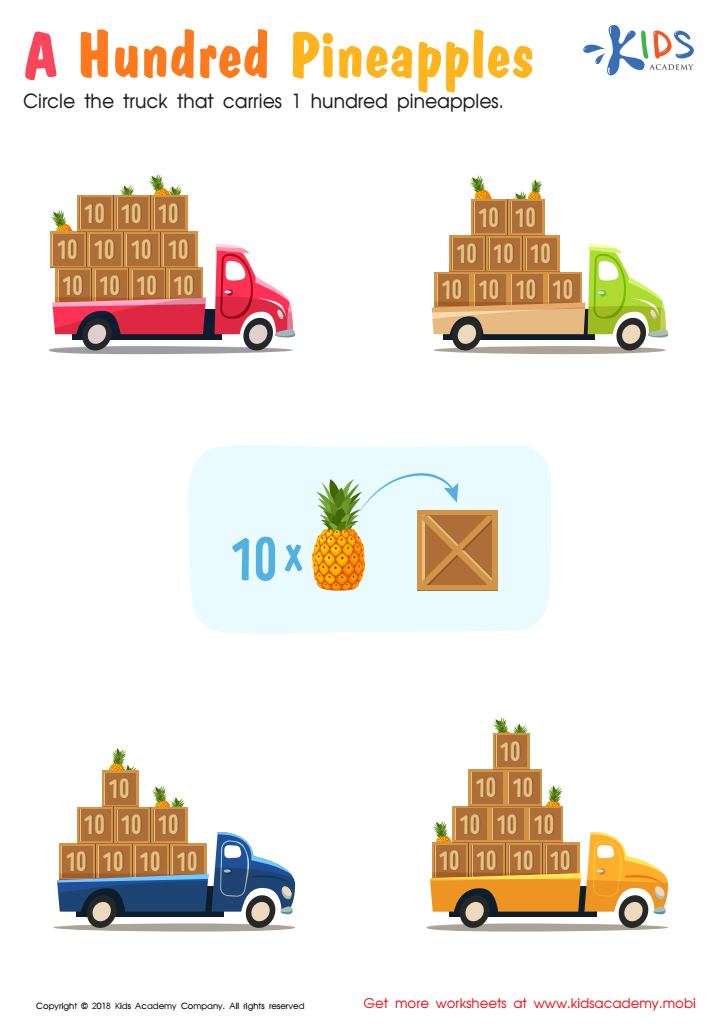
A Hundred Pineapples Worksheet
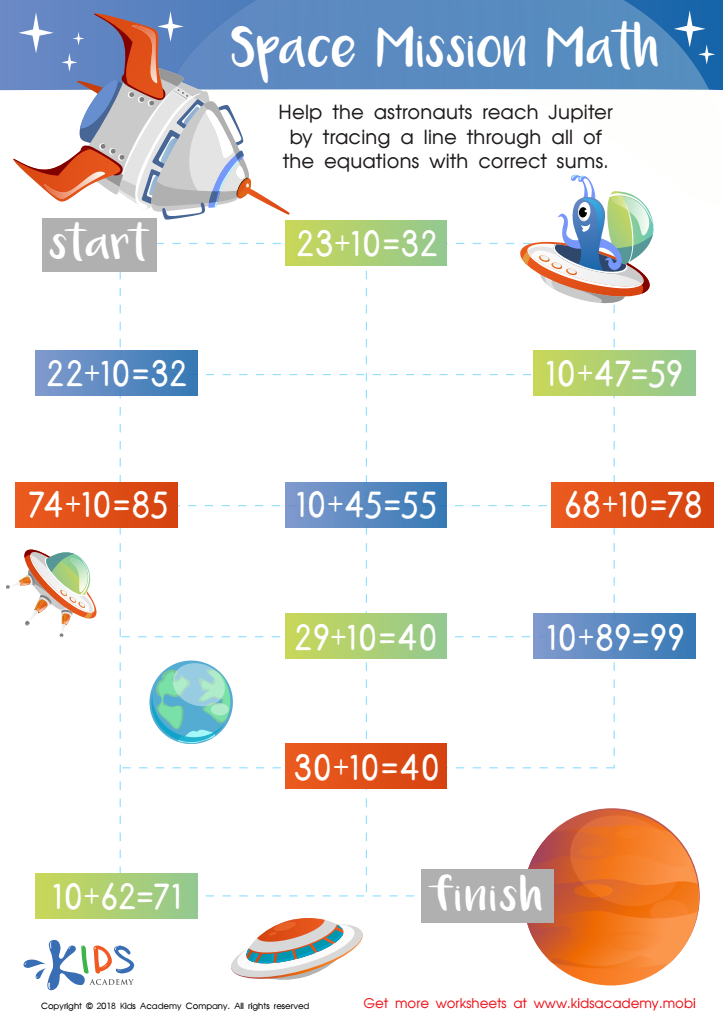
Space Mission Math Worksheet





.jpg)


Number sequencing is a critical skill for children aged 7-8, as it forms the foundation for more complex mathematical concepts. Parents and teachers should care about providing extra challenges in this area because it enhances children's cognitive development, problem-solving abilities, and understanding of patterns. By engaging with number sequencing activities, children improve their mathematical fluency and build confidence in their skills, which is crucial during these formative years.
Additionally, number sequencing fosters logical thinking. Children learn to recognize order and relationships between numbers, which aids in their overall understanding of arithmetic operations like addition and subtraction. The ability to follow sequences also supports later concepts in algebra and provides a basis for understanding ratios, fractions, and even basic statistics.
In the 21st century, proficiency in mathematics is essential for success in numerous careers and daily problem-solving scenarios. Thus, nurturing a strong foundation through number sequencing not only benefits academic performance but also prepares children for future challenges. By incorporating enhanced challenges, teachers and parents emphasize critical learning while making math enjoyable and engaging, ultimately igniting a lifelong interest in the subject. This investment in foundational skills can significantly influence a child's academic journey and future opportunities.








