Understanding graphs Extra Challenge Worksheets for Ages 7-8
3 filtered results
-
From - To
Enhance your child's comprehension of graphs with our 'Understanding Graphs Extra Challenge Worksheets' designed specifically for ages 7-8. These engaging worksheets foster critical thinking and help young learners interpret various types of graphs, including bar graphs and pictographs. Each worksheet presents age-appropriate challenges that encourage children to analyze data, draw conclusions, and develop their mathematical skills. Boost your child's confidence in handling graph-related concepts while making learning fun and interactive. Perfect for classroom use or at-home practice, these worksheets provide an excellent resource for educators and parents alike. Explore our collection and watch your child excel in graph understanding!
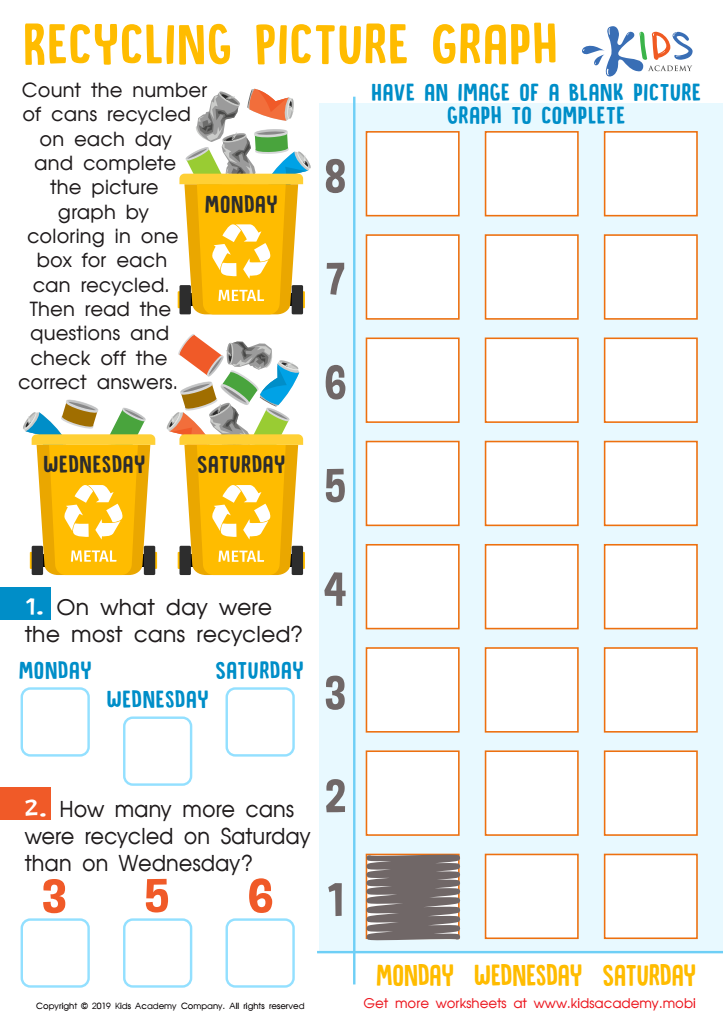
Recycling Picture Graph Worksheet
 Assign to My Students
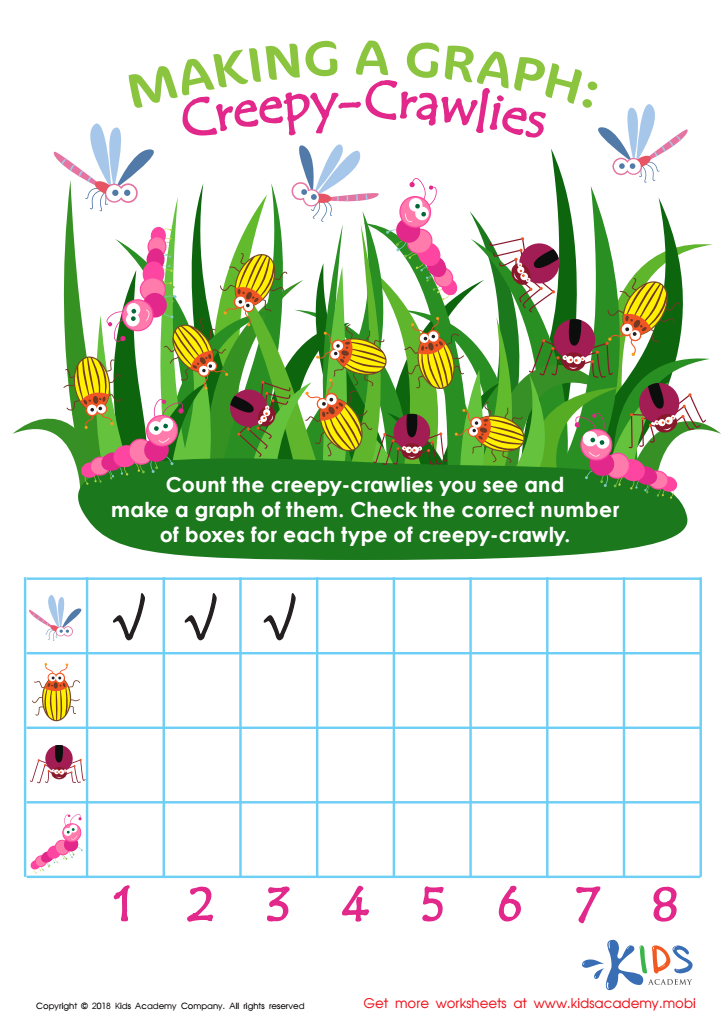
Making a Graph: Creepy Crawlies Worksheet
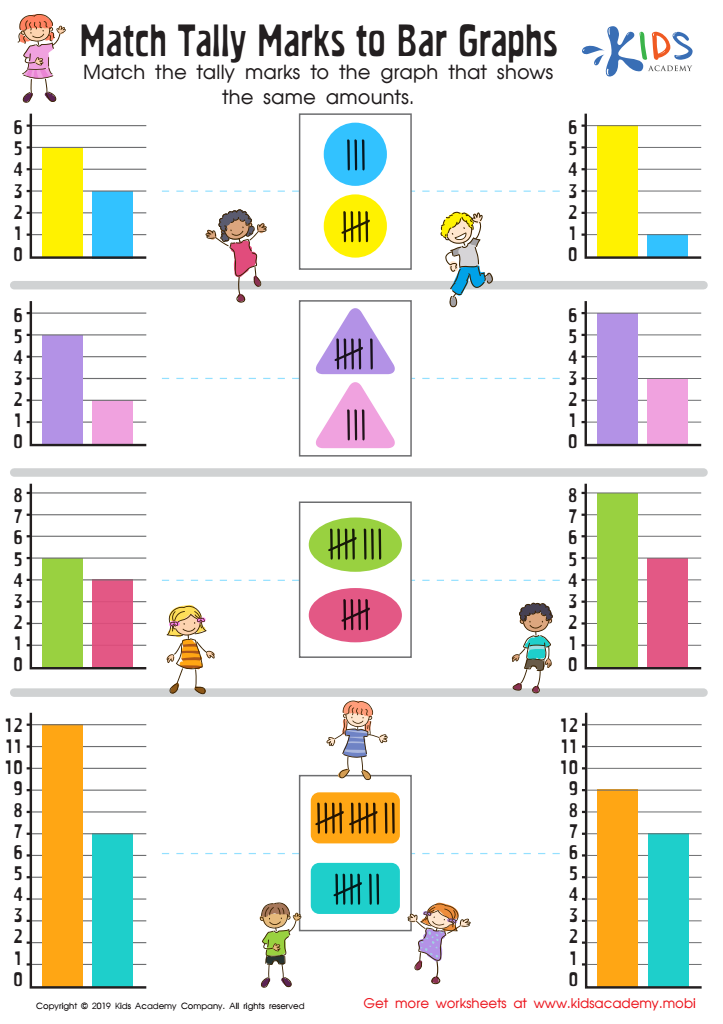
Match Tally Marks to Bar Graphs Worksheet








Understanding graphs is crucial for children aged 7-8, and both parents and teachers should prioritize this skill for several compelling reasons. First, graphs represent data visually, making complex information easier to understand and interpret. By mastering graphs, children can engage with data in a relatable way, improving their analytical and critical thinking skills. This aligns with key learning objectives in math and science education.
Moreover, interpreting graphs fosters foundational skills that are essential for future educational success. As children progress, they will encounter graphs in various subjects, including social studies, where they analyze statistics, or in science, where they track experiments and outcomes. Therefore, nurturing these skills early on sets the stage for more advanced learning.
Another important aspect is that understanding graphs equips children to make informed decisions in daily life. Whether it’s comprehending survey results, following trends in social media, or interpreting sports statistics, the ability to analyze data visually helps them navigate information critically.
By incorporating graph analysis in educational activities and discussions, parents and teachers will enhance children's cognitive development, promote curiosity, and bolster their confidence in math and science, fostering lifelong learning and engagement in an increasingly data-driven world.








