Recognizing shapes Extra Challenge Math Worksheets for Ages 7-9
3 filtered results
-
From - To
Unlock your child's geometric potential with our "Recognizing Shapes Extra Challenge Math Worksheets" designed for ages 7-9! These engaging and challenging worksheets offer a variety of activities that enhance shape recognition skills while promoting critical thinking. Students will explore different shapes through fun exercises that include identifying, classifying, and completing shape patterns. Tailored to boost problem-solving abilities, these worksheets make learning math enjoyable and interactive. Perfect for classroom use or at-home practice, they provide a hands-on approach to understanding geometry. Equip your young learners with the skills they need for future success in math with these extra challenging worksheets!
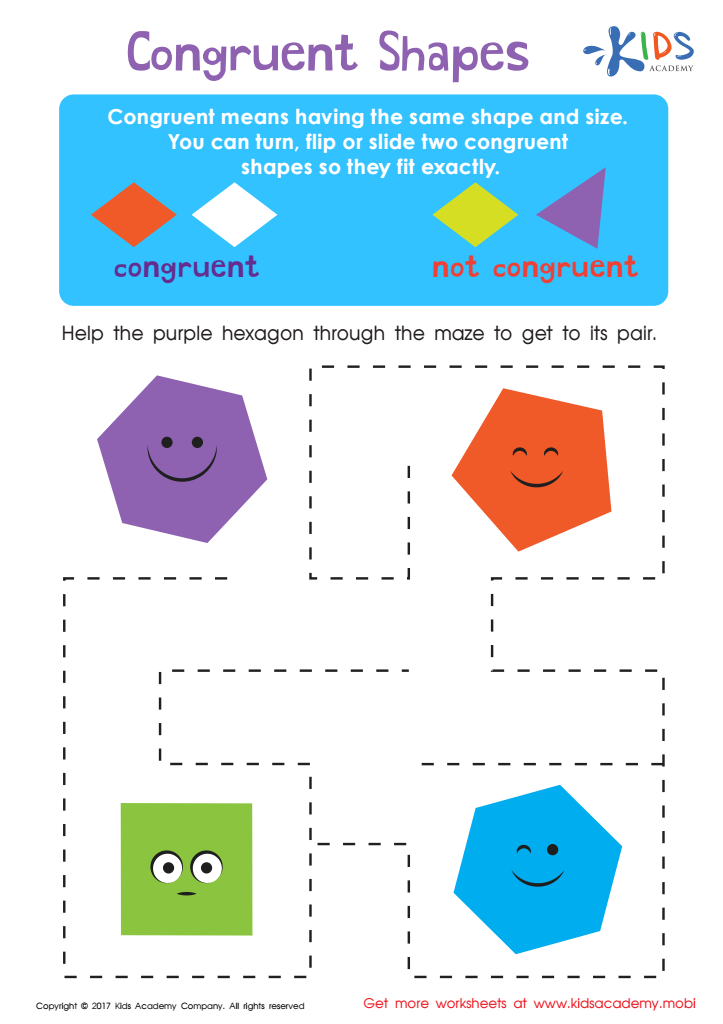
Congruent Shapes Worksheet
 Assign to My Students
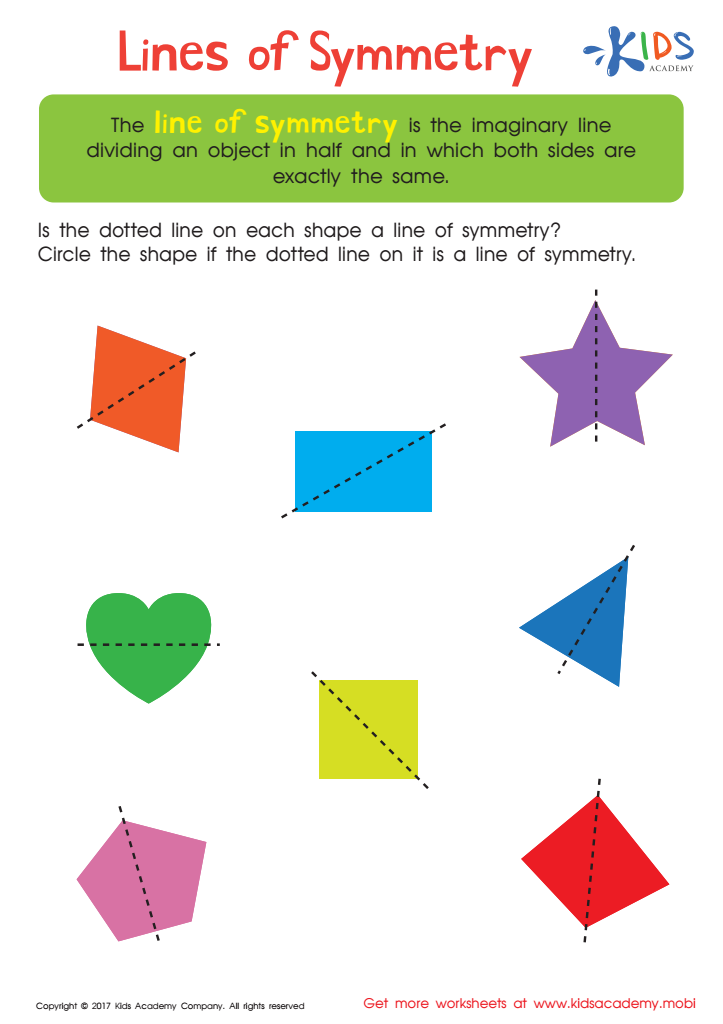
Lines of Symmetry Printable
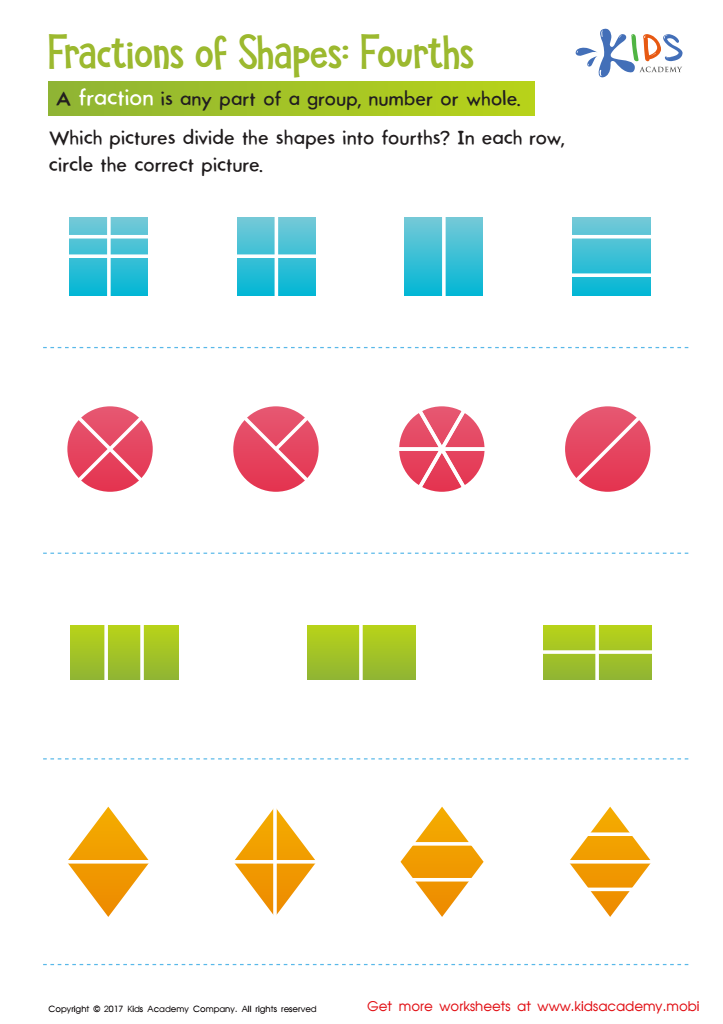
Fractions of Shapes Worksheet








Recognizing shapes is a fundamental skill in early mathematics that lays the groundwork for more complex concepts in geometry and spatial reasoning. For children aged 7-9, mastering shape recognition can enhance their problem-solving abilities and cognitive development, enabling them to visualize and understand their world more effectively.
Parents and teachers should care about this Extra Challenge Math program because it provides engaging activities that encourage critical thinking and creativity. Recognizing and working with shapes fosters essential skills like comparison, classification, and pattern recognition—key components in a child's overall cognitive growth. Additionally, exposing children to various shapes through diverse activities can improve their fine motor skills, as they often involve drawing, cutting, or modeling shapes.
Furthermore, early proficiency in recognizing and understanding shapes can positively impact a child's future academic performance in subjects such as math and science, where these concepts frequently intersect. By cultivating an interest and aptitude for geometry at this young age, adults can help children build the confidence and skills necessary to tackle more advanced mathematical concepts as they progress in their education. Overall, nurturing shape recognition can create a strong mathematical foundation and promote a lifelong love for learning.








