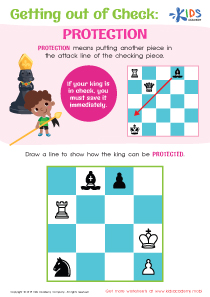
Strategic thinking development Extra Challenge Chess Worksheets for 7-Year-Olds
3 filtered results
-
From - To
Explore the world of strategic thinking with our engaging Extra Challenge Chess Worksheets designed specifically for 7-year-olds! These worksheets provide fun and educational activities that sharpen young minds, fostering critical thinking and problem-solving skills. Each uniquely crafted exercise encourages children to analyze complex situations on the chessboard, anticipate opponents’ moves, and develop effective strategies. Suitable for both classroom and home learning, these resources inspire kids to think several steps ahead while enjoying the classic game of chess. Dive into enriching challenges that not only build strategic prowess but also ignite a passion for learning through play. Perfect for young chess enthusiasts!
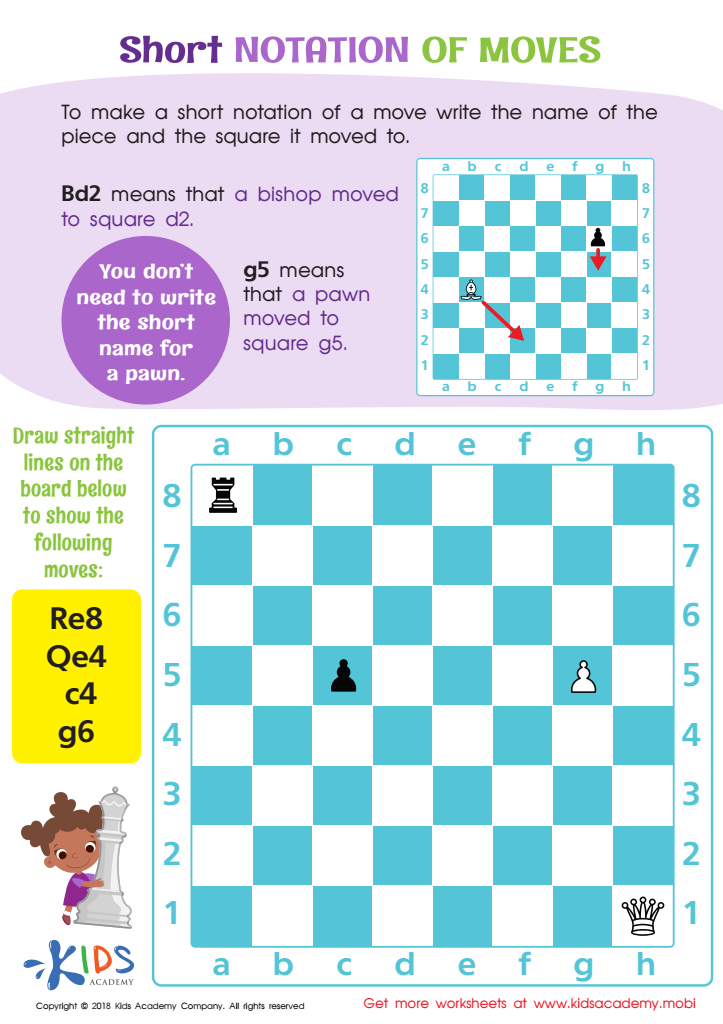
Short Notation of Moves Worksheet
 Assign to My Students
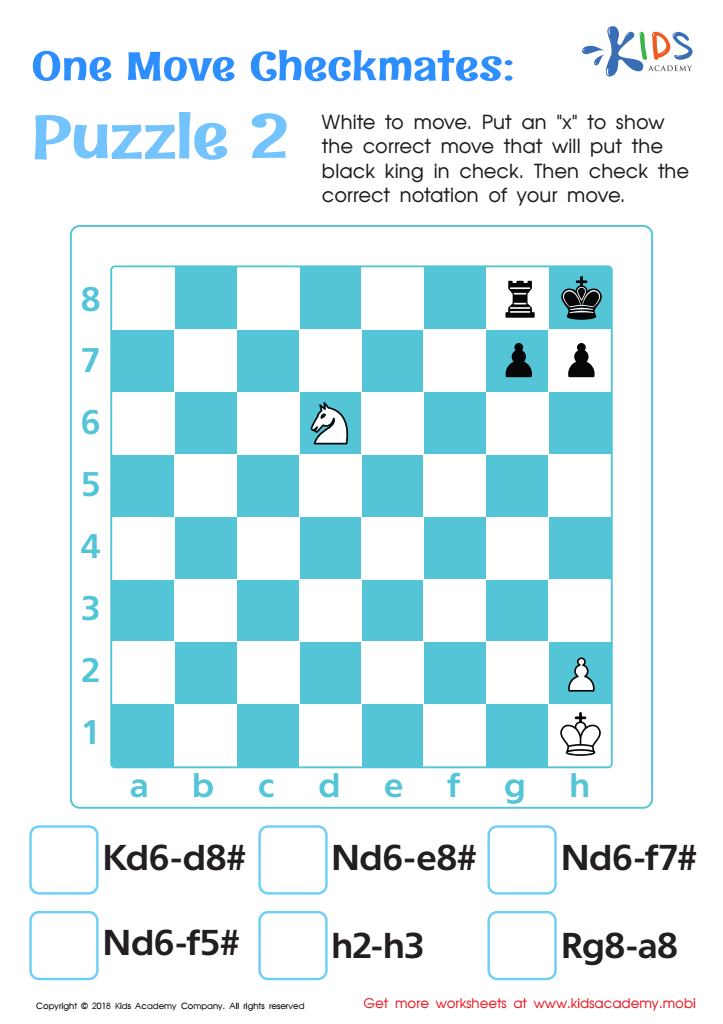
One Move Checkmates: Puzzle 2 Worksheet
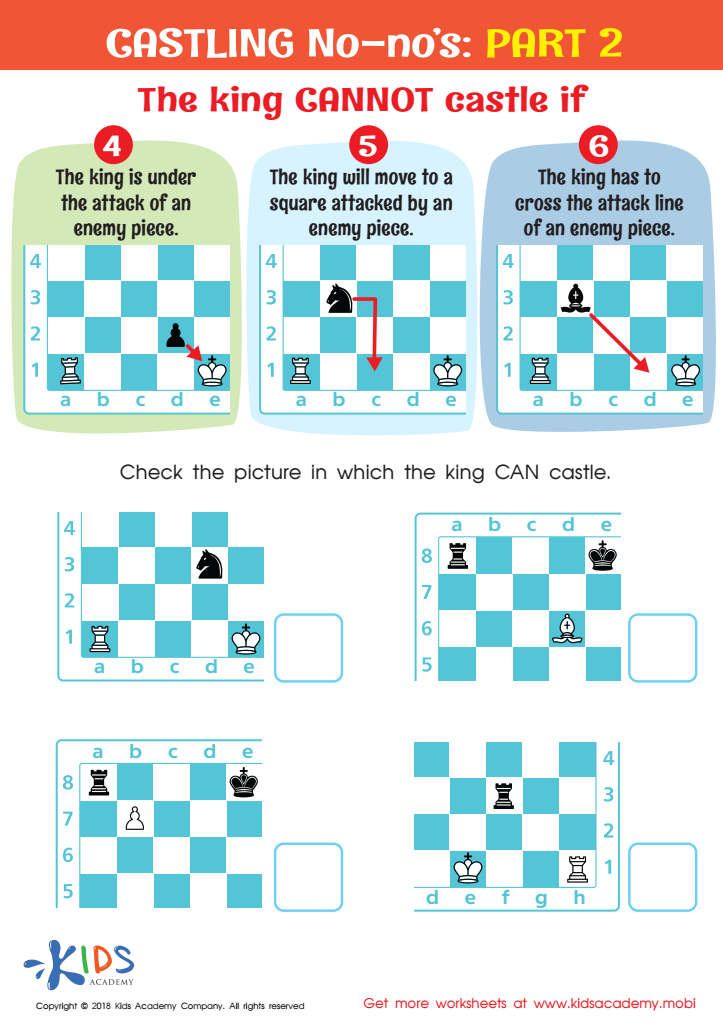
Castling No - no's: Part 2 Worksheet



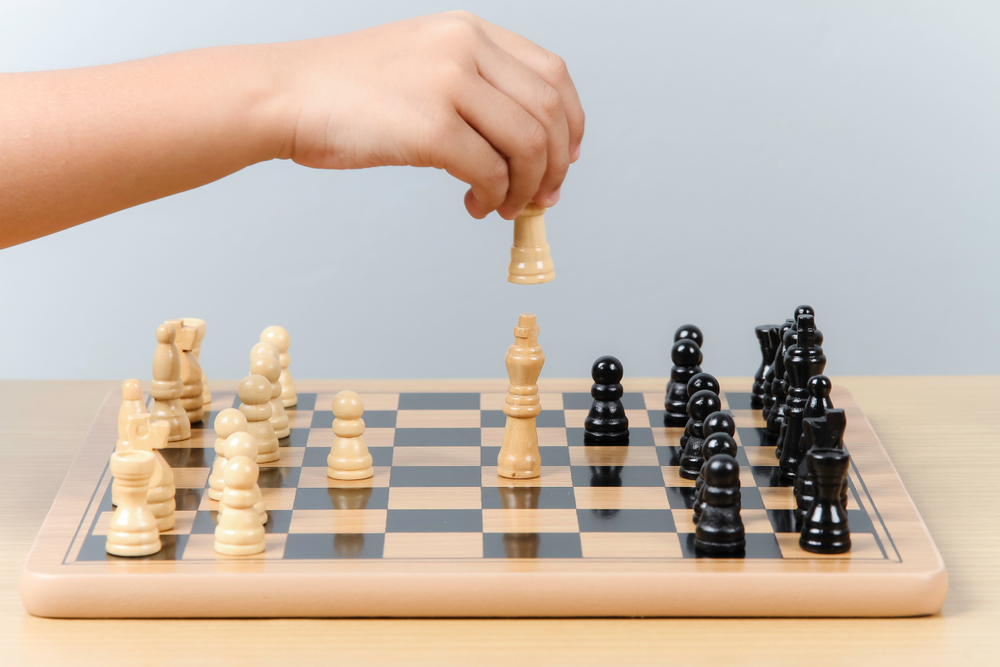


Parents and teachers should care about the development of strategic thinking in young children, especially through activities like Extra Challenge Chess, for several compelling reasons. Firstly, chess is renowned for enhancing cognitive skills such as problem-solving, critical thinking, and analytical abilities. These foundational skills are essential not just in academics but in all areas of life.
At the age of seven, children are cognitively at a stage where introducing strategic thinking can significantly impact their overall learning and development. Engaging in chess encourages them to think several steps ahead, fostering foresight and patience—qualities that are vital for future success. Moreover, it helps develop their ability to assess situations, plan accordingly, and adapt to new challenges.
Additionally, chess can improve social skills, as children often play in pairs or groups, learning to communicate and collaborate with peers. It also promotes sportsmanship, teaching them to handle victory and defeat gracefully.
Finally, integrating chess into educational frameworks can be enjoyable and motivating for children. By making learning fun through games like Extra Challenge Chess, parents and teachers not only cultivate essential skills but also nurture a lifelong love for learning.