
Story sequencing Extra Challenge Worksheets for 7-Year-Olds
3 filtered results
Difficulty Level
Grade
Age
-
From - To
Subject
Activity
Standards
Introducing our Story Sequencing Extra Challenge Worksheets for 7-year-olds, designed to enhance critical thinking and storytelling skills! These engaging worksheets invite young learners to arrange events in the correct order, fostering comprehension and narrative skills. Each activity presents captivating stories filled with colorful illustrations, motivating kids to analyze plot development and details. Perfect for reinforcing classroom learning or as an at-home challenge, these worksheets encourage creativity while bolstering literacy. With a variety of difficulty levels, children can progressively master the art of sequencing. Spark your child's imagination and learning with these fun, educational resources today!
Favorites
With answer key
Interactive
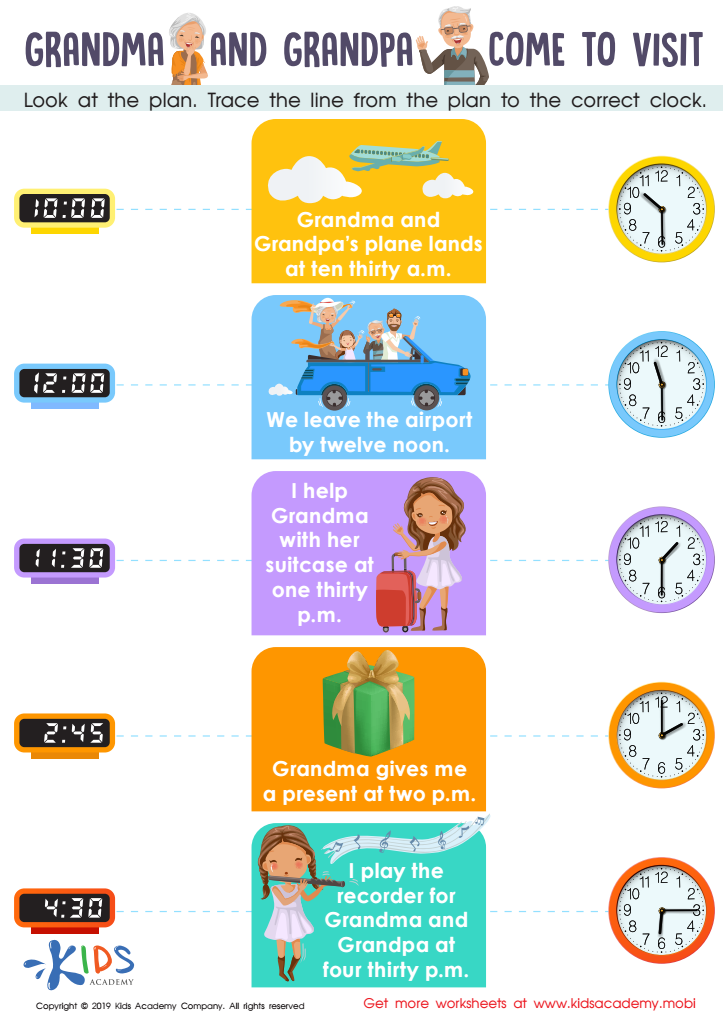
Grandpa and Grandma Come to Visit Worksheet
Have your kids learn about time using this worksheet. It contains pictures, accompanying texts and a clock, which you can use to help them trace the plan. Grandparents' visits and trips to their house are the perfect opportunity to practice this skill. Talk to your kids about the plan and watch them trace it to the correct clock.
 Assign to My Students
Grandpa and Grandma Come to Visit Worksheet
Worksheet
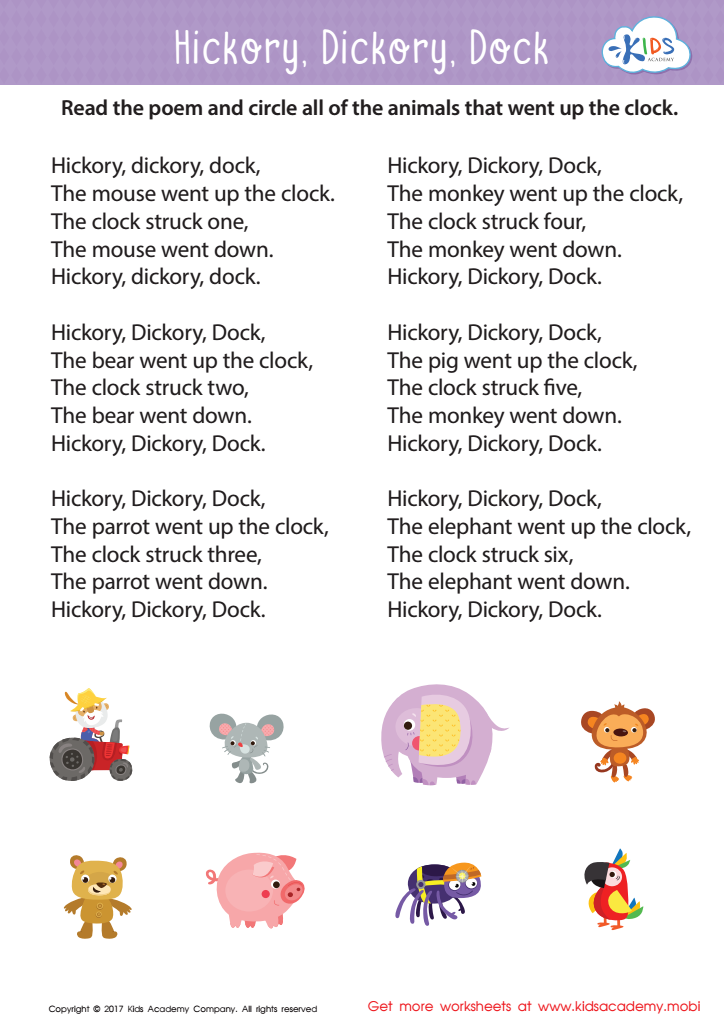
Hickory Dickory Dock Sequencing Worksheet
Help your child boost their reading skills with this fun Hickory Dickory Dock sequencing worksheet! They'll read and identify the animals in the right order, strengthening their story sequencing and comprehension skills.
Hickory Dickory Dock Sequencing Worksheet
Worksheet
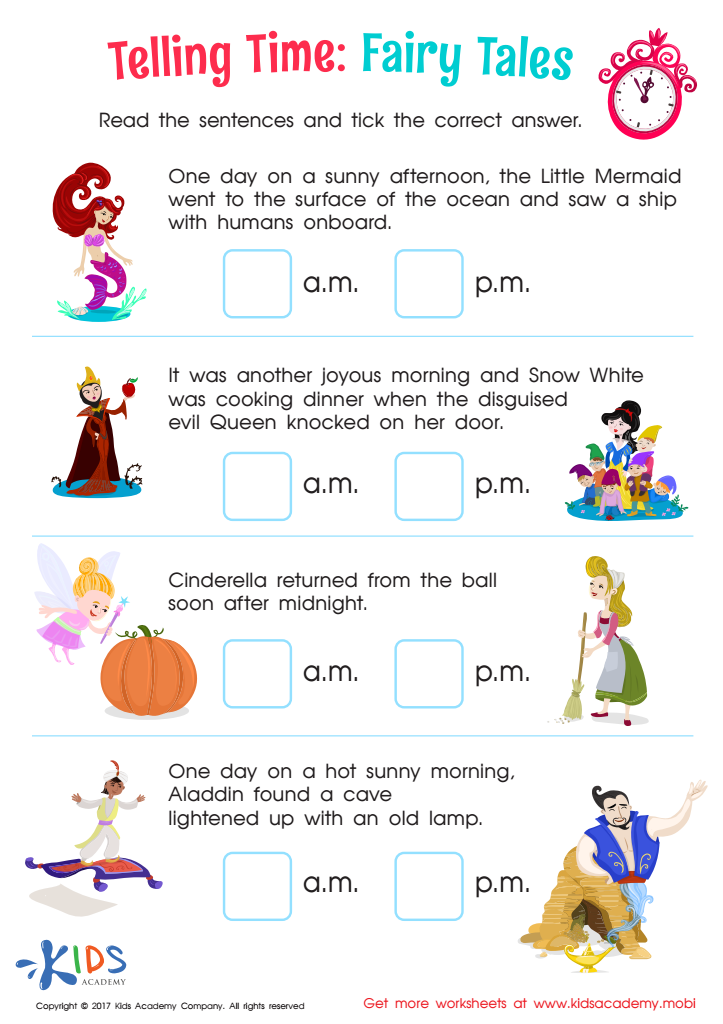
Telling Time: Fairy Tales Worksheet
Bring your child's imagination to life with classic fairy tales! This colorful telling time worksheet has it all: The Little Mermaid, Cinderella, and more! Plus, your child will have fun learning to distinguish a.m. from p.m. with this charming worksheet.
Telling Time: Fairy Tales Worksheet
Worksheet
Join Kids Academy for Free
Who is primarily going to use this learning content?




.jpg)



Story sequencing is a critical skill for 7-year-olds that significantly influences their reading comprehension, writing abilities, and overall cognitive development. Parents and teachers should care about this competency because it helps children understand the structure of narratives, including beginnings, middles, and endings. By mastering story sequencing, kids learn to identify key events and the relationships between them, which enhances their ability to summarize and retell stories accurately.
Furthermore, engaging in story sequencing activities encourages critical thinking, as children must evaluate the importance of events and their order. This skill transfers beyond language arts, fostering analytical skills beneficial in subjects like math and science.
Additionally, story sequencing cultivates creativity, allowing children to explore their own narratives by rearranging elements or creating original stories. It also serves as a platform for discussions about cause and effect, character motivations, and moral lessons, enriching their emotional intelligence.
In practical terms, story sequencing is easily integrated into fun, interactive activities, making learning enjoyable. Whether through games, crafts, or digital tools, these experiences strengthen parent-child or teacher-student bonds. Thus, emphasizing story sequencing can significantly enhance literacy and cognitive skills, laying a solid foundation for lifelong learning.








