Introduce your child to the exciting world of letter recognition with our "Extra Challenge Tracing Letters Worksheets" designed specifically for ages 8-9! These engaging worksheets go beyond basic tracing to help develop your child's understanding of letter shapes, sounds, and placements. Perfect for reinforcing alphabet skills, they encourage practice in a fun and motivating way. With varied activities that challenge children to trace, identify, and creatively interact with letters, your young learner will gain confidence and accuracy in their writing. Ideal for at-home learning or classroom reinforcement, these worksheets are a fantastic resource for aspiring writers and eager readers!

Check out this FREE Trial Lesson on Tracing Letters for age 8-9!

X

Favorites
With answer key
Interactive
  • 8-9
  • Letter recognition
  • Tracing Letters
  • Extra Challenge
Letter R worksheets
Letter R worksheets

Letter R Tracing Page

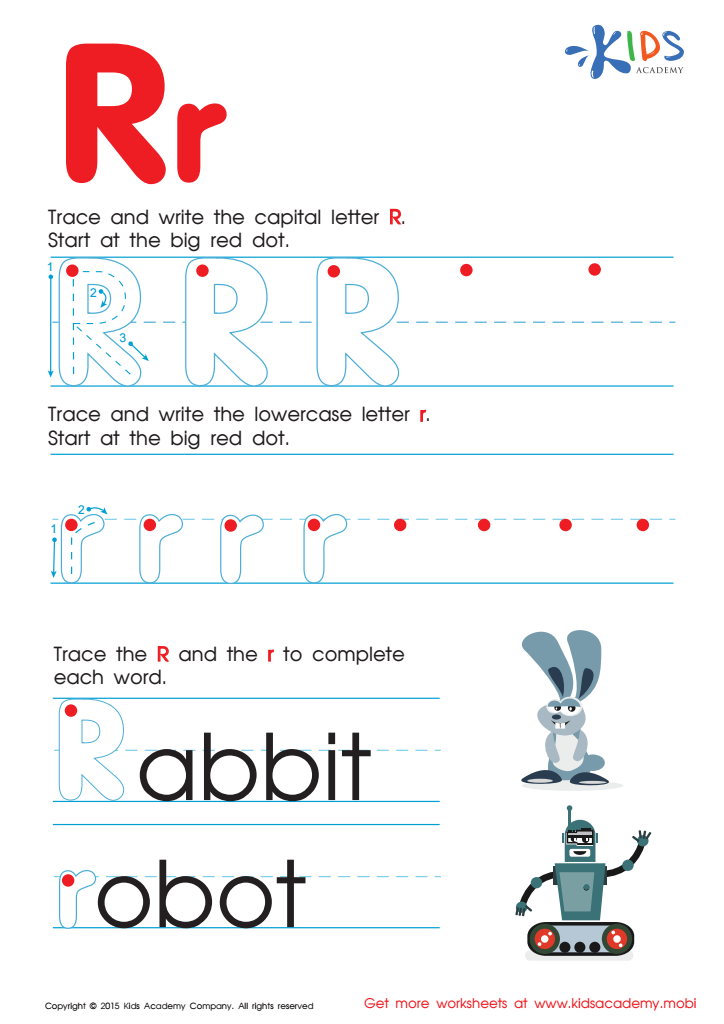
Trace and write the letter "R" with this worksheet for kindergarten. Start with the uppercase, then move on to the lowercase. Write the letters several times for practice. Then help complete the words for the rabbit and robot, spelling carefully. More ABC worksheets can be found at Kids Academy.
Letter R Tracing Page
Worksheet
Letter X worksheets
Letter X worksheets

Letter X Tracing Page

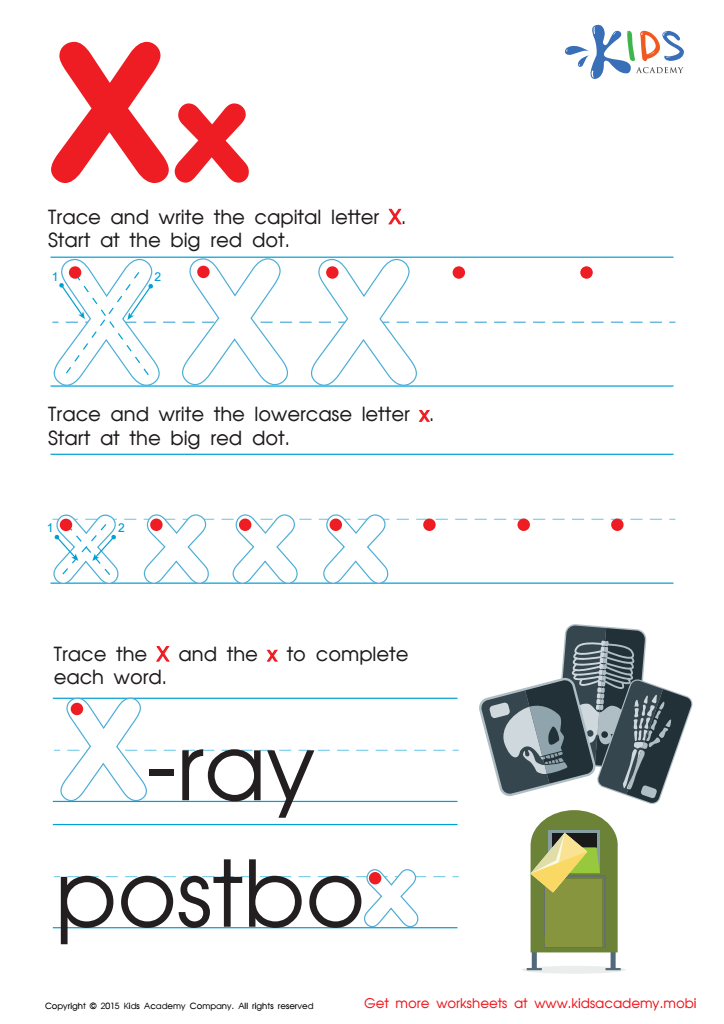
Trace the uppercase letter "X" to learn, then write it yourself and practice. Then do the same with the lowercase "x" before completing the words "X-ray" and "postbox". Enjoy our alphabet printables!
Letter X Tracing Page
Worksheet
Letter U worksheets
Letter U worksheets

Letter U Tracing Page

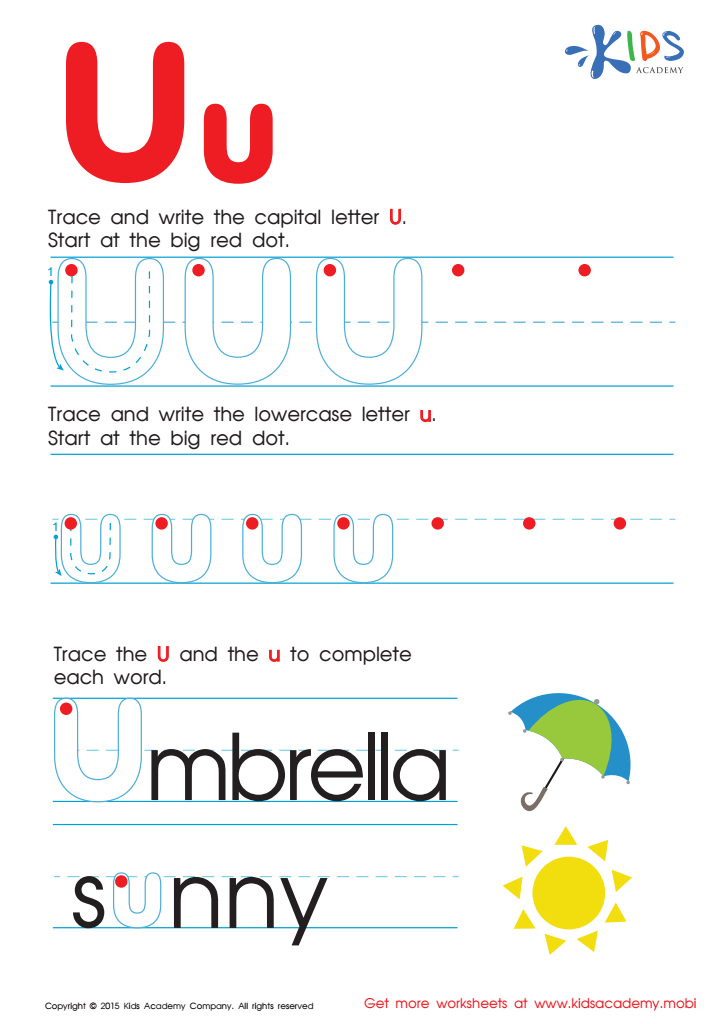
Ready to trace and write the letter "U"? Use our worksheet and practice tracing both uppercase and lowercase letters. Complete the words "umbrella" and "sunny" with a capital "U". Check our full collection of alphabet printables for more activities.
Letter U Tracing Page
Worksheet
Letter S worksheets
Letter S worksheets

Letter S Tracing Page

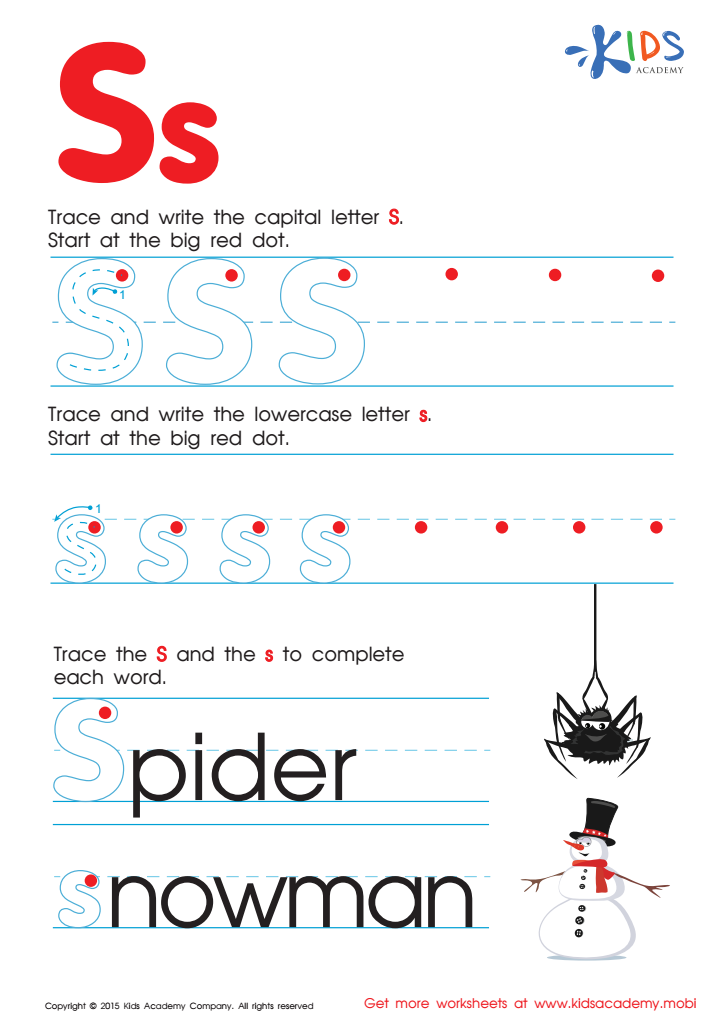
Trace and write the capital and lowercase "S" on this ABC worksheet for kindergarten. Start with the big red dot and be careful. When you finish, help the spider and snowman in the pictures restore their words with the capital and lowercase letters. Continue learning the alphabet with Kids Academy.
Letter S Tracing Page
Worksheet
Letter W worksheets
Letter W worksheets

Letter W Tracing Page

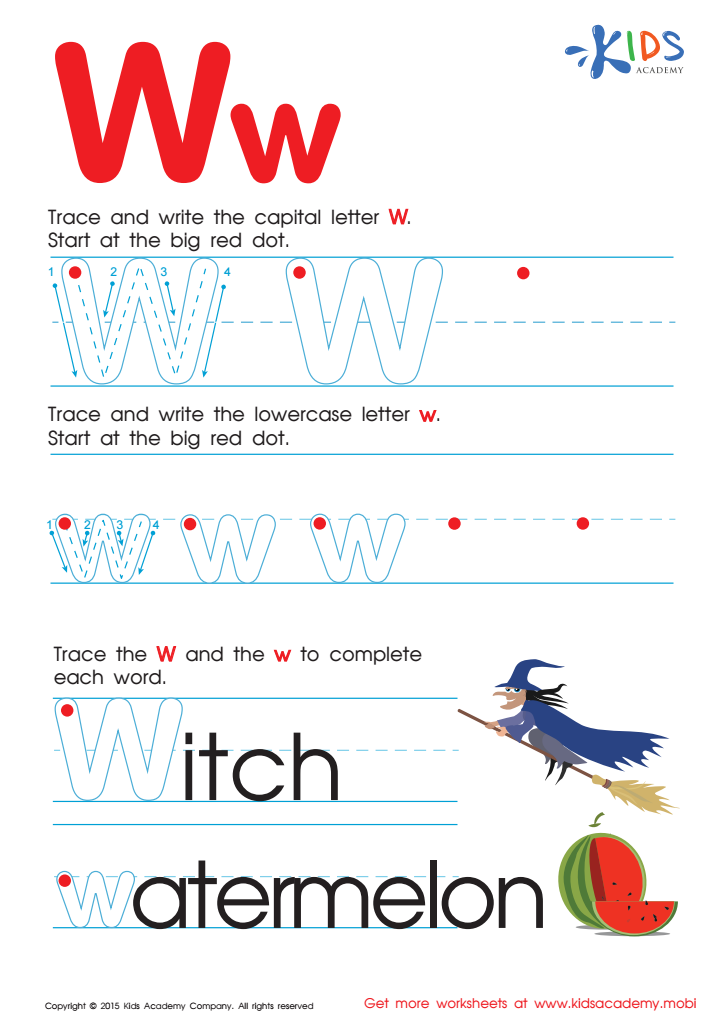
Trace and write the capital and lowercase letter W with this free letter tracing worksheet by Kids Academy. Complete the words "Witch" (capital) and "watermelon" (lowercase). Check out our other kindergarten alphabet worksheets!
Letter W Tracing Page
Worksheet
Letter V worksheets
Letter V worksheets

Letter V Tracing Page

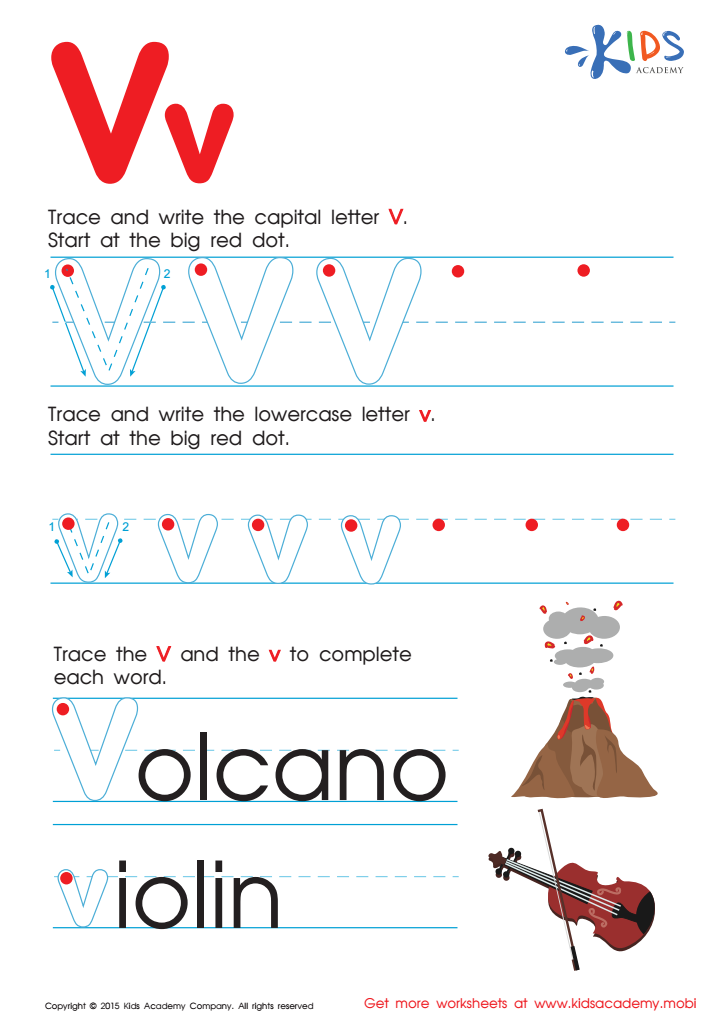
Trace the uppercase and lowercase letter "V" with our kindergarten tracing worksheet. Begin at the red dot and follow the lines. Write it several times. Complete the words "Volcano" and "violin". Get more alphabet activities at Kids Academy.
Letter V Tracing Page
Worksheet
Letter T worksheets
Letter T worksheets

Letter T Tracing Page

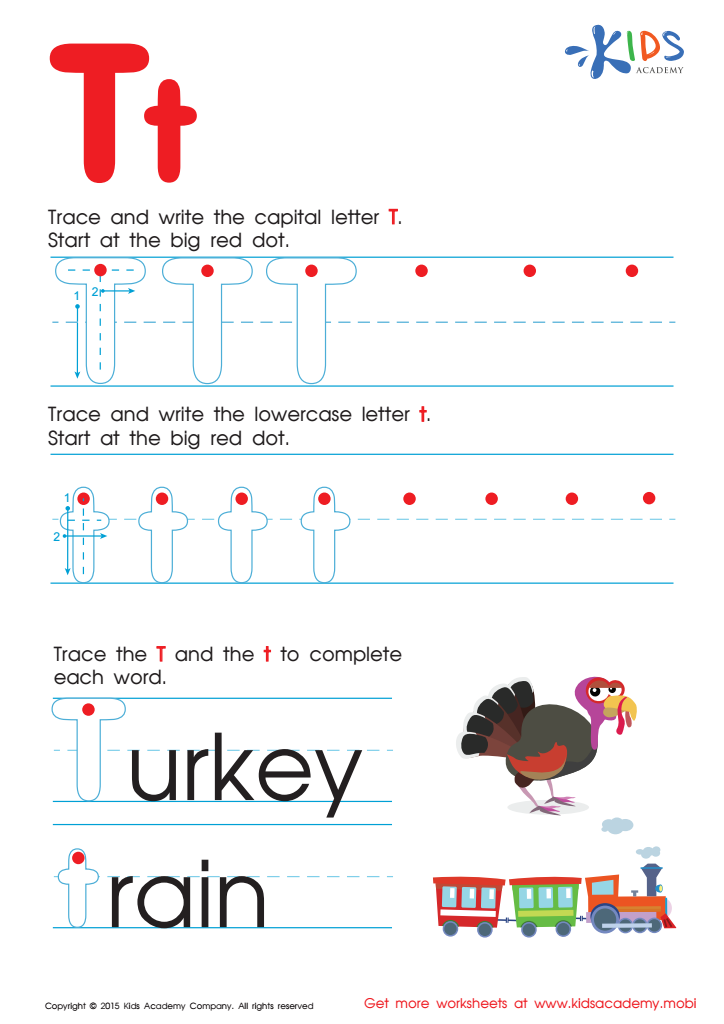
Trace letters, complete words, draw pictures and see your kids having fun! Kids Academy offers alphabet tracing worksheets to learn to write letters. Start with the big red dot, trace the letter, then write it. Practice uppercase and lowercase. Have fun completing words with a Turkey or a rain-train and draw pictures. Get more printable worksheets to make learning enjoyable.
Letter T Tracing Page
Worksheet


Letter recognition is a foundational skill vital for literacy development in children aged 8-9. This age group is transitioning from learning to read to reading to learn, making effective letter recognition crucial. The "Extra Challenge Tracing Letters" activity enhances this skill by engaging young learners in a fun, interactive way. Tracing letters reinforces proper formation and promotes fine motor skills, vital for writing.

When parents and teachers encourage letter tracing exercises, they are helping children build confidence in their writing ability, which directly impacts their reading proficiency. Mastery of letter shapes aids in quicker recognition when reading printed text, allowing children to access content with ease and focus on comprehension rather than grappling with decoding.

Furthermore, incorporating tracing activities into daily learning routines serves as a targeted intervention for struggling readers. It offers additional practice and supports various learning styles, emphasizing kinesthetic engagement, which is essential for many children.

Ultimately, facilitating this skill not only prepares children for academic success but also fosters a love for learning. By integrating fun challenges like letter tracing into their education, parents and teachers help cultivate essential literacy skills that will serve students throughout their schooling and beyond.