Alphabet Recognition Extra Challenge English for Beginners Worksheets for Ages 8-9
3 filtered results
-
From - To
Unlock your child's potential with our "Alphabet Recognition Extra Challenge Worksheets," specially designed for young learners aged 8-9. Perfect for beginners, these engaging printables focus on reinforcing alphabet recognition through fun and interactive exercises. Your child will dive into exciting activities that enhance their understanding of letters, sounds, and vocabulary, all while building confidence in their reading skills. Carefully crafted to cater to various learning styles, our worksheets make learning enjoyable and effective. Encourage your child to explore the world of letters with these dynamic tools, and watch their language skills flourish! Start their language journey today!
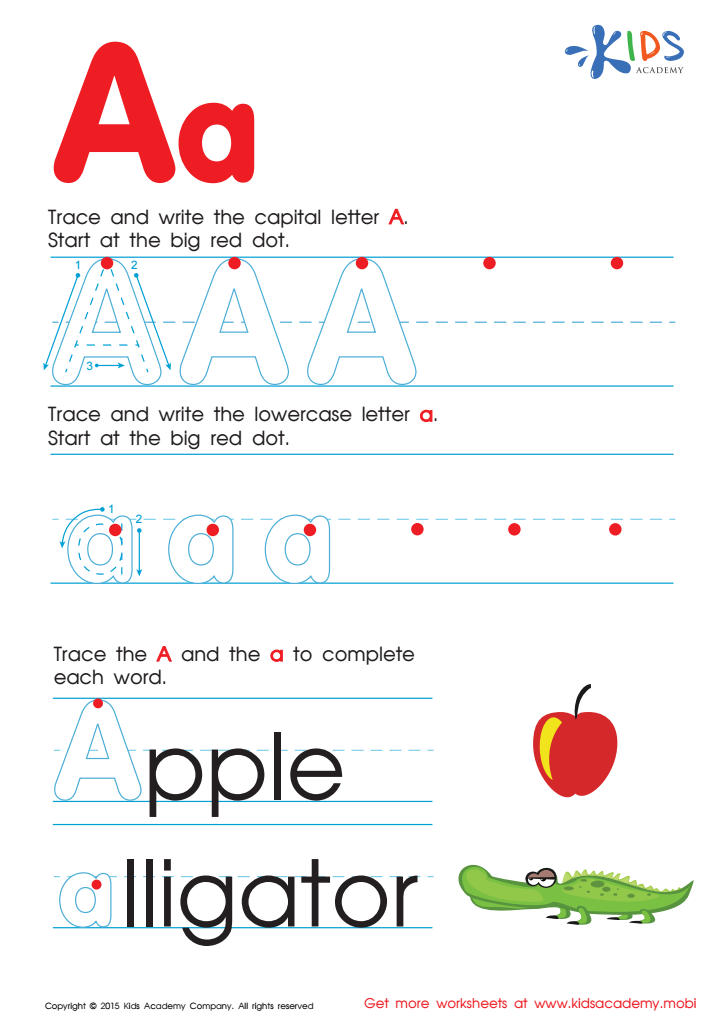
Letter A Tracing Page
 Assign to My Students
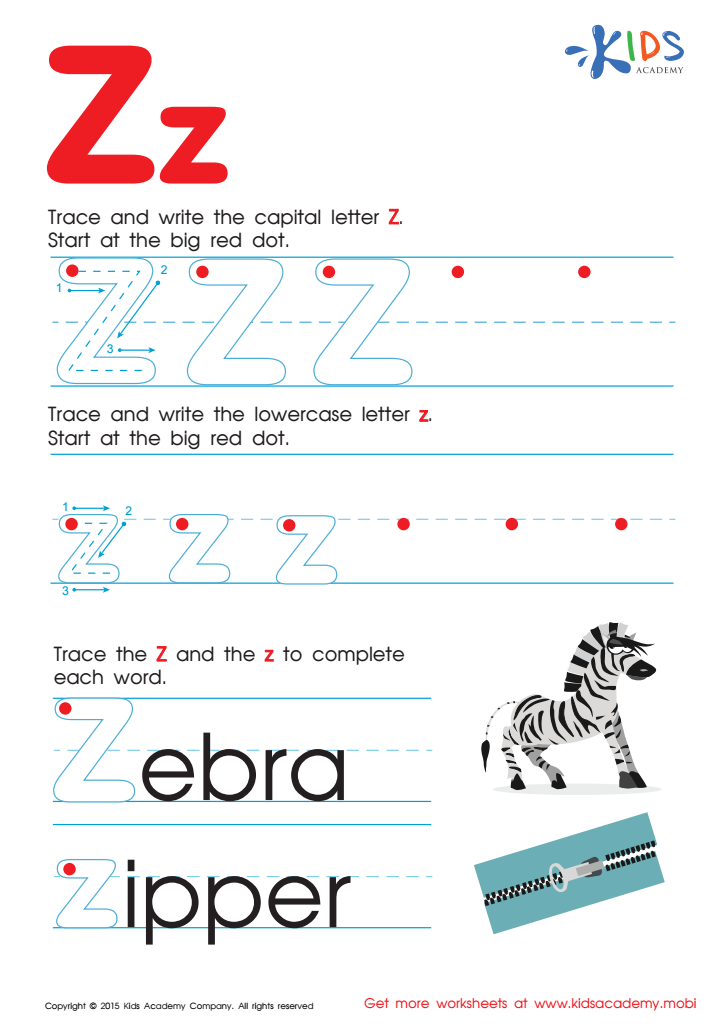
Letter Z Tracing Page
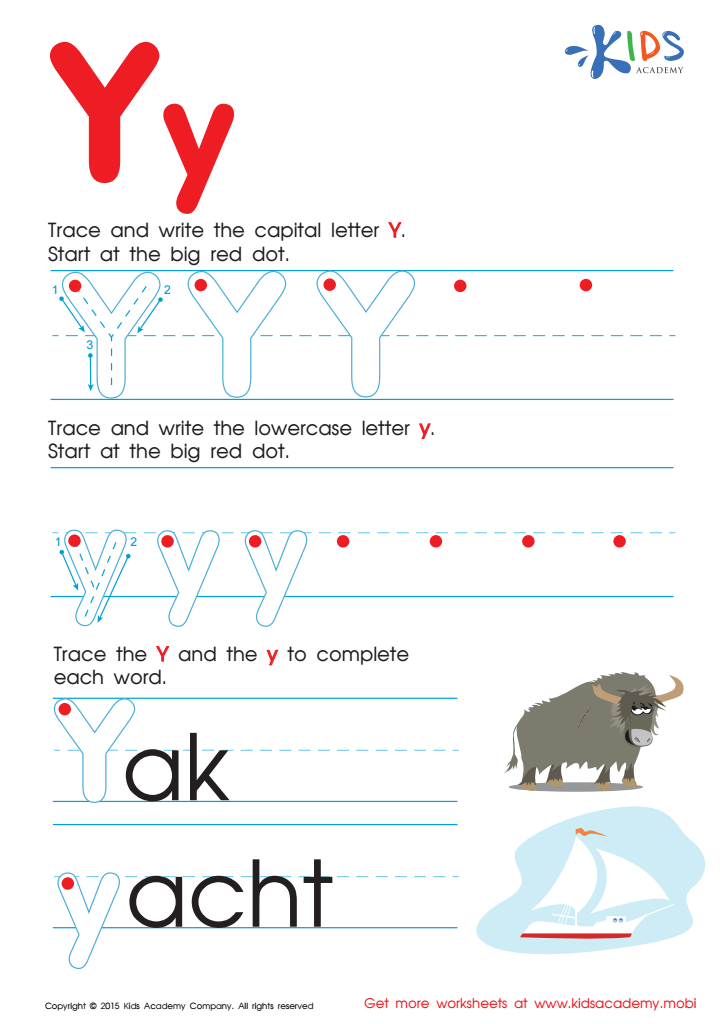
Letter Y Tracing Page





Alphabet recognition is a foundational skill for early readers, making the "Alphabet Recognition Extra Challenge: English for Beginners" crucial for children aged 8-9. As students progress in their literacy journey, mastering the alphabet builds confidence and competence in reading, writing, and overall communication. At this age, children are expected to handle more complex texts, and a firm grasp of the alphabet sets the stage for their success.
Parents and teachers should prioritize this extra challenge because it encourages active engagement with letters, moves beyond rote memorization, and includes creative learning techniques that cater to different learning styles. It reinforces letter-sound relationships, essential for phonemic awareness—a key component in reading proficiency.
Moreover, recognizing letters in varying contexts, including uppercase and lowercase forms, enhances children's ability to decode words quickly, paving the way for smoother reading and writing experiences. For teachers, integrating such challenges into classroom routines supports diverse learners and fosters a growth mindset. For parents, this extra challenge can be an excellent tool to complement reading at home, making practice fun and interactive. In summary, emphasizing alphabet recognition not only impacts literacy but also builds critical thinking skills that benefit students across all subjects.








