Counting practice Extra Challenge Math Worksheets for Ages 8-9
5 filtered results
Difficulty Level
Grade
Age
-
From - To
Subject
Activity
Standards
Boost your child's math skills with our challenging Counting Practice Extra Challenge Math Worksheets tailored for ages 8-9. These thoughtfully designed worksheets from Kids Academy go beyond basic counting, engaging young learners with intricate patterns and advanced number sequences. Perfect for mastering addition, subtraction, and recognizing numerical relationships, this resource can turn mundane practice into an exciting math adventure. Enhance problem-solving abilities and build a strong mathematical foundation with our fun, educational activities. Ideal for classroom support or supplemental learning at home, our worksheets ignite a passion for math and promote lasting academic success.
Favorites
With answer key
Interactive
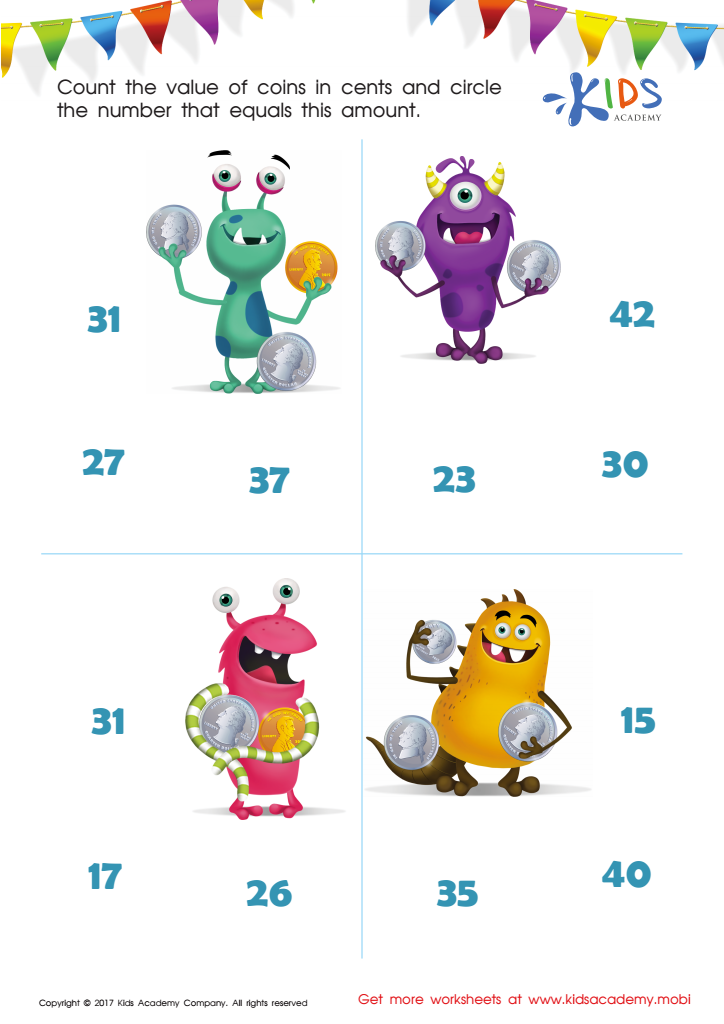
How Many Coins Money Worksheet
Have fun while counting coins: look at the monsters and count the coins in their hands. Challenge your little learners to count and write down the number of coins each one has. Enjoy the time together!
 Assign to My Students
How Many Coins Money Worksheet
Worksheet
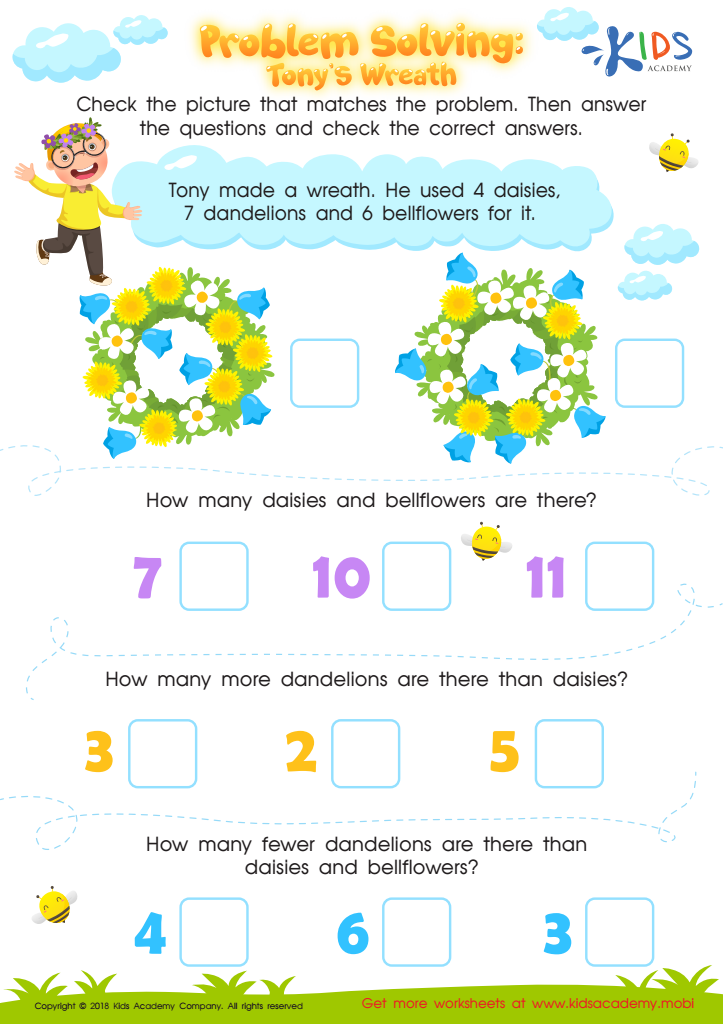
Problem Solving: Tony's Wreath Worksheet
Tony needs help! He's made a beautiful, colorful wreath and needs help counting the flowers. Your math student can read the word problems, match answers to the problems and solve basic addition and subtraction. They'll practice with two and three addends, minuends and subtrahends to find sums and differences and help Tony and his bee friends.
Problem Solving: Tony's Wreath Worksheet
Worksheet
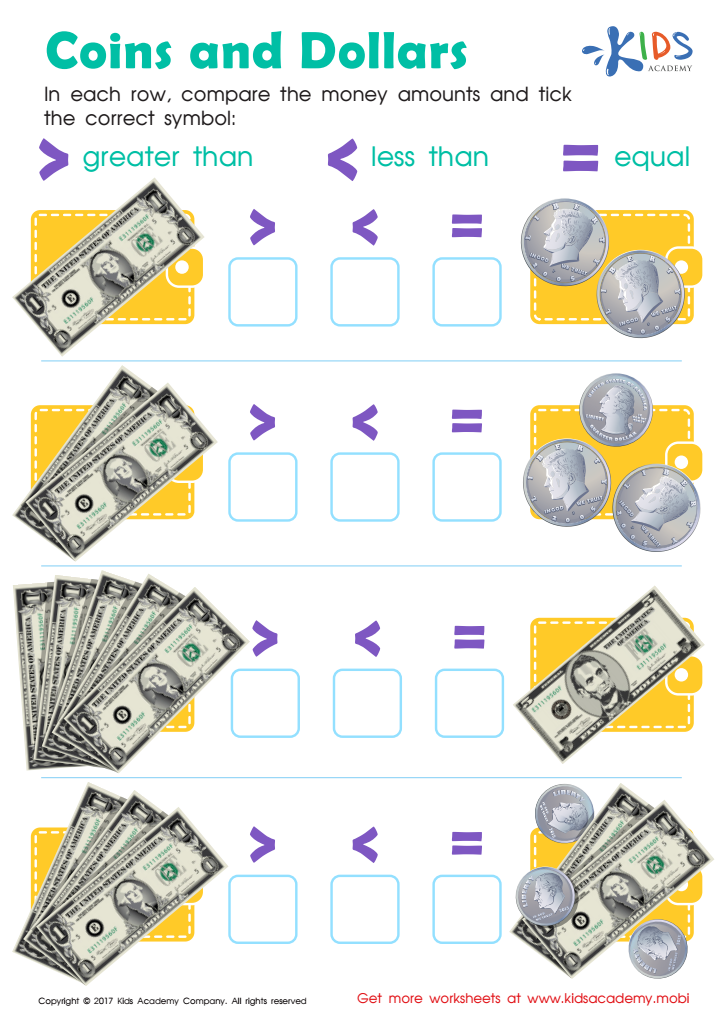
Money: Coins Dollars Printable
Motivate your kid to learn and practise essential math skills, like 'greater than' and 'less than', by introducing the importance of money! The money worksheet "Coins and Dollars" will give them a hands-on experience of counting coins and dollars, making math symbols more memorable.
Money: Coins Dollars Printable
Worksheet
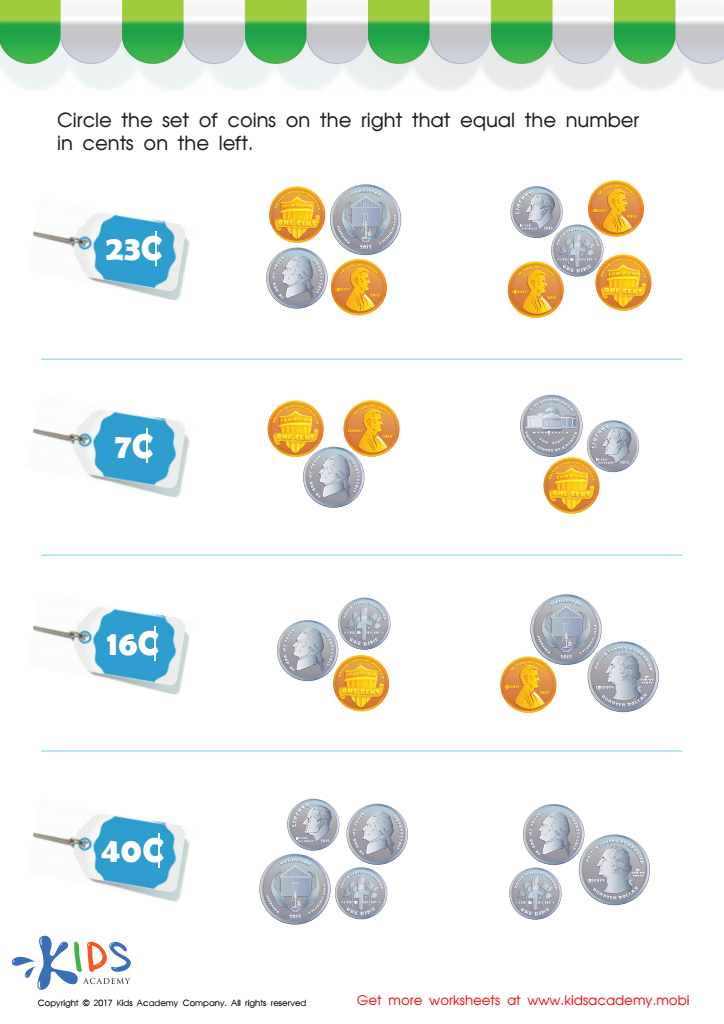
Picking the Coins You Need Money Worksheet
Let's learn to count money with Parents and Kids Academy! Investigate a real shop together: buy a globe, pencils, books, and a school bag using coins. Then, circle the coins you'll need. Visit our website for more free and fun money games for kids!
Picking the Coins You Need Money Worksheet
Worksheet
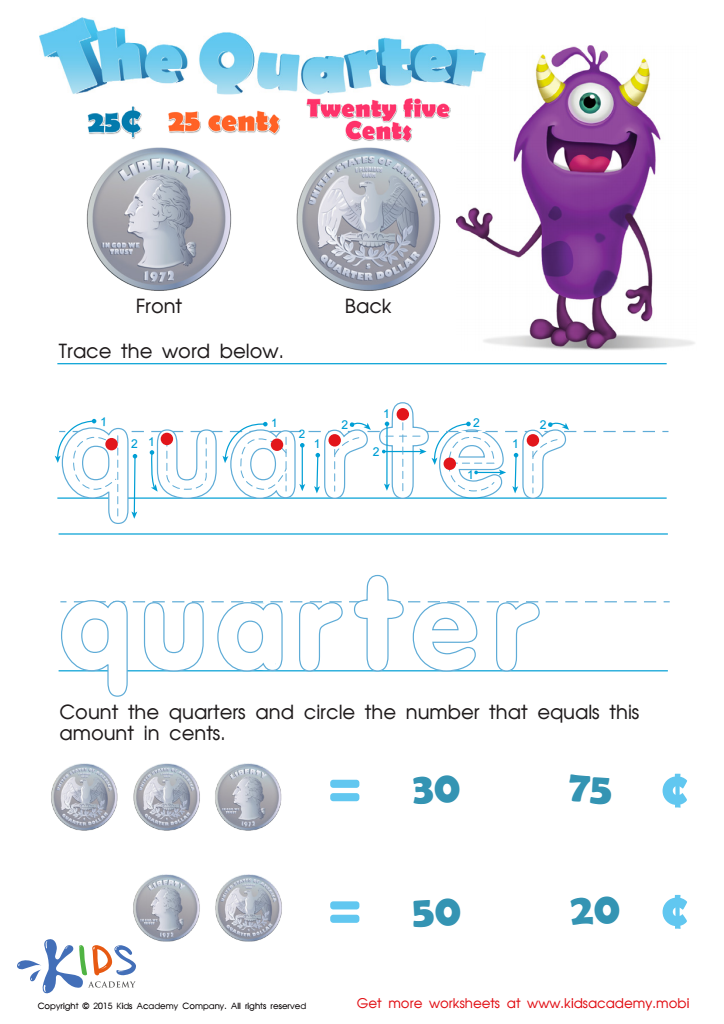
Twenty Five Cents or the Quarter Money Worksheet
Check out our new printable money games - learn to count money easily! With quarters, trace the word, count them and calculate the amount in cents. More worksheets at our website. Give it a try!
Twenty Five Cents or the Quarter Money Worksheet
Worksheet
Join Kids Academy for Free
Who is primarily going to use this learning content?





.jpg)


Counting practice and extra challenge math activities for children aged 8-9 are extremely important for several reasons. First, they help build a robust foundation in mathematical skills that children will use throughout their educational careers and into adulthood. By engaging in counting practice, youngsters improve their number sense, which is crucial for understanding more complex math concepts.
Additionally, such challenges foster critical thinking and problem-solving skills. They encourage children to go beyond rote memorization and actually think about numbers and their relationships. This deeper understanding helps in future topics like multiplication, division, fractions, and algebra.
Practicing counting and tackling extra challenges also boosts confidence. When children master challenging tasks, they feel a sense of achievement, which motivates them to take on even more complex subjects without fear. This can create a positive feedback loop, continually enhancing their mathematical skills.
Moreover, engaging in these activities can make learning fun. Through the use of games, puzzles, and other challenges, children can associate math with enjoyment rather than frustration. This positive association is beneficial for long-term academic engagement and success.
Finally, these activities provide valuable one-on-one parent-child or teacher-student interaction, helping adults understand a child’s specific strengths and weaknesses and providing targeted support. Overall, it's a vital component of a well-rounded early education.