Recognizing shapes Extra Challenge Math Worksheets for Ages 8-9
3 filtered results
-
From - To
Unlock your child's potential with our "Recognizing Shapes Extra Challenge Math Worksheets" designed for ages 8-9! These engaging worksheets provide advanced learners with stimulating activities that promote spatial awareness and geometric understanding. Your child will explore a variety of shapes through puzzles, mazes, and creative problems that encourage critical thinking. Perfect for reinforcing and expanding their knowledge, these worksheets not only make learning fun but also empower children with the skills necessary for future success in math. Download our printable worksheets and watch as your young mathematician shines in recognizing and manipulating shapes with confidence!
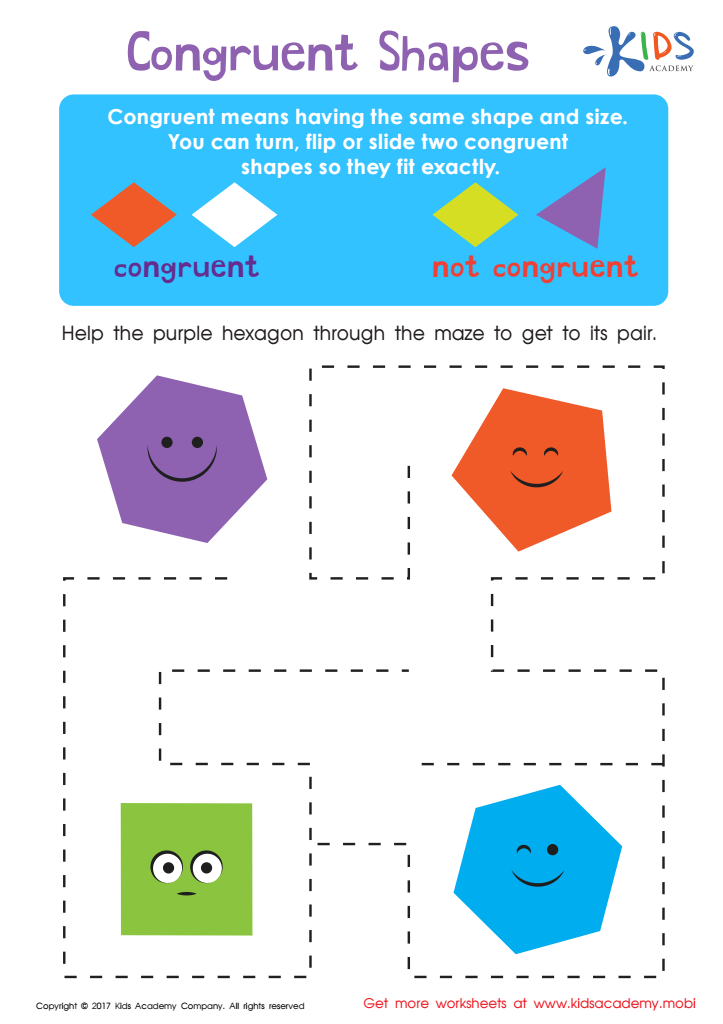
Congruent Shapes Worksheet
 Assign to My Students
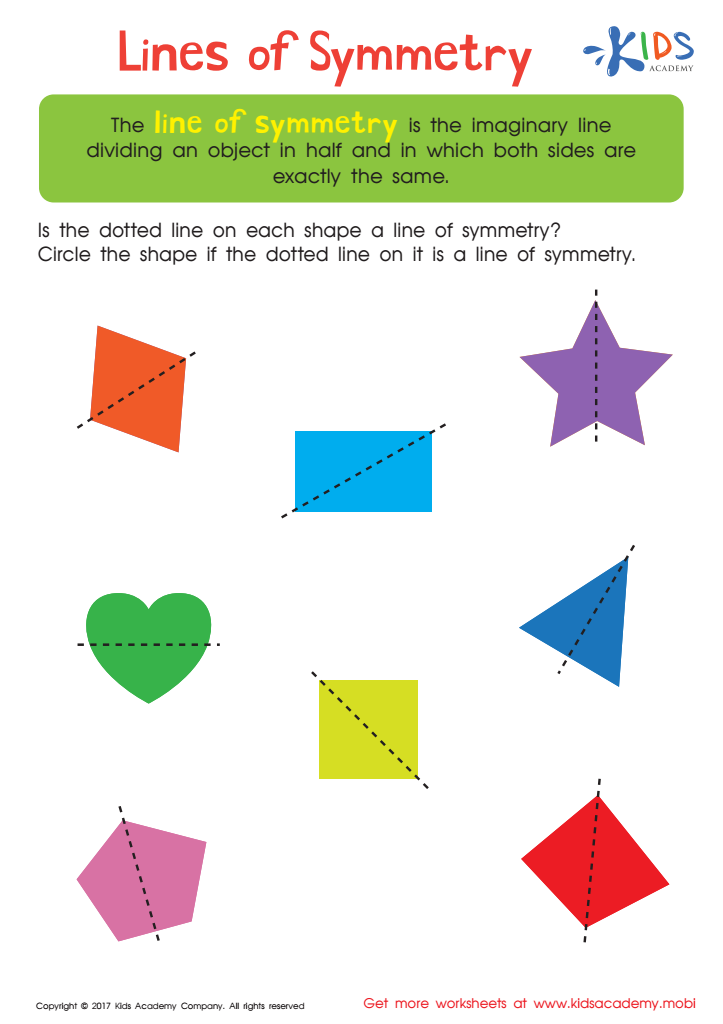
Lines of Symmetry Printable
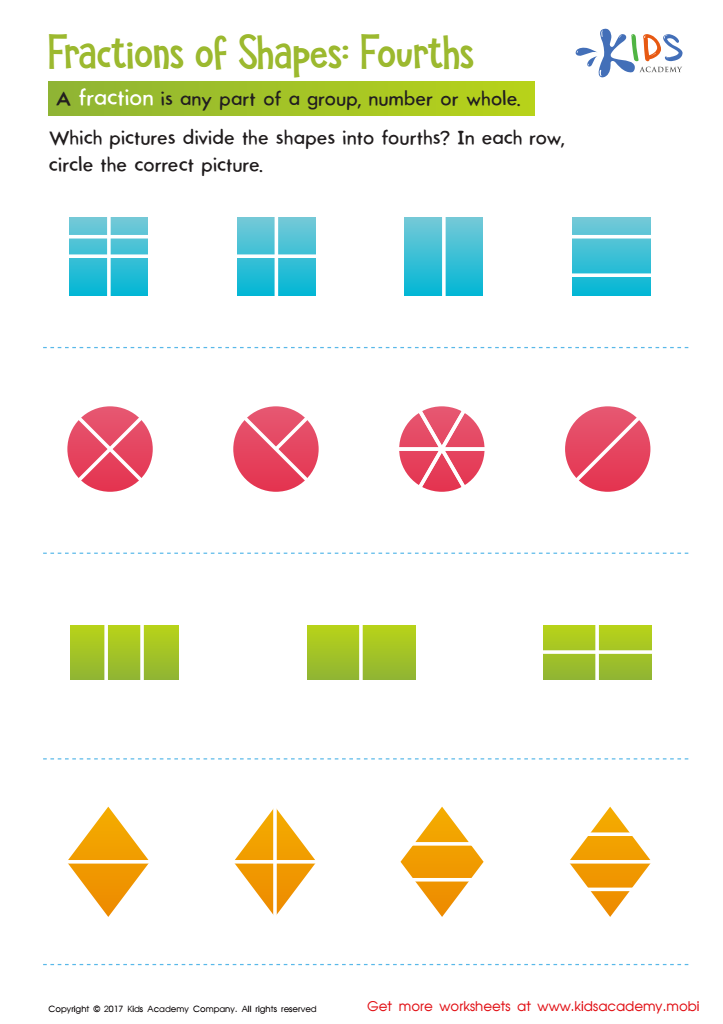
Fractions of Shapes Worksheet








Parents and teachers should prioritize recognizing shapes in the "Extra Challenge Math" program for children aged 8-9, as it significantly enhances essential cognitive skills. At this age, students are developing critical thinking and problem-solving abilities. By engaging with shapes, children learn to identify, compare, and categorize objects, which helps strengthen their visual-spatial intelligence. This foundational skill is crucial not only for math but also for science, art, and everyday problem-solving tasks.
Moreover, recognizing shapes supports the development of geometric understanding, which is pivotal in progressing to more complex mathematical concepts such as area, volume, and symmetry. It lays the groundwork for algebraic thinking as well. Beyond academics, mastery of shapes fosters a sense of accomplishment and boosts self-confidence in children, encouraging them to tackle more challenging subjects as they progress.
Additionally, hands-on activities associated with shapes can promote cooperative learning and social skills. Through collaborative games and projects, children can develop communication skills and teamwork, reinforcing that learning can be a fun and engaging process. Therefore, endorsing shape recognition in educational settings not only supports mathematical proficiency but also contributes to holistic child development, making it a vital area of focus for parents and educators alike.








